
Published: 16 April 2026
Reading Time: 8 minutes
Reviewer: Placeholder for Reviewer Name, Placeholder for Reviewer Credentials
Mastering SMT Reflow Oven Temperature Profiles: A Step-by-Step Optimization Guide
Temperature profiles are the backbone of successful Surface Mount Technology (SMT) soldering. Not getting them right can lead to weak solder joints, splattering, or even complete failure of your assembly. But when done right? You get durable connections that keep your electronics working seamlessly.
This guide walks you through the essentials of creating and optimizing SMT reflow oven temperature profiles for precise, reliable results every time. Whether you’re troubleshooting common issues or trying to understand ramp rates, this piece covers it all.
Jace Liu is an experienced Electronics Manufacturing Services (EMS) consultant specializing in SMT equipment optimization. With over a decade of expertise in assembly line automation and reflow oven profiling, Jace has assisted global manufacturers in streamlining their processes for maximum throughput. His insights merge technical precision with practical strategies for achieving efficiency.
Understanding the SMT Temperature Profile
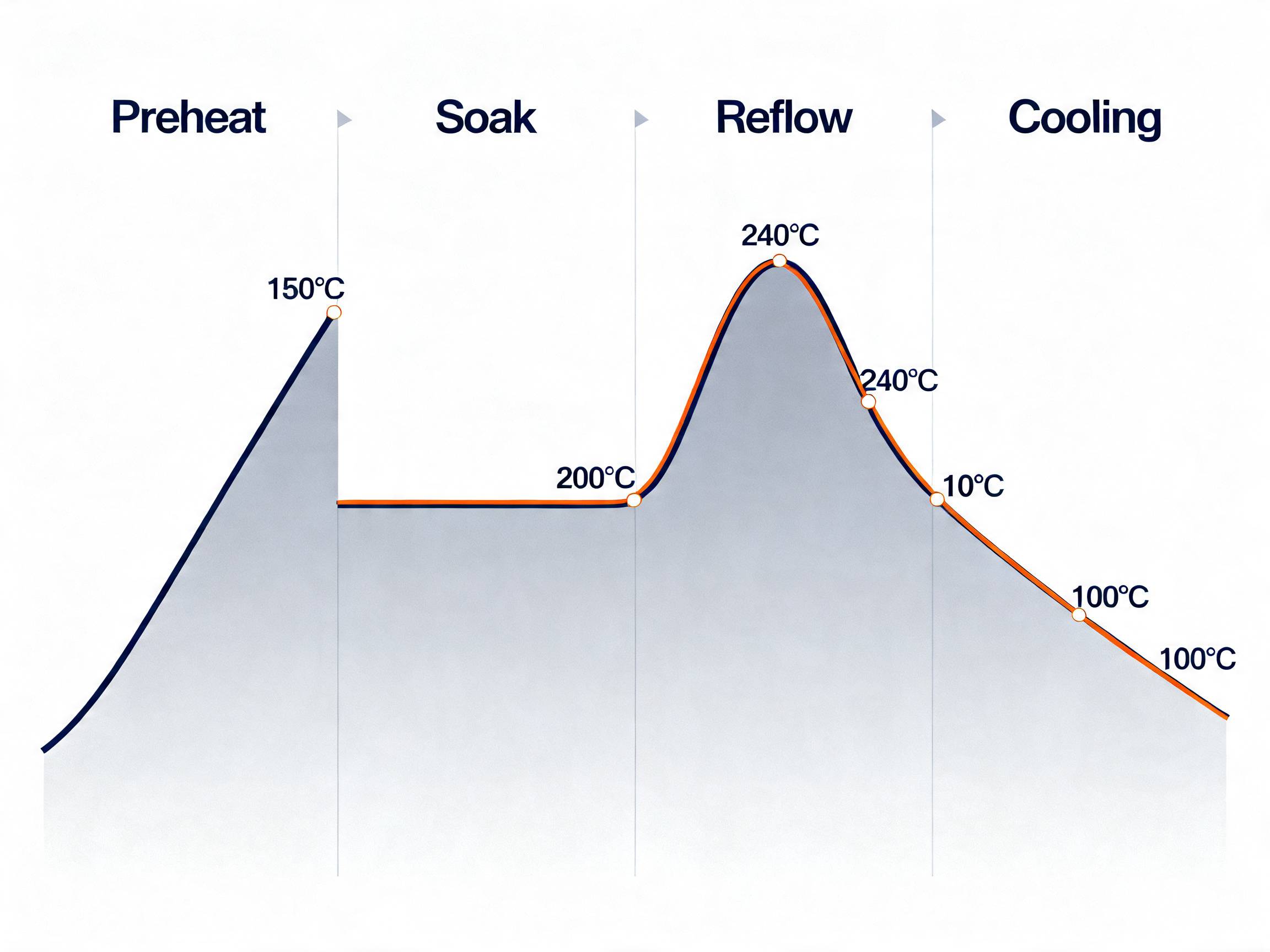
You hear all this talk about temperature profiles, but what are they exactly? Think of them as the temperature “journey” your PCB goes through inside a reflow oven. It’s broken into four key phases:
- Preheat Zone: This stage slowly brings the temperature up, warming your board and components to prevent thermal shock. It’s kind of like warming up a car engine; sudden changes in heat could cause damage.
- Soak Zone: Ever notice how solder paste needs time to “activate”? This stage keeps your board at a steady temp so the flux does its thing, cleaning surfaces for solder bonding.
- Reflow Zone: This is the make-or-break moment. The oven hits peak temperatures to melt the solder paste, letting it flow into joints and solidify. For lead-free solder, this typically means hitting 230-250°C.
- Cooling Zone: After all that heat, the board needs a cooldown. Rapid cooling can make joints brittle, while too slow causes unwanted grain structures. A gradual cooldown ensures stability.
When all these steps are calibrated correctly, the temperature curve looks like an art form—a perfect mix of precision and science. If you’d like an example, check out this visual of typical reflow profiles.
Why It Matters
The process isn’t just for show; a solid temperature profile impacts solder joint quality more than anything else. Imagine trying to bake a cake at random oven settings. You’d get uneven textures or a burnt crust. Similarly, SMT profiles control ramp rates, soak times, and peak temps to avoid defects like tombstoning, solder balls, or brittle joints.
Optimized profiles lead to high-performing joints that last longer under mechanical stress. And yes, they save plenty of time troubleshooting issues. Based on a study from KIC Thermal, manufacturers who dedicate time to profiling see up to 30% fewer returns due to solder failures. Now that’s efficiency.
Expert Tip: Adapting your profile to environmental factors, like humidity or airflow around the oven, can help avoid temperature deviations. A small tweak here and there pays off big time.
Key Factors Influencing Reflow Oven Temperature Profiles
Getting the temperature profile right requires a mix of science, observation, and adjustment. Let’s break down the most critical factors manufacturers need to keep in mind when setting these profiles.
Equipment Preparation
First off, inspect your reflow oven for consistent performance. A malfunctioning oven can throw off your whole process, leading to costly issues. Check for:
- Stable heat distribution across the oven zones
- Functioning thermocouples to capture real-time temperature data
- Cleanliness of the oven’s interior (even a thin layer of residue can impact accuracy)
Practicing routine maintenance ensures you’re working with reliable equipment that won’t cause random spikes or drops in heat.
Starting with a Baseline Profile
Now it’s time to create a basic profile using test boards. These boards should replicate your production PCBs closely—same material, solder paste, and layout—to give accurate results. Run a preliminary trial through the reflow oven, noting:
- Ramp rate (how quickly the temperature rises)
- Evenness in the soak zone before peak heating
- Any anomalies during the cooling cycle
Expert Tip: For large or heavily populated boards, lower ramp rates can help prevent temperature unevenness. Make small adjustments until you see consistent solder flow across all joints.
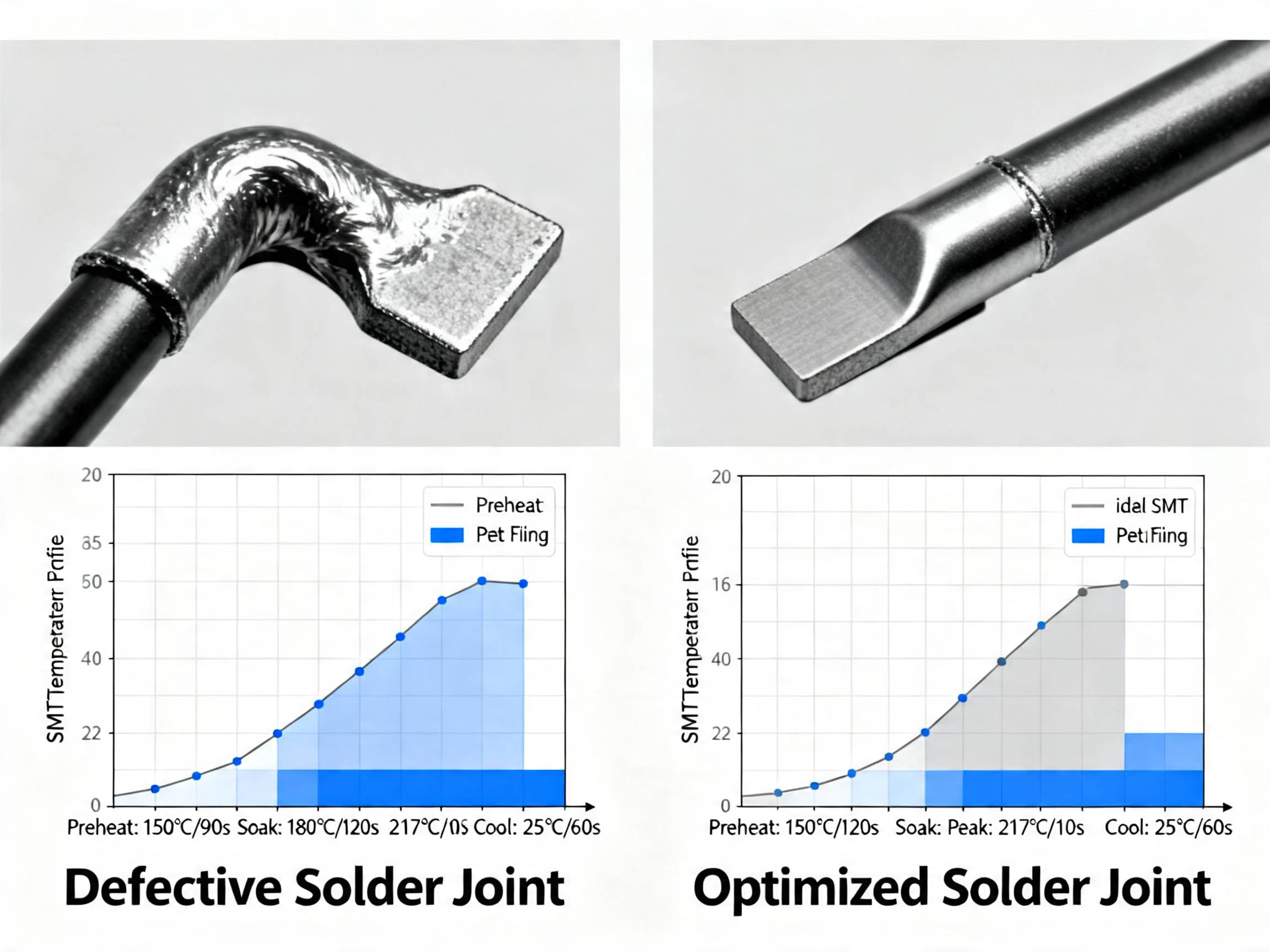
Fine-Tuning
This is where the real magic happens. Start adjusting individual factors one at a time:
- Ramp Rates: Too steep causes thermal shocks; too shallow leads to incomplete solder melting. Aim for a smooth, gradual increase that matches your solder’s requirements.
- Soak Times: Ensure adequate time in the soak zone for flux activation without extending it too long, as over-soaking can negatively affect solder performance.
- Cool Down: Avoid excessively fast cooling; this can result in micro-fractures within solder joints.
The adjustments might seem small, but they make a big difference. Testing and refining the baseline profile with different parameters ensures a precise temperature curve that’s tailored to your specific assembly process.
Pro Insight: Environmental factors, like ambient temperature or airflow near the oven, can subtly change how heat behaves. Use sensors to gauge these aspects and modify settings accordingly.
If all this sounds like a lot of effort upfront, it is—for good reason. A temperature profile tuned just right saves production time, prevents manufacturing defects, and reduces rework.
Advanced Techniques for Precision Temperature Control
Alright, let’s kick it up a notch. Perfecting a reflow oven profile requires advanced tools and systems, especially when manufacturing processes scale up or demand higher precision. Here’s how cutting-edge techniques can transform your SMT soldering game.
AI-Driven Adjustments
These days, manufacturers are turning to artificial intelligence for better control over reflow oven profiles. AI systems monitor real-time data, like temperature fluctuations or inconsistencies across oven zones, and automatically adjust settings for optimal results. Picture this: instead of tweaking the profile manually after a defect occurs, AI systems anticipate changes and make adjustments before problems even arise.

It’s like having a super-smart assistant who’s always one step ahead, ensuring solder quality stays spot-on.
Real-Time Monitoring
Want to stay on top of your process from start to finish? Real-time monitoring tools allow manufacturers to track temperature curves as they happen. Systems like thermal cameras or advanced sensors capture detailed heat distribution data within the oven.
This approach doesn’t only help optimize the current run—it also creates a wealth of historical data for future improvements. In other words, you’ll know exactly how your oven behaves on a typical day and can make proactive changes.
Expert Tip: Leveraging AI for real-time adjustments can save hours of troubleshooting and prevent costly defects. Pair these systems with automated notifications to alert you about any deviations.
Automated Responses
If you’re managing large-scale production, automation isn’t optional anymore; it’s necessary for consistent results and reduced downtime. Reflow ovens integrated with automated systems can respond instantly to temperature deviations or environmental fluctuations (like changes in humidity or airflow). For example, during a surge in ambient temperature, the system might slow the ramp rate or prolong the cooling period.
This kind of flexibility is especially critical for lead-free solder processes, where even minor adjustments can guarantee long-term durability.
Big Wins for Manufacturers
What’s the payoff for diving into advanced techniques? In 2026, companies using AI and real-time monitoring systems reported up to a 50% reduction in defective boards compared to traditional methods. Plus, with less need for manual intervention, production lines ran faster and smoother.
Continuous Improvement in SMT Profiling Practices
Creating an optimized SMT temperature profile isn’t a one-off task. To really make a difference, teams need to keep improving their processes. Sticking to a single profile forever is like never updating your software; eventually, it just doesn’t work as well. Let’s take a look at how you can focus on continuous improvement.
Monitoring Trends and Collecting Data
One big part of improvement is keeping track of how temperature profiles perform over time. Try implementing tools that log key metrics, like temperature consistency and production yield. The more data you collect, the easier it becomes to spot issues or areas for fine-tuning. Even small improvements, like adjusting the soak zone time by a few seconds, can lead to fewer defects and higher efficiency.
Training Your Team
Even the best tools don’t work if people don’t know how to use them. Regular training sessions are a must! Teach your staff not only how to create and adjust profiles but also how to spot errors caused by improper settings. Practical workshops on real PCBs work better than theory-based lectures because they give employees hands-on experience. Experienced team members can even demonstrate examples where better profiling solved production issues.
Pro Insight: “Invest in training. An informed team not only increases efficiency but creates a culture of continuous improvement that benefits the entire operation.”
Learning from Resources, Peers, and Experts
There’s no need to figure it all out on your own. Plenty of online resources, webinars, and even industry conferences can help you stay updated. For instance, check out thermal profiling guides like the ones offered by KIC Thermal for in-depth tips on profile optimization. It’s a good idea to connect with other manufacturers who might share what worked for them, especially when troubleshooting new kinds of boards or solder materials.
Setting Up Tests for Future Proofing
Sometimes, the only way to find the best solution is to test and compare. Set up exact trials to measure how small profile changes affect production. For lead-free materials, for example, test peak temperatures between 230°C and 250°C to see which gives you the strongest solder joints while reducing stress on sensitive components. The effort pays off when you catch weaknesses before full-scale production.
In the fast-changing world of electronics manufacturing, standing still isn’t an option. Teams need to embrace better tools, smarter processes, and ongoing learning to keep their profiles sharp and their PCBs flawless.
Expert Tip: Continually improving your profile settings can help you adapt to evolving regulations or shifts in customer needs—like newer lead-free materials or smaller components.
Related SMT Equipment
Looking for equipment to support your manufacturing line? S&M offers a full range of SMT equipment:
- SMT Reflow Ovens — Nitrogen and air atmosphere, 8-15 zones, dual-track options
- Wave Soldering Systems — Standard and selective soldering, 350-610mm tunnel
- PCB Loaders & Unloaders — Magazine-based automated board handling
- PCB Buffers — Storage and cooling buffers for production line balancing
- Curing Ovens — UV and thermal curing for coatings and adhesives
Contact our application engineers for equipment recommendations and line configuration support.