
Load thin or delicate PCBs without bending or surface damage
Vacuum PCB loader uses full-area suction handling for boards that need gentler pickup than standard magazine push feeding. It is useful for thin, flexible, high-value or sensitive PCBs where damage risk matters more than the lowest handling cost.
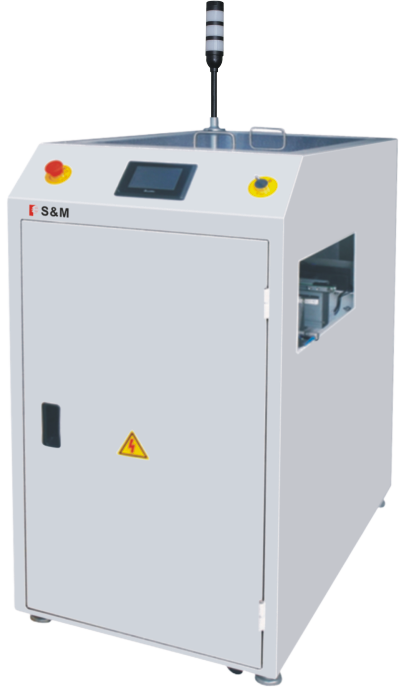
The real problem is not loading boards. It is line rhythm.
A PCB loader should not become the small machine that slows down the whole SMT line. The buyer needs stable transfer, easy magazine handling, clear SMEMA communication and a configuration that matches the actual factory layout.
Problems this page should prevent
- Thin boards can bend during standard feeding.
- Surface-sensitive boards need less mechanical contact.
- High-value assemblies make one damaged board expensive.
- The loader must protect the board while still keeping line rhythm stable.
Why this model is useful
- Vacuum suction loading supports delicate board handling.
- 50 × 50 – 500 × 550 mm PCB range covers standard sizes.
- 0.4 – 4.0 mm PCB thickness range supports thinner boards.
- Vacuum zone layout can be confirmed by board size and surface condition.
What to send before quotation
PCB size, board thickness, magazine size, board weight if relevant, line direction, conveyor height and one photo or sketch of the station position.
Why choose S&M instead of a generic PCB loader supplier?
One team checks the handling line
S&M supplies loaders, unloaders, buffers and conveyors. That reduces interface mismatch and supplier blaming when stations do not run smoothly together.
Configuration before quotation
We check whether a standard model fits first. If your board or layout needs another loader type, we tell you before quoting the wrong machine.
International-line expectations, local-price structure
For standard PCB handling stations, many factories do not need international-brand pricing. They need stable transfer, clean integration and fast response.
Verified technical specifications
The table keeps verified parameters from the current S&M product page. Final configuration still depends on PCB size, layout and production rhythm.
| Loading Method | Vacuum suction |
| PCB Size | 50×50 – 500×550 mm |
| PCB Thickness | 0.4–4.0 mm |
| Interface | SMEMA compatible |
| Conveyor Height | 900 ± 20 mm |
| PCB Size (Min) | 50 × 50 mm |
| PCB Size (Max) | 500 × 550 mm |
| Power Supply | 220V / 50Hz |
| Rail Adjustment | Manual width adjustment or motorized width adjustment |
| Signal / Control | Tower light, buzzer alarm, and custom handshake integration on request |
| Machine Direction | Left-to-right or right-to-left line direction to match plant layout |
| Vacuum Handling | Vacuum zone layout and suction strength options based on PCB type |
When to choose it — and when not to
Choose this model when
Choose vacuum when board handling risk is the buying trigger: thin PCB, flexible PCB, surface sensitivity or high-value production.
Do not choose it blindly when
Do not choose vacuum just because it sounds advanced. For standard rigid PCBs, inline or side-entry loading may be simpler and more cost-effective.
Before you buy, check these points
- PCB size range and future product size changes.
- PCB thickness, board weight and surface sensitivity.
- Magazine size, magazine capacity and access direction.
- Left-to-right or right-to-left line direction.
- Conveyor height, SMEMA signal and upstream/downstream station position.
- Whether you also need matching unloader, buffer or conveyor.
Related SMT equipment
Use these links to match the loader with downstream board handling and soldering equipment.
Check if your PCB really needs vacuum loading
Send your PCB size, magazine size, board thickness and line direction. If you have a station photo or sketch, mention it in the form and we will ask for it by email after submission.
Get a loader recommendation
We usually reply within 1 business day. Your information is used only for quotation and technical communication.
FAQ
Can S&M match this with my current line?
Yes. Send conveyor height, line direction and SMEMA requirements. The loader can be matched with existing SMT equipment when dimensions and signals are clear.
Can you customize size or direction?
Yes, depending on board size, magazine format and line layout. We confirm the configuration before quotation instead of forcing one standard model.
What makes the quote faster?
Send PCB size, thickness, magazine size, target UPH, line direction and a photo of the station. This avoids back-and-forth and wrong configuration.