
UV and thermal curing equipment for SMT production
Curing Ovens for SMT Adhesive, Coating and UV Process Control
S&M curing ovens are built for factories that need stable adhesive curing, conformal coating curing, UV exposure, clean process control, and practical line integration. The range covers tray-type vertical curing ovens, chain-type inline curing ovens, UV curing conveyor lines, and custom curing configurations.
What Is a Curing Oven?
A curing oven controls heat, airflow, UV exposure, or a combined process to cure adhesives, coatings, potting materials, and other electronics materials after dispensing or coating.
In SMT production, curing is not just heating a board. The oven must control temperature uniformity, cycle time, conveyor or tray handling, exhaust, and process cleanliness so the result is repeatable across different boards and shifts.
What Is a Curing Oven Used For?
SMT Adhesive Curing
For glue, underfill, or bonding materials after dispensing, especially when the process needs stable temperature and controlled cycle time.
Conformal Coating Curing
For drying or curing protective coatings on electronics used in industrial, automotive, power, and outdoor environments.
UV Curing Process
For UV-sensitive adhesive or coating processes that need controlled UV wavelength, exposure distance, and conveyor speed.
Different Types of S&M Curing Ovens
This section is based on real S&M product pages. It does not include product types that are not currently listed on the website.
KL Tray-Type Vertical Curing Ovens
For batch-style curing with vertical layout, controlled hot air recirculation, and flexible PCB width options.
KT Chain-Type Vertical Curing Oven
For continuous inline adhesive curing and thermal processing with chain-type transport.
PTC UV Curing Conveyor Line
For UV curing applications using 395 nm UV exposure and conveyor-based handling.
Custom Curing Oven
For special curing mode, working width, conveyor layout, UV lamp configuration, exhaust, or utility requirements.
Thermal / UV / Combined
Selected KL pages list UV, thermal, or combined curing as optional configurations. Confirm the correct curing mode before quotation.
Selection Logic
Choose by material, PCB size, cycle time, curing temperature, UV wavelength, line layout, and whether the process is batch or inline.
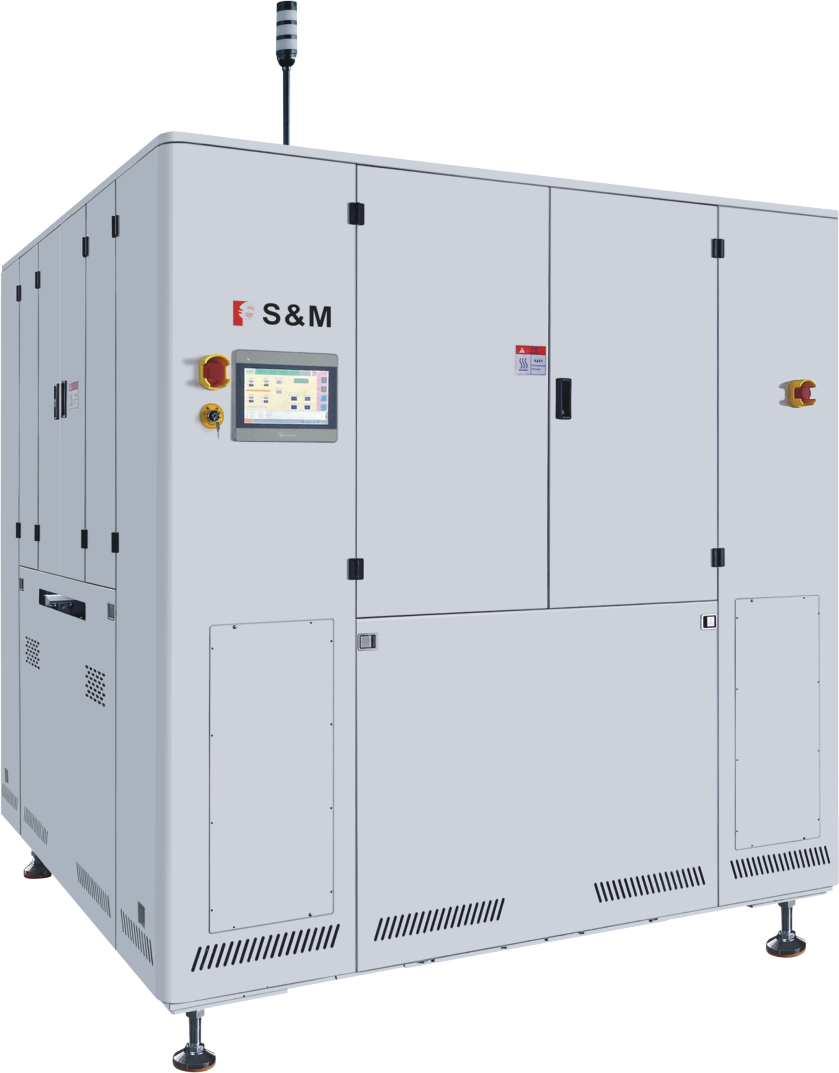
KL series tray-type vertical curing oven for SMT adhesive and coating curing.
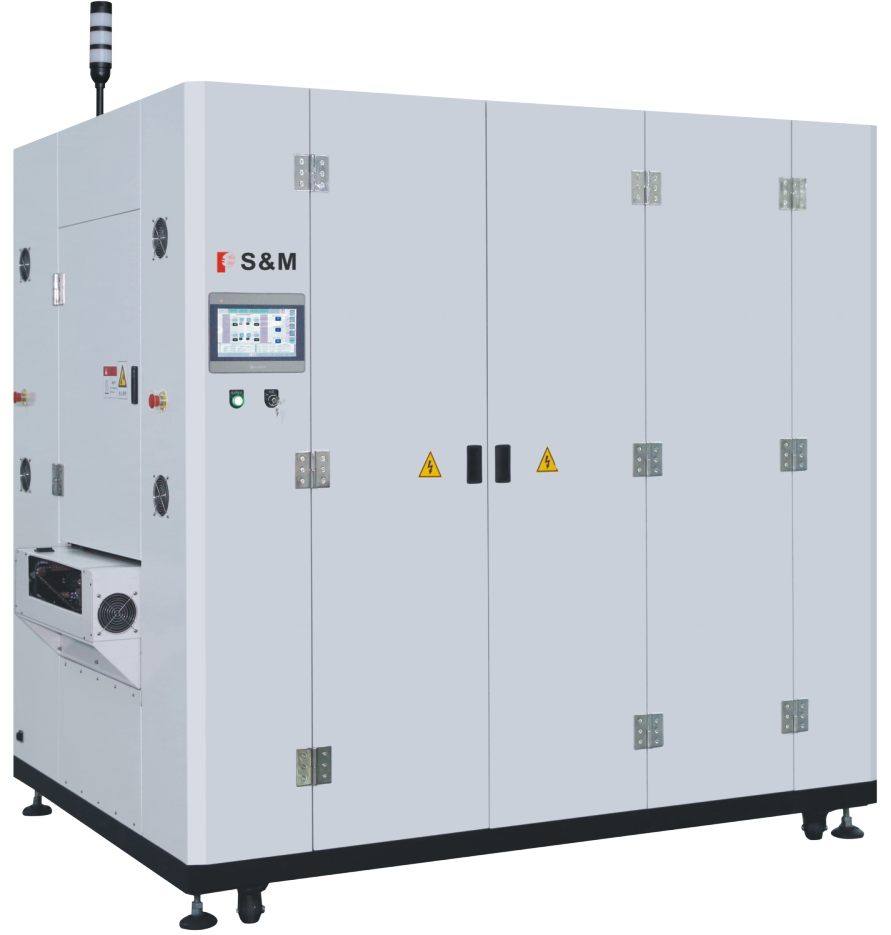
KT series chain-type vertical curing oven for inline thermal processing.
Tray-Type vs Chain-Type vs UV Curing Line
| Requirement | Tray-Type KL Series | Chain-Type KT Series | PTC UV Conveyor Line |
|---|---|---|---|
| Best for | Batch curing and vertical space saving | Continuous inline adhesive curing and thermal processing | UV adhesive or coating curing |
| Typical model | KL-460 / KL-600 / KL-650 | KT-400 | PTC-460UV-1000 |
| Process driver | PCB size, tray capacity, temperature uniformity | Line integration, conveyor handling, cycle time | UV wavelength, exposure distance, lamp power, speed |
| Decision point | Choose when batch handling is acceptable or preferred | Choose when inline flow is required | Choose when the material requires UV curing |
How to Choose a Curing Oven
Material and Process
- Adhesive, coating, underfill, or UV material
- Required temperature range
- UV wavelength and exposure time
- Allowed temperature deviation
PCB and Handling
- Maximum PCB size
- Board weight and component height
- Tray, chain, or conveyor handling
- Rail width adjustment range
Line Integration
- Batch or inline production
- Target cycle time
- Conveyor height and direction
- Exhaust, cooling, SMEMA, MES needs
Selection Table
| Customer Requirement | Recommended S&M Product Group | Model Options |
|---|---|---|
| Compact batch curing for boards up to 460 × 460 mm | Tray-type vertical curing oven | KL-460 |
| Medium-to-large PCB curing with 600 mm width | Tray-type vertical curing oven | KL-600 |
| Batch curing and conformal coating with 650 × 460 mm board size | Tray-type vertical curing oven | KL-650 |
| Continuous inline adhesive curing and thermal processing | Chain-type vertical curing oven | KT-400 |
| UV adhesive or coating curing with 395 nm exposure | UV curing conveyor line | PTC-460UV-1000 |
| Special curing mode, conveyor, UV lamp, width, or utility requirement | Custom curing oven | Custom Curing Oven Solutions |
S&M Curing Oven Models
KL-460
Tray-style vertical curing oven with 4-zone hot air recirculation, PID closed-loop control, and 460 × 460 mm max PCB size.
KL-600
Tray-style vertical curing oven for medium-to-large boards, 650 × 600 mm max PCB size, and 65 kW installed power.
KL-650
Tray-type vertical curing oven for SMT adhesive curing and conformal coating, with 650 × 460 mm max PCB size.
KT-400
Chain-type vertical curing oven for continuous inline adhesive curing and thermal processing.
PTC-460UV-1000
UV curing conveyor line using 395 nm UV exposure, 50–80 mm installation height, and conveyor-based handling.
Custom Curing Oven
Custom curing mode, working width, conveyor configuration, utilities, UV lamp configuration, cooling, exhaust, SMEMA, or MES options.
Key Technical Data Confirmed From Product Pages
| Model | Confirmed Data | Notes |
|---|---|---|
| KL-460 | 4-zone hot air recirculation; PID closed-loop control; 2250 × 1650 × 2150 mm; room temp – 200°C; PCB max 460 × 460 mm; rail 80–460 mm; 52 kW. | Optional UV / thermal / combined curing, cooling/exhaust, SMEMA, MES. |
| KL-600 | 4-zone hot air recirculation; PID closed-loop control; 2250 × 1800 × 2150 mm; room temp – 200°C; PCB max 650 × 600 mm; rail 80–600 mm; 65 kW. | For medium-to-large PCB curing. |
| KL-650 | Tray-type vertical curing oven; PCB max 650 × 460 mm; rail 80–460 mm; auto width adjustment; conveyor height 950 ± 30 mm; installed power 65 kW. | For batch adhesive curing and conformal coating. |
| KT-400 | Chain-type vertical curing oven; PCB max 500 × 460 mm; rail 100–460 mm; auto width adjustment; conveyor height 950 ± 30 mm; installed power 70 kW. | For continuous inline curing. |
| PTC-460UV-1000 | AC single-phase 220V, 50/60Hz; max 300VA; 395 nm UV wave band; installation height 50–80 mm; duration approx. 15 s; 0.8 m lamp ~800 mW/cm². | UV-LED point light source / surface light source listed on page. |
| Custom curing oven | Curing mode, working width, conveyor configuration, utilities, UV/thermal/combined curing, conveyor width/rail, and lamp configuration defined per project. | Use when standard KL/KT/PTC models do not fit the process. |
Exact configuration can change by order. For quotation, confirm material type, curing temperature, UV wavelength, exposure time, PCB size, cycle time, conveyor height, line direction, exhaust requirement, voltage, and destination country.
Where It Fits in the Production Line
Typical dispensing and curing flow:
For UV process:
Common Problems This Equipment Solves
- Adhesive or coating curing result changes between shifts.
- Manual or small-batch curing cannot match production demand.
- Temperature deviation causes unstable bonding or coating quality.
- UV exposure distance, wavelength, or curing time needs tighter control.
- Batch curing and inline curing requirements are mixed across products.
- The curing step needs to match loaders, conveyors, buffers, exhaust, inspection, and unloaders.
Why Choose S&M for Curing Equipment?
S&M manufactures SMT soldering equipment and PCB handling equipment in-house. That matters because curing equipment must match the whole line, not only the material datasheet. Board size, conveyor height, flow direction, exhaust, cycle time, and upstream/downstream equipment all affect the final result.
- Real model range covering tray-type vertical curing, chain-type inline curing, UV conveyor curing, and custom curing solutions.
- Verified KL models with 4-zone hot air recirculation and PID closed-loop control.
- Options for UV, thermal, or combined curing on selected configurations.
- Integration with PCB loaders, unloaders, conveyors, buffers, reflow ovens, and wave soldering equipment.
- International-quality build standard with local pricing and full in-house production.
FAQ
What is a curing oven used for in SMT production?
It is used to cure adhesives, coatings, underfill, or UV-sensitive materials after dispensing, coating, or assembly steps.
How do I choose between tray-type and chain-type curing ovens?
Choose tray-type when batch processing and vertical space saving are suitable. Choose chain-type when continuous inline flow and direct line integration are required.
When should I choose a UV curing conveyor line?
Choose a UV curing conveyor line when the material requires UV exposure, such as UV adhesive or UV coating. Confirm wavelength, exposure distance, lamp power, and process time.
What temperature range do KL curing ovens support?
KL-460 and KL-600 pages list room temperature to 200°C adjustable as the temperature range.
Can S&M customize a curing oven?
Yes. Custom curing solutions can be configured by curing mode, working width, conveyor setup, utilities, UV lamp configuration, cooling, exhaust, SMEMA, and MES requirements.
What information is needed for a quotation?
Send material type, curing temperature, UV wavelength if needed, exposure time, PCB size, target cycle time, line direction, conveyor height, exhaust requirement, voltage, and destination country.
Submit Your Curing Requirement Directly
Send your material type, PCB size, curing temperature, UV requirement, target cycle time and line layout. S&M will recommend a practical curing oven configuration for your production line.
Submit Your Requirement Here
Fill in the form below. Tell us your PCB size, process requirement, target UPH and destination country. Our team will respond within 1 business day.