
SMT equipment for semiconductor and MiniLED process control
Semiconductor packaging, MiniLED and high-density modules need tighter temperature control, low handling damage and a process path that protects yield before volume ramp.
Check My SMT Line ConfigurationView Products
What makes this application difficult?
In semiconductor and MiniLED applications, small process drift can become high rework cost. Voiding, warpage, fixture handling and temperature uniformity matter more than a generic line package.
Voiding and oxidation can limit yield
Vacuum or nitrogen reflow may be required when solder joint reliability is more important than machine cost.
Small boards still need stable transfer
MiniLED modules and compact carrier panels can be damaged by poor handoff between machines.
Process changes need repeatability
Engineering teams need equipment that can hold recipe repeatability across pilot runs and production batches.
Typical equipment path
A semiconductor or MiniLED SMT path usually starts with careful board loading, controlled reflow, cooling or buffer handling and unloading with minimal manual touch.
Recommended equipment for this line
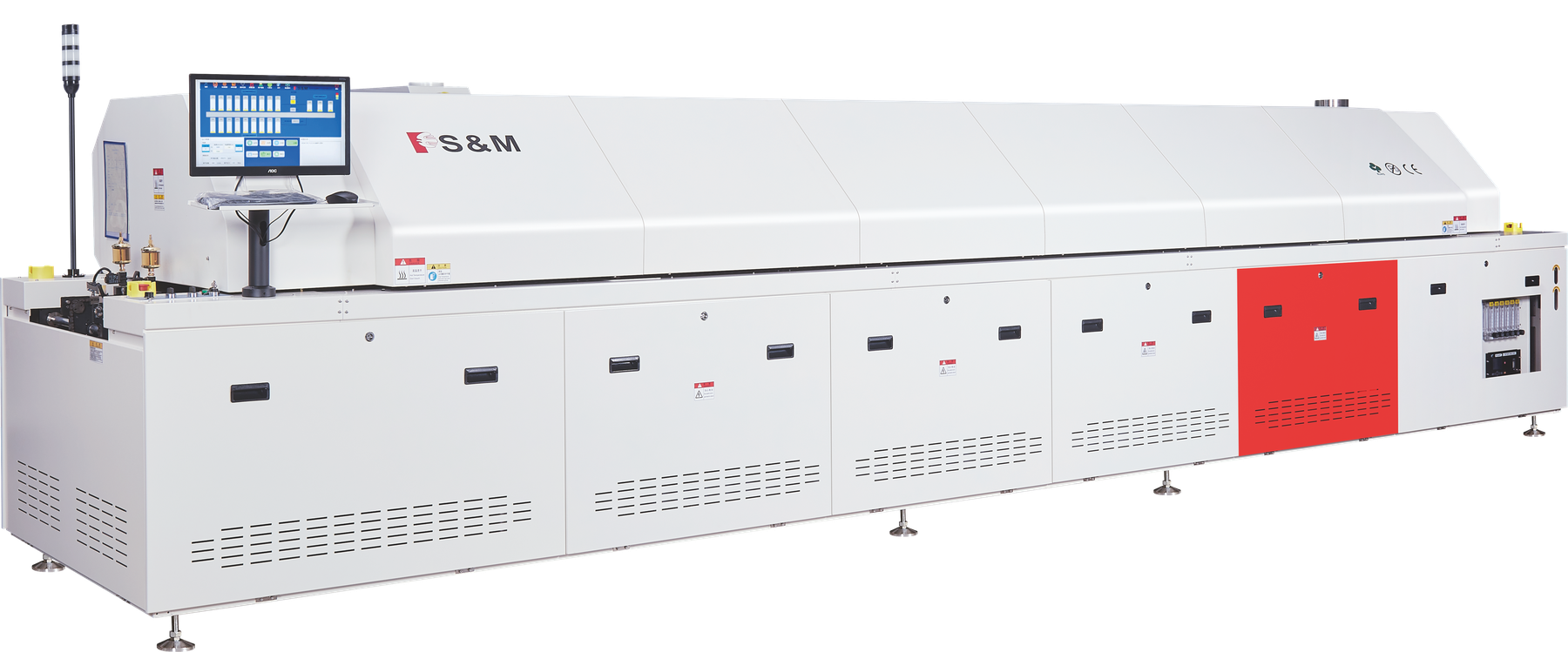
Vacuum Reflow Oven
Useful when void reduction and solder joint reliability are key process goals.
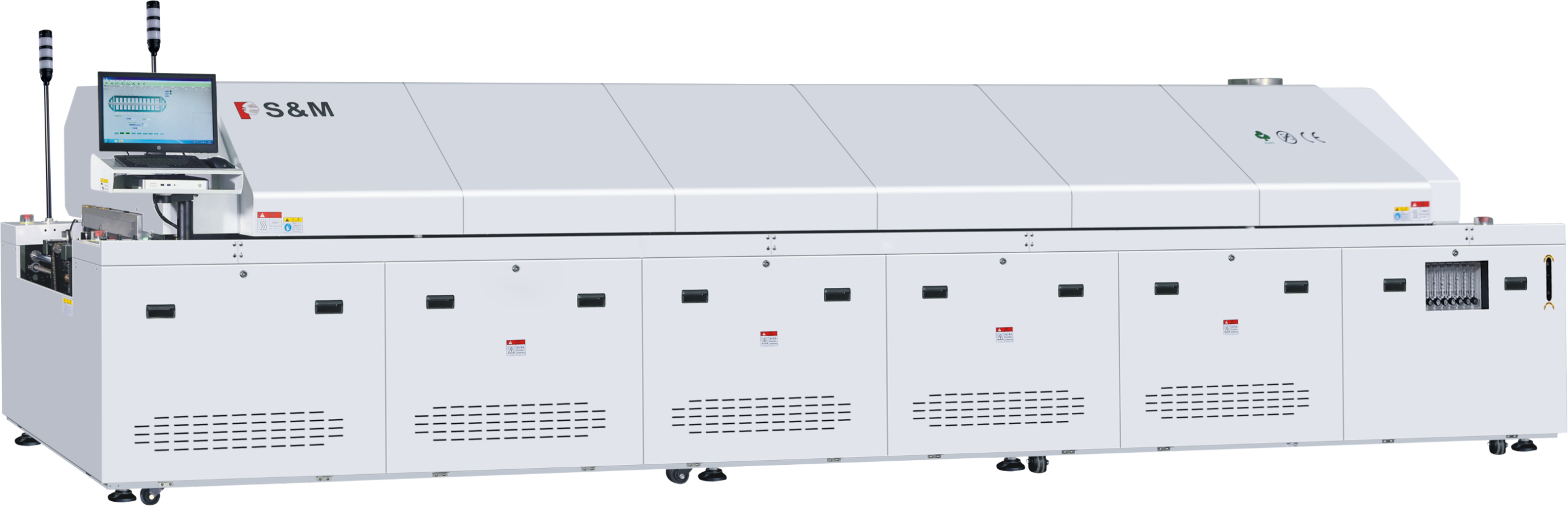
Nitrogen Reflow Oven
Supports oxidation control and a wider process window for sensitive soldering applications.
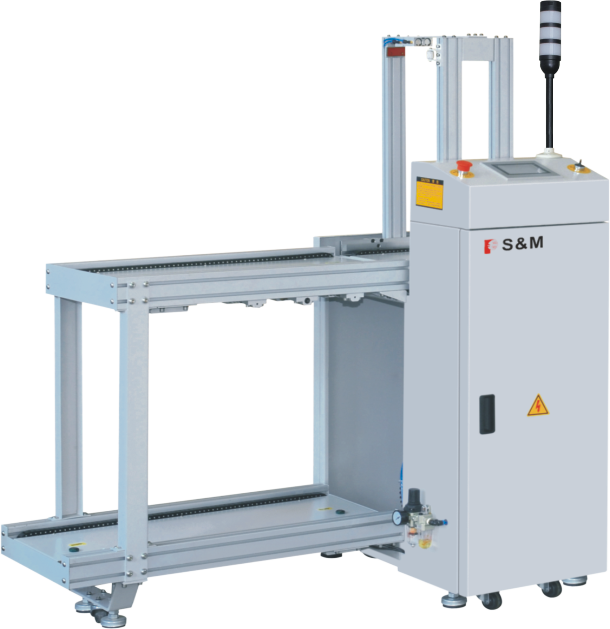
PCB Handling Modules
Reduces manual touch and keeps fragile boards moving at a stable rhythm.
How to choose the right configuration
| Decision point | What to check | Recommended direction |
|---|---|---|
| Board size and weight | Panel dimensions, carrier use, heavy components | Select loader, conveyor width and buffer type around the real board |
| Soldering risk | Oxidation, voiding, thermal mass, through-hole count | Choose air/nitrogen/vacuum reflow or wave/selective soldering |
| Line rhythm | Target UPH, changeover frequency, manual touch points | Use buffers, shuttle conveyors and stable transfer height to avoid bottlenecks |
Why EMS and OEM buyers use S&M for this application
Line fit, not isolated machines
S&M builds soldering equipment and PCB handling equipment in-house, so loader, conveyor, buffer, reflow, wave and curing stations can be matched around board size, takt time and factory layout.
International quality, local pricing
For teams comparing imported brands with domestic suppliers, S&M gives a practical middle path: stable equipment, faster communication and a budget level that fits multi-line expansion.
Clear handoff after installation
Procurement, engineering and production teams get a configuration discussion before ordering, reducing supplier handoff issues when the line starts running.
Buyer checklist before asking for a quote
- Board size range and maximum component height
- Expected UPH or cycle time target
- Single product or high-mix production
- Air, nitrogen or vacuum process requirement
- Through-hole soldering requirement
- Available line length and transfer height
- Preferred delivery schedule and installation support
Application FAQ
Do we need vacuum reflow?
If voiding is a key reliability risk, vacuum reflow should be evaluated. For less sensitive boards, nitrogen or air reflow may be enough.
Can the handling system support small boards?
Yes, but the board size, carrier method and transfer height must be confirmed before choosing loaders and conveyors.
Is this only for high volume?
No. Pilot and medium-volume lines also benefit from stable process control when yield risk is high.
Check a semiconductor or MiniLED equipment path
Send board size, process target, voiding requirement and carrier details. We will suggest a practical configuration.
Send your board size, product type, expected UPH and factory layout. We will suggest a practical equipment path instead of pushing a fixed package.