
Wave vs selective soldering: choose by board mix, throughput and risk
Both processes can solder through-hole components, but they fit different production situations. The right choice depends on connector layout, masking risk, batch size, line rhythm and how much rework your factory can tolerate.
Fast answer
Choose wave soldering when throughput matters
Wave soldering is usually the better fit for boards with many through-hole joints, stable layouts and higher volume. It keeps the soldering step fast and consistent when masking and board design are suitable.
Choose selective soldering when the board is mixed and sensitive
Selective soldering is better when only a few through-hole points need soldering or when nearby SMT components make full wave contact risky.
Do not decide by machine price alone
The cheaper machine can become more expensive if it creates masking labor, rework, solder bridges or a bottleneck in the line.
Comparison table
| Decision point | Wave soldering | Selective soldering |
|---|---|---|
| Best fit | Higher-volume through-hole or mixed-technology boards with suitable layout. | Boards with limited through-hole points, tight SMT spacing or process-sensitive areas. |
| Throughput | Usually faster for many joints across the board. | Usually slower per board, but avoids unnecessary solder exposure. |
| Masking | May require pallets or masking if SMT parts are exposed. | Often reduces masking because solder is applied only where needed. |
| Risk | Bridging, insufficient solder, pallet design and thermal balance must be controlled. | Programming, nozzle access, cycle time and fixture stability must be controlled. |
| Cost logic | Lower cost per board when layout and volume fit. | Better cost when rework/masking risk is high or product mix changes often. |
Recommended S&M equipment paths
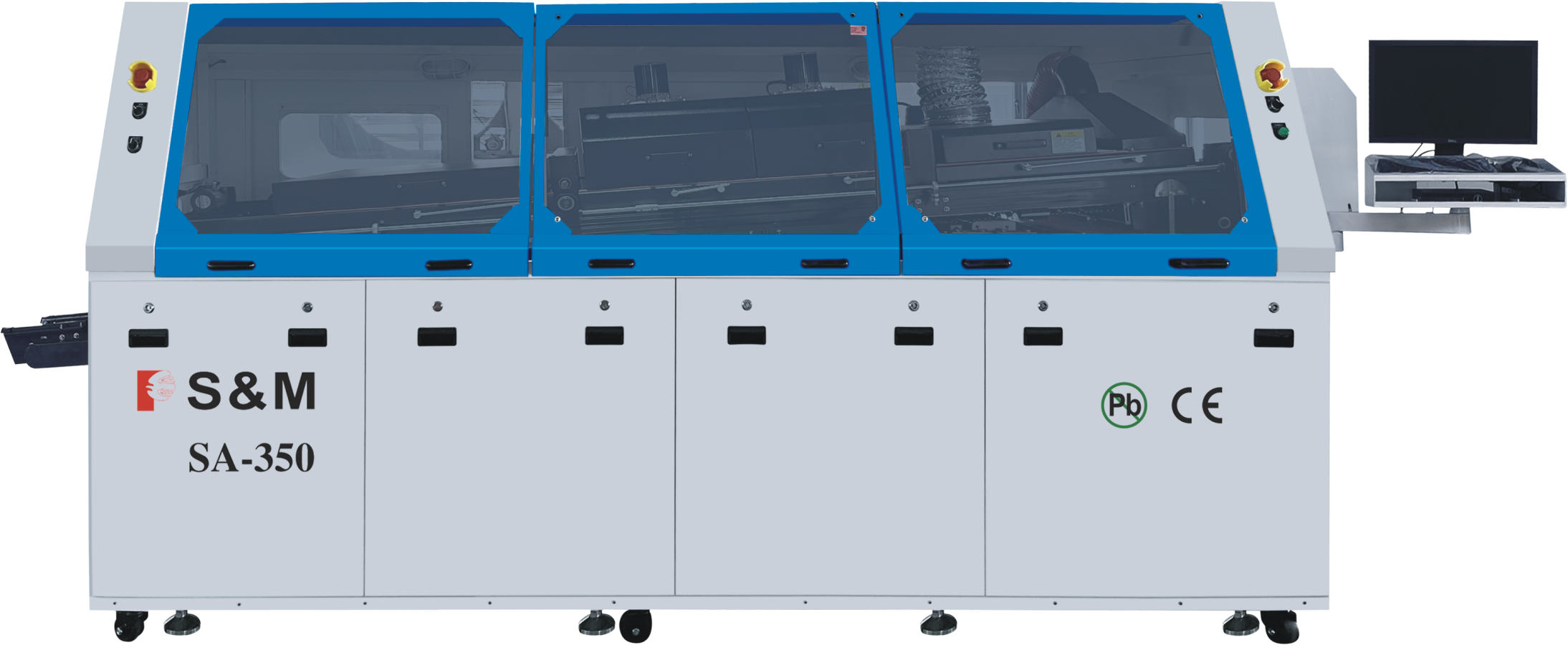
Wave soldering machines
For stable through-hole production where speed and repeatability matter.
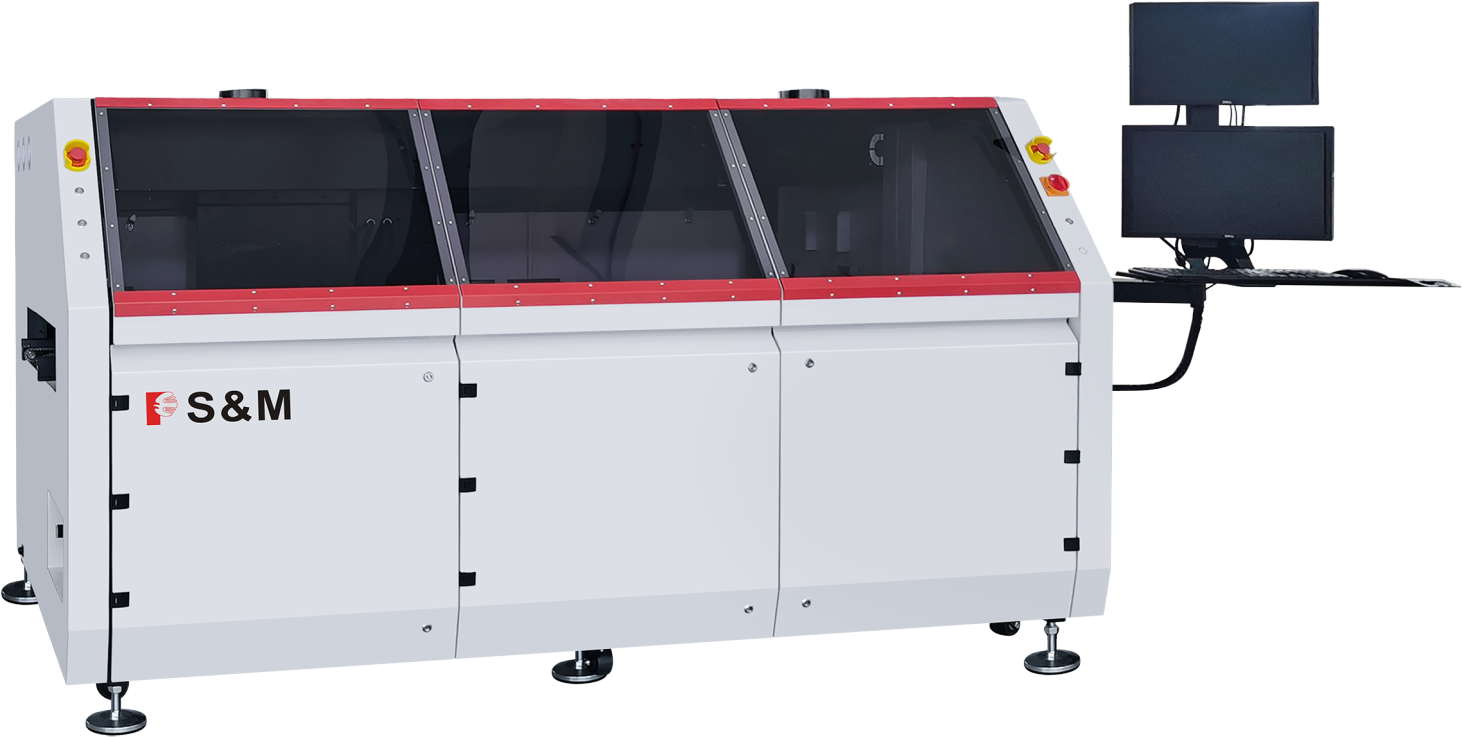
Selective soldering machines
For mixed boards where only local through-hole areas need soldering.
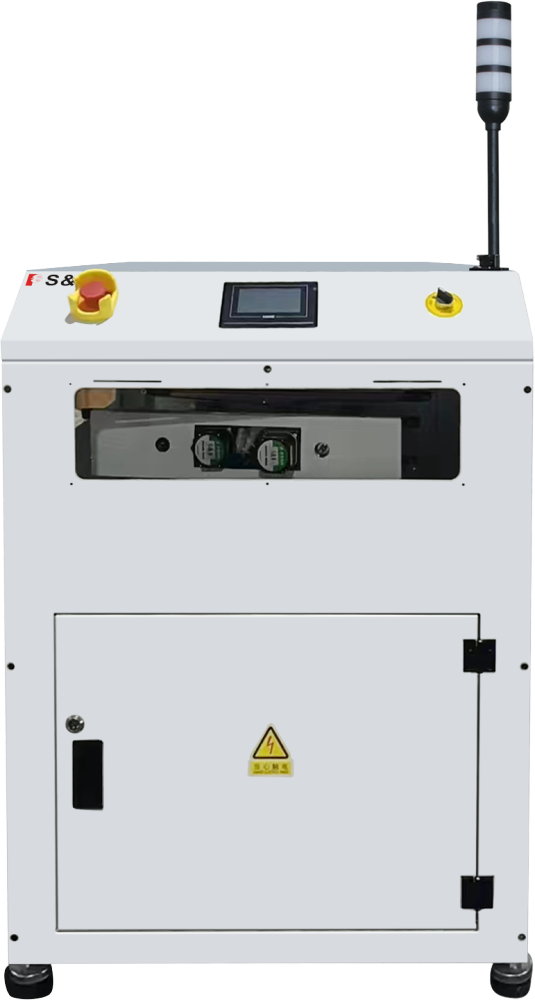
PCB handling around soldering
Use conveyors, loaders, unloaders and buffers to keep the soldering step from becoming the line bottleneck.
Questions to answer before quotation
- Board size, thickness and panel direction.
- Number and location of through-hole components.
- Nearby SMT components that may require masking or selective soldering.
- Target UPH and acceptable soldering cycle time.
- Lead-free or special solder process requirements.
- Available line length and transfer height.
FAQ
Is selective soldering always better?
No. It can reduce risk on complex boards, but for many joints and high volume, wave soldering can be faster and more economical.
Can one factory use both?
Yes. Many EMS factories use wave soldering for stable volume products and selective soldering for sensitive mixed boards.
What should I send for process advice?
Send board photos, connector locations, target UPH and whether current defects are bridging, insufficient solder or thermal-related.
Check my soldering process configuration
Send your PCB layout, through-hole component count and target output. We will suggest whether wave soldering, selective soldering or a combined process is the safer fit.
We reply with a practical process direction first, not a generic machine list.