
Published: 06 April 2026
Reading Time: 12 minutes
Reviewer: Simon Scrapes, Founder
Laser and Dot Peen Marking Machines Explained: Technology, Advantages, and Comparison
Introduction to Marking Machines for Industrial Applications
In the world of industrial manufacturing, marking machines play a key role that you might not hear about every day. But think about it—without them, tracing and tracking products would be a mess. They’re like the quiet players that ensure your smartphone or your car gets from the factory to you without a hitch.
Marking systems are becoming increasingly essential for industries like electronics manufacturing, especially with Surface Mount Technology (SMT) operations. Why? Because precision and traceability are huge deals. Isn’t it frustrating when things go missing or get mixed up? These systems help keep everything in line, enabling us to track products, comply with regulations, and even cut down on waste.
You might wonder what kinds of technologies we’re talking about here. Well, laser marking and dot peen marking are two major types. Laser marking is super precise and great for keeping everything neat and organized. On the other hand, dot peen marking machines are robust and durable—they’re like the hardworking cousins of the laser markers, perfect for industries needing tough, reliable marks.
Jace Liu is an experienced engineer specializing in Surface Mount Technology and precision manufacturing solutions. With over a decade of involvement in high-density electronic assembly, Jace brings expert insights into automation and quality control technologies.
Let’s dig into these technologies and see what makes them crucial for industries aiming for top-notch production efficiency.
Understanding Laser Marking Technology
Laser marking technology is pretty cool, and it’s becoming more popular in places where precision is key. This method uses lasers to make marks on materials. It’s like pinpointing details with light. You might wonder what marks it can create. Well, there’s engraving, lettering, or even barcodes.
There are different types of laser marking machines. Fiber lasers are top choice for metal. They’re good at engraving quickly. CO2 lasers are better for organic materials like wood or leather. And UV lasers work great with plastics, offering precise, clean marks.
The thing with laser marking is its accuracy, durability, and compatibility. Want to mark materials from metals to plastics? Laser marking’s got you covered. Plus, because it uses light, it’s non-contact, meaning no wear and tear.
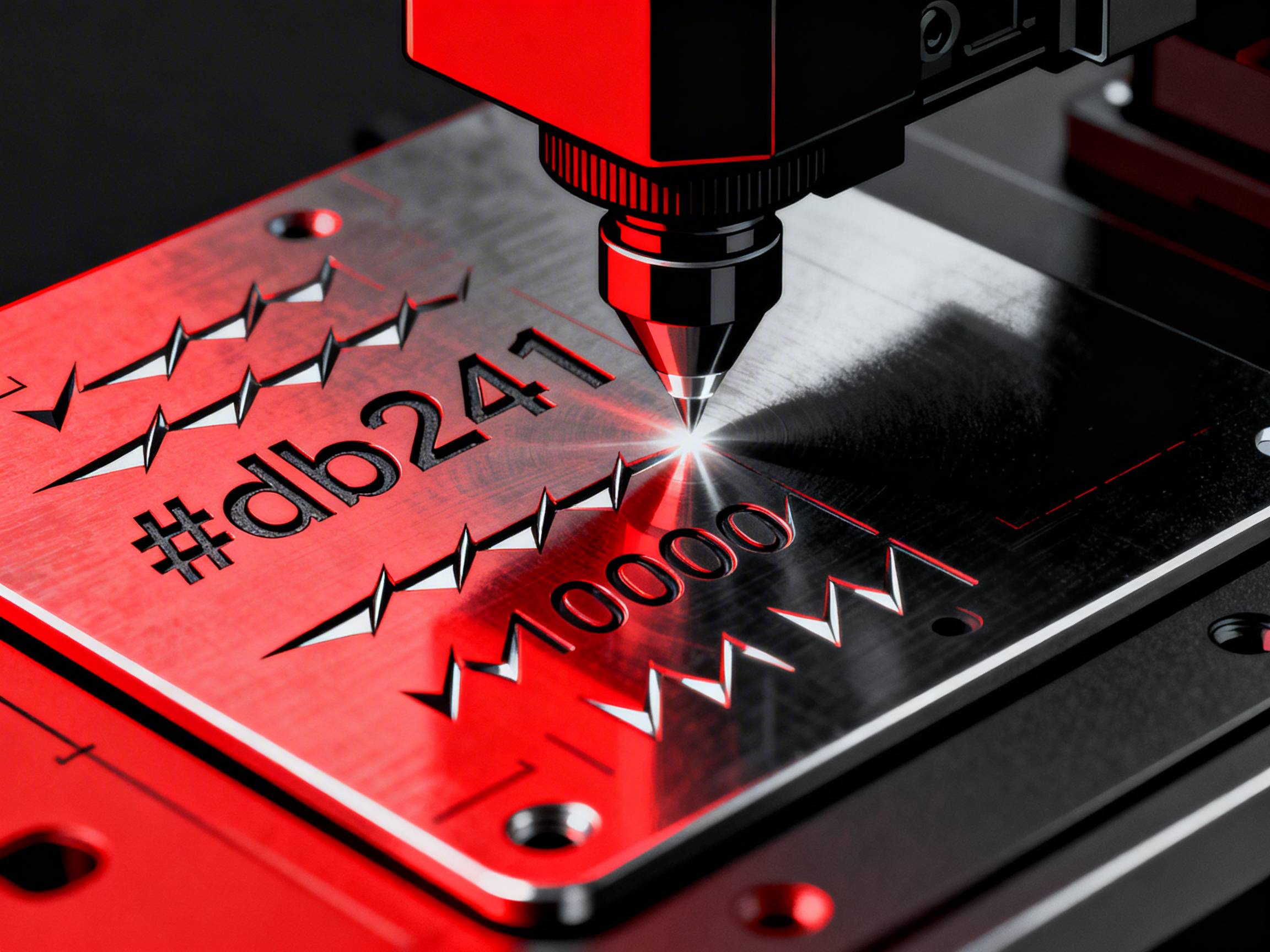
Laser marking also scores high on durability. Marks last long because they’re resistant to chemicals and wear. They’re used in everything from electronic gadgets to military devices.
And guess what? They fit perfectly in modern production lines, making automation and integration smoother.
Laser marking machines are just one piece of the puzzle, helping industries aim for the best quality.
A Guide to Dot Peen Marking Technology
Dot peen marking might not sparkle like lasers, but this technology gets the job done in its own dependable way. Instead of light beams, dot peen systems use mechanical force to indent marks on materials. A pin strikes the surface with consistent pressure, creating permanent marks like serial numbers, barcodes, or even logos.
This method is often chosen because it’s rugged. Manufacturers love it for its ability to handle tough materials like metal, even when the surface is uneven or coated. It’s perfect for challenging environments like automotive and aerospace industries where durability comes first.

What’s really neat is how cost-efficient dot peen systems can be. These machines provide lasting marks without relying on consumables like ink or chemicals. Plus, their affordability makes them a go-to for businesses running on tighter budgets.
Pro Insight: Balancing cost and precision in selecting a marking solution.
Beyond affordability, dot peen technology shines in traceability. With electronics manufacturing, for example, traceable marks on circuit boards or components mean fewer errors and easier compliance with strict regulations. Imagine knowing exactly where and when each piece was made—it’s like having a GPS for your parts!
In fact, we’ve seen how dot peen markers thrive in high-pressure sectors. From automotive parts to aerospace components, their simplicity works wonders for teams that value reliability over thrills.
While it may not offer the whisper-quiet operation or super-polished marks of laser machines, dot peen marking delivers where it matters for industrial operations: on reliability and cost-effectiveness.
Key Factors in Choosing Between Laser and Dot Peen Marking Machines
Choosing a marking machine means thinking about several key things, like what kind of stuff you’re marking, how fast you need to go, and what matters for the environment. Laser machines, like fiber laser marking machines, work well with different materials like metals and plastics. They’re quick too, offering high-speed marking that fits well in automated production lines. But they can be pricey.
On the other hand, dot peen marking machines shine with their toughness, especially when the surface is rough or coated. They’re more budget-friendly, offering reliability without using extra stuff like ink. Plus, they’re great for environments where durability is crucial.
Both types of machines have their pluses and minuses. Lasers are precise and neat, but they need careful maintenance to keep performing well. Dot peen machines need less TLC, making them ideal for industries where robustness is key.
From Our Experience: How S&M Co. Ltd. has implemented marking technologies to ensure defect-free production.
For folks in high-density electronics assembly, like Surface Mount Technology, laser marking might be the winner for precision. But if budget is tighter and speed is less important, dot peen machines offer a solid solution.
Thinking about cost, precision, and maintenance helps in finding the right machine. They’re both vital in industries like electronics manufacturing to keep track of parts and maintain quality.
Laser marking offers precision; dot peen is about durability and cost-effectiveness. The choice depends on what you need.
The Role of Marking Machines in SMT and Related Industries
When it comes to Surface Mount Technology (SMT) and high-density electronic assembly, marking machines are the unsung heroes. They ensure every part, from the tiniest resistor to larger components, is traceable and in compliance with strict international standards. Without them, keeping a production line efficient and error-free would be a lot tougher.

Why Marking Matters in SMT
In SMT production, precision is key. Here’s where marking solutions like laser marking and dot peen machines really shine. These systems apply critical identifiers—such as serial numbers, barcodes, or QR codes—directly onto components. This ensures traceability all the way through the supply chain. For industries like consumer electronics or military manufacturing, this level of accuracy means better quality control and fewer defective products.
Take for example how marks on printed circuit boards (PCBs) allow teams to trace every step of their creation. If an error is detected, it’s easy to pinpoint exactly where and when something went wrong. This reduces waste and avoids costly rework or recalls.
From Our Experience: We’ve seen how S&M Co. Ltd. used marking technologies to reduce defects in even their most complex SMT lines. By integrating these systems, production efficiency went up, and defect rates plummeted—a win-win for everyone involved.
Examples of S&M Co. Ltd.’s Application
S&M Co. Ltd.’s products, including lead-free reflow ovens and wave soldering machines, operate at the forefront of high-precision electronics manufacturing. They maintain compatibility with marking technologies to meet the needs of industries like semiconductors and military manufacturing. For example, during a production cycle for semiconductor components, laser marking ensures that every batch is identifiable and meets environmental compliance standards. This type of integration strengthens both quality and reliability.
Enhancing Compliance and Automation
Marking technology doesn’t just improve quality; it also ensures compliance with industry regulations. For example, manufacturers working on military electronics might use fiber laser marking because the marks are resistant to wear and even extreme environments. Automated systems can scan these marks in real time, streamlining inspection processes.
Automation is a big deal in 2026. Marking technology integrates so seamlessly into SMT production lines, it eliminates lots of manual steps, making teams more productive and less prone to errors. Plus, with the rise of AI-supported automation, companies can now customize and monitor their marks more precisely than ever.
Why Now?
By 2026, industries are racing to modernize their production lines to keep up with growing demands. Whether it’s the smartphone sector or advanced military tech, the reliance on efficient and sustainable solutions is stronger than ever. And marking machines are right at the center of this transformation.
Future Trends in Marking Machine Technology
As we move further into 2026, marking machine technology is embracing new trends that are set to revolutionize industries. One of the biggest shifts is the emergence of AI-driven marking processes. Imagine smarter machines that not only mark but optimize every move. AI helps in making processes faster and more precise, practically eliminating errors. Pretty exciting, right?
Automation is another game changer. Marking machines are growing more intelligent, taking over mundane tasks and allowing workers to focus on more important things. This level of automation boosts efficiency and productivity across production lines.
But there’s a green side too. Sustainable, environmentally-friendly technologies are in the spotlight. Lead-free solutions are becoming crucial for manufacturers looking to reduce their environmental footprint. Keeping things eco-friendly isn’t just a trend; it’s becoming a necessity.
Customization is also on the rise. Industries need solutions that fit their unique needs, and modern marking machines are starting to offer more flexibility. Whether it’s specific materials or exclusive designs, manufacturers can tweak processes to suit their goals perfectly.
These advancements are no longer visions; they’re happening now. Companies are adapting and integrating these trends to stay ahead in a competitive environment.
By embracing these innovations, industries are setting the stage for a more efficient and sustainable future.
Conclusion: Finding the Right Marking Machine for Your Operations
Both laser marking and dot peen marking machines serve unique purposes, and choosing the right one depends on your specific needs. Think about what you’re working with. Are your materials metal or plastic? Do you need high-speed precision? Or is durability and cost-savings your main goal? Laser machines provide unmatched precision and clean marking for high-tech applications, while dot peen machines bring toughness and affordability to the table.
From what we’ve seen, industries like SMT manufacturing benefit most from laser marking for precise and traceable results. But if you’re in a sector like automotive, where ruggedness matters more, a dot peen solution may be your best bet. Each option plays a key role in boosting production efficiency and enabling traceability.
If you’re unsure which to go for, consult the experts. Companies like S&M Co. Ltd. can help guide you toward the right marking solution for your production line. They specialize in ensuring that high-density electronics assembly stays efficient and error-free with the latest technologies.
Ready to enhance your marking systems? Take the next step by exploring tailored solutions that fit your operation’s needs. The right technology could make all the difference in driving precision, saving cost, and staying ahead in 2026.
Related SMT Equipment
Looking for equipment to support your manufacturing line? S&M offers a full range of SMT equipment:
- SMT Reflow Ovens — Nitrogen and air atmosphere, 8-15 zones, dual-track options
- Wave Soldering Systems — Standard and selective soldering, 350-610mm tunnel
- PCB Loaders & Unloaders — Magazine-based automated board handling
- PCB Buffers — Storage and cooling buffers for production line balancing
- Curing Ovens — UV and thermal curing for coatings and adhesives
Contact our application engineers for equipment recommendations and line configuration support.