
Published: 09 April 2026
Reading Time: 11 minutes
Reviewer: Jace Liu, SMT Compliance Expert
How to Ensure Compliance, Quality, and Safety in SMT Equipment & Assembly
You know that feeling when you’re trying to check off every box, follow every rule, and still meet insane production deadlines? That’s life in the SMT (Surface Mount Technology) industry these days. Compliance, quality, safety—it all matters, but balancing them can feel like juggling while riding a bike uphill. And in 2026, the stakes have only gotten higher.
Why? Because regulations like RoHS and REACH keep evolving, factory automation is speeding ahead, and sustainability is no longer just a “nice-to-have.” It’s a business necessity. So how do you make sure your SMT operations stay ahead of this curve? Let’s dig into the must-knows for compliance, quality, and safety in today’s manufacturing environment.
Jace Liu is an expert in electronics manufacturing technology, specializing in SMT equipment compliance and assembly processes. With over a decade of experience working with global OEMs and EMS providers, Jace brings in-depth knowledge of quality control systems, regulatory certifications, and operational efficiency to the field.
Why SMT Compliance, Quality, and Safety Matter
Let’s break it down. Compliance makes sure you’re following laws like RoHS and REACH to avoid fines and product bans. Quality guarantees you’re delivering reliable products without crazy production delays. And safety? Well, that keeps your employees safe and your company out of lawsuits. Simple enough, right?
Actually, it gets complicated fast.
Rising Challenges for SMT Manufacturers

By 2026, manufacturers face intense pressure. Regulatory updates—like the EU AI Act—keep shifting product specs. At the same time, companies juggle increasing demands for speed, cost efficiency, and sustainability. Here’s what you’re up against:
- Changing rules: Whether it’s stricter traceability requirements or extended producer responsibilities, SMT manufacturers need to adapt. Staying compliant is non-negotiable.
- Sustainability pressures: Regulations now include more than just chemical bans, like those in RoHS and REACH. Customers expect eco-friendly processes or risk losing business.
- Cybersecurity concerns: Operational Technology (OT) systems in production lines are a growing target for cyberattacks. Forgetting this can compromise compliance and quality.
TIP: “RoHS and REACH certifications aren’t just checkboxes anymore. They define how you design your systems and your supply chain. Prioritize them early.”
Key Standards You Can’t Ignore
There’s no shortcut here—these standards will make or break compliance for SMT assembly:
- RoHS & REACH: These restrict harmful substances in electronics. Failure? It’s goodbye to the EU market.
- IPC-A-610 & J-STD-001: These benchmarks define quality in soldering and materials.
- ISO 9001: A global standard for quality management, required for many manufacturing contracts.
Meeting these is critical, especially if your business depends on global markets like Europe, the US, or Asia. Ignoring compliance now means losing your edge later.
Environmental and Safety Practices
Balancing environmental sustainability and workplace safety in SMT (Surface Mount Technology) assembly isn’t just about following rules. In 2026, manufacturers are under pressure to embrace eco-friendly materials and ensure rock-solid safety protocols to stay competitive and responsible.
Eco-Friendly Production Materials
Companies are increasingly adopting materials that minimize environmental harm. For instance, lead-free solder is now a requirement under RoHS standards. But it’s not just about regulatory compliance. Using sustainable materials is also a business strategy since many customers now demand eco-friendly products. Plus, choosing ethical suppliers can boost a brand’s reputation.
Pro Insight: “Integrate eco-friendly solutions into your production line early. It helps your business stay ahead of stricter regulations and builds customer trust.”
Circular Economy Models
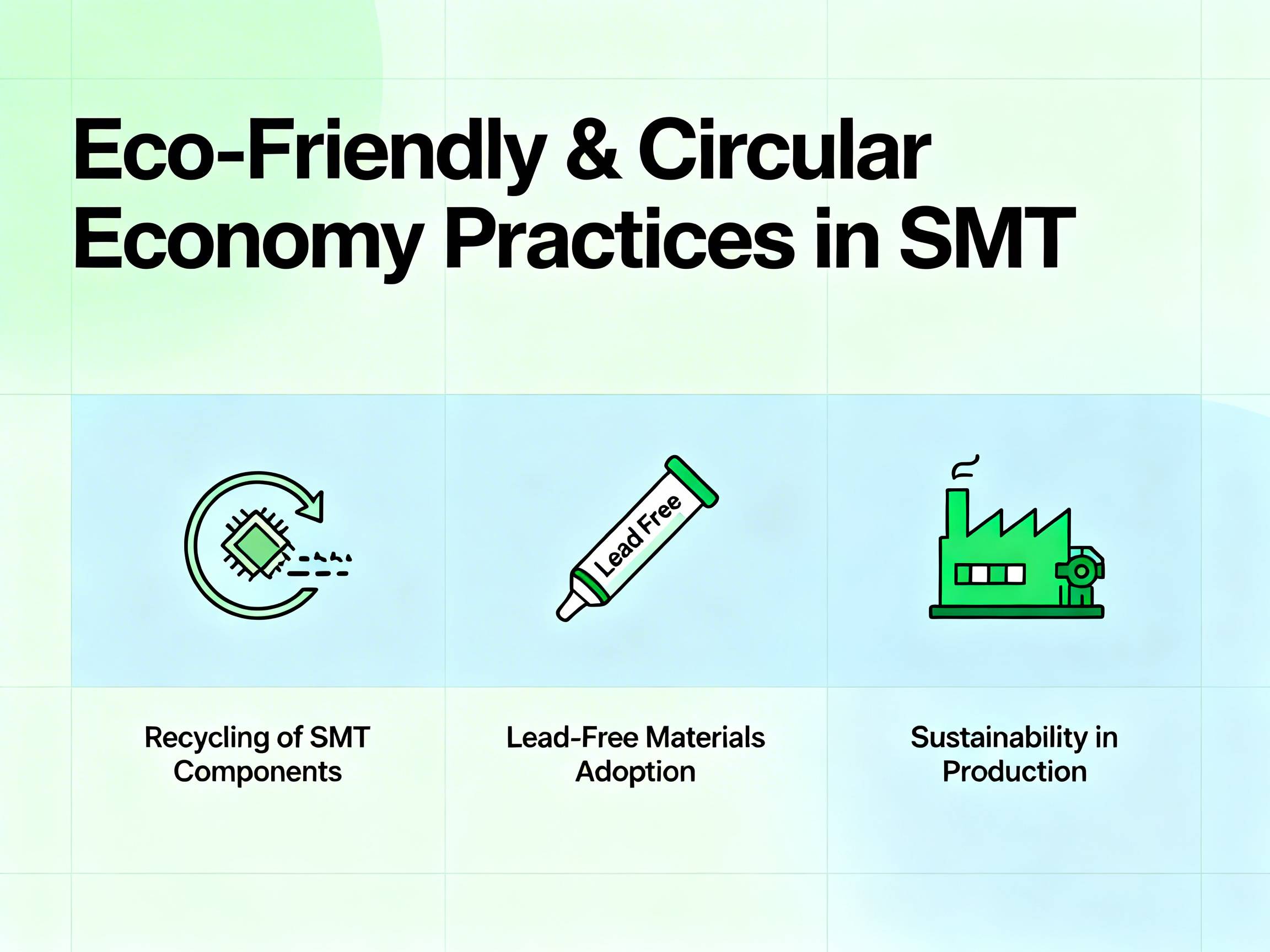
SMT manufacturers in 2026 are rethinking waste. Instead of generating unnecessary byproducts, companies are turning to circular economy practices. This means incorporating processes like recycling PCB (Printed Circuit Board) materials and reusing components wherever possible. It helps reduce costs in raw material procurement too. For instance, a factory could reclaim defective boards, extract usable parts, and recycle the rest.
Let’s be honest: adapting these methods isn’t always easy. But once set up, they lead to both cost and environmental benefits.
Safety Practices That Matter
Safety isn’t negotiable in electronics assembly. Proper machine guarding, regular operator training, and advanced ventilation systems are just the start. It’s also crucial to use non-toxic materials and monitor for potential hazards like ESD (Electrostatic Discharge) risks.
Accidents in SMT production lines not only risk employees’ well-being but can also halt operations entirely. To avoid this, companies are adopting technologies that automate hazardous tasks and provide real-time monitoring for anomalies.
Here’s an example: Sun and Mountain SMT’s advanced reflow ovens include safety features like temperature tracking and emergency shutdown systems. This allows for safer operations without sacrificing productivity.
Pro Insight: “Automating safety checks can spare you from costly delays in production. Use software to track real-time hazards, especially for high-volume operations.”
Adopting eco-friendly practices and ensuring workplace safety are more than checkboxes—they’re smart investments for SMT manufacturers. These efforts strengthen compliance with global standards and build trust with both customers and employees.
Continuous Improvement Systems in SMT
You know when you think you’ve nailed a process, but then changes happen? That’s the reality for SMT manufacturers striving to stay on top through continuous improvement systems.
Trends in Automation and Precision
Automation has entered a new phase in 2026. SMT equipment now features AI-driven precision improvements, which means less human error and faster production times. Companies like Sun and Mountain SMT lead the way with sophisticated reflow ovens that offer real-time data monitoring and precision temperature controls.
Expert Tip: “Invest in AI-enhanced equipment to future-proof your production line, particularly for high-volume operations.”
Implementing Continuous Quality Improvement
Continuous quality improvement systems are crucial in enhancing process efficiency and output quality. In 2026, these systems include the integration of modular MES for real-time performance tracking and proactive issue resolution.
Pro Insight: “Use MES systems that support IPC-CFX standards to reduce risks related to compliance and enhance operational transparency.”
Key Actionable Points for Compliance
Being compliant isn’t just about meeting regulations; it’s about maintaining a market edge. Here are some strategies:
- Regular Audits: Ensure your SMT assembly adheres to IPC and ISO standards with frequent audits.
- AI Integration: Implement AI tools for precision-driven monitoring and real-time quality checks.
- Eco-Initiatives: Strengthen eco-friendly practices to comply with increasing sustainability demands.
- Cybersecurity Updates: Upgrade security protocols annually to protect operational technology systems.
SMT manufacturers must adopt these improvement systems to meet regulatory standards effortlessly and stay ahead in an evolving market.
In 2026, the SMT industry isn’t just about keeping up. It’s about setting benchmarks for compliance, quality, and safety, as discussed. Staying ahead means embracing innovation like sustainability and AI-enhanced processes, ensuring your business isn’t just surviving but thriving in today’s competitive landscape.
“Navigating compliance, quality, and safety in SMT demands dedication, continuous learning, and a commitment to best practices. Whether it’s adopting new standards, training staff, or updating equipment, the journey requires adaptability and foresight.” – Jace Liu, SMT Compliance Expert
Sun and Mountain SMT’s innovative solutions aren’t just safe; they’re smart investments for ambitious manufacturers aiming to redefine their production efficiency.”
Related SMT Equipment
Looking for equipment to support your manufacturing line? S&M offers a full range of SMT equipment:
- SMT Reflow Ovens — Nitrogen and air atmosphere, 8-15 zones, dual-track options
- Wave Soldering Systems — Standard and selective soldering, 350-610mm tunnel
- PCB Loaders & Unloaders — Magazine-based automated board handling
- PCB Buffers — Storage and cooling buffers for production line balancing
- Curing Ovens — UV and thermal curing for coatings and adhesives
Contact our application engineers for equipment recommendations and line configuration support.