
Published: 09 April 2026
Reading Time: 10 minutes
Reviewer: Jace Liu, Expert in Surface Mount Technology (SMT) and electronics manufacturing processes
Mastering Surface Mount Technology (SMT): Equipment, Processes, and Industry Trends
Surface Mount Technology (SMT) changed the way the electronics industry approaches manufacturing. Did you know that modern SMT equipment can place over 100,000 components per hour? It’s engineering magic that keeps getting better each year. In this guide, we’ll talk about what makes SMT special, how it compares to older methods, and what you need to know about its components and processes. Let’s dive in.
Jace Liu is an experienced professional in the field of electronics manufacturing with years of expertise in Surface Mount Technology (SMT) processes and equipment optimization. Jace has worked extensively with mid-to-large scale manufacturers to streamline production efficiency using cutting-edge SMT technologies.
What is Surface Mount Technology?
At its core, Surface Mount Technology, or SMT, is a process that places small electronic components directly onto the surface of a printed circuit board (PCB). This method is a lot faster and allows for smaller, more efficient designs compared to older techniques. Imagine your smartphone. Without SMT, it would likely be bulkier, heavier, and less reliable.
How SMT Differs from Through-Hole Technology
You might wonder: how is SMT different from through-hole technology? The key difference is how components are attached. In through-hole technology (THT), components have long lead wires that are threaded through holes drilled in the PCB and soldered on the reverse side. SMT skips the drilling altogether, mounting components directly onto the board using tiny solder pads. This streamlined approach means higher component density and smaller, lighter designs, making it perfect for modern electronics.
But is THT obsolete? Not really. THT is still used for scenarios where mechanical strength matters, like products exposed to vibration or stress. Think industrial machinery or aerospace tech.

Components Used in SMT Manufacturing
Ever heard of resistors, capacitors, or IC chips? These tiny parts are the building blocks of SMT manufacturing. Here’s a quick list of common SMT components:
- Resistors: Regulate current
- Capacitors: Store electrical energy temporarily
- Diodes: Control the direction of current flow
- Integrated Circuits (ICs): Mini computers performing complex tasks
Plus, there are connectors, transistors, and LEDs that make all those little gadgets in our lives function seamlessly. The beauty of SMT lies in its ability to accommodate these components in highly automated ways, cutting down on manual work and errors.
Pro Insight: To get the most out of SMT processes, integrate your production lines with compatible equipment like high-precision reflow ovens or pick-and-place machines. Integrated solutions save time and reduce costly misalignments.
Introduction to SMT Equipment
The heart of SMT manufacturing lies in its equipment. These machines aren’t just tools; they define the precision, speed, and efficiency of the entire assembly process. Let’s break down the primary SMT equipment and how it all works together.
Solder Paste Printers
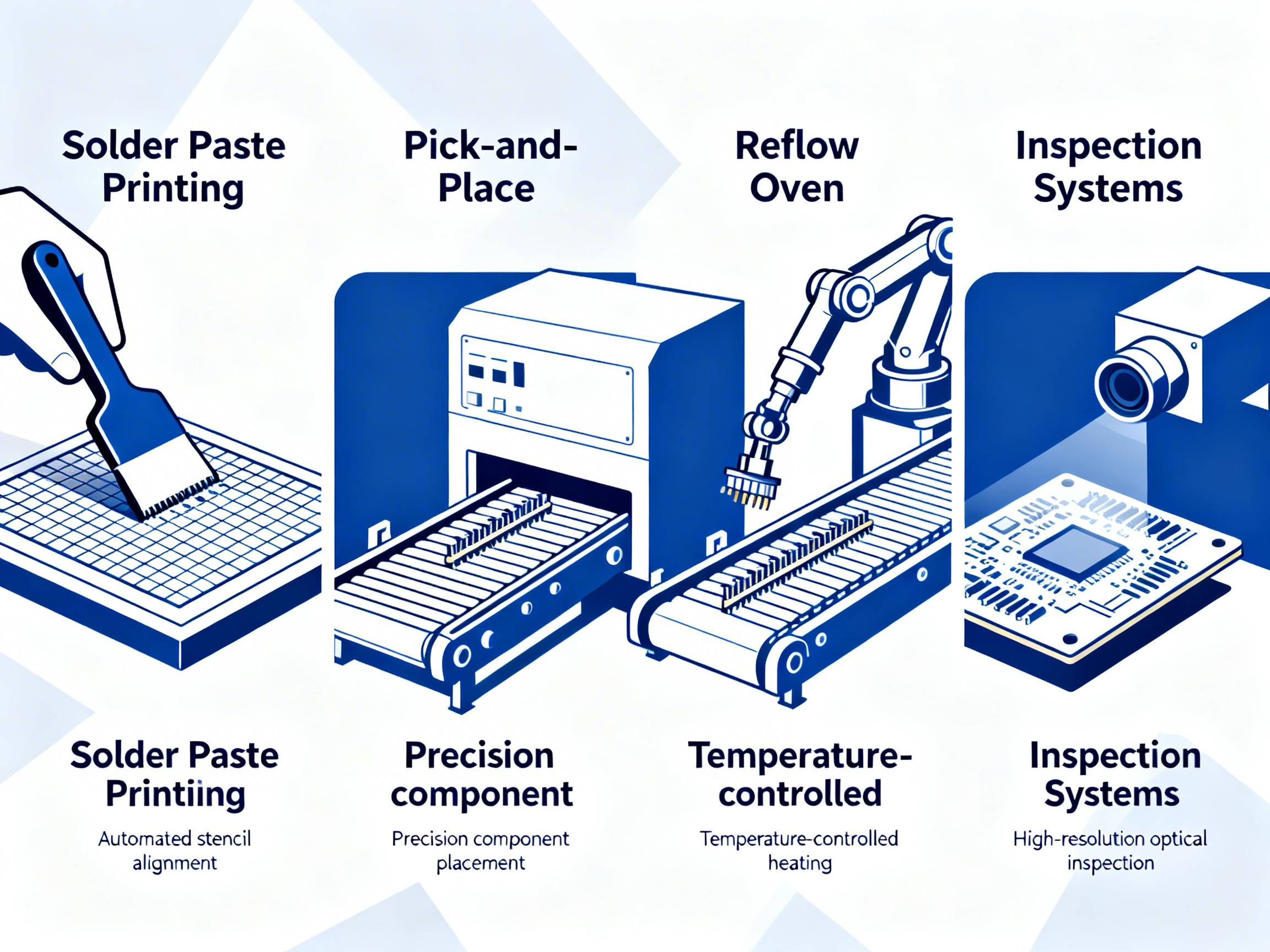
The SMT assembly process starts with solder paste printers. They apply a thin layer of solder paste onto the PCB with high precision, targeting just the solder pads. Inaccurate printing here can throw off the entire production line. Modern printers use advanced stencils and vision alignment systems to ensure accuracy down to the micrometer level.
Pick-and-Place Machines
Next up: pick-and-place machines, often considered the workhorses of SMT lines. These machines pick up components using suction nozzles and place them exactly where needed on the PCB. With speeds of over 100,000 placements per hour, they handle everything from tiny resistors to large ICs. Their precision ensures each component is placed within fractions of a millimeter of its intended spot.
Reflow Ovens
After component placement, PCBs are sent through reflow ovens. These ovens heat the solder paste and allow it to melt and solidify, creating strong electrical and mechanical connections between components and the PCB. The temperature profiles must be exact to prevent cold solder joints or component damage.
Wave Soldering Machines
Wave soldering machines, while more common in through-hole technology, still play a role in SMT when hybrid boards are used. These machines apply solder to the underside of the PCB by passing it over a wave of molten solder, quickly connecting components to the board.
Inspection Systems
Quality control is critical. Automated optical inspection (AOI) and X-ray systems check for defects like misaligned components or solder voids. These systems are fast and thorough, ensuring any issues are caught before final assembly.
Conveyors and Loaders
Finally, conveyors and loaders connect all the machines together. They ensure a smooth transition between each phase of the SMT process, saving time and reducing manual handling.
Pro Insight: SMT equipment scalability makes it suitable for both small-scale production and full-scale manufacturing. Modular setups allow businesses to start small and expand as demand grows.
Exploring the Advantages of SMT
Surface Mount Technology really shines when it comes to efficiency and innovation in electronics manufacturing. It enables a high-density placement of components, allowing manufacturers to pack more functionality into smaller devices. Think about modern gadgets like smartwatches. Without SMT, these devices would either be oversized or lack the advanced features that make them so essential.
Compact Electronics, Less Waste
How does SMT help reduce material waste? It eliminates the need for drilling those tiny holes required in through-hole technology. Fewer steps mean fewer materials used. Plus, SMT minimizes assembly downtime because everything is automated. This combo of compact designs and efficient workflows makes SMT a great choice for manufacturers looking to cut waste and costs while increasing output.
Boosting Efficiency
Machines like pick-and-place systems push SMT into high gear. Automated setups reduce mistakes and speed up production. For manufacturers, this means less time wasted troubleshooting and more consistent results. Plus, SMT doesn’t just tolerate automation—it depends on it to keep things running smoothly.
Pro Insight: Maximize the efficiency of your SMT processes by integrating production lines with advanced systems like modular reflow ovens or smart pick-and-place machines. These tools save you headaches from misalignments and bottlenecks.
SMT also lends itself to scalable production. Need to ramp up for a big order? No problem. SMT equipment handles extra volume without missing a beat, making it a go-to for businesses that want flexibility.
Lighter and Smaller
SMT shines in making electronics lightweight. From smartphones to drones, lighter devices lead to better performance and lower shipping costs. And no more bulky designs cramming up device interiors—SMT finds a way to fit it all, neatly and effectively.
As of 2026, the drive for eco-friendly manufacturing aligns perfectly with SMT principles. Less waste, smaller form factors, and energy-efficient setups are just the start. If you’re an electronics manufacturer, SMT is a must-have for staying competitive.
Related SMT Equipment
Looking for equipment to support your manufacturing line? S&M offers a full range of SMT equipment:
- SMT Reflow Ovens — Nitrogen and air atmosphere, 8-15 zones, dual-track options
- Wave Soldering Systems — Standard and selective soldering, 350-610mm tunnel
- PCB Loaders & Unloaders — Magazine-based automated board handling
- PCB Buffers — Storage and cooling buffers for production line balancing
- Curing Ovens — UV and thermal curing for coatings and adhesives
Contact our application engineers for equipment recommendations and line configuration support.