
Published: 09 April 2026
Reading Time: 8 minutes
Reviewer: Placeholder, Placeholder
Mastering the PCB Assembly Process: Key Technologies, Steps, and Challenges
Printed Circuit Board (PCB) assembly is a big deal in the world of electronics manufacturing, especially for industries like Electronics Manufacturing Services (EMS) and Original Equipment Manufacturers (OEM). We often hear how Surface Mount Technology (SMT) is amazing for speeding up production. Why? Because it lets us make precise and automated processes.
Our goal today is simple: we’re going to break down PCB technologies, the steps to assemble them, and how to tackle everyday challenges.
Jace Liu has over a decade of expertise in SMT technologies and PCB assembly, with hands-on experience working with leading electronics manufacturers in North America and East Asia. His insights into automation and precision-driven manufacturing make him a trusted authority in the field.
Understanding PCB Assembly Methods: SMT vs. THT
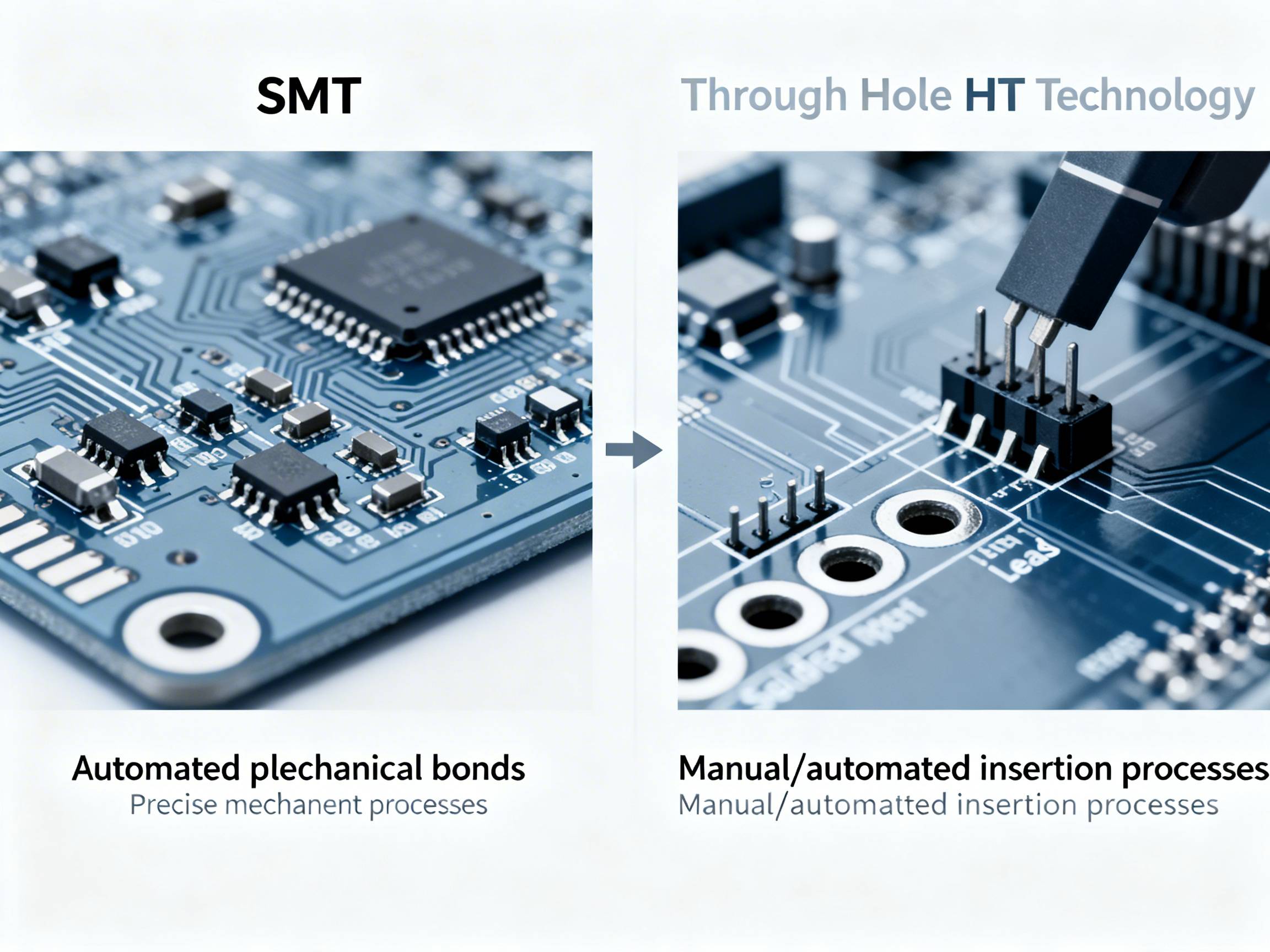
When we talk about PCB assembly methods, there are two major names that pop up: Surface Mount Technology (SMT) and Through Hole Technology (THT). They both have their own perks, depending on what you need.
SMT is like the superhero of speed and precision. It uses components that sit right on the board’s surface. This makes everything smaller and faster, ideal for when space is tight. No drilling holes here!
On the other hand, THT is a bit of an old-school champion, providing strong mechanical bonds with components that go through the board. It’s still crucial when we need parts that can stand up to stress.
With more mix-and-match happening, hybrid assembly is getting common, where they mix SMT and THT; each used where it shines best. This kind of flexibility is key to handling different design needs, especially in 2026.
Expert Tip: The importance of precise solder paste application in modern PCB manufacturing can’t be overstated. Keep an eye on it to ensure quality and reliability.
Key Technologies in PCB Assembly
In 2026, PCB assembly technologies are full of exciting innovations. We’ve got Surface Mount Technology (SMT), Through Hole Technology (THT), and Hybrid Assembly combining both. But wait—there’s more! Advanced processes like CoWoP (Chip-on-Wafer-on-PCB) and AI-driven automation are on the rise, helping with high-density designs.
Why Precision Matters
Today, precision is super important because our gadgets keep getting smaller. If PCBs have errors like misaligned components or solder defects, it could mess things up. These tiny mistakes can cause big problems in performance and reliability.
Read more about precision in PCB assembly
Innovations Impacting PCB Manufacturing
AI is a game-changer. It’s helping optimize designs and even catch defects before they become an issue. Plus, we’ve got flexible PCBs and cool new materials making everything more efficient.
Explore the latest PCB innovations
Expert Tip: Pro strategies for adapting to rising production volumes without compromising precision are key. Maintaining quality at higher volumes is the challenge of the year!
In 2026, Sun and Mountain (SMT) stands out with equipment like precision reflow ovens and PCB conveyor systems. These tools are perfect for Electronics Manufacturing Services (EMS) and Original Equipment Manufacturers (OEM) who need efficiency and precision. Plus, their machines focus on cutting down manual processes and boosting automation, helping companies stay ahead.
Step-by-Step Guide to PCB Assembly
PCB assembly is all about precision. Each step matters when it comes to making reliable circuits. Here’s how it works:
1. Material Procurement
It all starts with getting the right materials. Things like solder paste, components, and the PCB board itself need to meet strict quality standards. Faulty materials can lead to huge headaches down the line. Make purchasing a priority to avoid unnecessary delays or defects.
2. Solder Paste Application
Solder paste application is the foundation—it’s where everything begins. The paste holds the components in place. It’s applied to specific spots on the PCB using stencils. Precision matters here because uneven application can cause alignment issues that affect functionality.
3. Component Placement
After applying solder, machines (or sometimes people) place components onto the board. Advanced pick-and-place machines ensure components are positioned correctly, even on high-density boards. This step is all about making sure there’s no room for error.
Pro Insight: Rising production numbers don’t have to mean sacrificing quality. Break down larger runs into smaller batches for better oversight. It’s all about maintaining control, even when running at max capacity.
4. Reflow Soldering
Next up is reflow soldering. Boards go through a reflow oven that melts the solder paste, bonding components securely to the board. Proper temperature profiles are crucial here; too hot, and you risk damaging components, too cold, and connections won’t form properly.
5. Inspection and Testing
Once assembled, boards need to be checked. Automated Optical Inspection (AOI) machines look for solder defects or misplaced components. Functional tests simulate real-world conditions to see if the board works as intended. No shortcuts here—it’s better to catch issues now than later in production.
6. Scalability for Growth
Adapting processes to handle higher volumes is a challenge. Start by automating wherever you can. AI-powered monitoring systems give real-time feedback to improve output consistency without slowing down production. Plus, try standardizing workflows to make scaling smoother.

Final Thoughts
Each of these steps ties together to build a strong foundation for PCB reliability. If even one step is rushed or overlooked, it can lead to costly errors. But when done right, your boards will be ready to perform in the real world every time.
Related SMT Equipment
Looking for equipment to support your manufacturing line? S&M offers a full range of SMT equipment:
- SMT Reflow Ovens — Nitrogen and air atmosphere, 8-15 zones, dual-track options
- Wave Soldering Systems — Standard and selective soldering, 350-610mm tunnel
- PCB Loaders & Unloaders — Magazine-based automated board handling
- PCB Buffers — Storage and cooling buffers for production line balancing
- Curing Ovens — UV and thermal curing for coatings and adhesives
Contact our application engineers for equipment recommendations and line configuration support.