
Published: 16 April 2026
Reading Time: 12 minutes
Reviewer: Simon Scrapes, Founder
Complete Guide to the PCB Manufacturing Process: Step-by-Step Workflow & Best Practices
Printed Circuit Boards (PCBs) are like the backbone of modern electronics. Without them, our gadgets, appliances, and even advanced machinery simply wouldn’t work. Think about your smartphone, gaming console, or even the GPS in your car – all of these rely on PCBs to function smoothly. But here’s the thing: creating a PCB that’s both precise and reliable is no small feat. It’s a complex process that demands attention to detail, proper tools, and smart workflows.
When I first started exploring PCB manufacturing, I was amazed at how intricate the process is. From design to testing, every little step has a big impact on the final product’s performance. Actually, scratch that – the tiniest mistake can completely wreck a batch. That’s why understanding the workflow is super important, especially if you’re aiming for efficient production methods and minimal defects.
In this article, we’ll take a step-by-step look at the PCB manufacturing process, discuss common challenges, and share practical tips to help you streamline your workflow. Whether you’re just starting out or already knee-deep in this field, there’s something here for everyone.
Jace Liu is an experienced SMT systems engineer specializing in surface mount technology and electronics manufacturing processes. With over a decade of industry expertise, Jace has helped optimize manufacturing workflows for mid-to-large-scale companies globally.
Copper Cladding and Etching: The Foundation of PCB Durability
Every PCB starts with a base layer of copper. This foundational step is where copper cladding plays its role. Copper cladding involves bonding a thin sheet of copper to the substrate, which serves as the structure for your PCB. The material you choose for this affects more than just performance; it determines how durable, high-temperature, and cost-friendly your product will be.
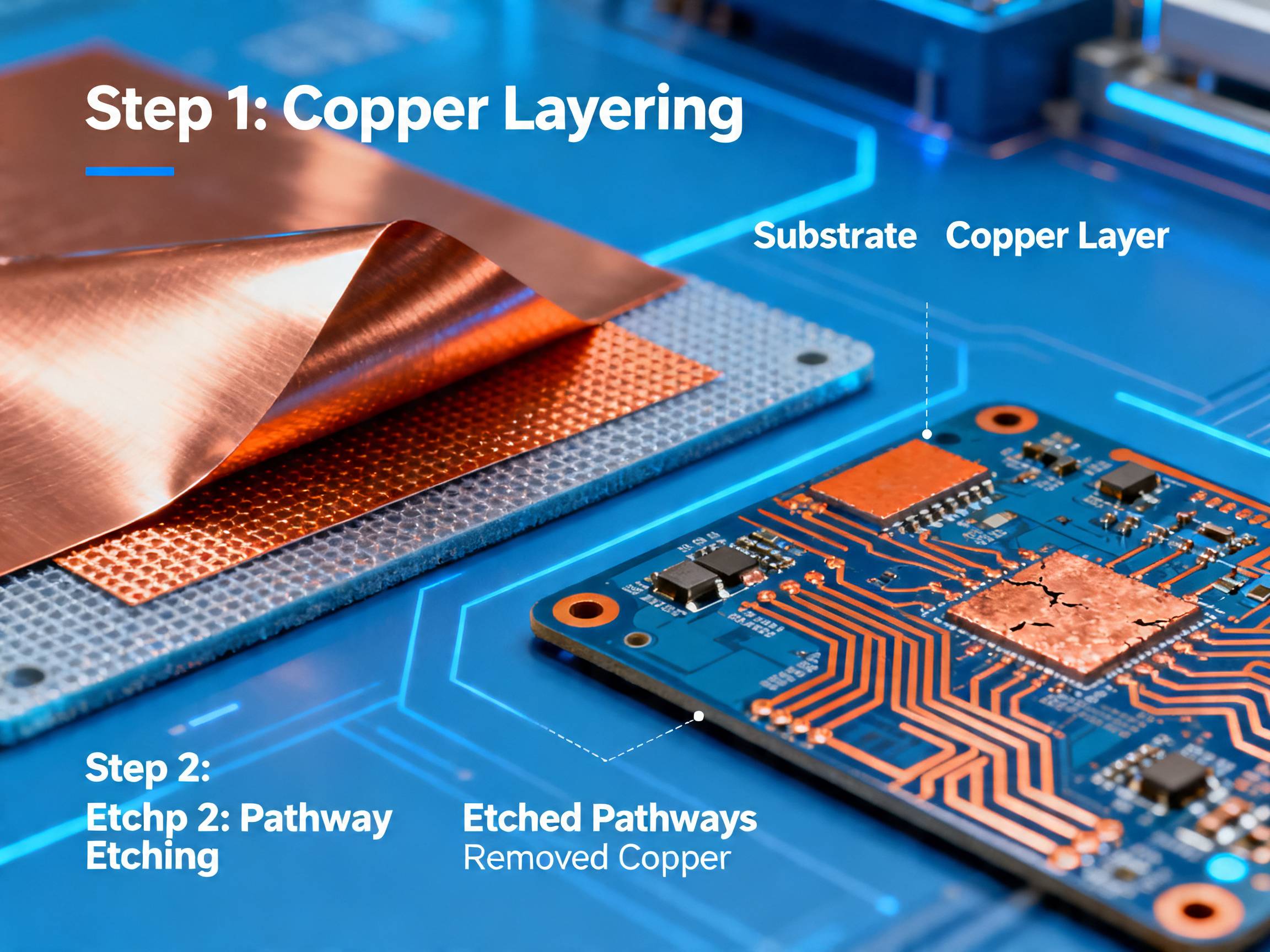
Now, here’s where quality matters. Many manufacturers use FR-4 materials for cladding since they’re reliable and provide excellent mechanical strength. But there’s a catch: as designs grow more complex (hello, miniaturization), newer options, like high-frequency CCLs or glass-reinforced laminates, are being adopted. These advanced materials reduce signal loss and boost operational reliability compared to older standards.
The Etching Process: Shaping the Pathways
Once cladding is completed, the next step is etching. Think of this as sculpting. The unwanted copper is removed using chemicals, leaving behind only the circuit pathways you need. This process requires precision because even small defects can lead to connectivity issues later. Manufacturers today rely on automated etching to maintain consistency.
Interestingly, I remember a time when I watched an automated etching process fail due to improper material preparation. The result was a board riddled with connectivity problems. From that moment, I realized that the preparation phase is just as crucial as the execution. Double-checking your materials, temperature profiles, and chemical concentrations is a must.
Laminating and Solder Masking: The Protective Layers
After etching comes laminating, which is essentially layering the PCB. This step helps protect the circuitry from environmental wear and adds to the overall board strength. To top it off, manufacturers apply a solder mask. This green or red layer does more than just add color; it keeps solder from accidentally bridging connections during assembly.
Attention to detail during solder masking is critical. Smudges, pinholes, or uneven application can create headaches during high-precision PCB assembly. With modern automated machinery, solder masking has become more efficient, but it still requires stringent quality checks.
Pro Insight: When selecting PCB materials for copper cladding, remember to prioritize options that align with your end product requirements. For instance, high-performance networks often benefit more from low-loss laminates compared to standard FR-4.
Via Drilling and Plating: Building Connectivity Between Layers
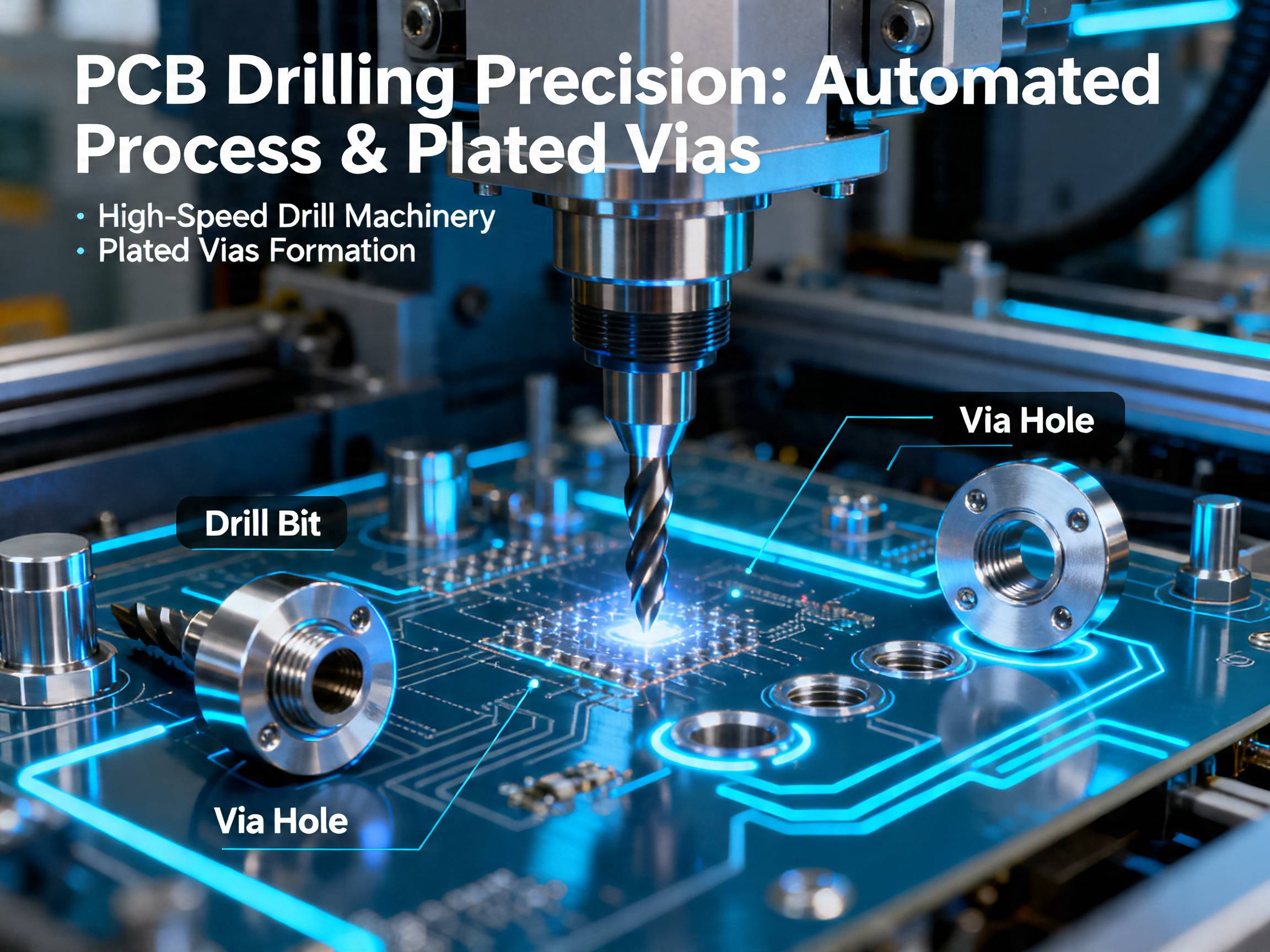
In the world of PCBs, vias are the secret heroes. These small holes connect layers of the board electrically, allowing signals to pass smoothly between different levels. Without vias, multi-layer PCBs wouldn’t exist, and devices like smartphones or high-speed routers would be stuck in the past.
Getting the Holes Right
Drilling vias isn’t just about punching holes. It’s about precision. These holes are minuscule, often less than a millimeter wide, and their positioning affects the board entirely. High-speed automated drills are now the industry standard for creating vias, ensuring uniformity and reducing human error.
But here’s the thing: not all vias are created equal. You’ve got through-hole vias that run through the entire board, blind vias connecting exterior layers, and buried vias hidden entirely in the inner layers. Knowing the right type to use for a specific design is crucial for keeping the board functional and efficient.
Plating for Electrical Integrity
After drilling, plating is what gives those vias their electrical superpowers. A thin layer of copper is deposited inside the vias, creating conductive pathways. This step is critical because any gap or uneven plating can lead to failures in connectivity.
Manufacturers use electroplating techniques to coat vias evenly and efficiently. Advances in automation have made this process faster and more accurate, improving the overall integrity of the boards. In fact, I’ve worked on designs that failed because of uneven plating. Early diagnostic testing caught the issue, saving the team from big headaches. This just goes to show how thorough plating affects the whole production outcome.
Expert Tip: Ensure your vias meet design spec by combining automated drilling with precise electroplating methods. This dual focus minimizes defects and boosts board reliability.
Automation: A Game-Changer
Speaking of automation, it’s revolutionized this stage of manufacturing. Tasks that used to take hours now happen in minutes. Plus, automation reduces variability between boards, ensuring quality stays consistent. High-speed drills paired with automated plating systems allow manufacturers to scale up production without sacrificing precision.
For companies looking to save time and money, investing in advanced automation tools is a no-brainer. It’s especially true for mid-to-large-scale businesses where production lines need to run smoothly and meet tight deadlines.
Testing and Quality Assurance: Backstop for PCB Reliability
No matter how advanced manufacturing tools have become, testing is still the backbone of ensuring every PCB works as intended. It’s like the final checkpoint before these boards transform into the hubs powering our favorite electronic devices. Thankfully, technology in 2026 gives us powerful testing protocols like ICT (In-Circuit Testing) and functional testing to catch issues before a board leaves the factory.

ICT: Your Circuit Safeguard
ICT dives deep into measuring electrical circuits. It checks for shorts, opens, and other configuration problems by simulating conditions the PCB will see in operation. Picture it as a detailed physical exam for your circuit board — it spots problems in the connectivity that could lead to disaster in real-world use. Automated ICT setups have become a game-changer because they boost efficiency and precision.
Remember, though: ICT isn’t a one-size-fits-all solution. Boards with lots of interconnections might require tailored probes to match their complexity. Plus, ICT identifies problems (like bent pins or damaged pads) that are otherwise tough to catch.
Functional Testing: Its Real-World Trials
Unlike ICT, functional testing simulates the actual environment where your PCB will operate. This step ensures that all your components, firmware, and interfaces come together like clockwork. I saw a batch of boards pass ICT only to fail functional tests due to overheating under load conditions — real-time stress testing can reveal issues that ICT misses.
Functional testing also shines for ongoing diagnostics, especially in high-volume production runs. Think smart factories using IoT-enabled systems for real-time troubleshooting. Pairing these tests can practically guarantee a board’s longevity and reliability.
Expert Tip: How advanced diagnostics improve PCB quality assurance. Tools enabled by machine learning can now flag potential production issues before they happen, saving time and reducing waste.
Combating Production Waste With Real-Time Diagnostics
Production inefficiencies and waste are like sneaky drain holes in your bottom line. Real-time diagnostics are one of the better ways to tackle this. These systems gather and analyze data about every aspect of PCB manufacturing in the moment. Whether it’s detecting substandard solder joints or spotting uneven copper plating, diagnostics let you address problems while production is still rolling.
Plus, with AI-driven algorithms, manufacturers can predict failure points in their workflow and pivot quickly to optimize processes. It’s cutting-edge stuff, and we love seeing how much waste it cuts from production lines. This doesn’t just improve profit margins; reducing waste is better for the planet too.
Meeting Global Standards: Responsibility Matters
Complying with international standards like IPC-A-600 (for PCB quality) or ISO 9001 isn’t just a legal obligation — it’s about your reputation too. These standards make sure your boards aren’t just functional, but durable and safe. The goal is simple: creating quality products that meet expectations anytime, anywhere.
A major part of achieving compliance is documenting everything carefully, from materials used to testing results and even how the boards were transported. Embracing CAD traceability helps tie your design processes to end manufacturing in a seamless way. It’s a combo of responsibility and quality rolled into one smart approach.
Overcoming Common PCB Fabrication Challenges
Every manufacturer, at some point, has faced struggles during the PCB fabrication process. Whether it’s fighting with material inconsistencies, managing precision errors, or dealing with wasted resources, these bottlenecks can slow production to a crawl. Thankfully, there are smarter workflows and techniques available today to help minimize defects and keep things running smoothly.
Spotting the Problem Areas
Production bottlenecks often stem from small, overlooked steps. Misaligned designs during the etching phase, faulty vias, or even improper solder mask application can lead to costly re-dos. Material wastage is another big deal. If you’re not careful with your tooling setup or quality assurance checks, you’re throwing money straight into the recycle bin. I’ve seen manufacturers lose thousands just because they skipped double-checking their copper cladding setup.
Pro Insight: Key strategies for minimizing defects during PCB fabrication include monitoring material quality and leveraging automated inspection systems during high-risk stages like solder masking and etching.
The Power of Efficient Workflows
Streamlining workflows isn’t just about saving time. It’s about improving quality and reducing downtime too. For example, a common PCB fabrication challenge involves uneven plating during the creation of vias. By incorporating automated electroplating, manufacturers can ensure that each layer is coated evenly, which saves both time and materials. Plus, tools driven by AI can detect irregularities in real time, giving teams the chance to address issues before they spiral.
Take this: a mid-sized electronics company in the U.S. implemented machine learning-based diagnostics in their workflow. Within six months, they reduced defect rates by 37% and shaved days off their production timelines. These kinds of efficiencies are exactly what today’s competitive production environments demand.
Real-World Solutions
When I came across a PCB fab lab struggling with repeated connectivity failures, the issue boiled down to incompatible materials being used during cladding. Simple but frequent missteps like this underline the importance of selecting the right materials for each step of the production process. Beyond materials, adopting better workflow systems—like inline solder inspection—can do wonders for final product quality. Systems like this check solder joints in real time and flag potential failure points right as they happen.
Expert Tip: How to ensure proper SMT placement for high-precision assembly: Always combine statistical process control methods with advanced SMT machines to consistently hit alignment and accuracy targets.
Cutting Down on Defects and Downtime
Defect reduction isn’t just about catching mistakes; it’s also about preventing them from happening in the first place. Automating production lines with advanced testing equipment can catch micro-defects that would otherwise slip by. From high-definition optical inspection systems to thermal imaging cameras, tech in 2026 has made detecting small errors easier than ever.
Downtime, on the other hand, is a silent killer for productivity. With hybrid automated setups, manufacturers can schedule maintenance on their machines without halting production entirely. This reduces delays and keeps operations scalable for tighter market demands.
By spotting bottlenecks early, choosing the right materials, and balancing manual and automated workflows, manufacturers can tackle common PCB fabrication challenges head-on. And when you get it right, you’ll notice the difference—not only in the numbers but in the confidence of your team and the satisfaction of your clients.
Related SMT Equipment
Looking for equipment to support your manufacturing line? S&M offers a full range of SMT equipment:
- SMT Reflow Ovens — Nitrogen and air atmosphere, 8-15 zones, dual-track options
- Wave Soldering Systems — Standard and selective soldering, 350-610mm tunnel
- PCB Loaders & Unloaders — Magazine-based automated board handling
- PCB Buffers — Storage and cooling buffers for production line balancing
- Curing Ovens — UV and thermal curing for coatings and adhesives
Contact our application engineers for equipment recommendations and line configuration support.