
Published: 09 April 2026
Reading Time: 15 minutes
Reviewer: Jace Liu, SMT Equipment Expert
PCB Manufacturing & Assembly: A Comprehensive Step-by-Step Guide
1. Introduction to PCB Manufacturing and Its Significance
Picture your smartphone or computer. It owes a lot to a small but mighty hero inside it—the printed circuit board (PCB). PCBs play a big role in all sorts of gadgets by connecting electronic parts and making sure everything works right.
Good PCB manufacturing keeps costs down and quality up. High-quality production means making them faster, with fewer mistakes, which is great if you’re making a lot. Plus, the steps in making PCBs are super important for getting everything perfect.
Let’s break down the main steps in PCB manufacturing so you get a good idea of how it all comes together.
Jace Liu is a seasoned expert in PCB manufacturing and Surface Mount Technology with over a decade of experience helping EMS and OEM companies optimize production workflows. Through hands-on expertise, Jace specializes in delivering cutting-edge solutions to streamline electronic assembly processes while ensuring precision and adherence to international quality standards.
4. Step 3: Printing and Etching the Circuit Pattern
Here’s where a blank canvas begins to transform into a functional PCB. Printing and etching the circuit pattern is all about transferring the design onto the copper surface and removing unwanted copper to shape the required circuit.
1. How Circuit Patterns Are Transferred
The most common method for transferring circuit patterns as of 2026 is photolithography. It’s a process where UV light is passed through a photomask onto a light-sensitive photoresist layer. Here’s a quick breakdown:
- A thin layer of photoresist is applied to the copper board (this layer reacts to UV light).
- A photomask is placed over the board, blocking light from certain areas.
- UV light is shined onto the setup, setting the photoresist where the pattern is designed.
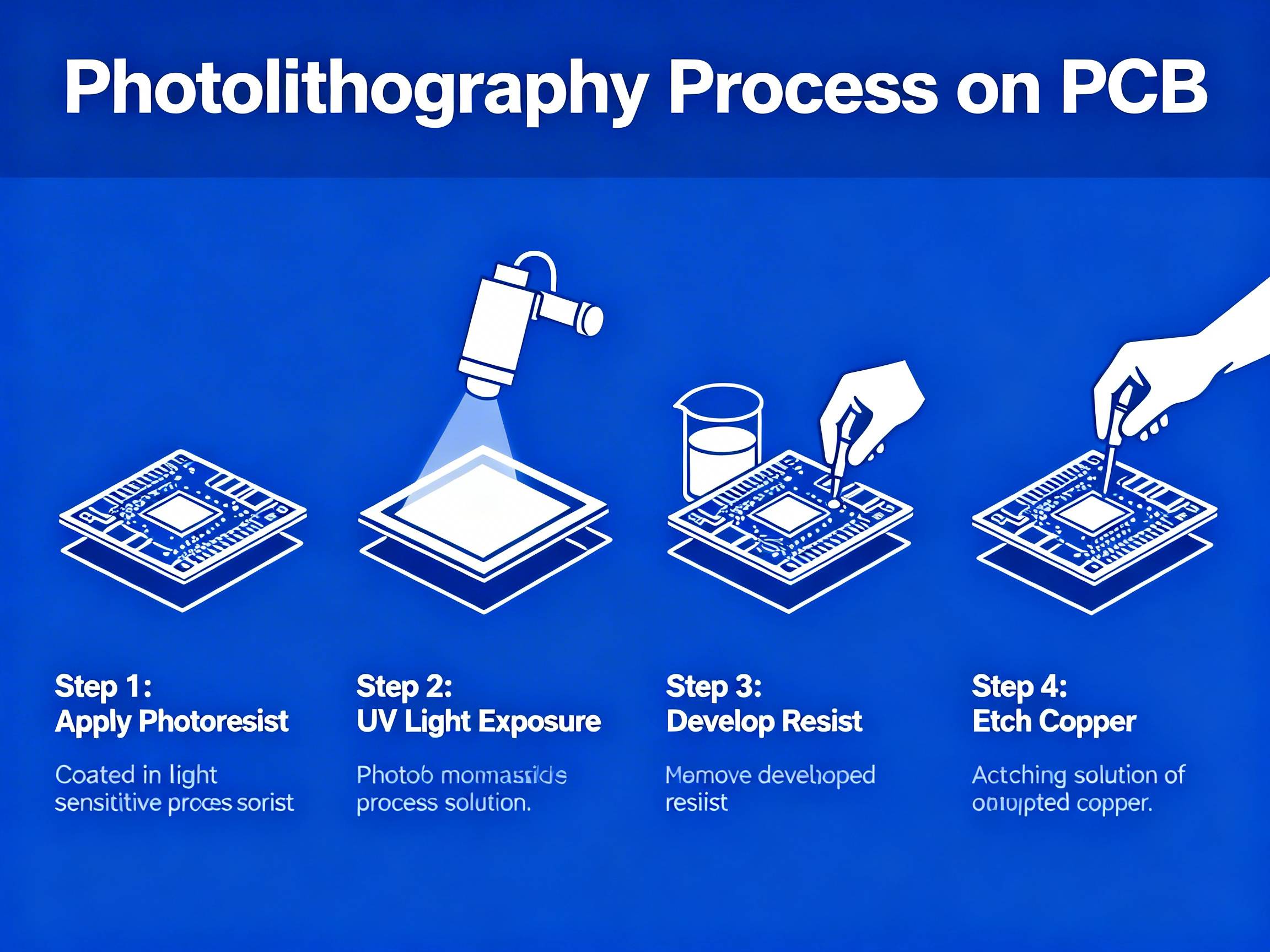
After this, the exposed areas of photoresist harden, and the unwanted areas are washed off with a developer. For simpler designs, screen printing is sometimes used, where conductive ink is directly applied to the board instead of photoresist.
Expert Tip: Tools like Altium Designer, which refine photomask designs, are game-changers for the PCB process in 2026, offering both precision and time efficiency.
2. The Etching Process – Shaping the PCB
Once the pattern is in place, etching begins. The goal is simple: remove all the unwanted copper leaving only the desired circuit.
- The board is submerged in an etching solution. Common ones include ferric chloride or an alkaline solution.
- The solution eats away unprotected copper, leaving clean, precise circuit lines.
- After etching, the photoresist is removed, revealing the copper pattern.
Automated etching machines today ensure uniformity, especially for complex designs like multilayer PCBs. High-precision etchers oscillate the solution over the boards, speeding up the process while maintaining accuracy.
3. Quality Control During Etching
Quality checks kick in immediately after the etching process. This step makes sure the circuit lines match the design perfectly and that there are no flaws, such as incomplete traces or excess copper. For example, automated optical inspection tools scan the circuit and compare it to the original design files.
From hands-on experience, I’ve seen how a small imperfection during this stage can lead to costly reworks or outright failures later. Investing extra time in inspection here can save you hours down the line.
Key Challenges & Solutions
Printing and etching come with their share of headaches. Tiny faults might not be visible at first but can disrupt functioning later. Here’s what helps:
- Precision alignment during photolithography avoids pattern distortions.
- Using fresh etching solutions regularly ensures consistent results.
- Automating as much as possible reduces human errors and speeds up production.
5. Step 4: Drilling, Plating, and Layer Bonding
Once the circuit pattern is etched, the next step is all about precision and connectivity. Drilling, plating, and bonding layers bring the PCB closer to its final form, especially for complex multilayer designs.

1. Drilling Holes for Connectivity
Every PCB needs drilled holes to connect layers or mount components. There are two main kinds of holes: vias (small, often plated holes that connect layers) and through-holes (used for mounting components). In 2026, drilling methods depend on the type of hole required:
- Mechanical drilling: Standard for larger holes (≥0.15 mm). High-speed CNC drills carve out clean and precise holes for components and PTHs (plated through-holes).
- Laser drilling: Ideal for microvias (holes <150 μm). Lasers create ultra-fine, precise holes crucial for high-density interconnect (HDI) boards.
The choice of method ensures both accuracy and cost-effectiveness depending on the design complexity. From past experience, I’ve noticed that regular bits often result in wear and tear during high-volume PCB production. Upgraded equipment drastically reduces such issues.
2. Plating: Creating Conductive Pathways
Once the holes are drilled, they’re plated with a thin copper layer to establish electrical connections between layers. Here’s how the plating process generally works:
- Desmearing: Removing resin from the hole walls after drilling for better plating adhesion.
- Electroless plating: A chemical process coats the hole wall with a thin, conductive copper layer.
- Electroplating: Builds up additional copper thickness to reinforce durability and conductivity.
Modern plating techniques in 2026 aim to meet strict standards like IPC-6012 for reliability and connectivity. Automated plating systems ensure uniformity, making them critical for complex designs like rigid-flex boards.
Pro Insight: For multi-layer PCBs, consistent plating thickness is key. Advanced machines can monitor the process in real time, reducing defects and ensuring perfect connections across all layers.
3. Multi-layer Bonding for Complex PCBs
For circuits requiring multiple layers, bonding those layers together is a precise but essential step. Here’s how it works:
- Layer stacking: Individual layers are aligned meticulously.
- Lamination: Layers are compressed together under heat and pressure to form a single solid PCB.
- Thermal curing: The stack is heated to harden adhesives and lock the layers in place.
High-end laminates and adhesives in 2026 have improved thermal stability and dielectric properties, ensuring minimal signal loss in high-performance devices. Also, X-ray equipment helps inspect alignment during this stage, reducing the chance of mismatched layers.
Challenges and Solutions
Drilling, plating, and bonding come with their own hurdles:
- Drill accuracy: Tools can wear out. Regular maintenance and upgrades like diamond-coated bits reduce errors.
- Plating consistency: Ensuring even copper deposition requires calibrated equipment.
- Layer alignment: Misaligned layers can ruin a PCB. Using X-ray machines keeps everything precise.
If you rely on outdated drilling setups, the results can be disappointing. Modern tools and equipment like those from SMT providers can minimize downtime and improve production quality.
7. Step 6: Assembly and Quality Control
After a series of precise steps, it’s time to bring all the parts together and make sure the PCB is ready for the real world. Assembly and quality control (QC) ensure that the finished boards actually perform as promised and meet necessary standards. Let’s dive in.
1. Automated Assembly Techniques and Surface Mounting Components
When it comes to assembling PCBs in 2026, automation plays a starring role. Machines handle most of the work, from placing components to soldering them securely. Surface Mount Technology (SMT) is the go-to method because it’s fast and accurate.
Here’s how it works:
- Pick-and-place systems: These machines place tiny components like resistors, capacitors, and integrated circuits directly onto the PCB’s surface. They’re crazy precise, often handling thousands of parts per hour.
- Reflow soldering: Once the components are in place, the PCB passes through a reflow oven, where controlled heat melts solder paste and bonds components to the board.
- Wave soldering (more common for through-hole mounting): The PCB is passed over a molten wave of solder to attach components securely.
Sun and Mountain’s SMT reflow ovens are a great example of how advanced equipment can boost efficiency during assembly. They’re designed for precision and can handle high-volume production runs, making them invaluable for EMS and OEM companies working on tight deadlines.
Expert Tip: Surface-mounted components can shrink faster than last season’s smartphone models. Always design with updated standards in mind to avoid compatibility headaches.
2. Testing Protocols for Manufactured PCBs
Testing is non-negotiable. After all, no one wants a faulty PCB in their laptop or car. In 2026, these are the main QC methods for PCBs:
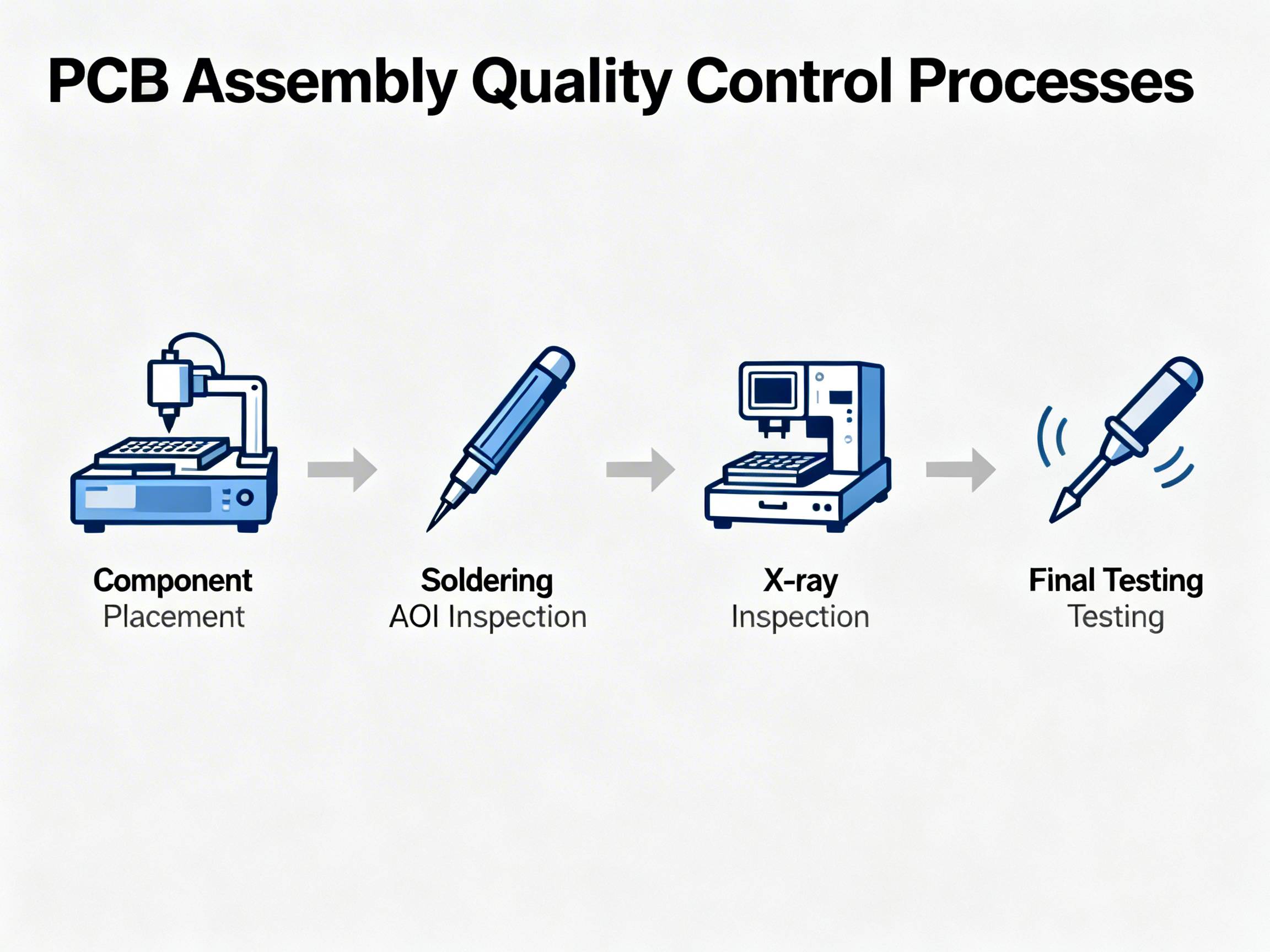
- Automated Optical Inspection (AOI): Cameras scan each board to check if components are positioned correctly and precisely soldered. AOI can catch defects like solder bridges or missing components quickly.
- X-ray inspection: For high-density designs, X-rays can peer through multilayer boards to identify hidden soldering issues or defects inside vias.
- In-Circuit Testing (ICT): This technique makes sure every trace and connection is working by sending electrical signals through the board.
- Functional Testing: This step simulates real-world conditions to check if the PCB performs as intended under load.
From hands-on experience, I’ve seen companies catch major issues during functional testing—ones that just don’t show up in earlier inspections. The takeaway? Don’t skip steps when testing.
3. Specific QC Checkpoints and Defect Mitigation Strategies
Even with top-notch equipment, problems can sneak up. Here’s how efficient QC minimizes risks and ensures high-quality boards:
- Solder Paste Inspection: Before soldering, machines scan every board to ensure the right amount of paste is applied to each pad. This step has prevented an infinite number of bad connections.
- Temperature Profiling: Every assembly line has unique thermal requirements, and getting them wrong during soldering can ruin an entire batch of PCBs. Profiling ensures ovens are calibrated just right.
- Environmental Testing: To prepare for all kinds of conditions, boards undergo tests for temperature resistance, humidity, and even vibrations.
From Our Experience: One common challenge during QC is identifying micro-cracks in solder joints. Tools like real-time X-ray systems have been game-changers for fixing these invisible issues before they snowball into larger problems.
Why Assembly and QC Matter
Think of assembly and QC as the finishing touches that turn a good PCB into a great one. When done right, these steps lower your defect rates, improve reliability, and protect your brand’s reputation. Companies like Sun and Mountain specialize in making this process smoother with their precision SMT equipment.
Whether it’s ensuring precise component placement or catching hard-to-spot defects, assembly and quality control aren’t just important—they’re essential for modern electronics manufacturing.
8. Choosing the Right PCB Manufacturer
Picking the right PCB manufacturer is like choosing a partner for a marathon. It’s not just about speed; it’s about reliability, trust, and shared vision. In 2026, there are a few key things to consider when making this critical choice.
Key Criteria for Selection
When choosing a manufacturer, start by looking at their track record. Have they worked with big-name companies? Do they handle small batches and bulk orders with the same precision? These questions matter.
- Certifications and Quality Standards: Make sure they adhere to international standards like IPC-A-600 and ISO 9001. These aren’t just certificates on a wall; they mean the manufacturer follows best practices for PCB quality.
- Experience in Your Industry: A manufacturer familiar with your type of products will understand your specific needs better.
- Customer Support and Service: Good manufacturers offer robust support. Whether it’s a quick question or a major issue, having a real person to talk to is invaluable.
Comparing Cost vs. Long-Term Value
Sure, costs are crucial, but weigh them against long-term value. A cheaper option may end up costing more in the long run.
- Hidden Costs: Look out for unexpected fees related to setup, delivery, or reworks.
- Reliability and Consistency: A slightly pricier manufacturer that delivers consistent quality can save a lot in potential board failures.
In my experience, working with certified companies can drastically reduce troubleshooting post-production. Their consistency ensures minimal production disruptions.
Making the Decision
Ultimately, finding the right manufacturer involves research and sometimes a leap of faith. But if you weigh the options with care, you’ll find a partner who not only meets your needs but also helps your business grow.
When it comes to PCB manufacturing, Cherry Picking a partner means considering not only the now but the future impact on your projects. Emphasize quality, reliability, support, and alignment with your strategic goals for the best outcomes.
9. Conclusion and Recommendations for Streamlined PCB Production
Wrapping up our guide on PCB Manufacturing and Assembly, it’s clear that a lot goes into making PCBs. From design to quality control, each step is crucial. Investing in high-quality processes isn’t just a good idea; it’s necessary. Consistent quality control reduces errors and ensures reliability.
To align production with your business goals, choose manufacturers that understand your needs. Look out for those with a strong record and necessary certifications to boost confidence. High-quality doesn’t mean just high-priced. Instead, it’s about value. An efficient manufacturer offers great support, reduces downtime, and scales with your business.
Keep an eye on 2026 trends in PCB manufacturing. AI and high-speed computing are leading changes, and eco-friendliness is more crucial than ever. Products from companies like Sun and Mountain are key in navigating these challenges with their innovative SMT solutions.
The future of PCB production looks promising with tech advancements. By focusing on precision, efficiency, and sustainability, businesses can thrive in the evolving market landscape.
Make the best choices now for long-term success, and you’ll find your manufacturing processes streamlined and primed for growth.
Related SMT Equipment
Looking for equipment to support your manufacturing line? S&M offers a full range of SMT equipment:
- SMT Reflow Ovens — Nitrogen and air atmosphere, 8-15 zones, dual-track options
- Wave Soldering Systems — Standard and selective soldering, 350-610mm tunnel
- PCB Loaders & Unloaders — Magazine-based automated board handling
- PCB Buffers — Storage and cooling buffers for production line balancing
- Curing Ovens — UV and thermal curing for coatings and adhesives
Contact our application engineers for equipment recommendations and line configuration support.