
Published: 16 April 2026
Reading Time: 8 minutes
Reviewer: Placeholder
PCB Manufacturing Process: Technologies, Materials, and Quality Standards Explained
You know how frustrating it is when technology fails at the worst moment. Imagine having an electronics product where a small defect in the printed circuit board (PCB) causes total chaos. That’s why PCB manufacturing matters so much. It’s all about creating reliable and cutting-edge boards that power everything from your smartphone to your car’s navigation system.
Creating high-quality PCBs involves some pretty fascinating processes. From picking the right materials to using automated tools, manufacturers have to nail every step. In this article, we’ll dive into the technologies, materials, and standards that define PCB manufacturing in 2026.
Jace Liu is a manufacturing engineering expert specializing in Surface Mount Technology (SMT). With over 10 years of industry experience working with advanced SMT systems and PCB fabrication processes, Jace has consulted and trained teams in EMS and OEM environments. His expertise focuses on precision-driven practices and ensuring compliance with global manufacturing standards.
Understanding Modern PCB Fabrication Technologies
PCB manufacturing in today’s world is a blend of advanced processes and precise equipment. Among the foundational technologies, we’ve got Surface Mount Technology (SMT) reflow ovens, wave soldering machines, and PCB conveyor systems playing key roles. They handle everything from soldering components to moving boards through assembly lines efficiently.
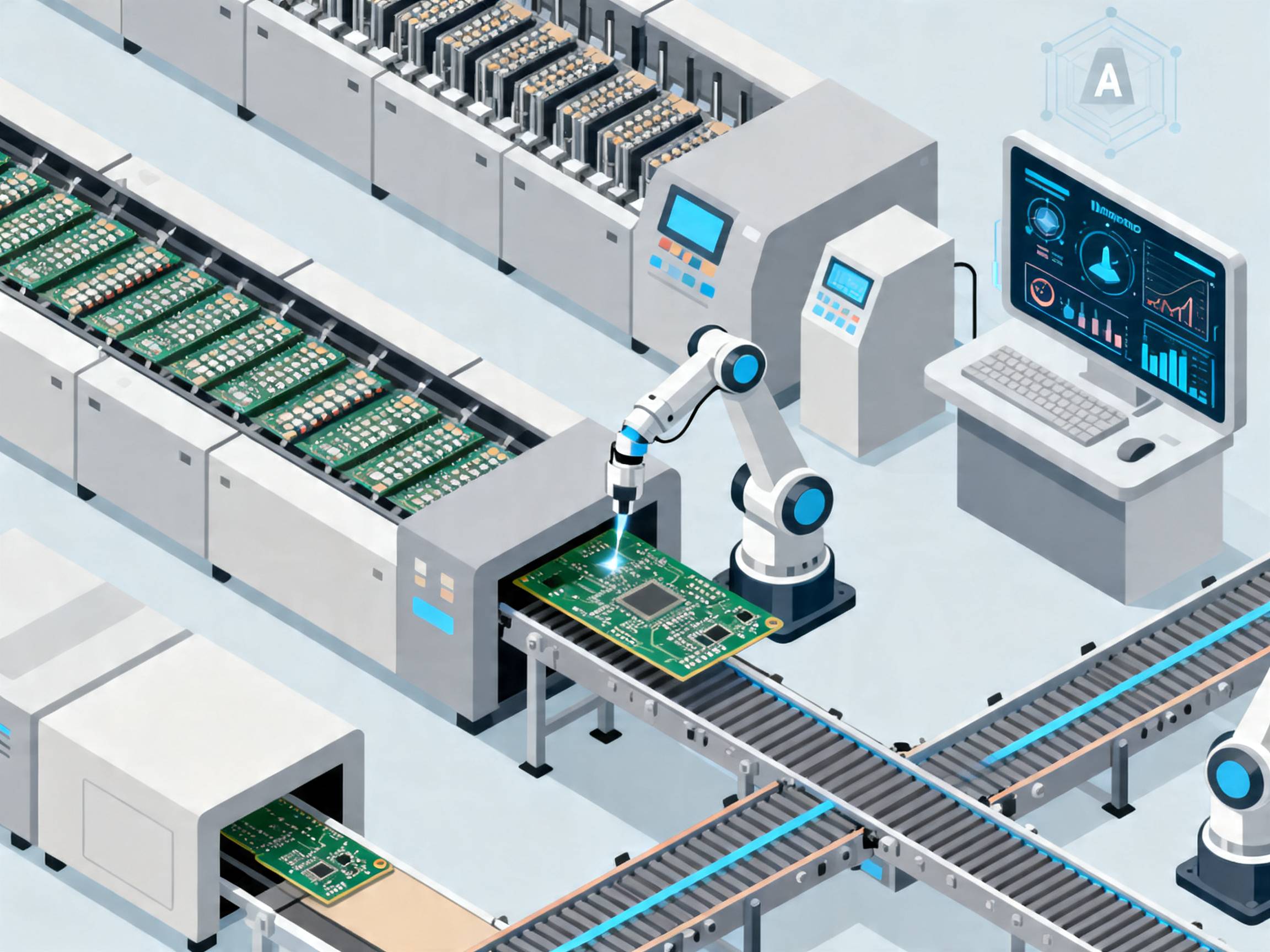
Automation has been a major game-changer in PCB fabrication. High-speed robotic arms, AI-driven testing systems, and synchronized workflows are now standard for companies intent on cutting downtime, boosting precision, and maximizing throughput. When machines can perform tasks faster without sacrificing accuracy, everyone wins.
The role these technologies play in meeting quality standards can’t be overstated. For example, SMT machines align components with sub-micron accuracy, ensuring boards are perfectly assembled every single time. AI-powered diagnostic tools catch defects earlier, leading to fewer returns or product failures later on.
But it’s not just about speeding up production. These technologies also help companies stay competitive by producing smaller, more complex electronics for industries like automotive and aerospace.
Expert Tip: Optimize automation to minimize production downtime.
Materials Used in PCB Manufacturing and Their Impact on Quality
Let’s talk about PCB materials. Choosing the right material sets the foundation for everything else. FR-4, polyimide, and Rogers laminates are popular picks because they’ve got the thermal efficiency and strength needed for modern electronics. Plus, ceramics like alumina work well for extreme environments.

But you can’t just pick one at random. Different projects call for specific materials. For example, a high-speed 5G network board and a simple home gadget will have totally different performance demands. FR-4 might cut it for the gadget, but advanced laminates like PTFE might be necessary for the 5G board.
Manufacturers also focus on finding materials that balance cost with performance. For companies dealing with tight budgets, FR-4 is a go-to solution. But for applications like aerospace or advanced automotive electronics, spending extra on Rogers or ceramic laminates pays off big.
Here’s the deal: thermal efficiency matters. If the board overheats under strain, it doesn’t matter how fancy the build is—it’ll fail. That’s why manufacturers analyze heat tolerance while picking the material.
Adding to this, material choice influences sustainable practices. As 2026 progresses, biodegradable options and carbon nanotube usage are rising in PCB manufacturing. Companies want high performance, but they also want eco-friendly solutions to match the global push toward greener tech.
Pro Insight: Selecting materials based on thermal efficiency ensures the long-term reliability of your PCB.
Importance of Compliance and PCB Quality Standards
Producing a high-quality PCB doesn’t just depend on the right materials and technologies. Compliance with international quality standards plays a huge role in ensuring products meet performance benchmarks. These standards, like IPC-2221 for PCB design or IPC-A-610 for assembly acceptability, set the framework for reliability, safety, and precision in manufacturing.
What happens when companies skip compliance? Well, your electronic devices could face shorter lifespans, inefficient performance, or even safety issues. For example, non-compliant solder joints could lead to overheating and breakdowns in critical devices like pacemakers or automotive control systems.
SMT equipment must align with these standards to ensure consistent results. High-quality reflow ovens, wave soldering machines, and conveyor systems designed with IPC compatibility can make compliance simpler. This also helps manufacturers reduce rework, cut waste, and enhance overall production efficiency.
Here’s the kicker: compliance isn’t just about meeting standards. It’s about building trust with customers who rely on your products at critical moments. And in sectors like healthcare, aerospace, or defense, that trust is non-negotiable.
Expert Tip: Ensuring SMT equipment aligns with IPC standards is vital for quality assurance.
Step-by-Step Guide to PCB Assembly Process
The PCB assembly process isn’t just one giant step; it’s a collection of smaller actions that, when done right, result in top-notch boards. Here’s how it usually goes:
- Material Selection: Start with the right substrate (like FR-4 or polyimide). Think about cost, thermal efficiency, and intended use.
- Design and Layout: Software tools like Altium Designer help engineers translate ideas into functional layouts.
- Solder Paste Application: SMT lines use precision stencils to apply solder paste to pads.
- Component Placement: Pick-and-place machines align and mount components with incredible precision.
- Reflow Soldering: Heat melts and solidifies solder paste, forming secure connections.
- Inspection: Automated Optical Inspection (AOI) systems check for defects like misaligned parts or weak solder points.
- Testing: Boards go through electrical testing to ensure functionality.
- Packaging and Delivery: Once everything tests well, it’s packaged and shipped.
These steps, combined with solid design principles and compliance, lead to products that meet customer demands for reliability and efficiency.
From my experience working on assembly lines, scalable solutions can significantly reduce bottlenecks at critical stages like component placement and reflow. If you’re considering new equipment, opting for SMT systems with adaptable features can make a big difference in your production flow.
Conclusion: Achieving Quality and Efficiency in PCB Manufacturing
By combining advanced technologies, picking the right materials, and sticking to global standards, PCB manufacturers can balance efficiency with reliability. This framework supports industries that demand high-performance components, whether it’s for smartphones, satellites, or medical devices.
Achieving this level of quality and speed requires investing in scalable tools and integrating compliance into every stage of production. It might take some upfront effort, but the payoff is worth it—reduced defects, higher customer satisfaction, and staying ahead in competitive markets.
Looking ahead, companies that embrace automation and eco-friendly practices will lead the charge in shaping how PCBs are made. They’ll be the trailblazers driving innovation in 2026 and beyond.
Jace Liu is a manufacturing engineering expert specializing in Surface Mount Technology (SMT). With over 10 years of industry experience, he’s consulted for leading EMS and OEM companies, helping teams optimize practices and meet the toughest quality standards worldwide.
Related SMT Equipment
Looking for equipment to support your manufacturing line? S&M offers a full range of SMT equipment:
- SMT Reflow Ovens — Nitrogen and air atmosphere, 8-15 zones, dual-track options
- Wave Soldering Systems — Standard and selective soldering, 350-610mm tunnel
- PCB Loaders & Unloaders — Magazine-based automated board handling
- PCB Buffers — Storage and cooling buffers for production line balancing
- Curing Ovens — UV and thermal curing for coatings and adhesives
Contact our application engineers for equipment recommendations and line configuration support.