
What is a Reflow Machine? Complete Guide to Types, Functions, and Benefits in Electronics Manufacturing
Published: 20 May 2026
Reading Time: 10 minutes
Reviewer: Simon Scrapes, Founder
Are you wondering how those tiny components stick perfectly onto a PCB, ensuring your devices run like clockwork? Or maybe you’re curious about what drives modern electronics manufacturing? Let’s break it down together. Reflow machines make it all happen. They’re pretty much the heart of any Surface Mount Technology (SMT) production line. Without these machines, creating high-tech gadgets would just be slower, less precise, and far more expensive.
So how do reflow machines work, and why do they matter so much to electronics manufacturing? Let’s dive right in.
[Author Name] is a seasoned professional in the field of electronics manufacturing with expertise in Surface Mount Technology and automation equipment. With years of experience in guiding mid- to large-scale manufacturers, [Author Name] specializes in evaluating and optimizing production workflows using state-of-the-art reflow soldering technologies.
What is a Reflow Machine? Core Definition and Working Principle
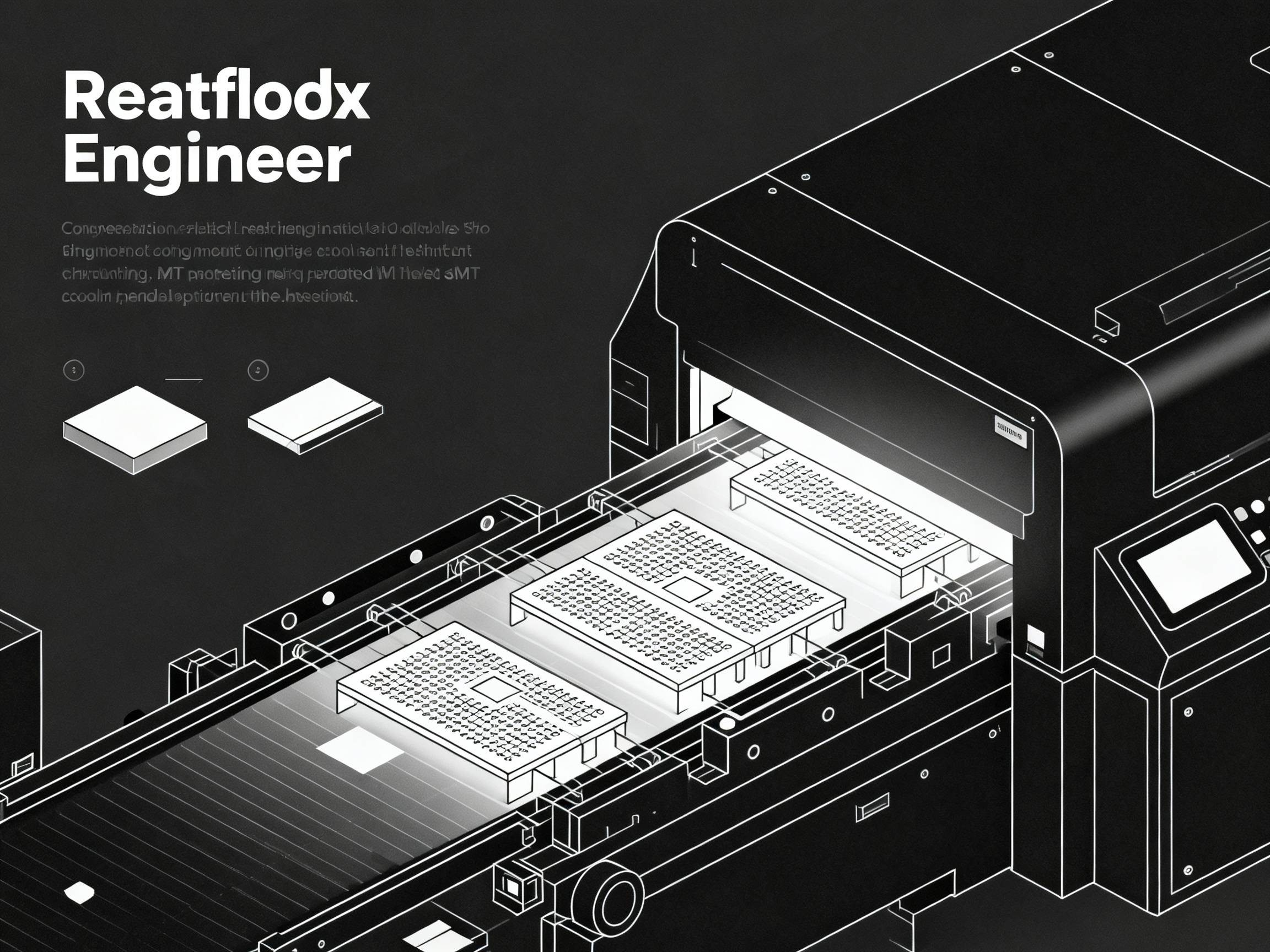
Reflow machines, also called reflow ovens or soldering machines, are specialized tools in SMT production that heat solder paste to securely bind components onto a printed circuit board (PCB). They play a critical role in creating electrical and mechanical connections while simplifying the process into a seamless, automated workflow.
Key Functions
A reflow machine does its magic in a few steps:
- Heating the PCB Assembly: The machine carefully brings your PCB up to the right temperature so solder paste can melt and flow.
- Flux Activation: During a “soaking phase,” flux takes action. It removes impurities and prepares the solder pads for a strong bond.
- Forming Joints: In the reflow stage, the solder paste melts, flows, and bonds components to the PCB, creating connections both mechanically and electrically.
- Cooling Down: Once joints are formed, the PCB begins its cool-down phase to harden solder and secure the components in place without defects like cracks or voids.
Why Reflow Matters in SMT
Think of reflow machines as the key to building those mini marvels inside your devices. These machines allow manufacturers to:
- Handle high-volume production efficiently
- Ensure repeatable, high-quality solder joints across orders
- Shrink device sizes by accommodating densely packed circuits
- Eliminate manual soldering errors entirely
Reflow soldering also opens the door to automation, making it easier for global manufacturers to hit deadlines without cutting corners.
Stages of Reflow Soldering
Reflow machines use multiple heating and cooling stages:
- Preheat Stage: Gently warms the PCB to avoid sudden thermal shocks.
- Soak Stage: Keeps the board at even temperatures to activate flux and remove oxides.
- Reflow Stage: Peaks the temperature above melting point, creating solder joints.
- Cooling Stage: Gradually cools everything to solidify joints and avoid defects such as cracks.
By consistently following these stages, reflow soldering ensures precise and repeatable performance for mass-produced electronics.
Expert Tip: For uniform solder joints, make sure temperature profiles are tailored specifically for your solder paste and component requirements. A slight adjustment here can make a huge difference!
Types of Reflow Machines: An Overview
When it comes to electronics manufacturing, choosing the right type of reflow machine is crucial. Different machines can have a big impact on your production line’s efficiency and the quality of your products.
Types of Machines
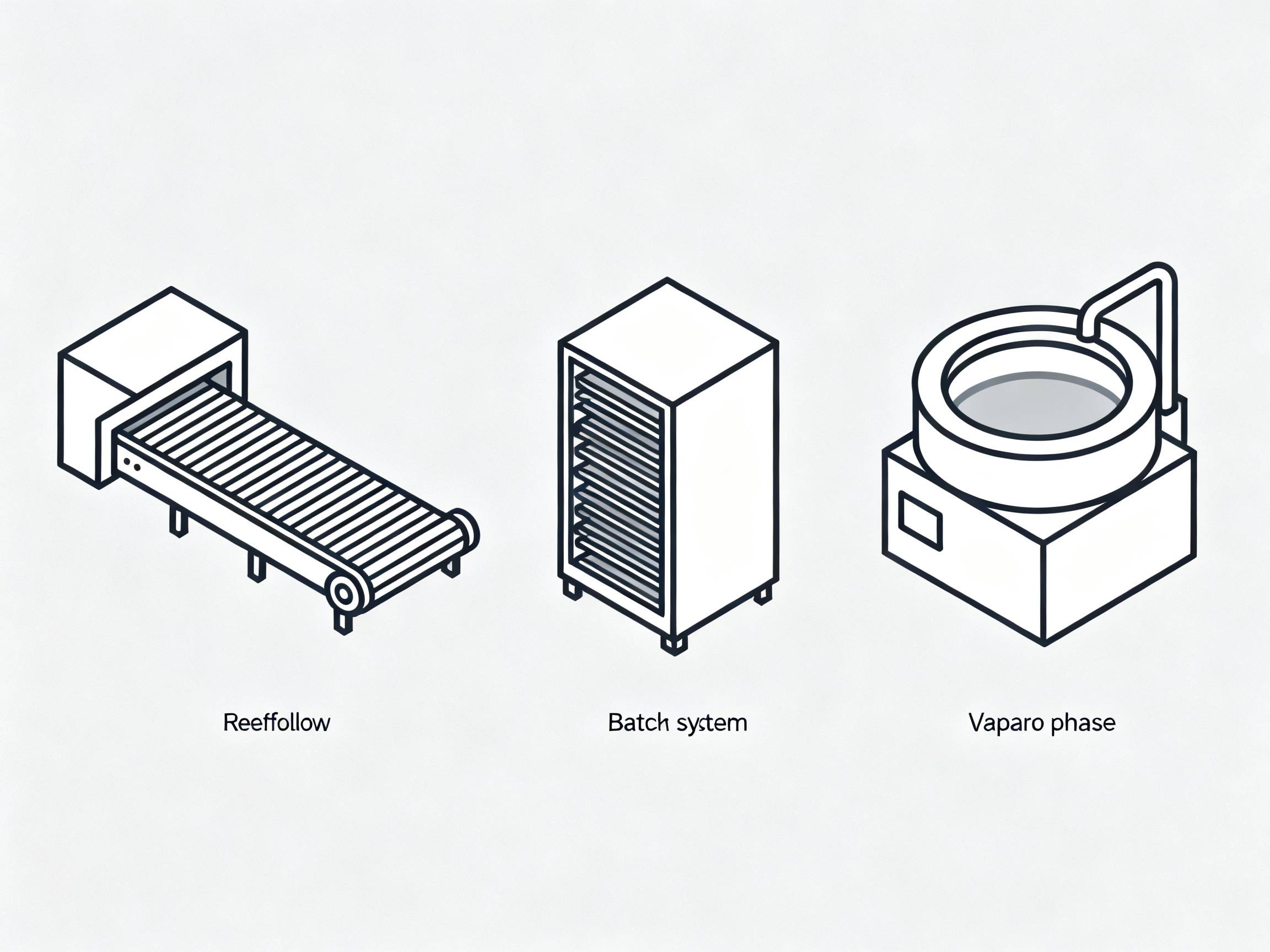
- Convection Reflow Ovens
- Pro Insight: Best for uniform heating and consistent quality, especially for mid- to large-scale production.
- Infrared (IR) Reflow Ovens
- Simpler design with quicker heating, though not as uniform.
- Vapor Phase Reflow Ovens
- Offers precise temperature control, great for sensitive components.
- Vacuum Reflow Systems
- Reduces voids in solder joints, improving reliability in demanding applications.
- Batch Reflow Ovens
- Ideal for prototypes and small batches.
- Inline Conveyor Ovens
- Preferred in high-volume factories for continuous throughput.
Choosing the Right Machine
Selecting the right reflow machine depends on your specific production needs, like volume, board complexity, and component density.
Pro Insight: For specific production needs, consider the mix of your products and the complexity of your components to guide the choice of a reflow machine.
Functions and Benefits of Reflow Machines in Electronics Manufacturing
Reflow machines are more than just tools; they’re game-changers for the electronics manufacturing industry. These machines combine precision soldering, robust automation, and cost-effectiveness to take production quality and output to the next level.
Core Functions
- High-Precision Soldering: Reflow machines use precise thermal profiles to create reliable solder joints for even the tiniest components. This ensures smoother production processes and better end-product performance.
- Accurate Temperature Control: Advanced systems allow zone-specific heating and cooling, preventing thermal stress on sensitive parts while improving overall solder quality.
- Automation-Friendly Integration: Reflow ovens are key players in fully automated SMT lines, reducing human intervention and the potential for errors.
Top Benefits
- Reduced Defect Rates: Controlled heating and cooling reduce common soldering issues like tombstoning and voiding, boosting overall reliability.
- Minimized Production Downtime: Thanks to automation and predictive maintenance features, reflow machines keep the production line running smoothly with minimal unplanned stops.
- Scalability for Growing Demand: These machines offer flexibility to grow with your business, whether you’re scaling up operations or tackling more complex products.
- Cost-Efficiency: While the initial investment might be significant, reduced defects, lower rework rates, and minimal downtime offer long-term savings.
- Compliance with International Standards: Reflow ovens meet stringent performance and safety guidelines, helping manufacturers stay compliant with global regulatory standards.
Real-world Examples
In our experience, automation with reflow machines has been a game-changer. Once, we helped a mid-sized electronics company transition from manual soldering to a fully automated SMT line. The results? They cut production time by 40% and rework costs by nearly 50%. Plus, they improved solder joint reliability, which enhanced their product reputation in the market.
From Our Experience: Automation is one of the easiest ways to save plenty of time and costs. Reflow machines eliminate manual errors, so investing in one can quickly pay off!
Common Challenges with Reflow Machines and Troubleshooting Tips
Even the best reflow machines can face issues now and then. Problems like soldering defects, overheating, or calibration drift aren’t uncommon but can often be solved with the right approach. Let’s look at some of the most frequent challenges and how to overcome them.
Frequent Issues
- Soldering Defects: Problems like tombstoning, bridging, or voids can occur when temperature profiles are incorrect or flux doesn’t activate fully. These defects may lead to unreliable connections.
- Overheating Components: Sensitive components can get damaged if the profile isn’t tuned properly, especially during the soak or reflow stages.
- Machine Calibration Drift: Over time, processes like thermal profiling can drift due to aging sensors or wear on parts such as conveyors.
- Residue Buildup: Flux residue and debris inside the machine reduce efficiency, leading to uneven heat distribution and more frequent maintenance needs.
- Misaligned Conveyor Systems: Incorrect alignment or speed can cause uneven dwell times in heating zones, leading to inconsistent soldering.
Solutions for Optimizing Machine Settings and Maintenance
- Adjusting Temperature Profiles: Periodically test thermal profiles to match component requirements. Each solder paste and board design might need slight tweaks for ideal results.
- Regular Machine Maintenance: Clean the machine’s internal parts regularly to prevent residue buildup. Focus on flux collection filters, blower fans, and conveyor belts.
- Calibrate Sensors Frequently: Checking and recalibrating sensors ensures heating zones remain within acceptable ranges without deviations.
- Troubleshooting Airflow Issues: Ensure the machine’s fans and blowers are working properly, as uneven airflow can cause temperature inconsistencies.
- Proper Conveyor Setup: Verify the belt’s tension, speed, and alignment. A misaligned conveyor can skew results and cause defects like tombstones or solder bridges.
Importance of Training and Software Integration
The human factor often contributes as much to performance as the machine itself. Proper training and leveraging advanced software can help:
- Training: Operators must be skilled in reading thermal profiles, recognizing defects, and identifying when adjustments are needed. Cross-training teams on maintenance and troubleshooting can reduce downtime.
- Software Monitoring: Modern reflow ovens often integrate with MES (Manufacturing Execution Systems) or SPC (Statistical Process Control) software for real-time monitoring. This ensures defects are flagged earlier and allows for predictive maintenance.
- Profile Management: Recipe storage and profile tracking streamline product changes, while reducing manual setup errors.
Expert Tip: “Make sure to clean the flux collection system often. Neglecting routine cleaning can lead to buildup, reducing heating efficiency and impacting solder quality.”
Efforts to stay on top of maintenance, implement training programs, and use process monitoring software ensure reflow machines remain reliable and efficient, improving overall production quality and reducing costs for manufacturers.
Reflow Machines in the Context of SMT Automation
Reflow machines are indispensable in Surface Mount Technology (SMT) automation. They seamlessly integrate into automated assembly lines, working alongside conveyors, pick-and-place machines, and inspection systems, forming the backbone of a well-coordinated manufacturing process.
How Reflow Machines Fit into SMT Lines
A typical SMT assembly line involves several steps:
- Solder Paste Application: Starts by printing solder paste onto the PCB where components will sit.
- Component Placement: Pick-and-place machines mount components precisely onto the paste-covered areas.
- Reflow Soldering: Reflow machines then heat the assembly to permanently bond the components to the board, ensuring robust mechanical and electrical connections.
- Inspection and Quality Checks: Automated Optical Inspection (AOI) systems and X-ray machines identify defects post-reflow.
Reflow ovens ensure that soldering happens efficiently and reliably. Thanks to features like adjustable conveyors and temperature profiles, they integrate smoothly with upstream paste and placement machines, as well as downstream testing equipment. Manufacturing Execution Systems (MES) use barcodes or scanned inputs to sync the reflow oven to other equipment, ensuring profiles match product demands.
Benefits of Automated Workflow with Reflow Machines
- Reduced Human Error: With automation, there’s minimal manual intervention, enhancing repeatability and precision.
- Increased Production Throughput: Reflow machines match the speed of today’s pick-and-place systems, eliminating bottlenecks.
- Consistent Quality: Thermal profiles and closed-loop control make defect rates significantly lower compared to manual methods.
- Improved Traceability: Modern ovens log parameters and link to broader MES software, ensuring alignment to compliance requirements.
Role of Software-Driven Processes
The software in reflow machines has evolved significantly to meet manufacturing demands. Many machines now feature real-time monitoring systems that adjust heating profiles based on board conditions. Other advancements include:
- Profiling Tools: Manage recipes for various PCBs, ensuring thermal consistency across different products.
- Predictive Alerts: Sensors detect drift in profiles and recommend recalibration or repairs.
- Data Logging and Analytics: Integrating with SPC software helps identify variations early, enabling swift corrections.
From Our Experience: A mid-sized company using MES-integrated reflow ovens saw operational downtime cut by 30%. The ovens’ ability to link data across stations ensured every stage of production flowed smoothly—no more hiccups mid-level.
In today’s competitive electronics manufacturing, integration and automation make reflow machines the silent workhorses keeping the tech industry moving forward.