
Create access or bypass without breaking the line
Use it when operators need a passage or the line needs routing flexibility. Built for SMT factories that care about line rhythm, fewer handling interruptions and equipment that fits the real layout.
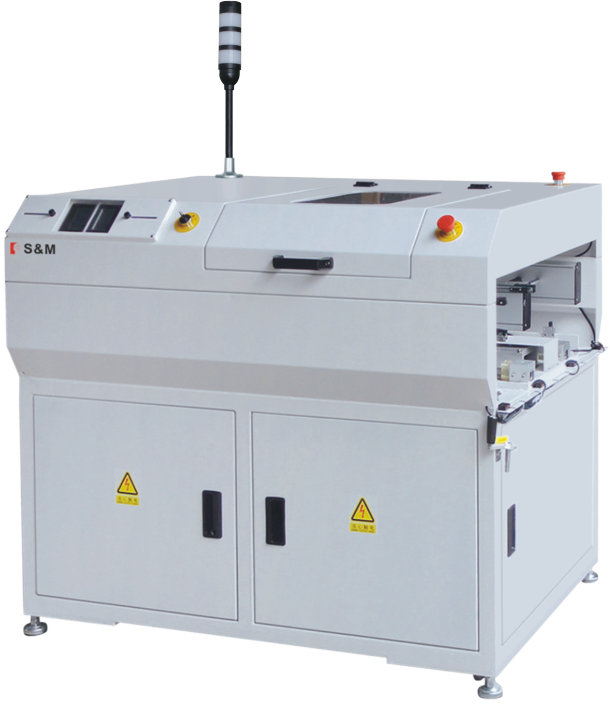
The real problem is not one machine. It is line rhythm.
A small PCB handling station can still slow the whole SMT line if board transfer, direction, timing or signal does not match the nearby equipment.
Problems this page should prevent
- A conveyor should connect machines without small delays becoming daily downtime.
- Wrong configuration causes waiting time, manual intervention and supplier blaming.
- Board size, direction, station height and signal must match the actual line.
- A low-cost generic machine can become expensive if it stops production rhythm.
Why this model is useful
- Use it when operators need a passage or the line needs routing flexibility.
- Board size verified on page based on current product specification.
- SMEMA / control details verified on page for line connection or control confirmation.
- Configuration is checked before quotation to avoid forcing the wrong model.
What to send before quotation
PCB size, board thickness, line direction, conveyor height, station position, target capacity and one photo or sketch if available.
Why choose S&M instead of a generic equipment supplier?
One team checks the line
S&M supplies loaders, unloaders, buffers, conveyors, sprayers and soldering equipment. The station is checked as part of the line, not as an isolated machine.
Configuration before quotation
We confirm whether the standard model fits. If the layout needs another type, we tell you before quoting the wrong equipment.
Practical cost structure
For standard SMT handling stations, factories need stable transfer and fast support without paying unnecessary international-brand pricing.
Verified technical specifications
These parameters are kept from the existing S&M product page. Final fit still depends on your PCB and line layout.
| Power Supply | 220V AC, Single Phase, Max 300 VA |
| Cycle Time | Approx. 10 seconds |
| Conveyor Speed | 0.5–20 m/min or as specified |
| Transfer Direction | Left→Right / Right→Left (selectable) |
| Width Adjustment | Manual (Optional: Auto width adjustment) |
| PCB Thickness | 0.6–6.0 mm |
| Effective PCB Size (L×W) | 80×50 mm – 510×460 mm (larger sizes available) |
| Machine Dimensions (L×W×H) | L 1,200×W 680×H 1,035 mm (raised); L 725×W 680×H 1,035 mm (lowered) |
| Conveyor Height | 900 ± 20 mm |
| Weight | 150 kg |
| Auto Width Adjustment | Motorized auto-adjust width (optional upgrade) |
| SMEMA Interface | Standard |
| MES Integration | One-key width adjustment + MES data exchange (optional) |
| ESD / Safety Options | Available on request |
When to choose it — and when not to
Choose this model when
Choose gate conveyor when human access and board transfer must both be protected.
Do not choose it blindly when
The problem is actually board size, board weight, direction, height, cooling time, sorting logic or another station. Send the line details first so we can check.
Before you buy, check these points
- PCB size, thickness and board weight.
- Left-to-right or right-to-left direction.
- Conveyor height and station position.
- SMEMA or control signal requirement.
- Target capacity and where the current line waits.
- Whether matching loader, unloader, buffer or conveyor is also needed.
Related SMT equipment
Use these links to match this station with the rest of the SMT line.
Get the right Gate Link Conveyor configuration before you buy
Send your PCB size, line direction, conveyor height and station position. If you have a photo or sketch, mention it in the form and we will ask for it by email after submission.
Get a configuration recommendation
We usually reply within 1 business day. Your information is used only for quotation and technical communication.
FAQ
Can S&M match this with my current line?
Yes. Send conveyor height, line direction and interface requirements so the station can be checked against your existing equipment.
Can you customize size or direction?
Customization depends on board size, station type and layout. We confirm the configuration before quotation.
What makes the quote faster?
Send PCB size, thickness, target capacity, line direction and a station photo or sketch if available.