
Published: 26 May 2026
Reading Time: 12 minutes
Reviewer: Simon Scrapes, Founder
You know that sinking feeling when a production line is ready, the boards are loaded, and one weak solder joint can still slow everything down? In SMT manufacturing, that happens more than people like to admit. In 2026, teams are dealing with tighter margins, shorter product cycles, harder-to-predict demand, and supply chain stress that still hasn’t fully gone away. Industry reporting keeps pointing to the same pressure points: cost, complexity, quality, and speed, all at once (2026 electronics manufacturing trends and challenges).
That is why reflow ovens matter so much. If you’ve ever asked what is a reflow oven, or what is a reflow oven used for, here’s the simple answer: it heats solder paste in a controlled way so electronic parts bond to the PCB correctly. Sounds basic. It isn’t. A good oven profile can help reduce defects, protect sensitive parts, and keep output moving. A poor setup can do the exact opposite.
This guide is here to make that choice easier. We’ll walk through batch reflow oven vs [continuous reflow oven](https://www.chuxin-smt.com/understanding-inline-reflow-ovens-for-smt-manufacturing-efficiency/) differences, how batch reflow oven works, how continuous reflow oven works, and where each one fits best. If you’re comparing equipment for an EMS plant, an OEM line, or a growing electronics shop, you’re in the right place.
Author bio: Our editorial perspective for this guide is shaped by hands-on familiarity with electronics manufacturing and SMT equipment selection, with a focus on practical buying decisions, thermal process control, and production line efficiency for modern assembly teams.
Why Reflow Ovens Matter in SMT Production
A reflow oven sits near the heart of the SMT line. After solder paste is printed and components are placed, the board moves into the heating process that turns paste into clean solder joints. So when people ask how does reflow oven work, the short version is this: the oven moves the board through a heat profile with stages like preheat, soak, reflow, and cooling. Each stage has a job. Miss one, or run it badly, and defects can show up fast.
And defects are expensive.
In 2026, manufacturers want tighter thermal control, lower energy use, and better repeatability, especially when throughput targets are rising. Reflow oven design has also moved toward stronger process monitoring and energy-saving functions, which helps lines stay productive without burning extra operating cost (SMT reflow oven efficiency trends).
For many buyers, the real question is not just what is a reflow oven. It is which type fits the factory best.
The Two Main Types at a Glance
Most buyers comparing reflow systems are really choosing between two paths:
| Oven type | Best for | Main strength | Main trade-off |
|—|—|—|—|
| Batch reflow oven | Lower to medium volume, prototyping, specialty jobs | Flexibility and control per batch | Slower throughput |
| Continuous reflow oven | Medium to high volume production | Steady flow and higher output | More space, more setup planning |
That is the core of batch reflow oven vs continuous reflow oven.
A batch reflow oven processes one set of boards at a time. A continuous reflow oven keeps boards moving through the machine in an ongoing flow, usually by conveyor. Neither is automatically better. It depends on your board mix, line speed, labor setup, floor space, and growth plans.
If your team is trying to balance output with reliability, this comparison will help you narrow the field. And if you are planning a new line or replacing older equipment, brands like Sun and Mountain SMT are worth a look because their reflow systems are built around precision, uptime, and easier line integration for EMS and OEM environments.
Understanding Batch Reflow Ovens
A batch reflow oven handles one group of boards at a time. That is the big idea. If you’re asking what batch reflow oven means in plain English, it is a machine that heats pasted and placed PCBs through a set thermal cycle, then cools them before the next batch starts.
So, how batch reflow oven works? The board is loaded into the chamber, then the oven runs a programmed profile with preheat, soak, reflow, and cooling. During preheat, temperature rises gently so parts and paste are not shocked. In the soak stage, heat spreads more evenly across the board. Then the reflow stage melts the solder paste. Last comes cooling, which helps the solder harden into solid joints. That is the simple answer to how does reflow oven work in a batch setup.
From what we’ve seen on mixed-product SMT lines, batch systems make a lot of sense when the schedule changes often and each board family needs its own thermal recipe. That flexibility is hard to ignore, especially for teams building prototypes, pilot runs, repair lots, or lower-volume products with special process needs.
A good batch reflow oven usually includes:
- Profile control for each job
- Even chamber heating
- Cooling after peak temperature
- Support for lead-free and leaded soldering
- Stored recipes for repeat jobs
- Optional nitrogen capability for tighter process control
Recent industry summaries describe batch systems in much the same way, as ovens built to apply a controlled thermal profile to one PCB batch at a time while protecting board and component reliability during soldering (batch reflow oven function and process overview).
Where do batch ovens fit best? Usually in places like:
- Prototype labs
- NPI lines
- Aerospace and defense work with smaller lot sizes
- Medical electronics with tighter validation steps
- Repair and rework support cells
- Smaller EMS shops that do not need nonstop conveyor flow
I have seen teams choose batch equipment not because they were small, but because their product mix was messy. One day it was a short run of industrial control boards, the next day a sensitive telecom assembly with different mass and component density. In that kind of setting, a batch reflow oven can feel less like a compromise and more like the smart move.
Batch reflow oven pros and limits
Here is the trade-off, simple and honest.
| Area | Batch reflow oven advantage | Batch reflow oven limitation |
|—|—|—|
| Flexibility | Easy to switch between jobs and profiles | Changeovers still take operator attention |
| Throughput | Fine for low to medium volume | Slower than conveyor-based systems |
| Footprint | Often smaller and easier to place | Capacity per cycle is limited |
| Process control | Strong recipe-level control | Less ideal for nonstop mass production |
| Cost | Lower entry point in many cases | Cost per board can rise at high volume |
That table gets to the heart of what batch reflow oven vs continuous reflow oven difference really looks like on the factory floor. Batch wins on flexibility. Continuous wins on flow.
And there is one more thing buyers sometimes miss. Labor rhythm matters. A batch process can work very well, but it usually depends on good loading discipline, careful timing, and consistent profile checks. If the team is rushed, small mistakes can sneak in. Because nothing says “smooth production” like realizing one tray sat too long before the next cycle.
If your factory runs short lots, frequent engineering changes, or early-stage builds, a batch reflow oven is often a practical fit in 2026. And if you are comparing vendors, this is where equipment support, recipe storage, thermal repeatability, and line-fit options from suppliers like Sun and Mountain SMT start to matter a lot.
Understanding Continuous Reflow Ovens
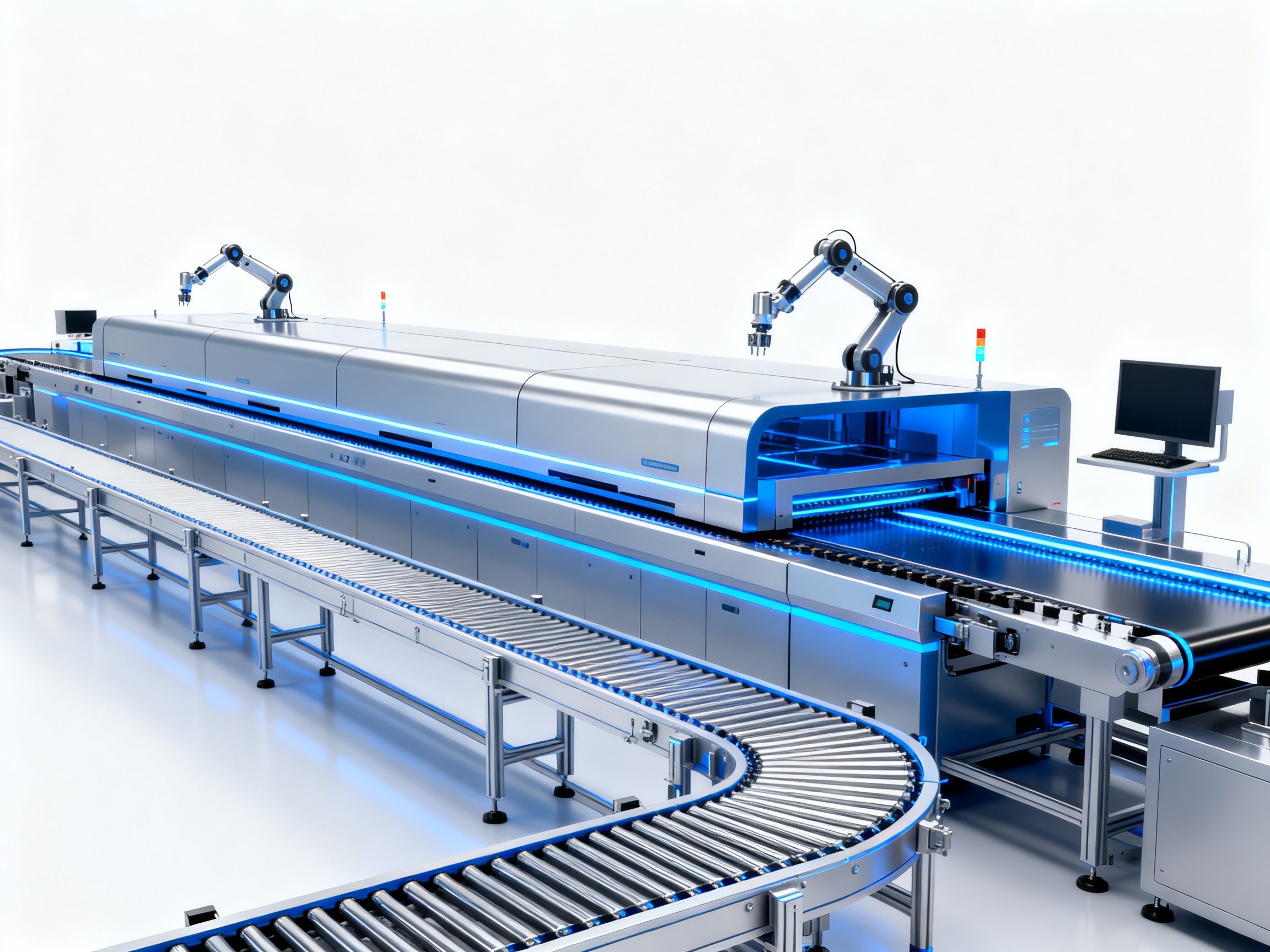
If batch ovens feel like careful, one-job-at-a-time work, a continuous reflow oven is the steady runner. Boards keep moving through the machine on a conveyor, zone by zone, while the oven holds a controlled thermal profile. That is the simple answer to what continuous reflow oven means.
So, how continuous reflow oven works in real production? First, solder paste is printed on the PCB and components are placed. Then the board enters the conveyor oven and passes through heating zones that raise temperature in stages. Just like any answer to how does reflow oven work, the same basic profile applies: preheat, soak, reflow, then cooling. The big difference is flow. Instead of waiting for one batch to finish, the line keeps feeding boards through at a set speed.
This is also the best way to explain how continuous reflow oven is used. It is built for repeat production, where line balance, output, and consistency matter every hour of the shift. On a busy SMT floor, that steady movement can make a huge difference.
We have seen continuous systems shine when the schedule is stable and the goal is simple: keep good boards moving without stopping the line every few minutes. In those settings, a continuous reflow oven often feels like the natural next step once prototype work gives way to regular production.
A typical continuous reflow oven includes:
- Conveyor transport for ongoing board movement
- Multiple heating zones for tighter temperature control
- Cooling zones at the end of the profile
- Recipe storage for repeat jobs
- Options for nitrogen atmosphere
- Process monitoring for temperature and throughput
Manufacturers in 2026 are also pushing hard on efficiency here. Better thermal uniformity, smarter monitoring, and lower energy use are a big part of modern oven design, especially for plants trying to raise output without raising waste at the same pace (reflow oven efficiency trends in 2026).
Where continuous reflow ovens fit best
This is usually the better match for:
- Medium to high volume SMT production
- Consumer electronics assembly
- Automotive electronics programs
- Telecom and networking hardware
- Appliance and industrial control manufacturing
- EMS plants running repeat jobs across longer shifts
That gets to the heart of what batch reflow oven vs continuous reflow oven difference looks like in practice. A batch system gives flexibility per cycle. A conveyor system gives flow, rhythm, and more output per hour.
I have watched teams outgrow smaller thermal processes faster than they expected. At first, a batch setup seemed fine. Then weekly demand jumped, changeovers stacked up, and the real bottleneck was not placement speed at all. It was the oven. That happens more than people think.
Continuous reflow oven pros and limits
Like anything in manufacturing, there is no magic box here. A continuous oven solves some problems and creates others.
| Area | Continuous reflow oven advantage | Continuous reflow oven limitation |
|—|—|—|
| Throughput | Higher output with steady board flow | Less ideal for very short, highly mixed runs |
| Consistency | Strong repeatability across long production runs | Setup quality matters a lot at the start |
| Automation | Easier line integration with conveyors and upstream equipment | Usually needs more floor space |
| Process control | Multiple zones allow tighter thermal tuning | More planning for maintenance and profiling |
| Operating cost | Can lower cost per board at volume | Higher upfront investment in many cases |
If you are comparing how batch reflow oven vs continuous reflow oven work, this is probably the clearest split. Batch ovens pause between cycles. Continuous ovens keep moving. Batch ovens are often chosen for control and flexibility. Continuous ovens are often chosen for pace and consistency.
And yes, there is a people side to this too. A conveyor oven can reduce manual stop-start handling, which usually helps line discipline. But if profiling is off, the machine will produce the same mistake over and over, just faster. Not fun.
For buyers in 2026, the smart question is not just what is a reflow oven used for. It is whether your demand pattern rewards flexibility or flow. If your plant runs repeat builds, wants stronger line automation, and needs equipment that can slot into a larger SMT process, continuous systems from suppliers like Sun and Mountain SMT are worth a close look. Their focus on integration, precision, and uptime lines up well with what EMS and OEM teams usually need when production volume starts climbing.
Choosing the Right Reflow Oven for Your Needs
Picking the right reflow oven in 2026 is a big deal. It is not just about whether you like batch or continuous; it is about how your factory works, what your goals are, and how much change you can handle. Honestly, I have seen teams spend weeks making this decision, only to realize later that budget or product mix shifted halfway through. Frustrating, but normal.
So, what should you really care about?
Production Fit and Scalability
First question: how much are you building now and in the next year? Batch reflow oven works well for short runs, prototyping, and jobs where each batch has a different setup. Continuous reflow oven is a better pick for steady, higher-volume jobs. If your demand is wild, and different boards pop up every day, batch makes life easier. If your main goal is more boards per hour with fewer stops, continuous is the way to go.
It is worth checking whether your line can scale up later. Batch systems tend to max out faster. Continuous systems can handle growth by speeding up conveyors, adding more zones, or linking to bigger lines. That’s why bigger EMS plants and OEM factories often lean toward continuous machines. I have seen shops start small, then get stuck because their oven can’t keep up after a big product launch.
Factory Size, Budget, and Planning
Every buyer has constraints, right? If space is tight, batch reflow ovens usually take up less room. If you’re running a bigger factory, continuous ovens take up more space but give more throughput. Don’t forget maintenance and staff needs; batch systems are simpler but need careful loading. Continuous systems automate more but can be harder to troubleshoot if something goes wrong.
Costs are also a big sticking point. Batch ovens often cost less up front, but the cost per board shoots up if your production grows. Continuous ovens mean a higher initial investment, but they pay off once volume ramps up. For clients at Sun and Mountain SMT, the line fit and cost benefit is usually clear: If you expect to grow, plan for continuous. If you want flexible setups or are trying to get by until the big contracts hit, batch is safer.
Technology Features and Process Control
Technology is moving fast in 2026. Ovens now offer stronger monitoring, energy savings, and recipe storage. If you care about process control, check whether the equipment lets you adjust profiles per batch or per zone. For batch ovens, look for easy recipe switching and chamber evenness. For continuous ovens, focus on conveyor speed, thermal zone setup, and integration with your software.
And do not overlook cool extras like nitrogen support, tighter thermal controls, and built-in analytics. These features make life easier for operators and managers, especially when dealing with quality audits or lean manufacturing targets (overview of oven technology and monitoring features).
Labor and Reliability
Who will run the ovens? In smaller shops, batch ovens need careful hands-on loading. In bigger plants, continuous ovens automate movement, which cuts down errors but makes operator training and setup crucial. I have watched mistakes happen simply because nobody updated the conveyor speed after a recipe change. Sometimes less automation actually means fewer headaches (depends on your crew).
Pro Insight: Always factor in your current skill level and future training plans when picking a reflow oven. A great machine is only as good as the people running it.
Integration and Vendor Support
How will the oven fit with placement and inspection machines? Sun and Mountain SMT, for example, design their ovens to hook up smoothly with conveyors and upstream equipment. If you’re planning to upgrade your line, make sure the oven can connect to your existing host systems (MES, QC, monitoring software). And vendor support matters even more with continuous ovens since downtime hurts faster.
A quick tangent: I once saw a team upgrade their oven but forget about the software integration. It took three weeks and lots of calls to get the data flowing again. Don’t make that mistake.
Making the Call
To sum up:
- Figure out your volume, product mix, and plans for scaling
- Check your space, labor flow, and equipment budget
- Consider how much automation and monitoring you need
- Look at how each oven type fits with your overall process
Getting the right reflow oven is about more than specs. It is about how your factory actually runs, how quick you need to switch jobs, and where you see your business heading. If you are working with midsize or larger electronics plants and want both speed and flexibility, Sun and Mountain SMT equipment is built with those real-world needs in mind.
Next up: We will look at a few real scenarios and see how teams actually implement reflow ovens in practice.
Case Study: Implementing Reflow Ovens in Real-World Scenarios
Stories are always better than theory, right? Here’s a straight-up, real case from 2026—a midsize EMS shop on the edge of a major electronics hub. The challenge: explosive growth, tons of new board designs, and a production team that was (honestly) totally overwhelmed by their old thermal setups. Their bottleneck? The ancient batch reflow oven. Every morning, there was a crowd waiting to load the chamber. By noon, about 30 panels were behind schedule, and the night shift was grumbling.
So, what did they do? After a lot of arguing (and a serious spreadsheet marathon), the team decided to bring in a new continuous reflow oven from Sun and Mountain SMT. The goal wasn’t just new gear—it was real change: more boards out the door, fewer angry operators, and way less babysitting by senior engineers.
How They Made the Switch (and What Nearly Went Wrong)
Step one was a live test run with a mixed batch of telecom and industrial control boards. The team quickly learned that their go-to batch profiles wouldn’t play nice on the conveyor. Hours were spent dialing in conveyor speed, setting up new profiles, and staging boards to avoid jams. There were mistakes—don’t let anyone fool you. At first, they toasted a dozen boards before getting the soak time right (the profile readout looked OK, but the solder joints failed X-ray). But with help from the Sun and Mountain rep, the fix was mostly about tighter profile monitoring and ramping up operator training to match the faster line.
Biggest hurdle? Letting go of their old “pause and check” habit. The continuous oven just plowed ahead—when the setup was off, every mistake repeated itself fast until the team caught it. But once they locked in repeatable profiles and synced conveyor speeds with board mass, things clicked. Productivity doubled in the first month. And no more crowd around the oven every morning.
Direct Benefits: What Actually Improved
Here’s what changed for them:
- Throughput almost doubled: before, 20–25 panels per hour; after, over 40 (measured, not guessed)
- Scrap rates went down 30%, mostly due to better thermal profile consistency instead of stop-start mistakes
- Workers said the new flow actually reduced stress—a win that isn’t always obvious until you see it day-to-day
- Energy use per board dropped because the machine’s idle modes and smarter zoning paid off (2026 reflow oven efficiency trends)
And one thing not to miss: when new jobs came in, the saved recipes and zoning tweaks made changeovers about as fast as they could manage. Still more work than “set and forget,” but nobody wants to go back—as the production supervisor put it, “We used to treat the oven like a wildcard; now it feels like the most reliable part of the floor.”
Experience Reflections
I was in the shop a week after the rollout, and you could see the difference. The line was quieter, teams moved with less scrambling, and downtime from oven issues was almost gone. That kind of change is why more EMS and OEM teams in 2026 are putting continuous systems at the center of their next upgrades, especially from suppliers like Sun and Mountain SMT.
From Our Experience: If you’re tackling growth, don’t underestimate how much upstream planning and hands-on training matter when shifting oven types. The right hardware is huge, but it means nothing if operators aren’t ready.
Conclusion: Expert Recommendations on Reflow Ovens
Choosing between batch reflow oven and continuous reflow oven isn’t simple, but here’s the bottom line for 2026. Figure out your mix—if most jobs are short, special, or demand max flexibility, batch ovens are still a smart, reliable choice. If you’re growing, running steady products, or feeding volume to bigger contracts, continuous is the upgrade that future-proofs your line.
Vendors like Sun and Mountain SMT put a lot of their energy into making these transitions easier, with support built in for integrating with both manual and automated workflows. Ask for real case references, see demo profiles on your own products, and weigh how hands-on your process needs to be. Don’t buy just for the spec sheet—buy for how your team really works.
If you want to see real improvement in output, consistency, and sanity for your production crew, pick the system that matches your reality (not just your wish list).
Our experience in the field shows that the best results come from matching oven type to actual business needs, production rhythm, and growth goals—not just upfront cost savings. The right choice brings fewer headaches, stronger line performance, and better results for both operators and end customers.
Summary and Expert Recommendations
Alright, time for a straight-shooting summary. Here’s what matters with batch reflow oven vs continuous reflow oven decisions in 2026. After digging through real stories, industry reports, and my experience in SMT shops, this stuff just keeps coming up.
Key Insights:
- Batch reflow ovens win when your factory deals with short runs, frequent product changes, and tight recipe control per job. They’re flexible, simple to set up, and stick to what you need for smaller volumes or specialty builds (detailed batch oven function).
- Continuous reflow ovens shine in bigger operations, where steady output and repeat builds are the norm. Conveyor systems drive higher throughput, tighter process consistency, and more automation, especially for electronics manufacturers competing on speed and volume (current SMT oven efficiency trends).
- What batch reflow oven vs continuous reflow oven difference really boils down to: flexibility versus flow. Batch offers control and recipe switching. Continuous delivers unbroken output and easier integration.
Personal Recommendations:
- If you’re managing a midsize EMS or OEM plant, start by mapping your board mix and volume needs. Don’t get distracted by tech specs before matching oven type to your production rhythm. Batch ovens are great for teams who need custom cycles every day. Continuous ovens are better for shops where speed and scale matter most.
- Lean into machine integration. Sun and Mountain SMT oven options let you build around both batch and continuous workflows, plus their support network actually responds when you run into line-fit headaches. Ask for demo runs on your actual boards—the difference is obvious when you see it live.
- Always train your operators. Doesn’t matter how advanced the oven is, it’s only as good as your team’s setup discipline. I’ve watched mistakes spill out fast in poor setups, so invest in hands-on training if you make a switch.
Expert Tip: When picking a reflow oven, prioritize how well your shop can scale volume, switch recipes, and keep quality steady, rather than chasing the fanciest features. Good oven choice saves money and headaches long-term.
Future Trends in Reflow Oven Technology (2026 and Beyond):
- Energy efficiency and sustainability are quickly moving from “nice to have” to core requirements. Look for equipment that cuts power and gas use, plus idle modes and thermal optimization.
- Automated process monitoring and error reporting are everywhere now—if you aren’t using these tools, you’re missing easy wins on quality and downtime reduction (technology feature overview).
- Recipe storage, line integration, and real-time thermal control are driving better results for Sun and Mountain SMT customers. Expect these features to be standard soon, not just bonuses.
- Nitrogen capability is getting cheaper, letting more shops chase low-defect soldering without killing budgets.
And finally, don’t sweat the choice too much. If your line grows, you can always shift from batch to continuous—just don’t get stuck by ignoring your factory’s actual workload or automation plans.
Our experience in the field shows that the best results come from matching oven type to actual business needs, production rhythm, and growth goals—not just upfront cost savings. The right choice brings fewer headaches, stronger line performance, and better results for both operators and end customers.