
Published: 26 May 2026
Reading Time: 10 minutes
Reviewer: Simon Scrapes, Founder
If you have ever wondered how those tiny components on your phone’s circuit board get perfectly soldered in place, the answer is usually a reflow oven for PCB assembly. These machines are the workhorses of modern electronics manufacturing, quietly melting solder paste at precisely the right temperatures to create reliable electrical connections across millions of boards every single day.
Here’s something that might surprise you. The global reflow oven market is worth roughly USD 0.4 billion in 2026, and it’s growing at about 4.1% each year. That growth tells us something important: more companies are waking up to the fact that getting their soldering process right matters, a lot.
So why should you care about what is a reflow oven? If you work in electronics manufacturing, the answer is simple. Without one, you are probably dealing with uneven solder joints, components that fail too soon, or production lines that crawl along slower than they should. We have seen manufacturers struggle with hot plates that cannot maintain consistent temperatures, manual processes that introduce human error, or older equipment that constantly needs babysitting. The truth is, poor soldering affects everything downstream, from product reliability to your company’s reputation.
The good news? A solid pcb reflow oven changes the game. It gives you repeatable results, better thermal control, and the ability to work with increasingly tiny components that modern electronics demand. Whether you are building simple gadgets or complex automotive systems, understanding how these machines work helps you make smarter decisions about your production line.
Over the next few minutes, we will walk through exactly what a reflow soldering oven does, how the temperature process works, when it makes sense to invest in one, and what to watch out for during maintenance. By the end, you will have a clear picture of whether a reflow oven fits your operation.
Simon Scrapes has spent over 15 years covering electronics manufacturing technologies, with a focus on practical equipment insights for production engineers and procurement specialists.## How a Reflow Oven Works: A Detailed Breakdown
A pcb reflow oven is essentially a controlled heating chamber with a conveyor system that moves your boards through different temperature zones. The magic happens in how precisely it manages heat over time. Most production-grade smt reflow ovens in 2026 feature between 8 and 13 heating zones, plus 1 to 3 cooling zones, all working together to follow a carefully designed thermal profile.
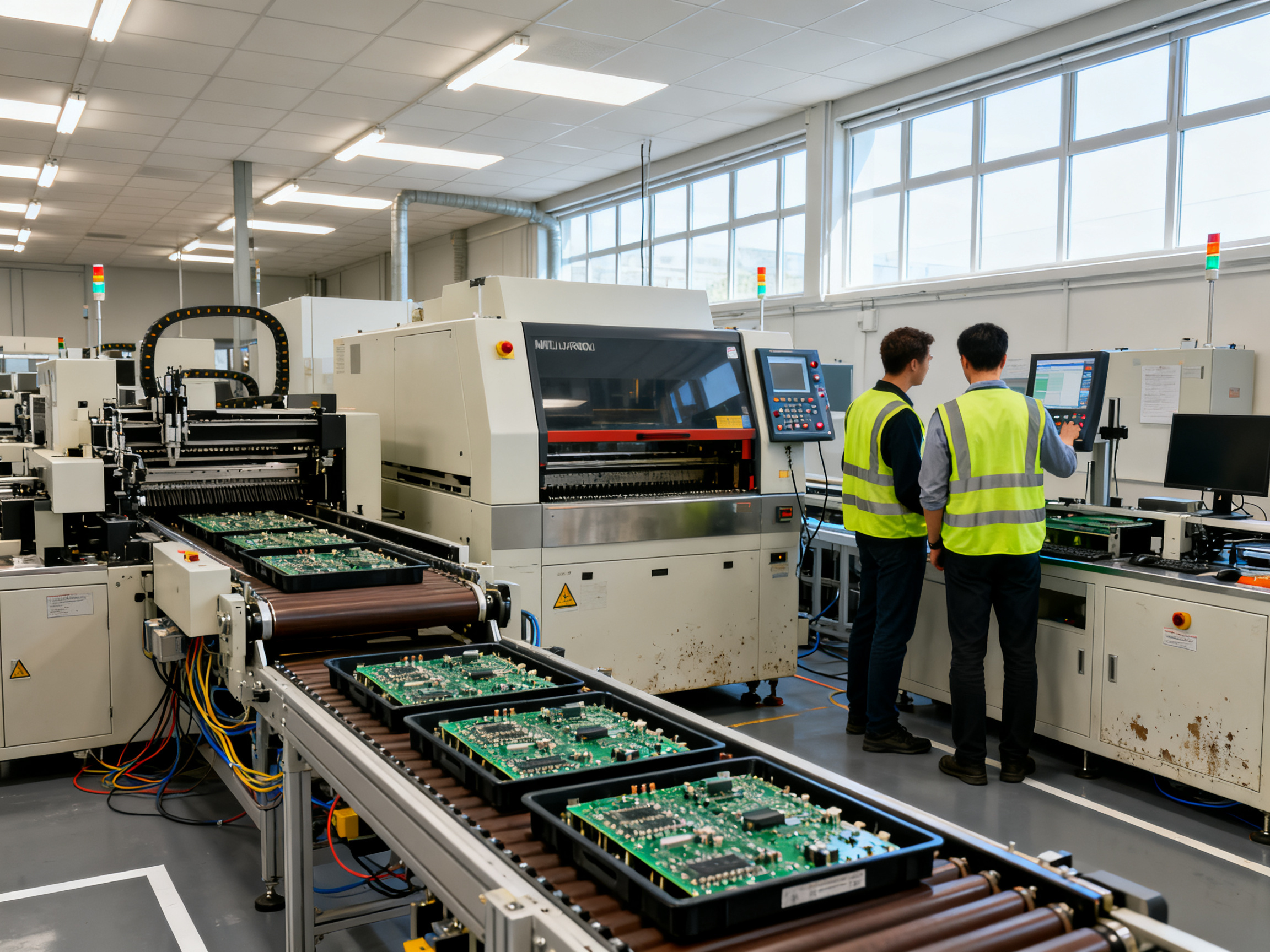
Here is how the process unfolds. Your PCB enters the oven on a conveyor belt, typically traveling at speeds between 500 and 2000 millimeters per minute depending on your board design and the profile you are running. As the board moves through each zone, heaters blow hot air (or use infrared radiation) across the surface to raise the temperature in a controlled way.
The Four Temperature Stages
The reflow soldering process breaks down into four distinct stages, each serving a specific purpose.
Preheat stage: The board gradually warms up, usually from room temperature to around 150 degrees Celsius. This lets the solvent in the solder paste evaporate and activates the flux. If you rush this stage, you get solder splatter and those annoying little solder balls scattered across your board.
Soak stage: The board holds at a moderate temperature, typically between 150 and 200 degrees Celsius. This stabilizes the thermal mass across the entire PCB and ensures all components heat evenly before hitting peak temperature. Think of it like letting a cast iron pan warm up before you cook with it.
Reflow stage: This is where the solder melts. Temperatures climb to around 250 degrees Celsius for lead-free solders, and the焊料 paste transitions from a paste state to a liquid, wetting the component leads to the pads. The board then enters the cooling zone, where solidification happens in a controlled way to form strong metallurgical bonds.
Cooling stage: The board exits the oven while still on the conveyor. Controlled cooling prevents thermal shock and ensures the solder joints form with the right grain structure for reliability.
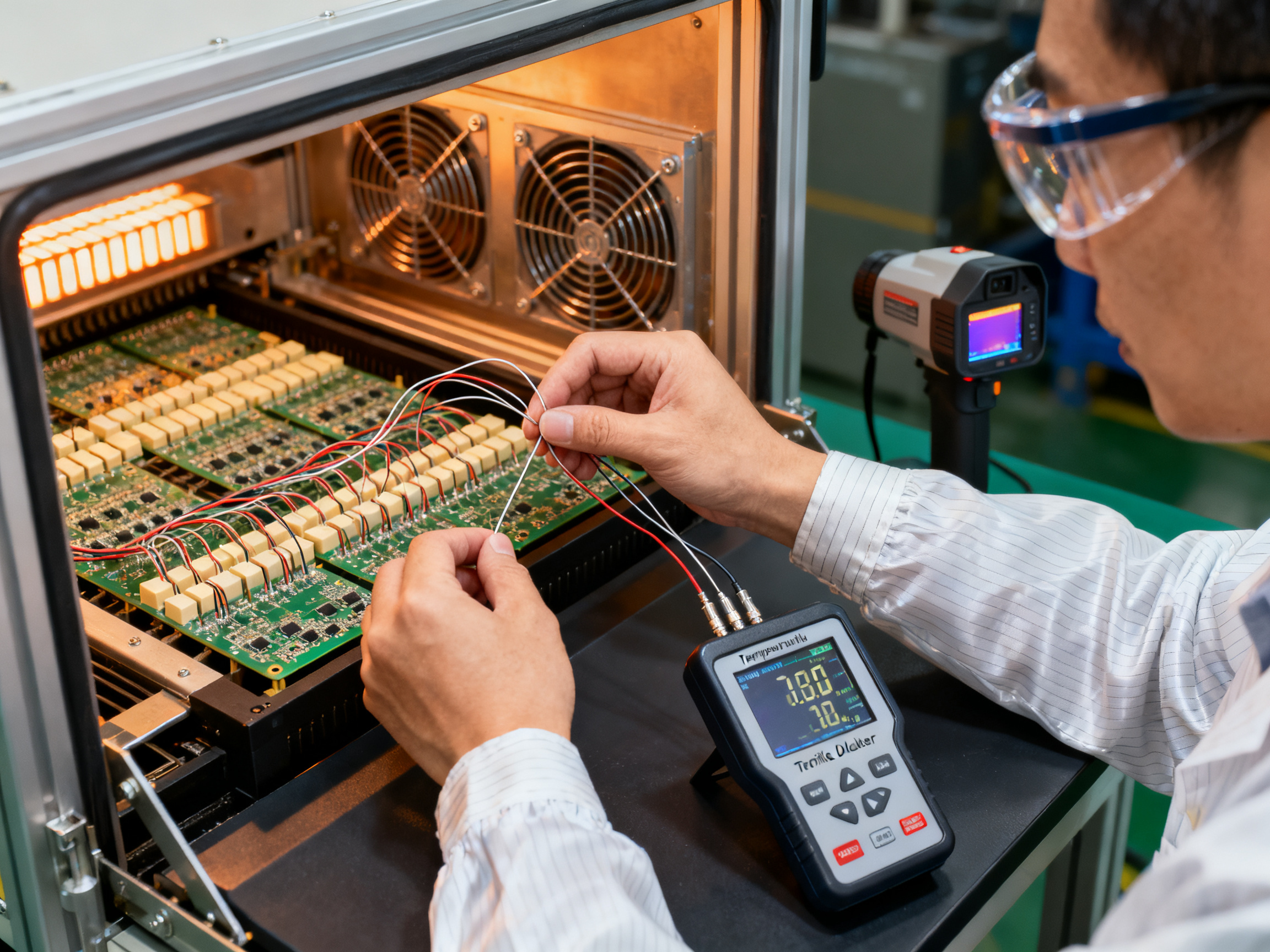
Expert Tip: When optimizing temperature profiles for different PCB requirements, start with your most thermally sensitive component and work backward. Heavy copper planes, large BGAs, and tiny 0201 components all behave differently, and your profile needs to find the middle ground that works for everything on the board.
Integration with Assembly Lines
Modern reflow ovens do not operate in isolation. They connect to pick-and-place machines upstream and inspection systems downstream, forming part of a continuous SMT line. The conveyor speed, zone temperatures, and atmospheric conditions all communicate with the broader line controller, which means changes in one area automatically adjust others.
We have integrated reflow ovens from Sun and Mountain SMT into production lines where the oven itself signals the pick-and-place to slow down if a thermal profile starts drifting, and that kind of real-time coordination makes a huge difference in first-pass yield. Some newer systems in 2026 even use AI to auto-tune profiles based on real-time thermal imaging, which is pretty slick if you have the budget for it.
The key takeaway? A reflow oven is not just a heater with a belt. It is a precision instrument that translates your thermal profile into consistent, reliable solder joints across thousands of boards per hour.## When to Choose a Reflow Oven for Your PCB Assembly
Not every electronics manufacturer needs a reflow oven. The honest answer is that it depends on what you are building, how much you are building, and whether the benefits actually match your situation. Let me walk through the scenarios where a reflow oven makes sense, and a few where it probably does not.
When a Reflow Oven is the Right Call
A pcb reflow oven becomes the obvious choice when you are working with surface-mount technology boards that have high component density. If your product mix includes fine-pitch components, BGAs, or 0201-sized parts, reflow soldering gives you the precision those parts need. We have worked with manufacturers who tried using hot plates or hand soldering for dense SMT assemblies, and they consistently ran into tombstoning issues, cold joints, and field failures that reflow would have prevented.
Production volume matters a lot here. If you are running 500 to 50,000 boards per month, the math usually works in favor of a dedicated reflow oven. Below that range, a smaller benchtop reflow oven might still serve you well for prototyping or low-volume work. Above that, you are probably looking at multiple ovens or higher-throughput models anyway.
The other big factor is consistency. Wave soldering can be faster for simple through-hole boards, but reflow ovens give you repeatable thermal profiles across thousands of boards. That means fewer surprises, less rework, and happier customers.
Cost-Benefit Across Different Scales
For small operations with occasional production runs, a reflow oven for pcb assembly might feel like overkill. The upfront cost, floor space requirements, and training needs do not always make sense if you are building fewer than 100 boards per month.
Mid-scale manufacturers, think 1,000 to 10,000 boards monthly, usually see the best return on investment. You have enough volume to justify the equipment cost, but you also benefit from the quality improvements that reflow delivers. Less rework means your labor costs drop, and better first-pass yield means you ship more product per board.
Large-scale operations running 10,000+ boards monthly practically need reflow ovens to stay competitive. The throughput advantages alone justify the investment, and modern SMT reflow ovens with 8 to 13 heating zones can handle complex thermal profiles while keeping cycle times short.
Pro Insight: When selecting a reflow oven for large-scale production, pay close attention to the number of heating zones, conveyor speed range, and the control system’s ability to communicate with your pick-and-place and inspection equipment. A faster oven that does not integrate well with your line will actually slow you down overall.
Environmental Considerations
Lead-free soldering requirements have pushed reflow oven temperatures higher, which means energy consumption matters more than it used to. If your facility has sustainability targets or strict energy budgets, look for ovens with heat recovery systems and better insulation.
Some manufacturers in 2026 are also moving toward nitrogen-assisted reflow for sensitive applications, which reduces oxidation but adds operating cost for the gas supply. That trade-off only makes sense if your boards genuinely need it, like aerospace or medical devices.
Quick Comparison with Other Methods
| Method | Best For | Throughput | Setup Complexity |
|——–|———-|————|——————|
| Reflow oven | SMT boards, dense assemblies | High | Medium |
| Wave soldering | Through-hole, simple THT boards | Very high for simple boards | Medium |
| Hot plate | Prototyping, small batches | Low | Low |
| Hand soldering | Rework, low-volume specialty | Very low | Low |
The bottom line? If you are building modern electronics with surface-mount components, a reflow soldering oven is not optional anymore, it is the baseline expectation for quality and efficiency.
Maintenance and Troubleshooting of Reflow Ovens
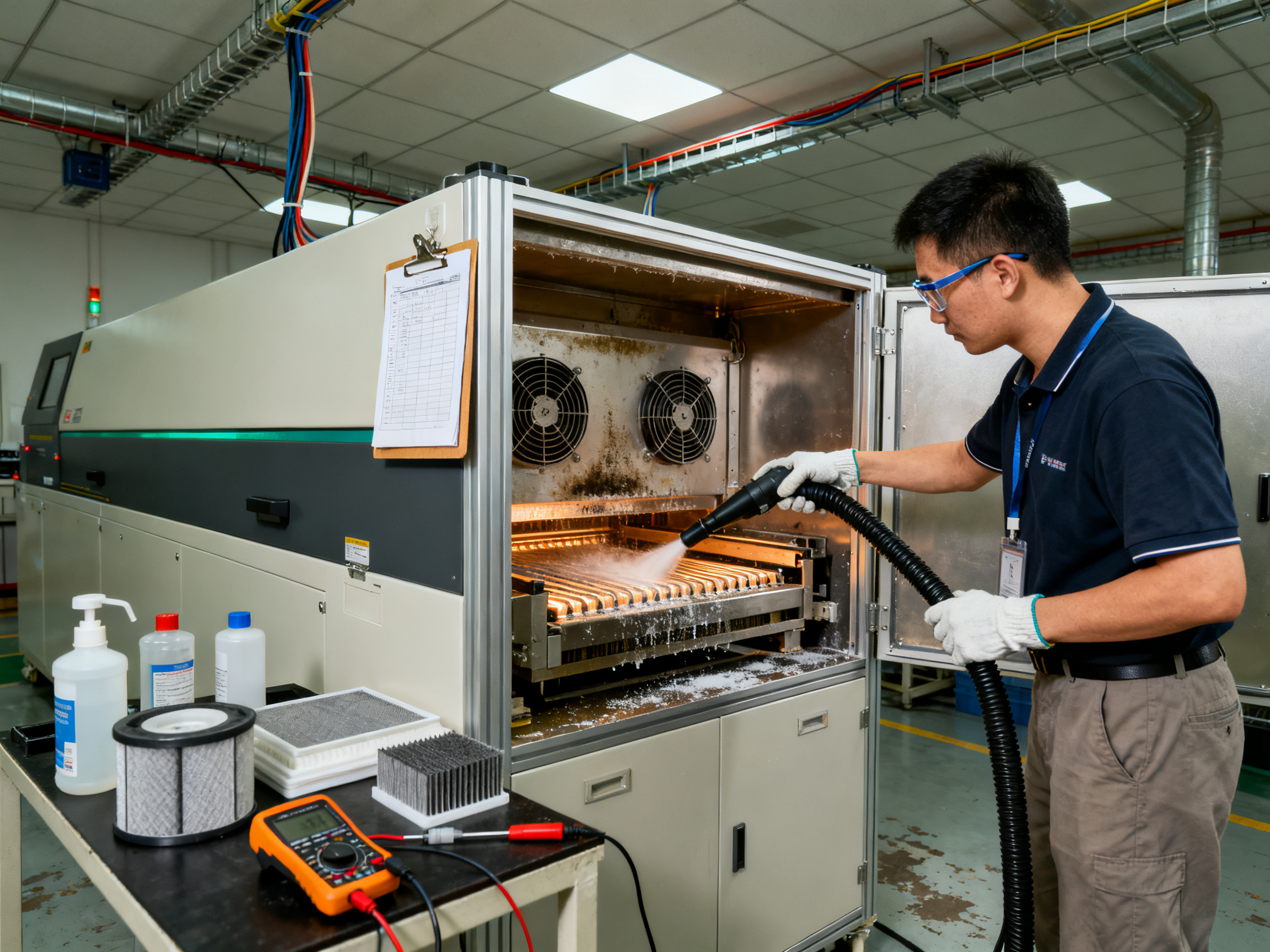
Let me be real with you. A reflow oven that is not maintained properly will cost you way more in rework, scrap, and downtime than what you save by skipping maintenance. We learned this the hard way at a facility I visited a few years back. They had not cleaned the heating chamber in over eight months, and the thermal profiles were drifting so badly that nearly 15% of their boards were coming out with cold joints.
Keeping Your Oven Running Smooth
Most problems with reflow ovens fall into a handful of categories. Blower fan issues rank right at the top. When fans get clogged with flux residue or dust, airflow becomes uneven, and parts of your board heat faster than others. That means inconsistent solder joints and a bunch of frustrated technicians trying to figure out why their profiles look fine on paper but their boards are failing in real life.
Temperature drift is another common headache. Thermocouples wear out. Heating elements degrade. Solid-state relays fail. If your zones are not hitting their setpoints anymore, your thermal profile is basically useless, no matter how perfect it looks in your software.
Conveyor problems sneak up on you too. Belt stretch, chain wear, speed sensor drift. Any of these changes your dwell time, which throws off everything downstream. I once spent three days chasing a sporadic bridging issue before realizing the conveyor speed had drifted about 8% over six months of use.
Your Basic Maintenance Checklist
Here is what your weekly and monthly routine should look like:
Weekly tasks:
- Clean the heating chamber and remove any residue buildup
- Check the conveyor belt for wear, tension, and debris
- Verify that all safety interlocks are functioning properly
Monthly tasks:
- Inspect wiring and connectors for damage or corrosion
- Check control panel displays and input响应
- Examine filters and clean or replace as needed
Every 500 operating hours:
- Inspect blower fans for dust buildup and unusual vibration
- Verify thermocouple accuracy against a calibrated pyrometer
- Check belt tension and chain/sprocket wear
Professional servicing should happen every 6 to 12 months, depending on how hard you run the oven. High-volume production lines typically need service closer to every six months, while lighter use might stretch to annually.
From Our Experience: When integrating reflow ovens into modern manufacturing processes, always document your maintenance activities in the same system where you track production data. That way you can correlate machine downtime or defect spikes with specific maintenance events or missed service intervals. It sounds obvious, but you would be surprised how many shops keep maintenance logs on paper sticky notes next to the machine.
Catching Problems Before They Catch You
Modern reflow ovens in 2026 often include IoT sensors and real-time monitoring that can alert you to problems before they cause defects. If your oven has Industry 4.0 connectivity, take advantage of it. Set up alerts for temperature variance, unusual power draw, or fan speed anomalies.
Predictive maintenance is not just marketing hype either. When your oven starts drawing more power than usual to reach the same temperatures, that is a pretty good sign something is degrading, whether it is a heating element, insulation, or airflow restriction.
The bottom line is simple. A few hours of preventive maintenance per month beats a weekend of emergency repairs followed by a week of re-qualifying your process. Trust me on this one.## Harnessing the Full Potential of Reflow Ovens for PCB
If you take away nothing else from this article, remember this: your reflow oven is only as good as the thermal profile running on it and the maintenance keeping it healthy. We have seen facilities spend $150,000 on a top-tier SMT reflow oven only to struggle with defects because nobody bothered to tune the profile for their specific board stackup. Conversely, we have watched small shops with modest equipment crush their quality metrics simply because they understood their machine inside and out.
The real strategic benefit of a reflow soldering oven goes beyond just making good joints. It gives you predictability. When your process is predictable, you can scale. You can quote tighter lead times. You can trust your first-pass yield numbers when talking to customers. That kind of operational confidence is worth more than most people realize until they lose it.
So what should you do with all this? Start by auditing your current setup. Where are your temperature zones hitting or missing? When was the last time someone ran a thermal profiling check? Are your operators trained on what to look for when a profile starts drifting?
If you are in the market for new equipment, think about where you will be in three to five years, not just what solves today’s problems. A machine that barely meets your current volume might choke on your 2028 product mix. Look at Industry 4.0 features, energy efficiency, and the supplier’s service network. Companies like Sun and Mountain SMT build their ovens with scalability in mind, which matters when your production roadmap includes expansion.
From Our Experience: When integrating reflow ovens into modern manufacturing processes, always benchmark your defects per million against industry averages before and after any major change. If your DPMO does not budge after six months with a new profile or new equipment, something in your approach needs rethinking. The numbers do not lie.
Electronics manufacturing keeps getting more demanding. Components shrink. Thermal budgets tighten. Customer expectations rise. A reflow oven that worked fine in 2023 might struggle with 2026 board designs. The good news? You now know what to look for, what to maintain, and when to upgrade.
That is a real advantage in a market that shows no signs of slowing down.