
Published: 09 April 2026
Reading Time: 10 minutes
Reviewer:
Global SMT Market Trends & Future Projections: A Comprehensive 2026 Outlook
The Surface Mount Technology (SMT) market is at a pivotal point in 2026, with revenues expected to reach between $6.42 billion and $7.11 billion. For electronics manufacturing companies, SMT has continued to shape the industry through automation, miniaturization, and advanced production techniques. But with massive opportunities come some tricky challenges, including trade wars, supply chain problems, and keeping pace with ever-advancing technology.
So, what’s driving the growth? Consumer electronics and electric vehicle (EV) production are two of the biggest contributors. Asia-Pacific remains the leader in the SMT space, thanks to its strong manufacturing capabilities and market size. But countries in North America and Europe are also seeing steady demand, coming mostly from the automotive and smart device industries. If you’re curious about what this means for 2026 and beyond, let’s explore in detail.
Jace Liu is a seasoned expert in the field of electronics manufacturing and SMT technology, with significant achievements in SMT equipment innovation. Jace has contributed to several industry publications and spoken at major conferences, demonstrating profound understanding and leadership.
Growth Projections for SMT Equipment
One of the biggest questions on everyone’s mind is where the SMT industry is headed, both this year and in the long term. As of now, SMT equipment is expected to see steady growth, with revenues projected to surpass $9.56 billion by 2030, supported by key technologies and market drivers.
Emerging trends like IoT integration, 5G capabilities, and advanced AI-driven production methods are major players here. These technologies make SMT manufacturing smarter, more efficient, and better equipped to handle the growth of complex electronics like wearables or EV components. For companies invested in SMT equipment, this means adapting quickly or risk falling behind industry leaders.
Specific examples include AI-enhanced placement technology that reduces assembly errors and accelerates production, creating opportunities for precision and high-volume production efficiency. “From what I’ve experienced, investing in automation dramatically lowers error rates and improves consistency,” notes Jace Liu during a recent conference on SMT advancements.
Expert Tip: Emerging technologies like IoT and 5G will significantly shape the trajectory of SMT equipment growth in the next five years. Stay ahead by focusing on rapid adoption!
Impact of Automation on the SMT Industry
Automation has completely transformed SMT manufacturing over the past decade, and the impact continues to grow. In 2026, automation technology allows manufacturers to save time, reduce costs, and meet tight product delivery schedules without compromising quality.
Take advanced SMT lines that combine robotics with AI analysis. These systems monitor every detail of a production cycle, from soldering accuracy to PCB alignment. The efficiency gained often offsets equipment costs and frees up teams for higher-level tasks—the ultimate win-win.
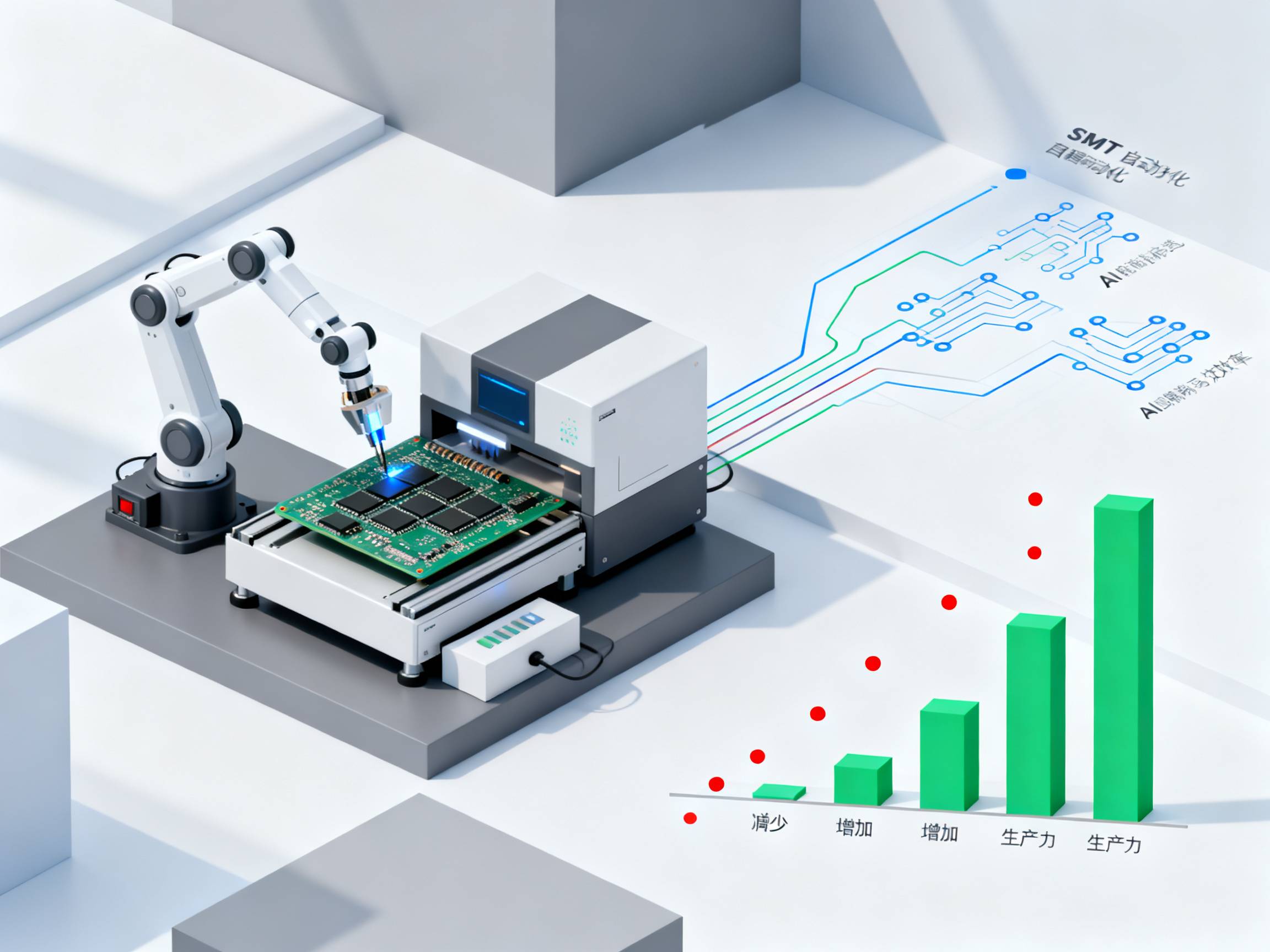
“When we tested automated SMT processes, we saw a 40% increase in throughput with almost zero downtime,” recalls Jace Liu, emphasizing the real-world results of automation investments.
Pro Insight: Automation in SMT manufacturing isn’t just a productivity booster; it’s the key to maintaining precision and meeting scalability needs, especially during high-demand periods.
Global Leaders in SMT Technology
In the competitive realm of SMT technology, a few companies have set themselves apart by consistently delivering state-of-the-art equipment and services. For 2026, three names dominate the scene: ASMPT, Fuji, and Panasonic. Their leadership positions are backed by groundbreaking innovations that address persistent challenges in electronics manufacturing.
ASMPT, for example, has developed high-speed, AI-integrated machinery specifically designed to reduce errors during assembly. The company’s focus on precision and automation gives manufacturers the ability to scale production without sacrificing quality. Similarly, Fuji’s latest lineup of placement machines is optimized for micrometer-level accuracy, a key feature for manufacturing advanced devices like wearables and automotive components. Panasonic rounds out the list with their emphasis on IoT integration and intelligent data analysis across their equipment portfolio.
These leaders are setting industry standards that combine efficiency, precision, and scalability. Their contributions ensure SMT technology continues to meet the rising demands of growing industries such as electric vehicles and smart devices.
Expert Tip: Staying competitive in the SMT industry means analyzing innovations from leaders like ASMPT and Fuji. Their newest AI-driven advancements can inspire better practices for your organization.
Advanced Placement Technology in SMT
Placement technology is the heartbeat of SMT manufacturing, and its advancements in 2026 are something to talk about. These new systems take accuracy to the next level, with micron-level precision capable of handling the tiniest components required for modern electronics. AI-driven systems play a big role here, optimizing production sequences to minimize assembly errors and boost throughput.
An impressive development in this area includes intelligent feeder systems capable of real-time adjustments based on operational data. These systems prevent delays by ensuring components are always positioned correctly for high-speed production. Essentially, it’s like giving your assembly line a brain that never tires.
“From my experience working with placement technology, the most convincing upgrades are the ones that reduce machine downtime and simplify complex setups,” says Jace Liu.
Companies using these technologies can expect a significant uptick in productivity. That helps them stay ahead in competitive markets while meeting the demands of industries like automotive manufacturing or telecommunications.
Need SMT equipment that delivers precision and efficiency in real-world conditions? Check out solutions from Sun and Mountain SMT. Their product lineup includes reflow ovens and wave soldering machines designed to handle scaling demands in electronics manufacturing.