
Published: 20 May 2026
Reading Time: 10 minutes
Mastering Reflow Soldering Machines: Techniques, Challenges, and Best Practices
Ever wondered how those tiny, intricate components stick so perfectly to the surface of circuit boards? It’s all thanks to reflow soldering machines. These machines are the unsung heroes of the Surface Mount Technology (SMT) industry, quietly ensuring precision and reliability in modern electronics manufacturing.
Reflow soldering machines use heat to melt solder paste and bond components onto Printed Circuit Boards (PCBs). They are vital for creating strong, consistent solder joints, which hold everything together. With the SMT industry growing faster than ever in 2026, these machines ensure manufacturers can keep up with the rising demand for smaller, more complex electronics.
Here’s the deal: nearly every device you touch, from smartphones to laptops, owes its existence to this meticulous process. Without reflow soldering, large-scale electronics production wouldn’t just be harder, it’d be impossible.
The author is an experienced manufacturing professional with a background in optimizing SMT equipment for high-precision workflows. They specialize in implementing cutting-edge reflow soldering technologies to meet demanding production goals and have a robust understanding of PCB assembly challenges.
What Is a Reflow Soldering Machine?
At its core, a reflow soldering machine is a device designed to permanently bond electronic components onto a PCB. Think of it like an industrial-grade kitchen oven, but instead of baking cookies, it “bakes” electrical connections. The process involves heating solder paste so it melts and flows into place, forming permanent joints between components and the PCB.
These machines typically follow four key steps:
- Preheating: The oven gradually warms up to prepare materials.
- Soaking: Components and solder paste reach appropriate uniform temperatures.
- Reflowing: Solder melts and connects the component leads to the PCB.
- Cooling: The system solidifies the solder into reliable bonds.

This multi-step heating process is all about control and precision. For manufacturers, every second in each phase counts, as even the slightest deviation can increase defect rates.
Why Is Precision So Important?
Small mistakes in soldering can lead to big problems: electrical shorts, poor conductivity, or even product failure. A well-calibrated reflow soldering machine ensures high-quality results, minimizing risks and boosting efficiency. After all, manufacturers need equipment that delivers not just speed but also consistency across thousands—or even millions—of PCBs.
In addition to ensuring production quality, these machines play a big role in improving operational efficiency. The ability to repeatedly produce flawless solder joints saves manufacturers significant time and resources. Modern machines mitigate common issues like bridging (unwanted solder connections) or tombstoning, where components tip over or detach entirely during production.
Expert Tip: Proven profiling methods for minimizing soldering defects include adjusting conveyor speed and optimizing temperature zones. Small tweaks here can make a huge difference in defect rates.
How Has Technology Changed Reflow Soldering?
Since the early days of electronics manufacturing, reflow soldering machines have come a long way. Today’s models embrace Industry 4.0 principles like data-driven process monitoring, making it easier to identify and correct errors in real time. Plus, environmental concerns have driven new technologies like lead-free solder and energy-efficient ovens.
Manufacturers are constantly innovating to meet the needs of smaller, more intricate components. In fact, I once worked closely with a team on fine-tuning a reflow soldering oven for miniature wearables. It involved creating a super-precise thermal profile, and the results were amazing—higher yields and fewer defects than expected.
In 2026, companies like Sun and Mountain SMT push these advancements even further. Their precision reflow ovens, for instance, are built with automation in mind, allowing larger manufacturers to scale up without compromising quality.
Next up: we’ll tackle the most common challenges manufacturers face when using reflow soldering machines. And don’t worry, we’ll also dig into strategies that’ll save you time, money, and headaches.
Core Techniques for Using Reflow Soldering Machines
When it comes to getting the most out of a reflow soldering machine, it all begins with one thing: temperature profiling. This process maps out how heat gets distributed across a PCB during soldering. If the profile is off, even by a little, defects like cold joints or overheating can crop up. Getting it right is critical, and honestly, it’s not all that hard if you focus on key steps.
Why Temperature Profiling Matters
Think of temperature profiling as the recipe for your soldering process. Heat levels need to be just right at every stage: preheating, soaking, reflowing, and cooling. If the temperatures run too hot, smaller components might shift—or worse—completely break down. On the other hand, if they don’t get hot enough, solder won’t flow properly and could lead to unreliable connections. In short, a well-planned thermal profile is your secret weapon against unplanned headaches.
Take this example: A manufacturer we worked with had profiles that were a mismatch for different board sizes they ran through the same machine. Once we guided them on customizing profiles for each board, their defect rate dropped by over 20%. Just goes to show how impactful small tweaks can be.
Techniques for Better Results
-
Test and Adjust Conveyor Speed: Faster speeds move PCBs through quicker, but if heat zones don’t have time to properly do their job, your solder could lack surface tension. Instead, aim for a speed that lets the solder fully melt and settle before cooling begins.
-
Dial in Temperature Zones: Test each zone along your machine (most machines have four or more) to verify they match your profile settings. Missing even a 5-degree difference can throw off the entire solder bonding process.
-
Match Profiles to Board Design: Not all PCBs are created equal. Larger boards might require longer soak times, while smaller ones heat faster, so you’ll need to adjust as you go.
Calibration Makes All the Difference
Calibration is like giving your machine a monthly health checkup. Without it, you can’t be sure that the numbers you see on your display match what’s happening inside the oven. By routinely calibrating your machine (even just quarterly), you eliminate inconsistencies that lead to soldering defects.
And yes, real-time monitoring helps too. Many modern reflow soldering machines track parameters digitally and alert you to any deviations. This feature may sound like a luxury, but over time, it pays for itself by catching problems before they escalate.
Expert Tip: Proven profiling methods for minimizing soldering defects include adjusting conveyor speed and optimizing temperature zones. Small tweaks here can make a huge difference in defect rates.
Common Challenges in Reflow Soldering and How to Navigate Them
Reflow soldering is great, but it’s not without its challenges. Like any manufacturing process, things can go wrong, leading to defects, downtime, and frustration. Here’s a breakdown of some of the most common issues manufacturers encounter and how to deal with them.
Soldering Defects: Tombstoning, Bridging, and More
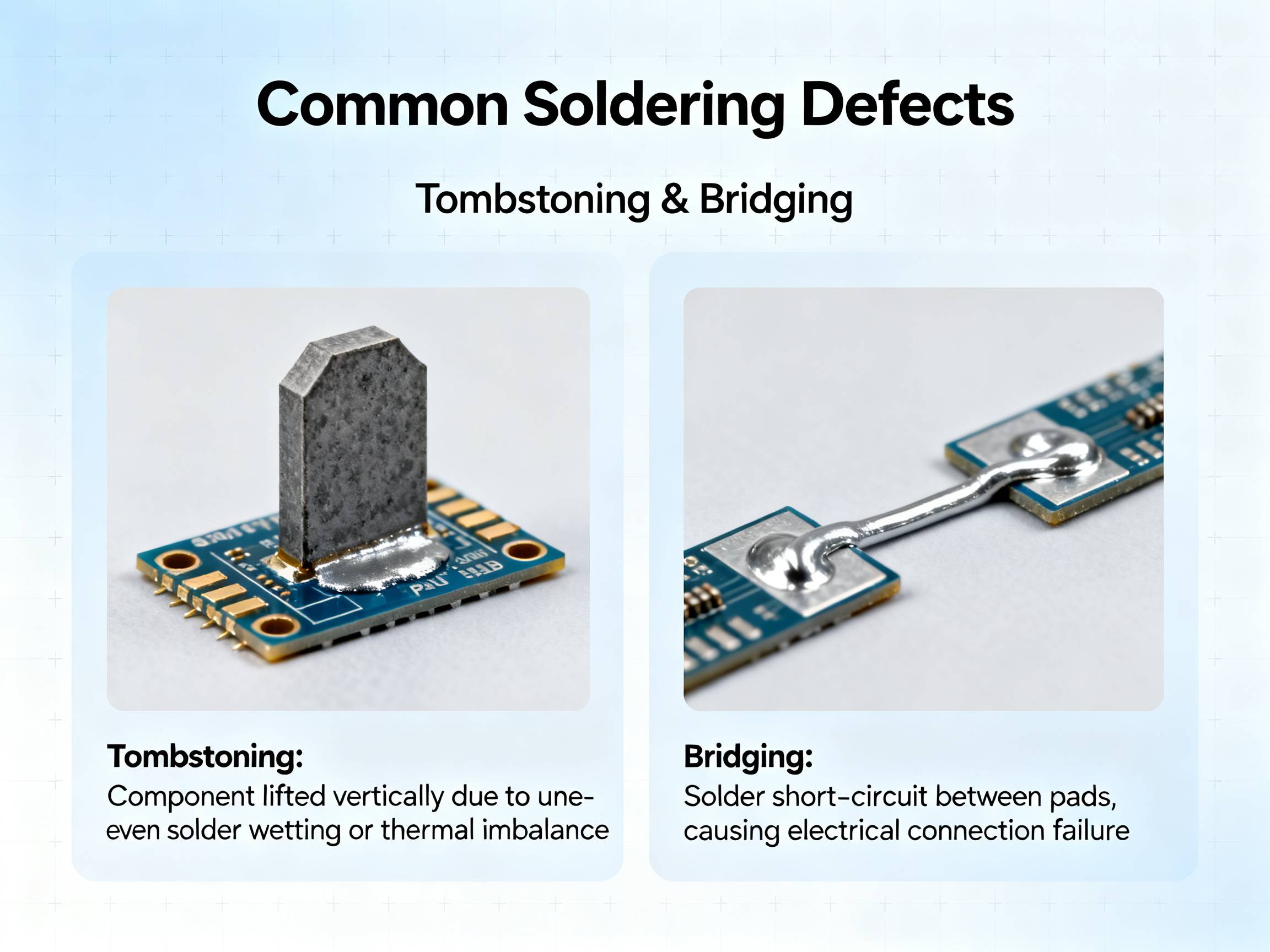
If you’ve worked with reflow soldering, you’ve probably run into defects like tombstoning or solder bridging. Tombstoning happens when small components tip and separate from the PCB during soldering. Bridging, on the other hand, creates unwanted solder connections between leads. Both issues can disrupt circuit performance and even cause electrical shorts.
Fixing these issues starts with understanding their root causes. For tombstoning, it’s often a result of uneven heating, so checking and adjusting thermal profiles can help. Bridging might be due to solder paste inconsistencies or incorrect stencil designs. Making small adjustments to paste deposition and performing regular stencil inspections is key.
Pro Insight: Guidelines for identifying and addressing tombstoning issues include monitoring zone temperatures closely and ensuring your solder paste is properly prepared and stored.
Downtime Problems: Causes and Solutions
Downtime during reflow soldering often stems from equipment malfunctions or improper maintenance. Calibration issues, clogged conveyors, or incorrect settings can grind production to a halt. The best way to avoid this is through proactive maintenance—cleaning key components regularly and scheduling routine calibration checks to keep the machines running smoothly.
One manufacturer we collaborated with implemented weekly maintenance schedules and cut downtime by 30%. It’s worth it, especially when you consider the ripple effects of delayed production.
Material Selection and Preparatory Phases
Did you know that the materials you use can make a huge difference in soldering success? Low-quality solder paste or poorly designed PCBs can lead to defects. Choosing high-quality paste and working with reliable PCB suppliers is a great starting point. Plus, ensuring a clean and controlled prep environment prevents contamination that can interfere with the soldering process.
Small steps like verifying material consistency and properly storing paste might seem minor but can save time and prevent headaches later.
When material issues are solved, and maintenance is prioritized, reflow soldering becomes a much smoother process, one that helps manufacturers meet tight production deadlines without sacrificing quality.
Future Trends and Advancements in Reflow Soldering Technology
Reflow soldering has come a long way, and if you think the innovation stops here, you’d be mistaken. In 2026, the technology is shifting gears to focus on automation, sustainability, and precision. Let’s unpack how these trends are shaping the future.
AI-Integrated Soldering Machines
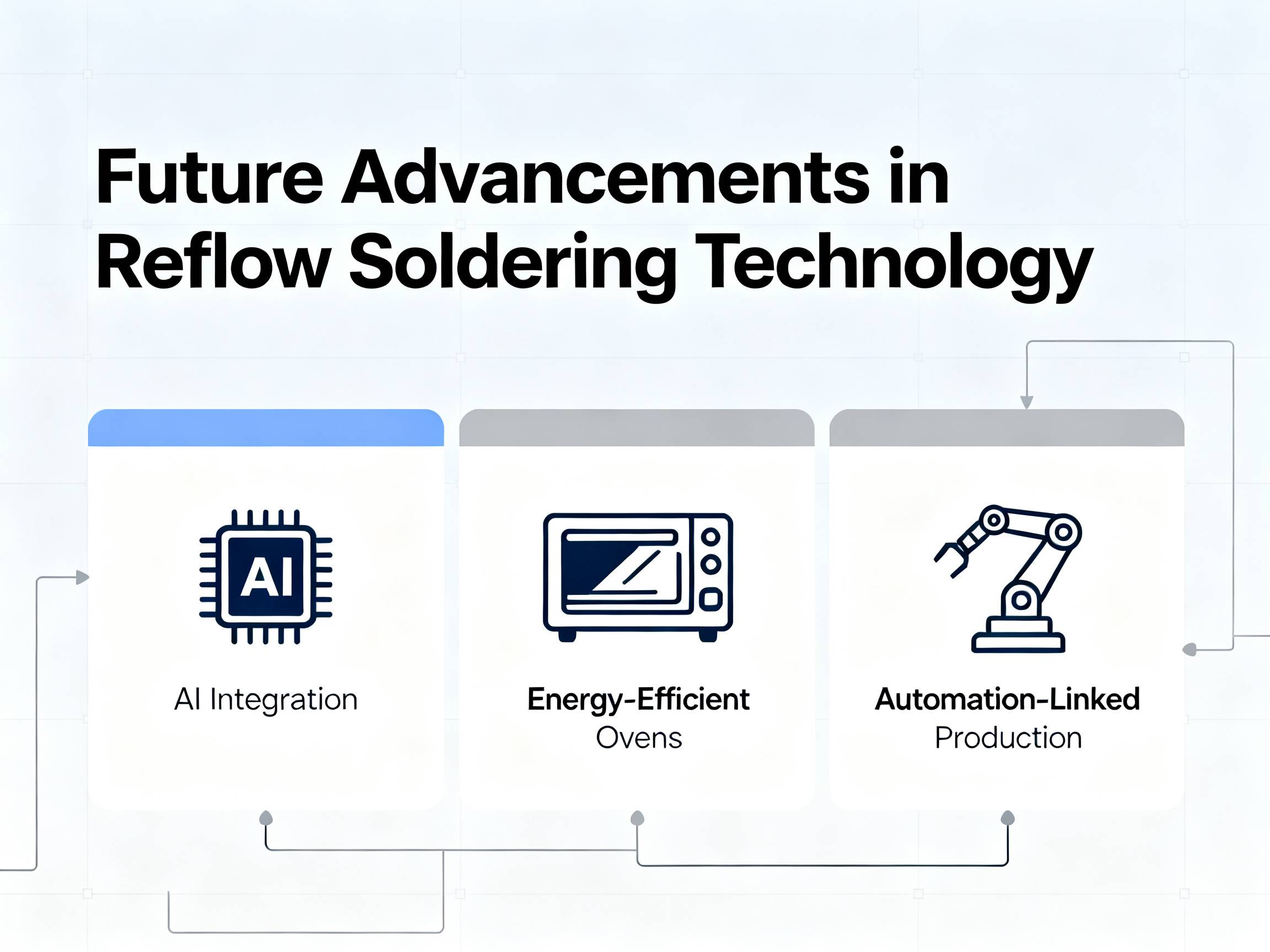
Artificial intelligence is no longer just a buzzword; it’s actively transforming electronics manufacturing. AI-enabled soldering machines use predictive algorithms to optimize temperature profiles and detect defects earlier. This means manufacturers can catch issues before they happen, saving time and money.
For instance, AI systems monitor variables like solder paste viscosity, ambient temperature, and conveyor speeds, then make real-time adjustments to prevent tombstoning or bridging. A manufacturer who invested in such systems reportedly halved their defect rate within six months.
Plus, AI is streamlining training for new operators. Instead of fiddling with manual settings, operators use intuitive dashboards that learn common adjustments over time. It’s like Google Maps for soldering—smart navigation through a complex process.
Energy-Efficient Reflow Oven Designs
Energy waste is a big topic these days. Manufacturers are adopting energy-saving measures, like reflow ovens designed to require less heat and power without affecting quality. Lead-free solder—although more challenging to work with—pairs well with these energy-efficient models.
Take Sun and Mountain SMT’s precision reflow ovens for example. Their latest models use advanced insulation techniques to retain heat better, reducing energy consumption by up to 15%. For manufacturers scaling operations, that’s a serious cost saver over time.
Another win? Many ovens now come with eco-friendly modes that lower power usage during idle times. This helps meet sustainability goals without compromising productivity.
The Automation Revolution
Automation isn’t just enhancing efficiency—it’s revolutionizing entire assembly lines. From robotic arms loading components onto PCBs to conveyor systems that self-correct speed variations, the goal is to remove bottlenecks caused by human error.
Fully automated lines mean that soldering output becomes faster, smoother, and more consistent. Companies using this tech are processing up to 40% more PCBs each day, with fewer interruptions.
Pro Insight: Emerging automation technologies driving SMT reliability include smart pick-and-place systems and conveyor belts equipped with self-diagnostic tools. These advancements reduce downtime by proactively addressing mechanical issues.
Future Implications for SMT Reliability
Increased reliance on IoT connectivity is another game-changer. IoT-enabled reflow soldering machines can connect directly to an enterprise’s cloud infrastructure, providing centralized monitoring of production stats. This setup also facilitates remote troubleshooting, which is a lifesaver for facilities with limited on-site engineering teams.
One example is the wearable tech market. As these devices get tinier, SMT reliability hinges on soldering innovations that can handle miniature components without sacrificing speed. It’s clear that automation and precision will continue to drive improvements in this area.
Looking ahead, the focus on miniaturization and sustainability will only grow. It’s an exciting time for manufacturers investing in next-gen reflow soldering technologies.