
Published: 26 May 2026
Reading Time: 8 minutes
Reviewer: Simon Scrapes, Founder
You know that jolt you get when you see the actual price tag on a new SMT reflow oven? It hits you right in the budget, especially if you’re comparing batch versus continuous models. Maybe it’s that moment you realize your prototype builds are bottlenecked by an old, clunky oven that just can’t keep up. Or maybe your boss just walked by, quietly muttering about “total cost of ownership” and now you’re on the hook to figure out exactly what that means in 2026.
Look, if you’re in electronics manufacturing, there’s no sugarcoating it — choosing the right reflow oven is a big deal financially, but also for your production goals. (Trust me, I’ve fumbled through quote spreadsheets on a Friday at 6pm, so I know how hard it is to sort real value from marketing fluff.)
If you want to actually control costs, hit throughput goals, and avoid nasty surprises with repairs or energy bills, you’ve got to look beyond just that upfront price. And with new miniaturized electronics, super-tight SMT specs, and rising energy costs, 2026 is making this whole decision even trickier.
What follows is the most practical, plain-English guide you’ll find this year. It’s for people who have to pick, buy, or justify reflow oven purchases, NOT for corporate PowerPoints or sales reps. We’ll break down batch versus continuous oven costs, look at real pricing ranges, and show you how the smartest teams set their budgets for what’s next. And yeah, you’ll walk away ready to talk TCO like a pro.
Simon Scrapes is the founder of Sun and Mountain SMT and a hands-on electronics manufacturing veteran. Simon’s advice cuts through industry jargon, focusing on what actually works when choosing SMT equipment and managing manufacturing budgets. Sun and Mountain SMT specializes in advanced reflow ovens and automation tools for EMS and OEM teams.
Why this choice matters more in 2026
A reflow oven is not just another line item. It shapes output, scrap risk, labor time, utility bills, and how stressed your team feels on a busy Wednesday.
In 2026, that pressure is higher. Boards are smaller, specs are tighter, and more factories want connected equipment with better thermal control and lower energy use. Market research points to the same theme again and again: reflow ovens are moving toward smarter monitoring, more automation, and better operating efficiency as electronics assembly gets more demanding (2026 reflow oven market analysis).
So if you’re comparing pcb reflow oven price quotes or trying to explain smt reflow oven price differences to finance, here’s the simple truth. The cheapest machine to buy is not always the cheapest machine to own.
Batch Reflow Ovens: Detailed Cost Analysis
Batch reflow ovens usually make sense for prototyping, low-volume builds, NPI work, and mixed product runs. They tend to cost less upfront, and they give teams more freedom when product demand jumps around.
Here’s the rough 2026 picture for price batch reflow ovens:
| Batch oven tier | Typical use | Common 2026 price range |
|—|—|—:|
| Entry level desktop or lab unit | Prototypes, light R&D | $2,000 to $8,000 |
| Mid-range batch reflow oven | Small production, engineering teams | $8,000 to $25,000 |
| High-spec batch system | Higher thermal control, larger boards | $25,000 to $60,000+ |
That range can shift fast based on heated area, profile control, nitrogen options, software, and service coverage. And yes, add-ons matter. A price batch reflow oven controller kit, price batch reflow oven chiller, or price batch reflow oven calibration package can quietly bump the quote by thousands.
We’ve seen teams get excited about a low purchase number, then realize the final spend climbed after they added installation, profiling tools, spare parts, and operator training. That part sneaks up on people.
A few cost items buyers often miss:
- Initial machine price
- Freight and rigging
- Electrical or exhaust changes
- Profile validation tools
- Calibration and maintenance visits
- Cleaning supplies and price batch reflow oven cleaner costs
- Spare sensors, belts, or controls
If you’re searching for price batch reflow oven for sale listings online, be careful. Some posted prices exclude freight, setup, software, or local support. So the visible number is not always the real reflow oven cost.
Expert Tip: Try to size batch capacity to your real weekly load, not your dream-state load. A half-empty oven run over and over can cost more per board than buyers expect.
Continuous Reflow Ovens: Cost and Efficiency
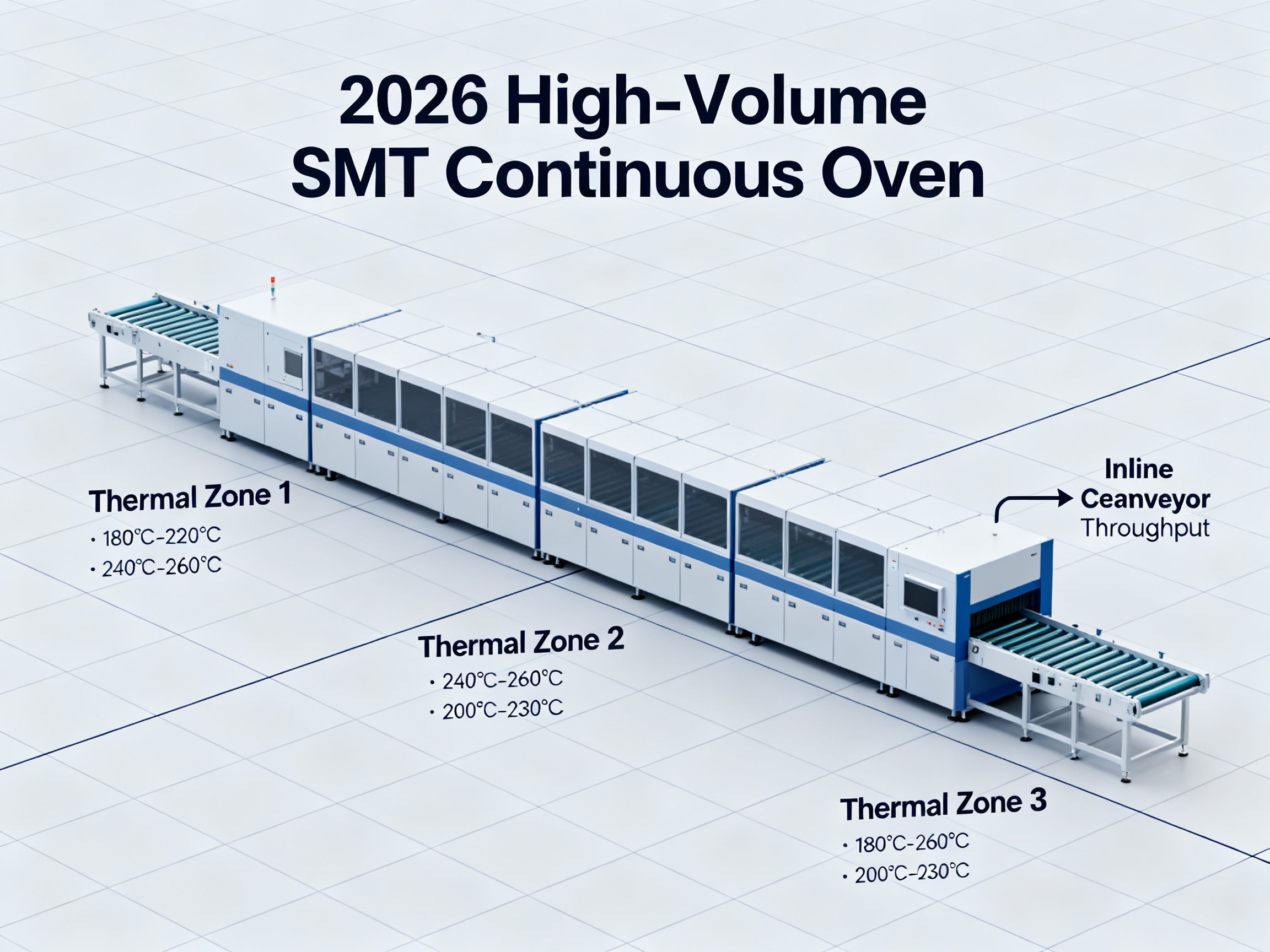
Now let’s talk about continuous reflow ovens. These are the go-to choice for steady throughput, inline SMT lines, and plants that need more boards moving with less stop-and-start.
Typical 2026 pricing for price continuous reflow ovens looks like this:
| Continuous oven tier | Typical use | Common 2026 price range |
|—|—|—:|
| Small continuous oven | Light production, growing EMS shops | $5,000 to $20,000 |
| Mid-range inline system | Regular production, mixed customer work | $20,000 to $50,000 |
| High-throughput industrial line | High volume EMS or OEM plants | $50,000 to $150,000+ |
Those ranges line up with current supplier and buyer guides on the market, though exact specs push prices up or down fast (2026 continuous reflow oven pricing benchmarks).
The higher purchase price usually buys you more than speed. You may also get better zone control, conveyor consistency, logging, recipe management, and easier line integration. For a team running repeat jobs every day, that can lower cost per board over time.
This is where the price continuous reflow oven conveyor, price continuous reflow oven exit conveyor, and price continuous reflow oven controller questions show up. A base machine may look decent on paper, but once you add conveyors, chillers, monitoring, and service coverage, the number changes. Fast.
And here’s the thing, throughput changes the math. Continuous ovens cut load and unload pauses, support steady line flow, and tend to reduce labor touches in higher-volume work. If your factory runs stable demand, that matters a lot.
Pro Insight: Downtime hurts more on a continuous line than most buyers expect. Ask vendors about maintenance access, spare parts lead time, and fault alerts before you sign anything.
Comparative Analysis: Batch vs. Continuous Reflow Ovens
So which one wins? Honestly, neither wins all the time.
It depends on your mix, volume, labor, and how often your schedule changes at the last minute because sales promised something heroic.
We’ve worked with teams that were sure inline was the obvious answer, but after mapping actual weekly demand, batch made more financial sense for their high-mix workflow. On the flip side, we’ve also seen batch systems become the hidden bottleneck once output started climbing.
Here’s a side-by-side view:
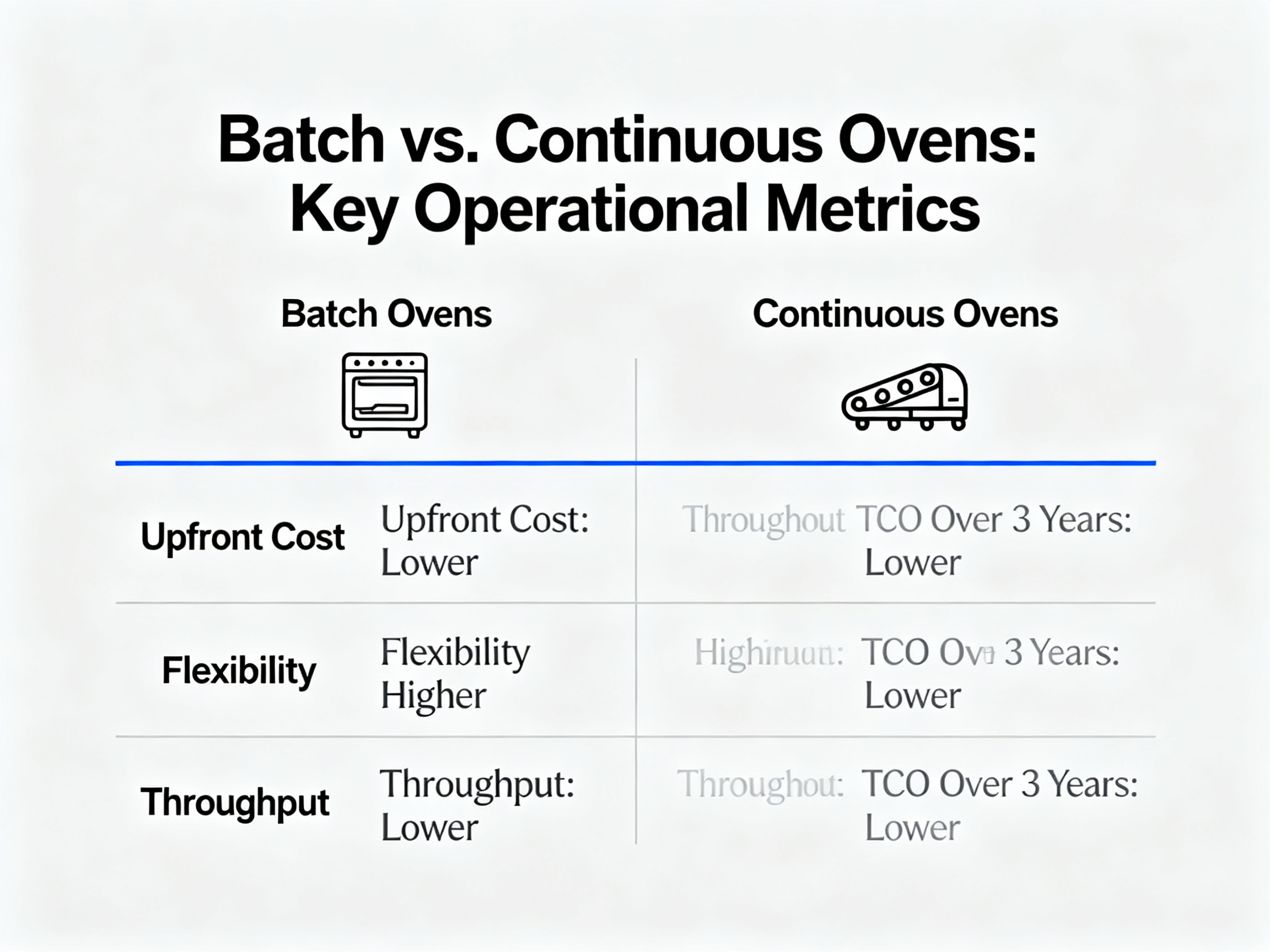
| Factor | Batch reflow oven | Continuous reflow oven |
|—|—|—|
| Upfront cost | Lower | Higher |
| Flexibility | Strong | Moderate |
| High-volume throughput | Limited | Strong |
| Cost per board at low volume | Usually better | Usually worse |
| Cost per board at high volume | Usually worse | Usually better |
| Changeovers | Easier | Slower or more structured |
| Labor touchpoints | More manual | Less manual |
| Best fit | NPI, prototype, low-volume mix | Repeat production, higher volume |
That summary matches wider 2026 industry thinking: batch ovens tend to win on flexibility and lower capex, while continuous systems usually win on scale and unit economics in stable production (batch vs continuous oven economics).
If you’re comparing price batch reflow oven vs continuous reflow oven, don’t stop at the quote. Ask:
- How many boards do we run per shift?
- How often do we change products?
- What does one hour of downtime cost us?
- Are we paying operators to wait on the machine?
- Will volume stay flat, or are we scaling in the next 12 months?
Simple questions. Big impact.
Reflow Oven TCO: What you’ll actually pay over time
This part is where a lot of budgets go sideways.
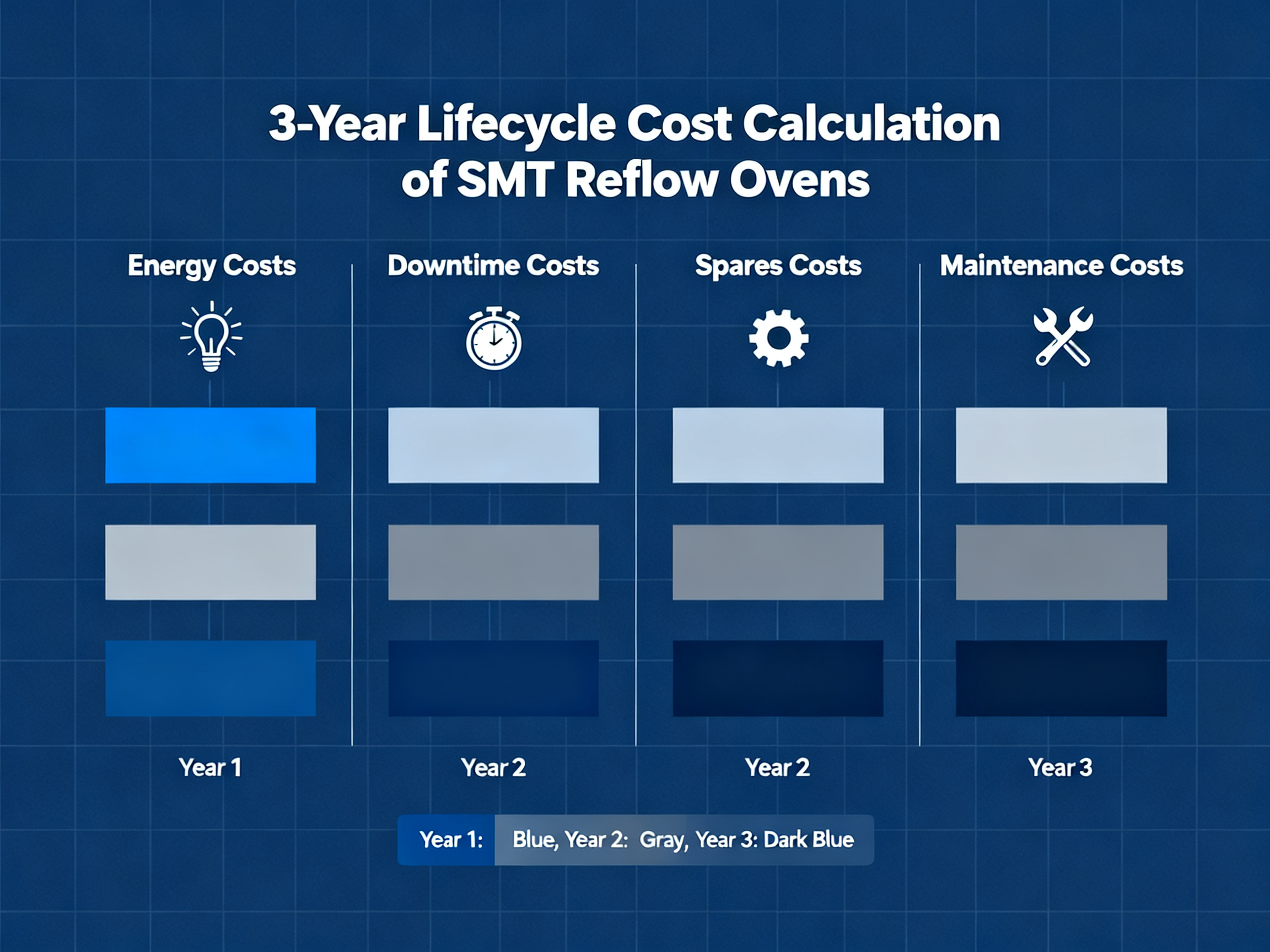
Reflow oven TCO means total cost of ownership. In plain English, it means everything the oven costs after the PO gets approved. Energy, service, downtime, maintenance, consumables, training, floor space, and lost output all belong in the conversation.
A basic TCO checklist for price pcb reflow oven cost planning:
- Purchase price
- Installation and facility prep
- Utilities and monthly energy use
- Preventive maintenance
- Calibration visits
- Replacement parts
- Production downtime
- Operator training
- Software or controls upgrades
- Yield loss from poor profile repeatability
Energy use is a bigger part of the story in 2026 than it used to be. Broader oven market analysis keeps pointing to the same issue: higher energy demand pushes operating costs up, while better efficiency helps protect margins over the life of the equipment (industrial oven energy cost trends).
So yes, pcb reflow oven price matters. But if one oven saves even a small amount per board and keeps uptime steadier, it may beat a cheaper option over 3 to 5 years.
A quick example:
| Cost area over 3 years | Lower-cost oven | Higher-cost oven |
|—|—|—:|
| Purchase | $18,000 | $31,000 |
| Energy | $12,600 | $9,300 |
| Maintenance | $8,400 | $5,200 |
| Downtime loss | $15,000 | $4,500 |
| Total | $54,000 | $50,000 |
Not a promise. Just an example. But this is exactly why finance teams ask about TCO.
Budget Planning Tips: Investing in Reflow Ovens
If you’re building a budget planning for reflow ovens sheet right now, don’t just ask, “What does the machine cost?” Ask, “What will this machine do to our cost per board, staffing, and uptime?”
I’ve watched buyers spend two weeks haggling over a $2,500 discount, then lose way more than that later because the oven needed more service calls and slowed production. Painful.
Here are a few practical budgeting moves that tend to help:
1. Build two budgets, not one
Make a capital budget for the purchase. Then make an operating budget for 12 to 36 months.
That second sheet should include:
- Power use
- Service visits
- Consumables
- Spare parts
- Calibration
- Training
- Expected downtime buffer
2. Price the whole system
A pcb reflow oven machine rarely works as a lone purchase in a real factory. You may also need conveyors, board handling, exhaust changes, chillers, profile tools, or software links to the rest of the line. Sun and Mountain SMT, for example, often fits best when buyers think about the reflow oven as one part of a full SMT flow, not as a stand-alone box.
3. Match spend to demand
If your line runs a lot of low-volume jobs, a big inline unit may be overkill. But if orders are growing and you already feel production queues building, buying too small can be just as expensive.
4. Ask for service terms in writing
This sounds boring because it is boring. But it matters. Ask about install support, remote help, spare part stock, response time, and what calibration includes.
5. Leave room for growth
Not huge unused capacity. Just enough. A machine that fits today but blocks growth next spring can become a very costly bargain.
Choosing the Right Reflow Oven for Your Business
This is the part where the decision gets real.
If you’re an EMS company handling lots of customer builds, changeovers, and new product introductions, batch might be the better starting point. If you’re an OEM with steady product demand and line utilization to support it, continuous reflow ovens often make better long-term sense.
We usually tell teams to map the decision across five filters:
| Buying filter | What to check |
|—|—|
| Product mix | High mix or repeat runs? |
| Throughput | Boards per hour and future demand |
| Board size and thermal needs | Larger boards, dense assemblies, lead-free profiles |
| Support needs | Service, spare parts, training |
| Expansion plan | Will this machine still fit in 18 months? |
That lines up with common 2026 best practice from SMT selection guides: match the oven to product mix, throughput, board size, thermal profile needs, and support quality, then validate that it can repeat the needed profile reliably (reflow oven selection best practices).
And don’t ignore the less glamorous parts of the quote. If you’re reviewing price continuous reflow oven calibration, price continuous reflow oven chiller, or price pcb reflow oven temperature control options, those details tell you a lot about what ownership will feel like after install day.
Pro Insight: Pick the oven that fits your real production pattern 80% of the time. Buying for a rare peak week can leave you overpaying for years.
If you want a practical next step, build a short vendor scorecard. Compare 3 to 5 machines on total cost, throughput, support, and upgrade path. That makes it much easier to defend the purchase internally, and honestly, it cuts through a lot of sales noise.
Final takeaway
The best reflow oven cost decision in 2026 is rarely about finding the lowest sticker price. It’s about finding the right fit for your workload, your growth plan, and your tolerance for downtime.
Batch reflow oven buyers usually get flexibility and lower entry cost. Continuous oven buyers usually get higher throughput and better unit economics at scale. Both can be smart buys. Both can also be expensive mistakes if the machine does not match the job.
So before you approve that next pcb reflow oven price quote, take one extra hour and run the full picture. Upfront cost, operating cost, service, uptime, and future demand. That’s where the real answer lives.
If you’re comparing systems now, Sun and Mountain SMT can be a helpful place to start, especially if your team needs reflow ovens, conveyors, or broader SMT line planning that fits existing production without adding more chaos.
Simon Scrapes’ advice is simple: buy for repeatable results, realistic throughput, and full-life cost, not just the number at the bottom of the quote.