
Published: 22 June 2026
Reading Time: 9 minutes
Reviewer:
You know that feeling when you’re scrambling to get PCBs moved between stations—and something snags, an edge chips, or you hear the dreaded static crackle? Way too familiar, right? Modern PCB manufacturing isn’t just about fast machines; it’s about keeping every board safe, smooth, and on schedule. I’ve seen more than one line slow to a crawl simply because a conveyor was out of whack, and it’s wild how much downtime eats into profits (and sanity).
Thing is, roller conveyor systems make a big difference. They let you move boards without a bunch of hands touching every piece, which helps cut down on static, damage, and contamination. But if you skip the setup details—even small ones—you end up with problems that cost both time and money. Turns out, optimizing your conveyor game is not only possible in 2026; it’s pretty much required if you want your line humming and your boards undamaged see expert tips here.
If you’re part of an EMS or OEM team juggling deadlines, or managing a production line with Sun and Mountain SMT equipment, this guide’s for you. We’ll walk through designing, building, and keeping those roller conveyor systems running strong, step by step. No magic—just real fixes, relevant stories, and practical steps. Ready?
Jace Liu is a seasoned expert in SMT equipment and PCB manufacturing workflows. With extensive experience in designing and optimizing PCB handling systems, Jace brings deep insights on improving production line efficiency and integrating advanced conveyor technologies into existing workflows.
Why Roller Conveyor Systems Matter for PCB Handling
PCB handling sounds simple until a board gets scratched, tilted, or zapped by static. Then it becomes everyone’s problem. A good roller conveyor system helps move boards between loaders, printers, pick and place machines, reflow ovens, and unloaders with less human contact and fewer ugly surprises.
That matters a lot in 2026, because most EMS and OEM teams are under pressure to move faster without letting quality slip. Manual handoffs slow lines down. Older conveyor setups can drift out of alignment. And when operators have to step in every few minutes, your nice automated flow starts looking a lot less automated.
Understanding How Roller Conveyors Work
So, how do roller conveyors work? At the basic level, they support and move a PCB across a line using rotating rollers, side rails, drive components, and a frame that keeps the whole path stable. Some systems use driven rollers. Others rely on linked movement between zones. The goal is the same: move boards smoothly, keep them aligned, and avoid stress on the panel.
Here’s the simple version:
| Part | What it does | Why it matters for PCBs |
| — | — | — |
| Rollers | Support and move the board | Reduces drag and handling stress |
| Side rails | Keep the board centered | Helps prevent skew and jams |
| Drive system | Powers roller movement | Keeps transfer speed steady |
| Sensors | Detect board position | Helps with timing between machines |
| ESD-safe materials | Lowers static risk | Protects sensitive assemblies |
The best systems do not just move boards. They control pace, spacing, and handoff points so each machine gets a board at the right time. That’s a big part of why automated lines feel smooth when they are set up well, and chaotic when they are not.
Expert Tip: Optimizing roller conveyor functions for smooth PCB handling starts with stable speed, proper rail width, and low-vibration transfer points. If a board wobbles even a little at handoff, fix that first.
How to Design Roller Conveyor Systems for Real Production Needs
If you’re figuring out how to design roller conveyor layouts for PCBs, start with the board, not the machine brochure. That’s the best shortcut I know.
You need to look at board length, width, thickness, weight, edge clearance, and component overhang. Then check your full production path. Are you moving bare boards, partially assembled boards, or finished units with tall components? Will the conveyor sit between a printer and placer, or between reflow and inspection? Those details change everything.
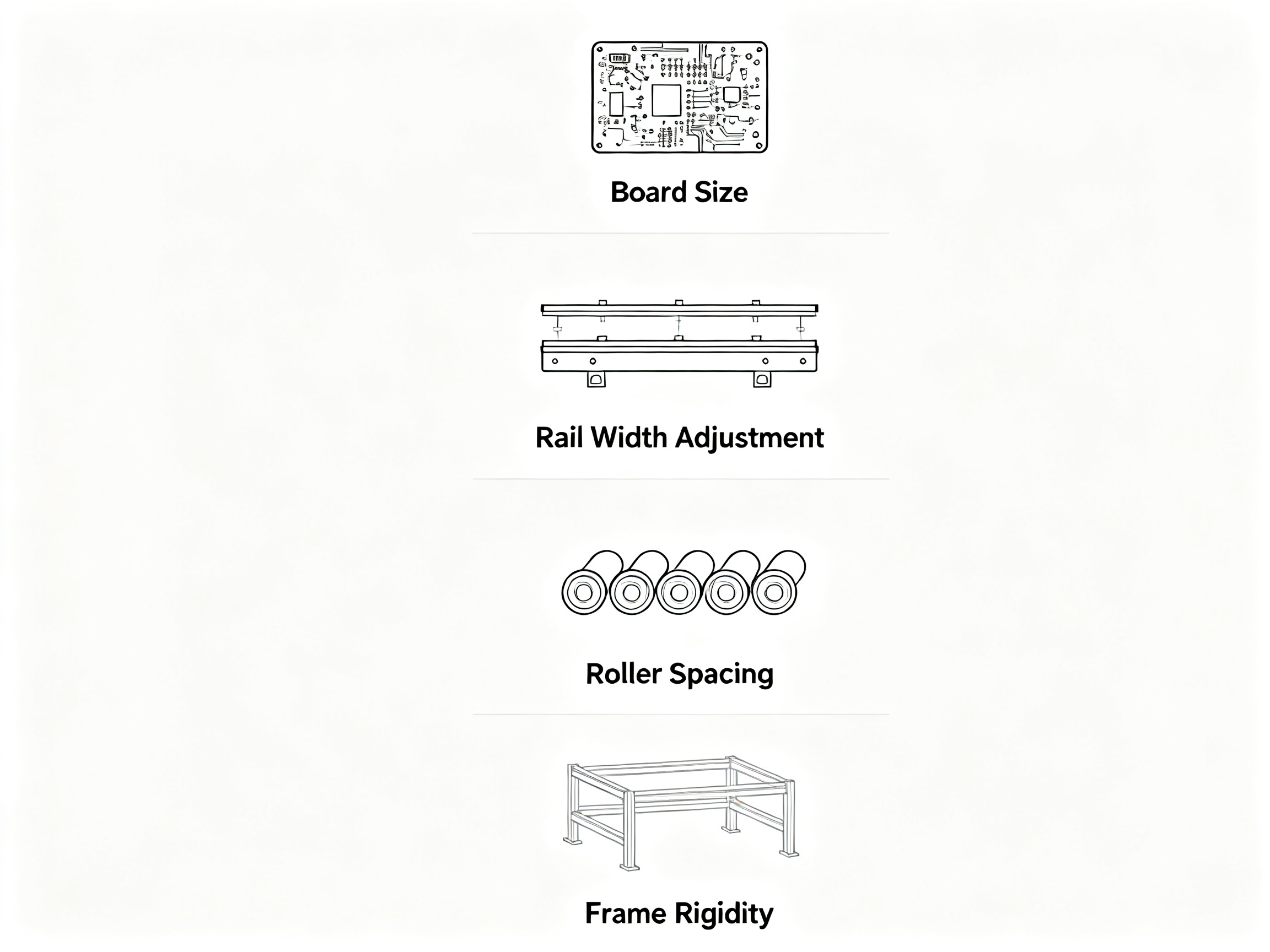
A smart design process usually covers:
- Board size range and weight limits
- Rail width adjustment method
- Roller spacing for stable support
- ESD-safe contact surfaces
- Transfer height matching across machines
- Speed control and sensor placement
- Maintenance access for operators
If your factory runs mixed batches, flexibility matters a ton. Quick-change rail adjustments and clear width markings save time every single shift. And if uptime is a priority, easy access panels for motors and belts are worth it.
How to Maintain Roller Conveyor Systems for Optimal Performance
Maintenance is the part everyone says they care about, right up until production gets busy. Then it slips. Then problems show up.
A solid maintenance plan keeps roller conveyor systems steady, safe, and less likely to fail at the worst possible moment. And yes, the worst moment is always right before a shipment deadline.
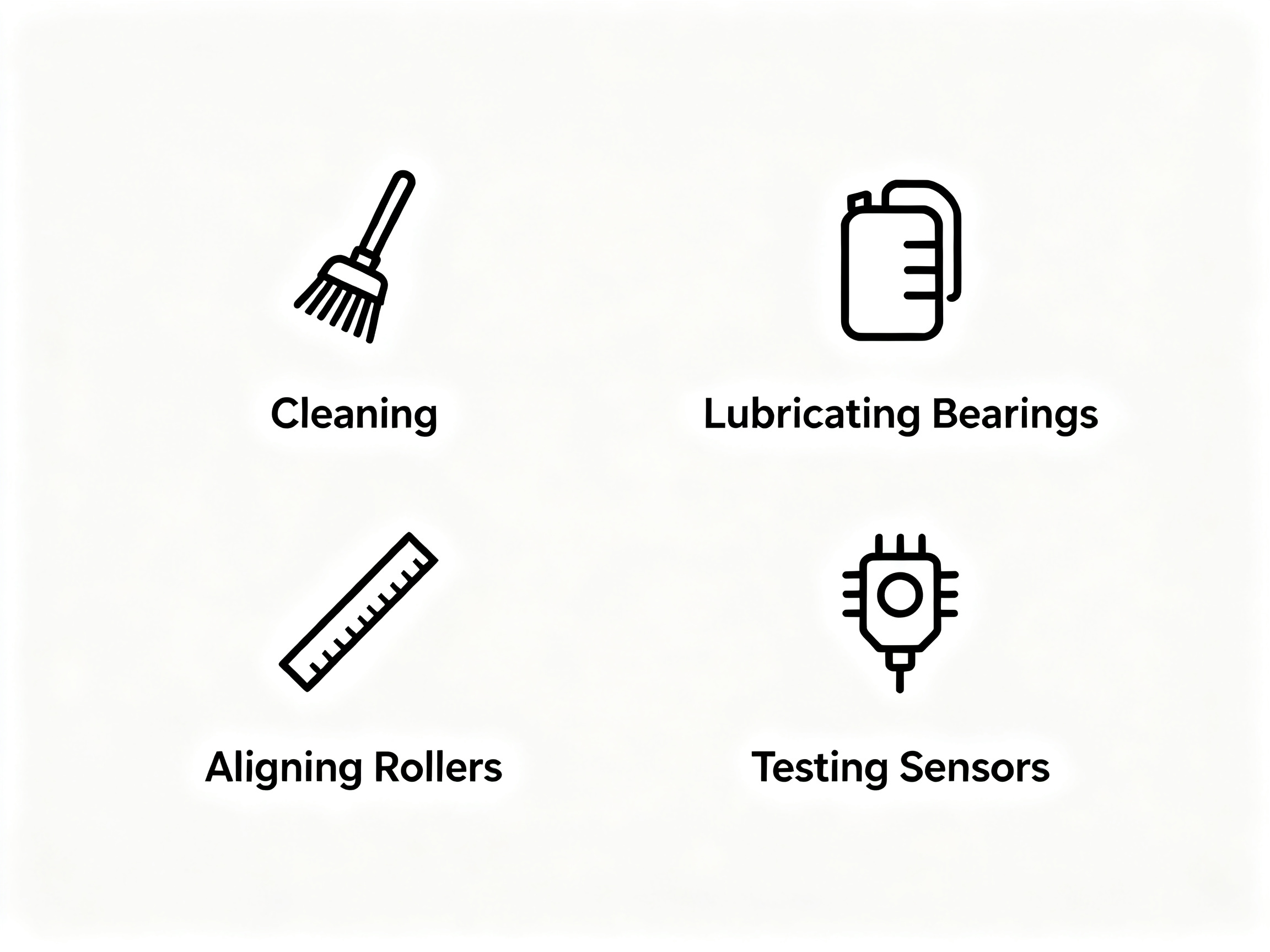
Here’s what actually helps:
| Maintenance task | How often | Why it helps |
| — | — | — |
| Clean rollers and rails | Daily or per shift | Removes dust, flux residue, and debris |
| Check alignment | Weekly | Prevents skew and jams |
| Inspect bearings | Monthly | Catches wear before failure |
| Test sensors | Monthly | Keeps transfer timing accurate |
| Verify grounding and ESD paths | Monthly | Reduces static-related risk |
| Review motor performance | Quarterly | Spots load or speed drift |
Consistent care avoids hours of downtime later. And with IoT monitoring more common in 2026, teams can catch trouble before it starts. Sensors watching vibration, runtime, and motor health can alert operators, helping them plan ahead.
Roller conveyor systems matter a lot more than they seem to at first. By paying attention to their design, maintenance, and performance, production lines stay smoother, PCB quality improves, and throughput remains steady. If 2026 is the year you’re ready to optimize, tools like IoT monitoring, smarter materials, and modular designs are here to help make it happen.