
Published: 28 June 2026
Reading Time: 10 minutes
Reviewer: Simon Scrapes, Founder
PCB Assembly Machine Price Guide 2026: Pick and Place, SMT Line Budgets, and Regional Insights
If you’ve priced SMT equipment lately, you already know the sticker shock is real. One quote looks fine, then freight, install, feeders, training, and service show up, and suddenly your budget is doing backflips. We’ve seen this happen a lot in 2026, especially with buyers trying to compare a simple pick and place machine price against the real cost of a full production setup.
This guide breaks it down in plain English. We’ll look at what drives the price pcb assembly machines market, what a complete SMT line usually costs, how new and used systems compare, and why pricing in the USA, India, and Pakistan can look wildly different. If you’re planning a purchase this quarter, or just trying to avoid a painful quote surprise, this should help.
Jace Liu is an experienced technical writer specializing in manufacturing and electronics-based topics. With deep knowledge of SMT equipment and automation systems, Jace shares practical advice that helps electronics manufacturers make smarter buying decisions with less guesswork.
Understanding PCB Assembly Equipment Pricing in 2026
Let’s start with the part everyone asks first: why are prices still high in 2026?
A big piece of the answer is raw materials. Copper prices have stayed elevated, topping $13,300 per metric ton in recent market reporting, while low-CTE fiberglass shortages have pushed some material costs up by about 45% based on current PCB market reporting. Add strong demand from EV, AI, and 5G production, and equipment makers are dealing with pricier parts, tighter supply, and longer lead times.
We’ve also seen labor pressure, compliance costs, and gold price swings feed into the final number. I don’t have every supplier spreadsheet in front of me, but the pattern is pretty clear. Machines with better automation, vision alignment, traceability, and lower downtime usually cost more up front, yet they often save money later.
So, what does that mean for your quote? Usually this:
| Equipment type | Typical 2026 price range | Best fit |
| — | —: | — |
| Entry-level pick and place machine | $8,000 to $35,000 | Small runs, labs, light production |
| Mid-range SMT placement machine | $40,000 to $120,000 | Growing EMS and OEM teams |
| High-speed production pick and place system | $150,000 to $500,000+ | Large factories, high-volume lines |
| Reflow oven | $10,000 to $80,000 | SMT soldering stage |
| Wave soldering machine | $12,000 to $90,000 | Through-hole or mixed lines |
| PCB conveyor systems | $2,000 to $20,000 per section | Board handling and line flow |
That table won’t match every quote exactly. But it’s a solid planning range if you’re trying to estimate pick and place machine cost or map out a broader pcb assembly equipment budget.
Key Pricing Components of Pick and Place Machines
This is where buyers sometimes get tripped up. The machine price is only one part of the deal.
A typical pick and place machine price can include, or skip, all kinds of extras:
- Base machine and placement heads
- Vision system and software license
- Feeders and nozzle sets
- PCB handling modules
- Installation and commissioning
- Operator training
- Spare parts package
- Warranty length and service response
And yes, those extras add up fast. A machine listed for $55,000 can turn into $72,000 or more once the feeder package, shipping crate, import duty, and training are added. Because nothing says “fun Tuesday afternoon” like finding out the feeders were not included.
Expert Tip: When you estimate total machine cost, ask for a line-item quote that shows freight, install, feeders, software, spare parts, and service terms separately. Long-term service agreements can look optional at first, but they often shape the real cost of ownership over 3 to 5 years.
Here’s the deal. If you’re comparing suppliers, compare the full delivered setup, not just the headline number. This matters even more if you want equipment that plugs into an existing line with minimal downtime. Companies like Sun and Mountain SMT, for example, often get attention because buyers want reflow ovens, wave soldering machines, and conveyor systems that can fit into a broader automation plan instead of becoming one more integration headache.
Budget Planning for a Complete SMT Line in 2026
A lot of teams are not shopping for one machine. They’re trying to budget a full line.
In 2026, a basic SMT line for lower to mid-volume work might land around $80,000 to $250,000. A stronger mid-scale setup can range from $250,000 to $700,000. And a high-throughput line with advanced inspection, handling, and automation can push past $1 million pretty quickly.
A basic line often includes:
- Solder paste printer
- Pick and place machine
- Reflow oven
- Conveyor sections
- Inspection tools
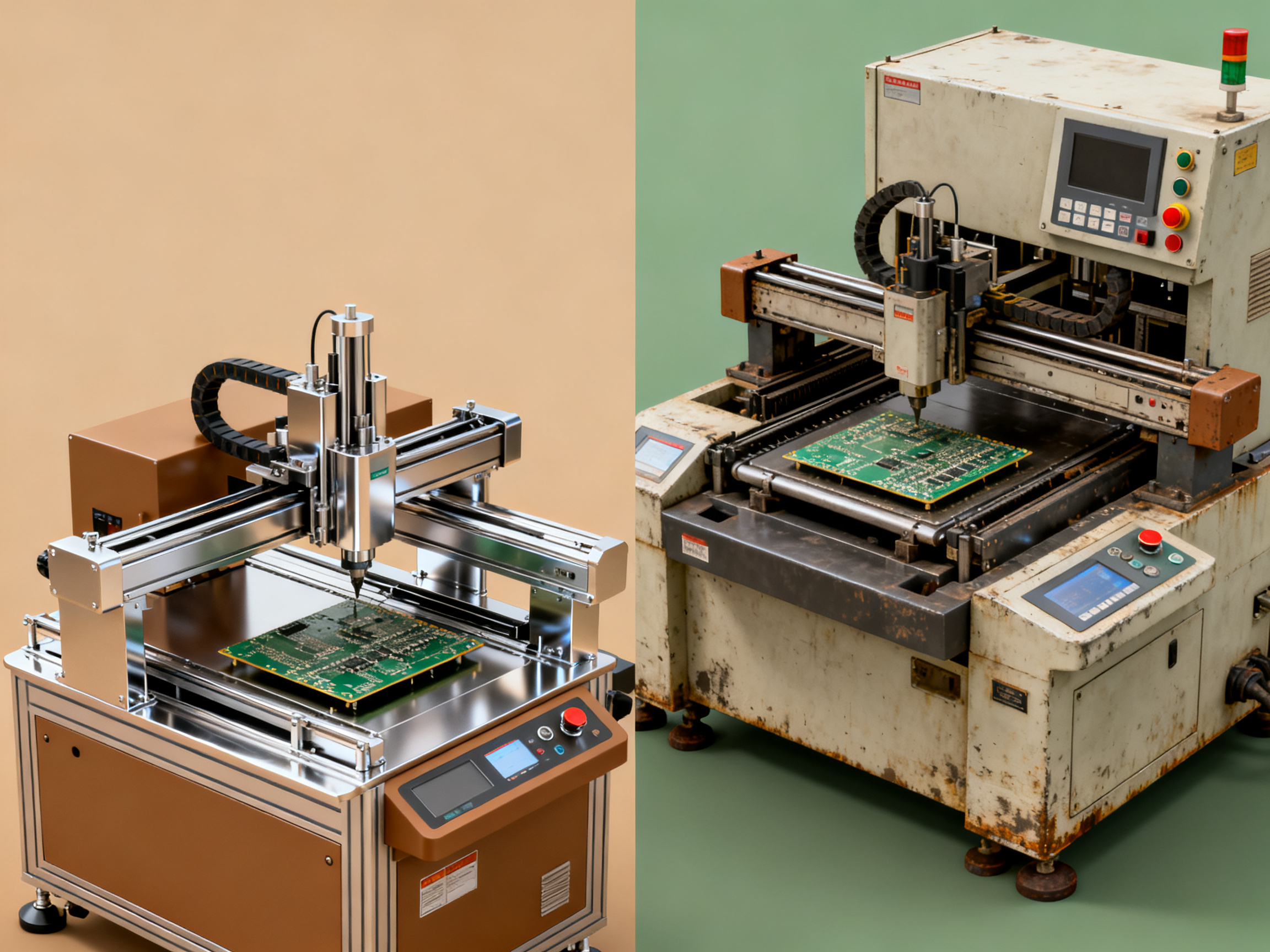
But wait, there’s more to consider. You may also need air supply upgrades, power work, ESD flooring, operator training time, line balancing help, and room for future expansion. We have seen buyers save money by skipping “nice to have” extras, then spend more six months later fixing bottlenecks. Painful.
New vs. Used PCB Assembly Machines: A Cost-Benefit Analysis
Used equipment can look like a bargain. Sometimes it is. Sometimes it’s a very expensive science project.
New machines usually give you:
- Full warranty
- Current software
- Better placement accuracy
- Easier spare parts access
- Lower early maintenance risk
Used or refurbished machines usually give you:
- Lower purchase price
- Faster payback for smaller jobs
- Good value for backup lines
- A practical route for budget-limited factories
We have found that the smartest used-machine buyers ask harder questions than new-machine buyers. They check feeder compatibility, software version, service history, calibration records, and local parts support before signing anything. And that’s where the real answer lives.
Pro Insight: A refurbished SMT machine is only cost-effective if you can verify uptime history, parts availability, and local service support. A low upfront price means very little if one failed board camera stops production for nine days.
A rough cost comparison of new and used SMT machines in 2026 looks like this:
| Option | Typical price range | Main upside | Main risk |
| — | —: | — | — |
| New pick and place machine | $40,000 to $500,000+ | Better support and features | Higher upfront spend |
| Refurbished machine | $15,000 to $180,000 | Lower entry cost | More maintenance uncertainty |
| Used older system | $5,000 to $60,000 | Cheap for light duty | Parts and accuracy limits |
If your orders are inconsistent, or you’re launching a new product line, a used system may be a smart bridge. But if downtime is expensive, new usually wins. Not always. But often.
Final Thoughts
PCB assembly machine prices in 2026 are shaped by more than the base machine tag. Raw material pressure, supply chain issues, support quality, and regional buying conditions all play a part. So if you’re comparing pick and place machine price options, or trying to estimate a full SMT line, the smartest move is to look at total cost of ownership, expected uptime, and how well each machine fits your actual production plan.
If you’re reviewing line upgrades now, this is a good time to ask suppliers for a detailed quote and pressure-test every hidden cost. And if you need support machines that fit into a reliable SMT workflow, Sun and Mountain SMT is worth a closer look for reflow, wave soldering, and conveyor integration options.
The best buyers in this market do not just chase the lowest quote. They ask better questions, plan for service early, and buy for the line they want to run next year, not just the one they have today.