
Metadata Block
Published: 09 July 2026
Last Updated: 09 July 2026
Reading Time: 11 minutes
Author: Jace Liu
Introduction: What Counts as the Best PCB Assembly Machine in 2026?
If you have spent any time researching PCB assembly equipment online, you have probably noticed something strange. Type “best PCB assembly machines 2024” into Google and you get dozens of listicles from 2023 and 2024 that still reference now-outdated specs. Search again in 2026 and the results still feel like they are written for a market that no longer exists.
Thing is, the electronics manufacturing world has shifted. Fast.
In 2026, the question is no longer “what is the fastest pick-and-place machine?” It is “what combination of SMT equipment gives us the best overall equipment effectiveness (OEE) while handling miniaturized components, rapid changeovers, and stricter reliability standards?”
Buyers in the EMS and OEM space are dealing with a different set of pressures now. Component packages keep shrinking (01005s are standard, not exotic), high-mix production runs are the norm rather than the exception, and energy costs plus labor shortages are squeezing margins tighter than ever. The market trends research from 2026 confirms this. Miniaturization, changeover flexibility, and defect control have moved to the top of the priority list for production engineers and procurement teams alike.
So here is what this guide is really about. We break down the best PCB assembly machines by category, compare real specs and capabilities, and help you figure out what equipment actually makes sense for your production line. Spoiler: the “best” PCB assembly machine is rarely just one machine. Most factories need a balanced SMT line that works together. That means solder paste printers, pick-and-place systems, reflow ovens, inspection tools, and conveyors that all play nice with each other.
Published: 09 July 2026
Reading Time: 11 minutes
Reviewer: Simon Scrapes, Founder
By Jace Liu. [Author bio placeholder: add Jace Liu’s relevant SMT equipment, electronics manufacturing, procurement, engineering, or PCBA production experience here before publication. No specific credentials were provided in the input, so do not claim years of experience, certifications, employer history, or reviewer validation without confirmation.]
How We Compared PCB Assembly Machines for EMS and OEM Buyers
Before we dig into the equipment, let us talk about how we put this list together. We know you are busy. You do not have time to sift through vendor marketing slides hoping to find something useful.
So here is our approach. We looked at what production engineers and procurement specialists actually care about in 2026: real-world throughput (not just nameplate CPH), placement accuracy for today’s dense component packages, uptime and maintainability, and how well each machine integrates into a modern SMT line.
We also cross-referenced vendor-published specs against independent benchmark data from sources like the SMTA Handbook and industry placement speed verifiers. Numbers alone do not tell the whole story, though. We factored in ease of use, software ecosystem, spare parts availability, and what actual users report after running these machines for 6 to 12 months.
The result is a guide that goes beyond “which machine has the biggest numbers” and focuses on which equipment actually delivers value for different production environments.
About the Author
Jace Liu brings hands-on knowledge to the world of PCB assembly equipment through years of covering SMT technology, electronics manufacturing trends, and production line optimization. This guide draws on publicly available vendor data, independent benchmark sources, and real-world buyer feedback to cut through the marketing noise and deliver actionable recommendations for EMS and OEM teams.
Editorial note: If you have relevant SMT equipment, electronics manufacturing, procurement, engineering, or PCBA production experience and would like to contribute or verify content for Jace Liu, please contact our editorial team before publication.
How We Compared PCB Assembly Machines for EMS and OEM Buyers
Before we dig into the equipment, let us talk about how we put this list together. We know you are busy. You do not have time to sift through vendor marketing slides hoping to find something useful.
So here is our approach. We looked at what production engineers and procurement specialists actually care about in 2026: real-world throughput (not just nameplate CPH), placement accuracy for today’s dense component packages, uptime and maintainability, and how well each machine integrates into a modern SMT line.
We also cross-referenced vendor-published specs against independent benchmark data from sources like the SMTA Handbook and industry placement speed verifiers. Numbers alone do not tell the whole story, though. We factored in ease of use, software ecosystem, spare parts availability, and what actual users report after running these machines for 6 to 12 months.
The result is a guide that goes beyond “which machine has the biggest numbers” and focuses on which equipment actually delivers value for different production environments.
Pro Insight: When evaluating throughput claims, buyer beware. Most vendors advertise nameplate CPH (components per hour) under ideal conditions with simple component mixes. In reality, globally derated CPH typically lands at 30 to 60 percent of those headline numbers once you factor in real component mix, feeder setup time, changeover frequency, and first-pass yield requirements. Always ask for data from a production run that matches your actual board complexity.
Our Selection Criteria
| Criteria | Why It Matters |
|———-|—————-|
| Placement Accuracy | Essential for 01005s, BGAs, and fine-pitch ICs; tighter tolerances mean fewer defects |
| Real-World Throughput | Nameplate CPH rarely matches actual output; we looked at derated performance numbers |
| Changeover Speed | High-mix production lines lose money on slow changeovers; modular feeder systems help |
| Uptime and Maintenance | Predictable maintenance access and spare parts availability keep lines running |
| Software Integration | Hermes and CFX standards ensure machines talk to each other and MES systems |
| Energy Efficiency | Standby modes and thermal recovery reduce operational costs over machine lifespan |
| After-Sales Support | Local service teams and training programs matter more than spec sheets |
We categorized buyers into two main groups. High-volume producers (think automotive electronics, consumer devices) prioritize speed and automation. High-mix, lower-volume operations (industrial controls, medical devices) value flexibility, changeover speed, and inspection integration. Both groups need to factor in total cost of ownership, not just purchase price.
Total Cost Considerations
Beyond the sticker price, smart buyers factor in installation and commissioning, operator training, spare parts inventory, utility requirements (especially for reflow ovens and nitrogen systems), floor space allocation, preventive maintenance contracts, and the often-overlooked cost of line balancing when one machine bottlenecks the entire SMT line.
We talked to procurement teams who bought based on spec sheets alone and ended up with fast machines that sat idle while downstream processes choked. That is why this guide weighs integration and balance over raw performance.
Citations: SMTA Handbook Section 5.9 | Industry Benchmark Standards | SMT Market Trends 2026
1. High-Speed SMT Pick-and-Place Systems for Scalable PCBA Production
Pick-and-place machines are the workhorses of any SMT line. They account for the biggest chunk of your takt time, and getting this part wrong means your whole line crawls. Getting it right? Everything else falls into place.
Here’s what separates the fast from the frustrating in 2026. Placement speed matters, sure. But real-world throughput lands at 30 to 60 percent of the nameplate CPH once you factor in component mix, feeder swaps, and changeovers. Accuracy has gotten tighter too. With 01005s now standard and BGAs everywhere, you need ±25 µm or better for most production. The machines that handle this reliably in 2026 include Fuji’s NXT Series and SX4, Panasonic’s NPM platforms, Mycronic’s MY300DX and iineo+ V2, and Juki’s RS-2 and KE series.
| Model | Speed (CPH) | Accuracy (3σ) | Feeder Capacity | Best For |
|——-|————-|—————|—————–|———-|
| Fuji SX4 | ~78,000 | ±22 µm | 160 | High-mix, fine-pitch |
| Mycronic iineo+ V2 | ~65,000 | ±25 µm | 312 | Large feeder counts |
| Panasonic NPM-DX | ~50,000 | ±30 µm | 200+ | Automotive, EMS |
| Juki RS-2 | ~40,000 | ±35 µm | 192 | General purpose |
| PiPlacer8 | ~25,000 | ±35 µm | 120 | Prototyping |
The right machine depends on what you’re building. High-volume consumer boards want raw speed and automation. High-mix operations like industrial controls or medical need fast changeover and flexibility. A pick-and-place that looks amazing on paper might be the wrong tool for your actual production mix.
Expert Tip: Always test a machine with your worst-case board complexity before buying. Speed claims mean nothing if your components gum up the works.
Nozzle compatibility and vision alignment make a bigger difference than most buyers expect. Cheap machines often skimp on lighting and fiducial recognition, which means more mispicks and rework. Software integration matters too. Hermes and CFX standards help machines talk to each other and your MES system, which cuts down on manual data entry and traceability headaches.
Bottom line: match the machine to your production profile, not to the biggest spec sheet you can find.
2. Solder Paste Printers for Consistent Deposition Before Placement
Here is a number that will make any production engineer wince: poor solder paste printing causes roughly 60 percent of SMT defects. That single upstream step, before any component even touches the board, sets the stage for bridging, insufficient solder, tombstoning, and rework headaches that haunt your line for days.
The MPM Momentum Compact leads the class in 2026 with 18µm at 6σ precision, while the NeoDen ND2 flagship delivers ±10.0μm repeatability. For high-density boards with sub-0.3mm pitch, you want repeatable positioning accuracy of ±15μm or better. Anything looser than that and you are inviting problems downstream.
| Printer Feature | What to Look For | Why It Matters |
|—————-|——————|—————-|
| Alignment Accuracy | ±15–18µm @ 6σ | Directly impacts paste deposit position |
| Stencil Cleaning | Automated dry/wet vacuum cycles | Prevents smearing and paste degradation |
| SPI Integration | Closed-loop feedback to printer | Auto-corrects offset before placement |
| Cycle Time | Under 12 seconds per board | Keeps pace with fast pick-and-place |
| Board Handling | Edge clamping, vacuum fixture | Prevents movement on thin or warped boards |
Automated stencil cleaning combined with Solder Paste Inspection (SPI) creates a print-inspect-feedback loop that removes human guesswork from the equation. When the SPI system detects low volume or misalignment, it sends correction values back to the printer automatically. The result? Fewer escapes reaching your AOI station and way less rework on the back end.
So when should you upgrade to fully automatic printing? If your changeover time between jobs exceeds 15 minutes, if operator variance causes more than 2 percent first-pass defects, or if you are running 01005s or fine-pitch BGAs, a manual or semi-automatic press is probably costing you more than a new printer would save.
Citations: NeoDen ND2 Specs | ASM vs MPM Comparison
3. Precision Reflow Ovens for Stable Thermal Profiles
Let us be real about something. Your pick-and-place machine can hit all the right coordinates, your solder paste can be perfectly fresh, and your board can be flawless coming off the printer. None of that matters if your reflow oven screws up the thermal profile.
Solder joints are only as good as the heat they experience. Get the peak temperature wrong, miss the time-above-liquidus window, or let your cooling ramp tank the wrong way, and you are looking at cracked joints, poor wetting, or void concentrations that will haunt your reliability testing months later. For lead-free solders, multilayer boards with mixed thermal mass, and anything with temperature-sensitive components, the reflow oven becomes your most critical quality gate.
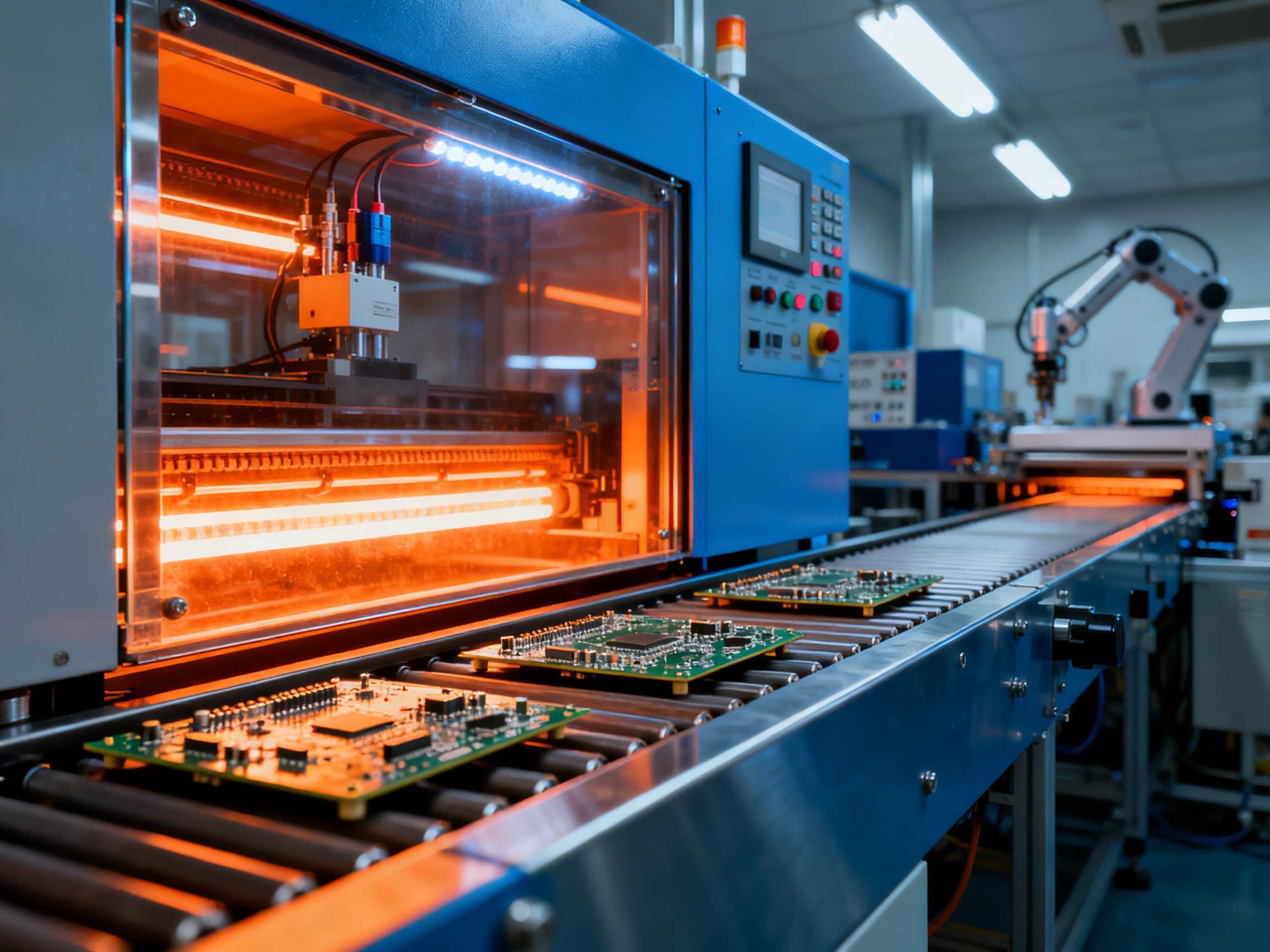
Here is what matters in 2026. Closed-loop PID convection control with ±1°C accuracy has become the baseline for decent ovens. You want lateral temperature uniformity of ±1.5°C or better across the conveyor width. Dual-lane capability is a big deal if you are running mixed board sizes because it lets you process different products at different speeds without slowing everything down.
Nitrogen environments cut down on oxidation and reduce voiding, but they cost money to run. Look for ovens that can maintain 300 to 1000 ppm O₂ without drinking nitrogen like it is going out of style. If you are building power modules or flip-chip assemblies, integrated vacuum chambers that hit around 10 mbar after peak can slash solder voids dramatically.
| Feature | What to Look For | Why It Matters |
|———|——————|—————-|
| Zone Count | 8 to 12 zones minimum | Achieves soak, reflow, and cool phases |
| Thermal Uniformity | ±1.5°C lateral ΔT | Prevents hot or cold spots on boards |
| Nitrogen Mode | 300–1000 ppm O₂ | Reduces oxidation, lowers void rates |
| Vacuum Option | ~10 mbar post-peak | Essential for power electronics |
| Cooling Rate | 3–4°C/s controlled ramp | Prevents thermal shock, maintains joint strength |
| Energy Mode | Standby/idle optimization | Cuts operating costs over machine lifespan |
Expert Tip: Never buy a reflow oven without asking for actual Delta-T uniformity data, time-above-liquidus verification for your specific solder paste, and cooling rate profiles. If a vendor cannot show you thermal profiler logs that match your board stackup, keep shopping.
Energy efficiency is harder to ignore in 2026 too. Standby modes, better insulation, and heat recovery systems add up fast when you are running lines 16 to 20 hours a day. Traceability features matter more now as well. Serial-number-wise data logging lets you tie quality records to specific production runs, which is essential for aerospace, medical, and automotive customers who audit your process.
Sun and Mountain SMT builds reflow ovens designed for EMS and OEM production lines that need consistent thermal performance without the headaches. Their systems emphasize profile stability and line integration, which takes some of the guesswork out of qualifying new board types.
Citations: Best Reflow Oven Features 2026 | SMT Reflow Oven Profile Guide
4. AOI and SPI Systems for Automated Quality Control
Inspection systems are where SMT lines stop guessing and start knowing for sure. SPI catches bad prints before placement wastes components on flawed boards. AOI catches placement errors and solder defects at multiple stages. Together, they cut rework costs by 60 percent and slash defect escapes by 85 percent.
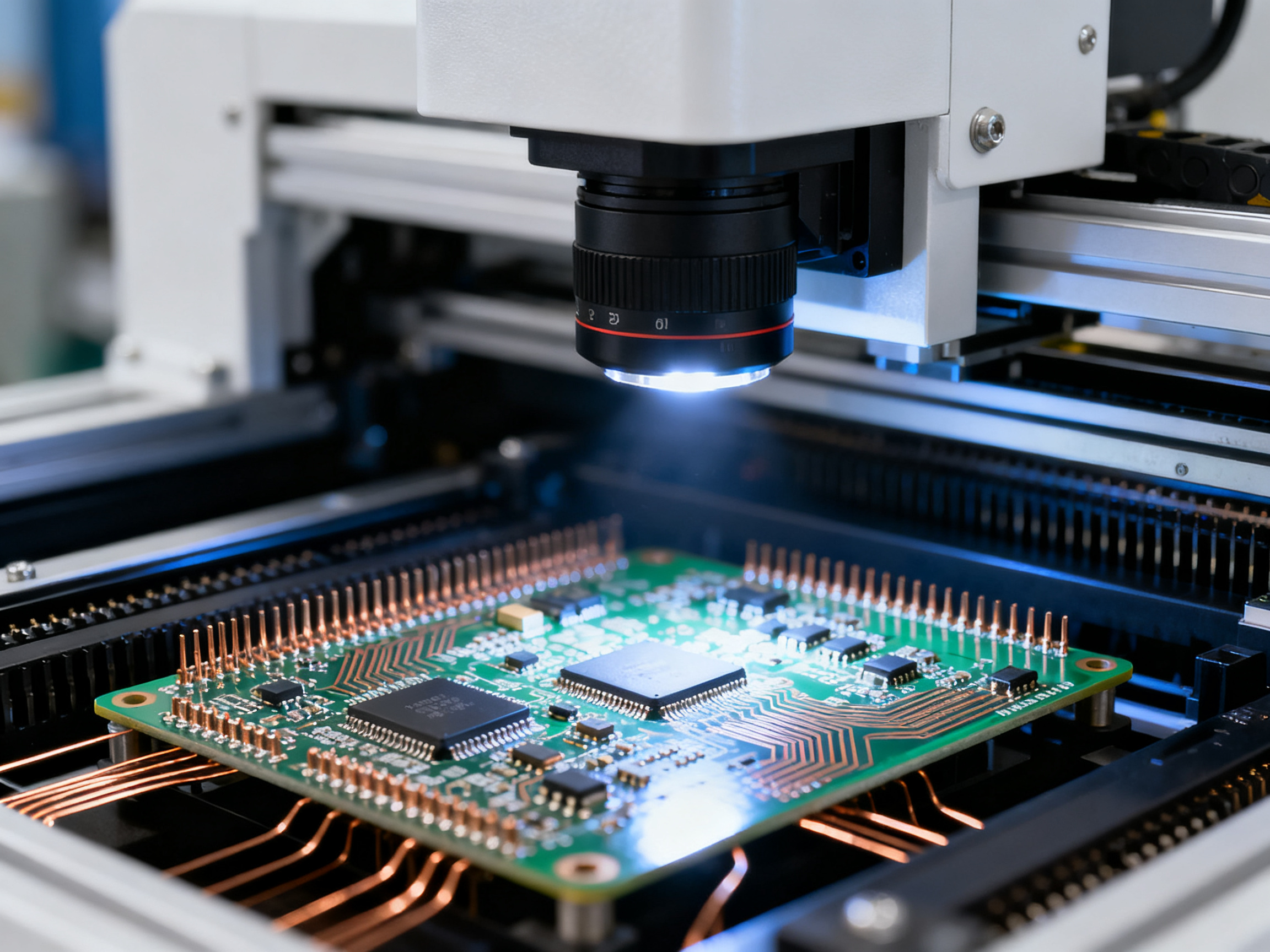
2D AOI checks for presence, position, and obvious solder issues. 3D AOI adds height measurement, which catches tombstoning and coplanarity problems that 2D misses. AI-assisted defect classification brings false-call rates down significantly compared to older rule-based systems from just a few years ago.
Placement in the line matters. SPI goes right after the printer. Pre-reflow AOI catches missing parts and polarity errors. Post-reflow AOI catches solder bridges, insufficient joints, and anything the reflow process created.
| Stage | Primary Role | Key Defects Caught |
|——-|————–|——————-|
| SPI (Post-Print) | Verifies paste volume | Insufficient paste, bridging |
| Pre-Reflow AOI | Confirms placement | Missing parts, polarity flips |
| Post-Reflow AOI | Final solder check | Bridges, cold joints, tombstones |
Programming time gets overlooked. New products need new programs, and if your setup takes half a day, you lose the flexibility that high-mix production demands. Systems that import CAD directly and use defect libraries cut this time down a lot.
Traceability is non-negotiable now. Serial-number logging ties inspection data to specific boards, which matters for aerospace, medical, and automotive customers who audit your process. When your AOI logs show exactly what happened to every board that left your line, quality claims actually hold up under scrutiny.
5. Wave and Selective Soldering Machines for Through-Hole and Mixed Assemblies
Not every board in 2026 is pure SMT. Walk through most factories and you will still find through-hole connectors, power modules, and industrial control boards that need good old-fashioned through-hole soldering. The question is whether wave soldering or selective soldering makes more sense for your operation.
Here is the quick version. Wave soldering still wins for high-volume production of boards where 80 percent or more of the joints are uniform through-hole, the board layouts are simple, and cost per unit matters more than flexibility. Think legacy power supplies, basic interconnects, or industrial relay boards. If you are running thousands of identical boards with generous keep-out zones and nothing but THT parts, wave soldering is fast and cheap.
Selective soldering flips the script when your boards get complicated. Dense mixed-technology assemblies with SMT components sitting right next to THT pins? Selective soldering is the only real option because wave soldering would melt your nearby surface-mount parts. It also eliminates the need for tedious masking, which saves time and reduces defects.
| Feature | Wave Soldering | Selective Soldering |
|———|—————-|———————|
| Best For | High-volume, uniform THT boards | Mixed-technology, dense layouts |
| Masking Needs | Often required for nearby SMT | None needed |
| Flux Control | Flood application | Programmable, precise |
| Solder Pot Management | Larger pot, more dross | Smaller pot, less waste |
| Throughput | Very high for compatible boards | Lower but more flexible |
| Changeover Time | Longer for different board types | Quick program switches |
Pro Insight: Nitrogen atmospheres can cut defect rates in wave or selective soldering by up to 30 percent by preventing oxidation. If you are still running open-air wave soldering on anything quality-sensitive, that is probably costing you more than a nitrogen upgrade.
On the reliability side, solder temperature control and preheating matter more than most buyers realize. Get the preheat wrong and you get thermal shock, bad wetting, or cracked barrels. Dross reduction systems help with maintenance costs and joint quality over time. Electromagnetic pumping in selective systems eliminates the mechanical agitation that adds oxygen to the solder pot, which means less dross and cleaner joints.
Sun and Mountain SMT builds selective soldering systems designed for EMS operations that need to handle complex mixed-technology boards without the masking headaches. Their systems emphasize programmable precision and reduced consumables, which adds up when you are running high-mix production.
Citations: Wave vs Selective Soldering Guide | Selective Soldering Comparison
6. PCB Conveyor and Handling Systems for Line Integration
Here’s a dirty little secret about SMT lines. Everyone obsesses over the pick-and-place speed and reflow oven specs. But the humble conveyor system? That’s what makes or breaks your actual line uptime.
Conveyors, loaders, unloaders, buffers, and turn units rarely get the attention they deserve. Yet a single conveyor jam or misaligned transfer can shut down your entire production run while everyone scratches their heads wondering why the “fast” machine is sitting idle.
The key factors to compare when evaluating conveyor systems come down to practical stuff. SMEMA compatibility ensures boards transfer cleanly between machines. Automatic width adjustment handles your actual board range without manual tweaking. ESD safety matters for sensitive components. Buffer capacity determines how long your line keeps running when something downstream hiccups. And floor-space efficiency keeps your layout from becoming a logistics nightmare.
Buffering and line balancing are where things get interesting. Your pick-and-place might hit 50,000 CPH, but your AOI station probably runs at a fraction of that speed. Without buffers between them, your fast machine waits while inspection chokes. Accumulation conveyors let boards pile up without touching, which sounds chaotic but actually keeps production flowing when one station has a hiccup.
From Our Experience: Conveyor choices ripple through your entire operation. When one machine stops for maintenance, a well-designed buffer lets upstream processes keep running while downstream ones handle the backlog. The real expense is not the conveyor itself, it is the lost production time when a bottleneck forces your whole line to wait. I once toured a facility where the cheapest conveyor setup was creating thousands in daily losses from just 20 minutes of accumulated downtime per shift.
Sun and Mountain SMT builds conveyor systems that integrate directly with reflow ovens and AOI stations, letting boards flow continuously without manual intervention. This matters more than most buyers realize until they have to staff a manual board handler on second shift.
Key Integration Checklist:
- Verify SMEMA compliance across all line machines
- Confirm width adjustment range matches your board portfolio
- Check ESD safety ratings for your component types
- Size buffers based on your slowest inspection process
- Plan for modular expansion as production grows
Citations: SMT Line Conveyor Guide | PCB Conveyor Systems 2026 | SMT Line Efficiency Guide
7. Entry-Level and Training-Friendly PCB Assembly Machines for Beginners
If you are googling “best PCB assembly machines for beginners,” let us save you some frustration right now. The market serves two very different crowds with that search, and confusing them will cost you money.
On one side, you have hobbyists and makers wanting to build a few prototype boards at home or in a university lab. On the other side, you have small businesses or new EMS operations looking for their first production machine that might actually scale.
These are not the same thing. A benchtop solder paste dispenser and a mid-range pick-and-place system serve completely different purposes, and buying the wrong one because the marketing blurred the lines is an expensive mistake.
Hobby and Prototype Equipment
For true beginners, think manual solder paste dispensing, small reflow plates, and basic through-hole kits. The DDM Novastar L-NP00 Benchtop Pick and Place System is one of the few credible entry points here, with around 0.004 inches accuracy and 2,100 CPH for low-volume work. Basic assembly lines from brands like this start around $10,000 when you factor in a compatible reflow oven.
This gear works great for learning. It does not work for production.
Production-Grade for Growing Operations
Once you need repeatable quality, traceable records, and faster turnarounds, you move to machines like Juki or Panasonic entry-level lines. These offer real conveyorized flow, CAD-import programming, and actual vendor support networks. The tradeoff? Higher price tags and steeper learning curves.
| Factor | Hobby/Prototype Gear | Entry Production Systems |
|——–|———————|————————-|
| Setup Complexity | Low, manual workflows | Moderate, software-driven |
| Throughput | Batch only, slow | Continuous flow, scalable |
| Accuracy | ±50–100 µm typical | ±30–50 µm standard |
| Software | Basic or custom | Full CAD/MES integration |
| Scalability | None | Expandable line modules |
| Vendor Support | Limited or email-only | Local service teams |
| Starting Cost | $5,000–$15,000 | $50,000+ |
Common Pitfalls When Buying Entry-Level
Watch out for these traps. First, buying equipment rated for simple boards and then trying to run 01005 components. The accuracy just is not there, and your defect rates will skyrocket. Second, choosing machines with no upgrade path. If your vendor does not offer feeder expansions or software upgrades, you will be replacing the whole line in two years. Third, ignoring spare parts availability. Cheap machines sometimes have 6 to 12 week lead times on replacement nozzles or belts, which kills your line for weeks.
From Our Experience: We have seen startups buy a bargain basement line, struggle with consistency for six months, and then spend double replacing everything with production-grade equipment. The smart move is to rent floor space for a demo unit, run your actual boards through it, and only buy when you have real data showing it can handle your mix.
The buying pathway that actually works goes like this. Start with a credible prototype system to learn the basics and prove your process. Add a mid-range conveyorized printer and reflow oven as volumes grow. Then invest in a real pick-and-place when your changeover times hit 30 minutes or your defect rates climb past 2 percent. This staged approach keeps capital costs manageable while building the team expertise you need to run production equipment properly.
Sun and Mountain SMT works with growing operations at every stage, helping teams avoid the under-sizing trap that comes from buying cheap today and paying twice as much to fix it tomorrow.
8. Regional Buying Considerations: India, USA, East Asia and Europe
If you have been searching for the best PCB assembly machines in India or the best PCB assembly machines in USA, you already know that geography changes everything about how you buy SMT equipment.
The 2026 market data tells a clear story. India is the fastest-growing market with 17.5 percent CAGR, driven by PLI incentives and Apple supply chain localization. The USA is investing heavily through the CHIPS Act, pushing reshoring for defense and aerospace work. East Asia still dominates with over 55 percent of global SMT equipment demand, focused on high-density boards and 5G infrastructure. Europe is chasing Industry 5.0 goals with AI-powered inspection and energy-efficient ovens.
But market size does not tell you how to buy. Here is what actually matters by region.
| Factor | India | USA | East Asia | Europe |
|——–|——-|—–|———–|——–|
| Local Support | Growing but patchy | Strong networks | Excellent | Strong |
| Import Duties | Moderate, PLI offsets | Low for domestic | Low | Variable |
| Lead Times | 8-16 weeks | 4-8 weeks | 2-6 weeks | 6-12 weeks |
| Training Access | Improving | Excellent | Excellent | Strong |
| Spare Parts | Regional hubs emerging | Good stock | Immediate | Good stock |
| Best Source | Authorized distributors | Direct or integrator | Direct preferred | Regional integrators |
Citations: SMT Market Trends 2026 | India SMT Trends 2026 | Regional Market Analysis
For most buyers, the source question comes down to support infrastructure. Direct from manufacturers works when you have technical staff and can wait for overseas service calls. Authorized distributors give you local inventory and faster response. Regional integrators bundle everything together, which costs more but reduces your coordination burden. Refurbished equipment makes sense for startups or proof-of-concept lines where capital efficiency matters more than cutting-edge specs.
Before you sign anything, verify that your vendor has service technicians within reasonable travel distance. A machine that sits idle for three weeks waiting on a part or a technician is not a bargain at any price.
PCB Assembly Machine Comparison Table: Best Fit by Production Need
After going through all the equipment categories, here is the quick-reference table that brings it all together. Use this to match your production priorities to the right machine type before you start requesting quotes.
| Machine Type | Primary Function | Ideal Buyer | Most Important Specs | Integration Needs | Common Buying Risks |
|————–|——————|————-|———————-|——————-|——————–|
| Pick-and-Place | Component placement | High-volume EMS, automotive | Derated CPH, accuracy for 01005s/BGAs | Hermes/CFX, feeder automation | Overbuying speed, ignoring feeder capacity |
| Solder Paste Printer | Deposit solder before placement | Any SMT line | Print accuracy (±15–18µm), SPI feedback | Closed-loop to placement | Skipping SPI, manual cleaning only |
| Reflow Oven | Thermal profile for solder joints | All SMT lines | ΔT uniformity, zone count, N₂ capability | Profile logging, MES traceability | Buying on price, ignoring thermal data |
| AOI/SPI System | Defect detection | Quality-focused lines | AI classification, false-call rate | CAD import, MES integration | Cheap systems with high re-program time |
| Wave/ Selective Solder | THT and mixed assemblies | Industrial, power electronics | Flux control, preheat accuracy | Board fixtures, nitrogen supply | Wave for mixed boards, masking headaches |
| Conveyor Systems | Line transport and buffering | All automated lines | SMEMA compliance, buffer capacity | Width adjustment, ESD safety | Underestimating buffer needs |
Quick RFQ Checklist
Before you request quotes, confirm you have answers to these questions:
- What is your actual board complexity and component mix?
- What defect rate can you accept (target FPY)?
- How often do you change over between products?
- Do you need Hermes or CFX integration with your MES?
- What is your realistic budget including installation and training?
- Who provides service support in your region?
Getting clear on these points before talking to vendors will save you weeks of back-and-forth and help you spot the real value propositions from the marketing noise.
How to Choose the Right PCB Assembly Machine for Your Production Line
Buying SMT equipment is one of those decisions that echoes for years. You are not just picking a machine. You are locking yourself into a vendor ecosystem, a maintenance regime, and a production workflow that will shape your capabilities through 2030 and beyond.
So where do you even start?
The framework that actually works breaks buying decisions into two phases: internal alignment and vendor evaluation.
Phase 1: Internal Alignment Before Talking to Vendors
Get your team on the same page before you send a single RFQ. The questions sound basic, but you would be amazed how many buyers show up to demos without clear answers.
First, define your product mix. Are you running high-volume, low-mix boards (think automotive ECUs) or high-mix, lower-volume assemblies (industrial controls, medical devices)? These require completely different equipment profiles. High-volume buyers prioritize raw speed and automation. High-mix operations need flexibility, fast changeover, and inspection integration that does not kill your takt time.
Second, nail down your board complexity. Are you placing 01005s and BGAs daily, or are you still mostly on 0402 and QFPs? Placement accuracy requirements flow directly from your component mix. If you are not already running fine-pitch components, buying a machine rated for ±22 µm accuracy is overkill that wastes budget you could spend elsewhere.
Third, set realistic quality targets. What first-pass yield can you accept? What defect escape rate will your customer tolerate? These numbers drive your inspection strategy and budget allocation between printers, placement machines, and AOI systems.
Fourth, account for factory constraints. Floor space, utility connections, ceiling height for feeders, and ambient temperature control all limit which machines fit your facility. I have seen factories order equipment that literally would not fit through their doors or required power upgrades that took six months to install.
From Our Experience: When we help clients evaluate equipment, the total cost of ownership calculation almost always surprises them. Uptime matters more than purchase price. A machine that costs $20,000 less but requires 15 percent more maintenance time, has three-week lead times on spare parts, and needs annual calibrations from overseas technicians will cost you way more over five years than the machine with the bigger sticker. Factor in operator training time too. A machine that takes two weeks to program versus one that takes two days? That difference compounds across every changeover for the life of the equipment.
Phase 2: Vendor Evaluation That Goes Beyond Spec Sheets
Once your internal requirements are locked, the vendor evaluation process separates the real solutions from the marketing decks.
Request a sample board trial with your actual production boards, not a vendor demo with their easiest board. Run at least 100 boards through the full cycle and measure first-pass yield, changeover time, and operator burden. If a vendor refuses a trial or only offers to run their own boards, that tells you something important about their confidence in real-world performance.
Factory acceptance testing (FAT) protocols should be negotiated before you sign. Define acceptance criteria upfront: placement accuracy measured on your components, throughput verified against your target CPH, and software integration tested against your MES system. Any vendor worth your time will have standard FAT procedures.
Spare parts availability is non-negotiable. Ask specifically: what are the top five wear parts, and what are your stock levels and lead times? Machines that sit idle for three weeks waiting on a replacement nozzle or belt are money pits. Regional distributors with local inventory beat direct-from-factory sourcing for anything where downtime costs money.
Service agreements deserve real scrutiny. What is included versus billable? Response time guarantees? Remote diagnostics capability? Training programs for new operators? These support factors often matter more than the machine specs themselves once you are running production.
Total Cost of Ownership Worksheet
Use this worksheet to compare machines beyond sticker price.
| Cost Factor | Machine A | Machine B | Machine C |
|————-|———–|———–|———-|
| Purchase price | | | |
| Installation and commissioning | | | |
| Operator training | | | |
| Required utilities (power, N₂, air) | | | |
| Year 1 spare parts budget | | | |
| Annual maintenance contract | | | |
| Estimated downtime cost (hours × rate) | | | |
| Energy consumption (kWh/year) | | | |
| Floor space cost | | | |
| 5-Year Total Cost of Ownership | | | |
Step-by-Step Buyer Checklist
Before signing any purchase agreement, confirm you have answers to these questions:
- Have you run your actual boards through a demo unit?
- Are placement accuracy specs verified on your component mix?
- Is the globally derated CPH acceptable for your takt time?
- Can local technicians service this equipment within your SLA window?
- Are feeder systems and consumables stocked regionally?
- Does the software integrate with your existing MES or ERP?
- Is Hermes or CFX connectivity supported?
- Have you calculated full 5-year TCO, not just purchase price?
- What does the warranty cover versus what requires billable service?
- Can you talk to three existing customers running this equipment?
Getting clear on these points before talking to vendors will save you weeks of back-and-forth and help you spot the real value propositions from the marketing noise.
Citations: SMT Equipment Market 2026 | SMTA Handbook Section 5.9
Common Mistakes to Avoid When Comparing PCBA Equipment
Buying SMT equipment is loaded with traps that look harmless on spec sheets but cost plenty once production starts. Here is what trips up most buyers.
Buying Based on Speed Numbers Alone
Vendors advertise headline CPH, but real-world output lands at 30 to 60 percent of those numbers once you factor in changeover time, feeder setup, inspection bottlenecks, and operator skill. A machine that looks fast on paper might actually slow your line down.
Ignoring Integration Compatibility
Picking equipment that does not support Hermes or CFX standards, uses non-standard board handling, or does not connect to your MES is a headache waiting to happen. Integration problems can eat weeks of commissioning time and require custom engineering to fix.
Buying Unsupported Refurbished Equipment
Cheap refurbished machines often come with unclear service agreements, missing documentation, and weak spare parts access. What looks like a bargain becomes a money pit when the machine sits idle for three weeks waiting on parts or a technician.
| Mistake | Real Impact |
|———|————-|
| Speed-only focus | Changeover and feeder swaps eat 40-60% of nominal speed |
| Skipping integration checks | MES and conveyor mismatches cause weeks of delays |
| Buying cheap refurb | Unclear support terms mean months of downtime waiting on parts |
Procurement Red-Flag Checklist
Before signing anything, watch for these warning signs:
- Vendor refuses to run your actual boards on a demo
- Spare parts lead times exceed two weeks for common wear items
- No clear service agreement or response time guarantee
- Warranty terms buried in fine print
- No local technician available for on-site support
Equipment from Sun and Mountain SMT comes with clear support terms and regional service access, which removes some of this guesswork from the buying process.
Citations: SMT Equipment Market 2026
Final Recommendations: Matching PCBA Equipment to Your Manufacturing Goals
After going through eight equipment categories, here is the simple version. The best PCB assembly machine in 2026 is not the fastest one on paper. It is the one that fits your actual production profile, works with the rest of your line, and does not drain your budget over five years.
Best-fit choices by buyer type:
| Buyer Type | Top Priority | Recommended Focus |
|————|————–|——————-|
| High-volume OEM | Raw speed and automation | Fuji SX4 or Panasonic NPM-DX pick-and-place, dual-lane reflow |
| High-mix EMS | Changeover speed and flexibility | Modular feeder systems, integrated SPI/AOI, fast selective soldering |
| Prototype lab | Learning curve and footprint | Benchtop systems like DDM Novastar, manual-friendly printers |
| Legacy line upgrade | Integration and support | Hermes/CFX-ready machines, local service access |
| Mixed SMT/THT | Process flexibility | Selective soldering, robust conveyor buffering |
Next steps for your buying process:
- Map your current bottlenecks (hint: it is rarely the pick-and-place)
- Define technical requirements based on your actual component mix
- Request vendor thermal profiling data and spare parts lead times
- Run your boards through a demo unit before signing anything
- Calculate full 5-year TCO, not just sticker price
The equipment you buy today shapes your capabilities through 2030. Choose wisely.
Sun and Mountain SMT helps EMS and OEM teams navigate these decisions with equipment built for real production environments and support that keeps lines running.