
Published: 26 May 2026
Reading Time: 10 minutes
Reviewer: Simon Scrapes, Founder
Introduction to Reflow Oven Technologies
Think about the last time you picked up a smartphone or used any electronic device. Now picture the tiny components inside it, all soldered onto circuit boards with pinpoint precision. How does that happen? The answer sits in a machine that most people never think about: the reflow oven.
These ovens are the workhorses of modern electronics manufacturing. They heat up circuit boards in a controlled way to melt solder paste and attach components permanently. Without them, our gadgets simply wouldn’t exist in the form we know today.
Here’s the thing though: not all reflow ovens work the same way. The technology inside matters, and picking the wrong one for your operation can mean endless headaches, wasted money, and products that fail down the line.
In this article, we’re breaking down the two main types you’ll encounter when setting up or upgrading your PCB assembly line. Convection reflow ovens use hot air circulation to heat boards evenly. Infrared (IR) ovens rely on radiation to transfer heat directly to components. Both have their place in electronics manufacturing, and both have improved a lot over the years.
So what changed in 2026? For starters, AI-powered thermal profiling has become standard in commercial machines, energy efficiency is no longer optional given rising operational costs, and hybrid designs are blurring the lines between the two technologies. If you haven’t shopped for a reflow oven recently, you might be surprised at what’s available now.
Whether you’re running a small hobbyist operation, managing a production floor, or somewhere in between, this guide will help you figure out which oven type actually makes sense for what you’re building.
[Author Name] is an expert in electronics manufacturing and equipment integration, specializing in SMT technology. With over a decade of experience in optimizing production lines for efficiency and precision, [Author Name] has contributed to numerous advancements in reflow oven design and application.
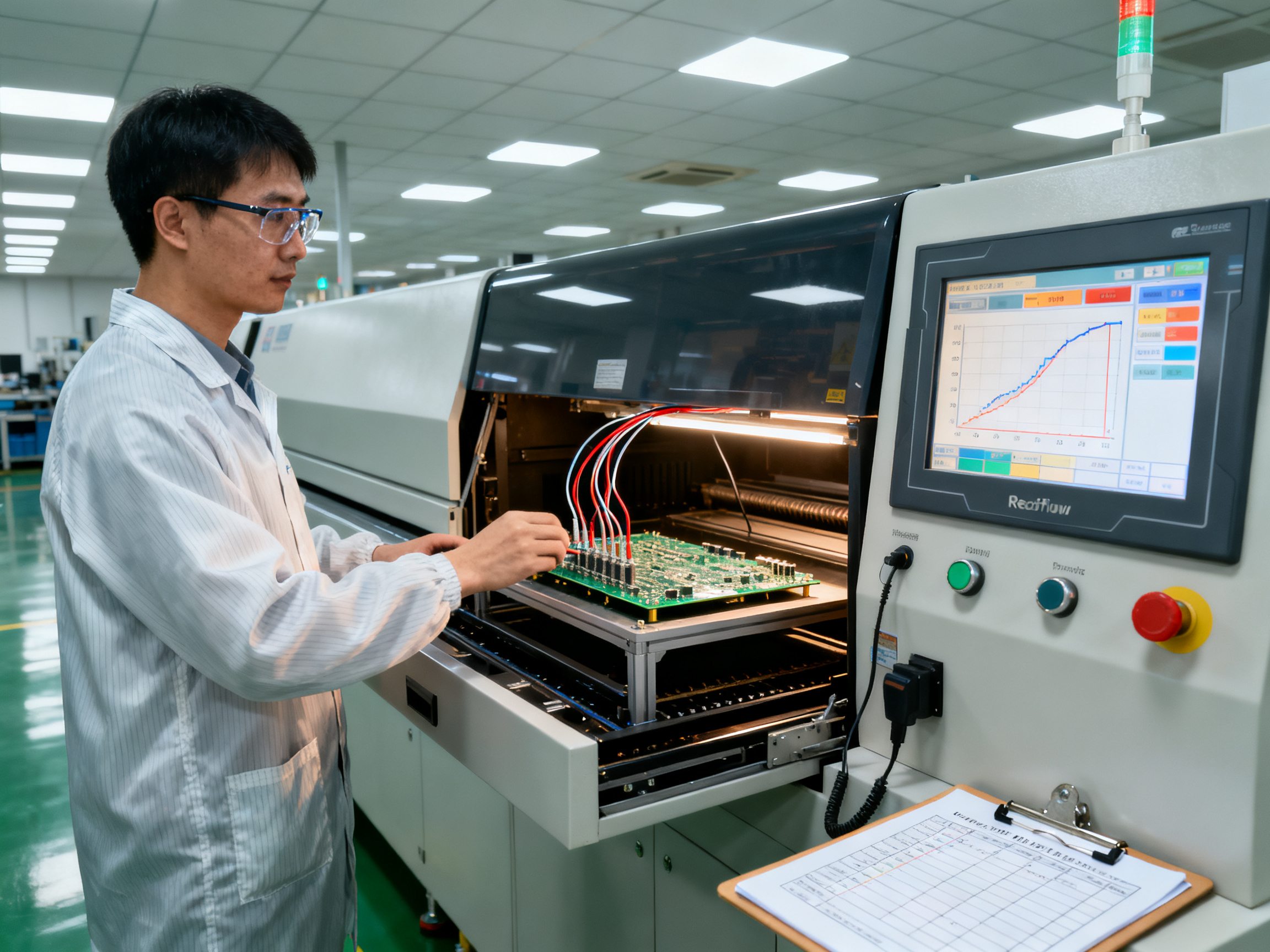
Comparing Convection and IR Reflow Technology
OK so let’s get into the actual differences. What makes these two oven types tick?
The core distinction comes down to how heat reaches your board. Convection ovens heat the air inside and blow it across your PCB. That hot air wraps around every component, getting into all the nooks and crannies. IR ovens work differently. They shoot infrared radiation at the board, and components absorb that energy directly.
Here’s the thing about heat transfer though. Convection gives you more even temperatures across the whole board. IR can heat faster, but different materials absorb radiation at different rates. A dark chip absorbs more IR than a shiny connector. That inconsistency shows up as temperature variations across your assembly.
How Each Technology Handles PCB Assembly
Convection reflow ovens are the workhorses for complex boards with mixed components. That hot air circulation means every part gets roughly the same thermal treatment, regardless of color or surface finish. Dense boards with lots of components? Convection handles those beautifully.
IR ovens have their strengths too. The direct heating approach means faster ramp rates, and you can sometimes target specific areas without affecting neighbors. But shadows from tall components can create hot and cold spots. If you have parts that block IR radiation from reaching other components, you’ll run into problems.
Expert Tip: When selecting reflow technology for different PCB designs, consider your component mix first. Boards with uniform, low-profile parts work well with IR. Anything with varied heights, different materials, or heat-sensitive components benefits from convection’s consistent coverage.
Precision and Quality Outcomes
The thermal profiling precision directly affects your solder joint quality. Convection ovens let you nail those soak zones and peak temperatures with tighter tolerances. That means more consistent reflow profiles run after run. IR can achieve great results too, but you need to account for material absorption variations when setting up your profiles.
So which technology actually delivers better quality? It depends on what you’re building. For high-density assemblies with mixed component types, convection typically produces fewer defects and better yields. For simpler boards with uniform components, IR can match that quality while offering speed advantages.
Most equipment manufacturers in 2026 offer both technologies, and some have hybrid systems that combine convection and IR heating. That gives you flexibility for different product lines without buying separate equipment.
Key Differences Between Convection and IR Reflow Ovens
Beyond how they move heat around, these two technologies differ in ways that directly affect your bottom line and maintenance schedule.
Energy Consumption and Operational Costs
Here’s where convection ovens typically take a hit. Running fans to circulate hot air takes more electricity than IR heating elements sitting mostly idle between boards. If you’re watching utility bills closely, that difference adds up over a production run of thousands of boards per week.
IR ovens win on pure energy efficiency for direct heating. The radiation hits components, energy transfers immediately, and you’re not heating unused air in the chamber. Some manufacturers claim 20-30% energy savings with IR compared to full convection systems. But that math only works if your board profiles cooperate with IR heating characteristics.
Expert Tip: When selecting reflow technology for different PCB designs, factor in your utility costs alongside the purchase price. A cheaper IR oven might cost more to operate over three years than a premium convection system with energy-efficient heating zones.
Durability and Maintenance Requirements
Convection ovens have more moving parts. Those circulation fans wear out. Heating elements covered by accumulated flux residue need regular cleaning. Thermocouples drift over time and require calibration checks. Budget for fan replacements every 18-24 months in a busy production environment.
IR systems are mechanically simpler. No fans means fewer failure points and less scheduled maintenance. The heating elements themselves tend to last longer since they’re not exposed to circulating contaminants. That said, IR bulbs and emitters do degrade and need replacement, though less frequently than convection fan motors.
From a reliability standpoint, IR ovens generally have the edge for continuous operation. Fewer moving parts means fewer things that can break at 2am before a big shipment.
The choice comes down to your production volume, board complexity, and how much downtime you can absorb for maintenance.
Practical Applications in Electronic Manufacturing
Here’s where theory meets reality. You can understand all the thermal dynamics in the world, but if your reflow oven doesn’t play nice with the rest of your assembly line, you’re going to have a bad time.
Integrating Reflow Technology into Assembly Lines
Putting a reflow oven into production isn’t just about plugging it in and hoping for the best. We’ve helped companies integrate these machines into setups ranging from manual bench stations to fully automated lines with robotic component placement.
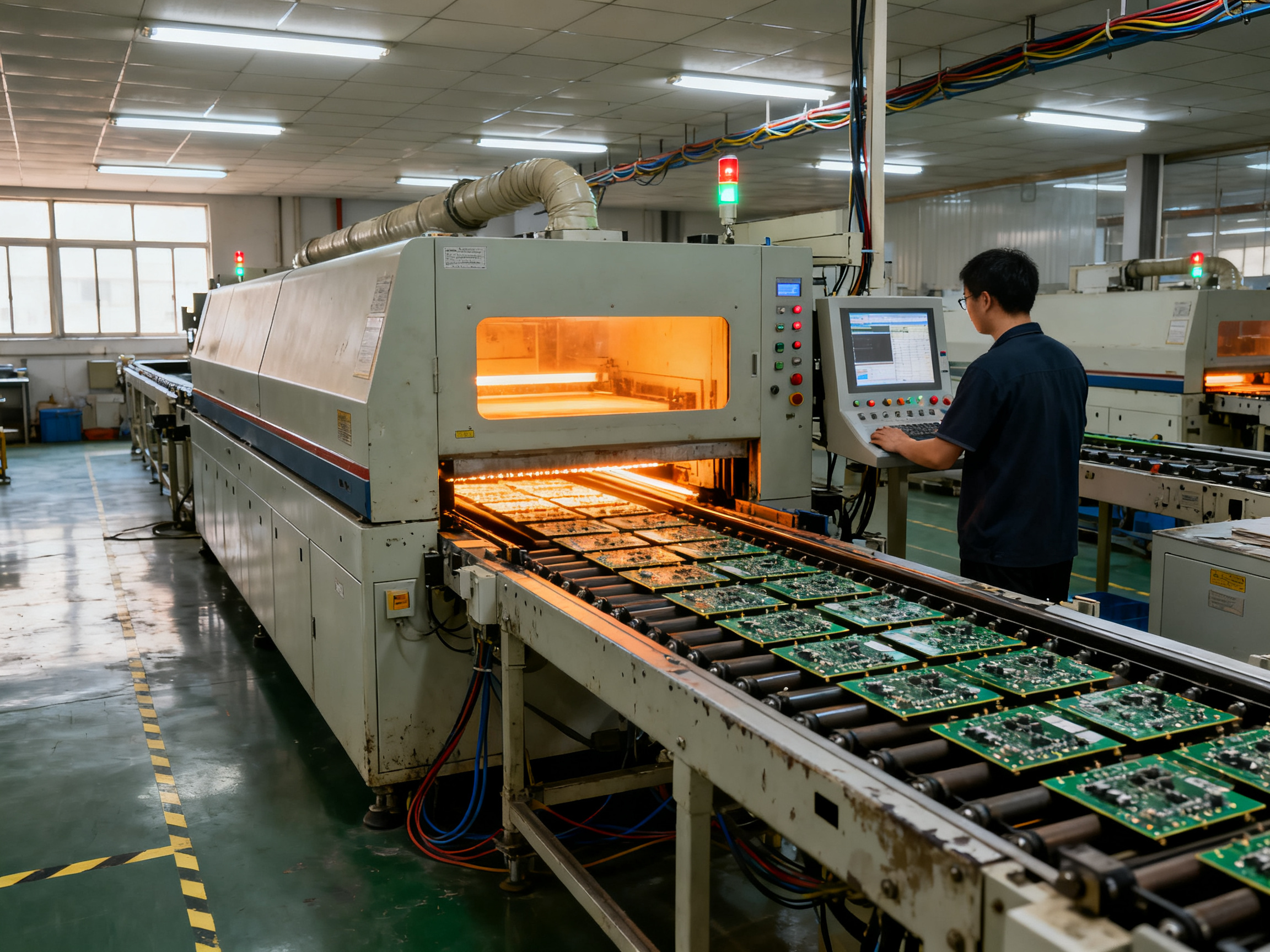
The conveyor system matters a lot. Your oven needs to match your line speed. If your pick-and-place machine spits out boards every 8 seconds, but your oven conveyor crawls along at half that pace, you’re creating a bottleneck that kills throughput. Sun and Mountain SMT designs their precision reflow ovens to work with standard PCB conveyor systems, which makes integration simpler for most operations.
Thing is, the physical integration is the easy part. The hard part is getting your thermal profile dialed in for your specific board designs. Each PCB has its own thermal mass, component mix, and solder paste requirements. That profile you spent three days perfecting on one board? It probably needs tweaking for your next product.
Achieving High Precision and Minimizing Downtime
Precision reflow ovens shine when you’re working with boards that have tight tolerances. Medical devices, aerospace components, automotive electronics. These industries can’t afford solder joints that are slightly off.
Downtime kills productivity faster than almost anything else in manufacturing. When your oven goes down mid-shift, you’re looking at lost labor, missed deadlines, and potentially damaged boards stuck in the machine. Modern reflow oven technology includes real-time monitoring that catches problems before they become catastrophes. Temperature drift, conveyor issues, heating element failures. These get flagged immediately so your team can respond instead of discovering defects three hundred boards later.
Pro Insight: Maintaining efficiency and reducing downtime through proper integration starts with choosing equipment that communicates with your existing systems. Look for ovens with open protocols that let you monitor thermal data from your central dashboard.
Case Studies of Successful SMT Implementations
Let me share something that stuck with me. A company in the automotive sector was struggling with intermittent solder defects on their ECU boards. Random failures, impossible to predict, driving them crazy during quality checks. The root cause turned out to be temperature variation across their old IR oven. Tall components were casting shadows, leaving some joints slightly underheated.
They switched to a forced convection system with better airflow design. The defect rate dropped from around 2% to practically zero within two weeks. The oven itself cost more upfront, but the savings in rework costs and customer returns paid for the difference in under a year.
That’s the kind of ROI that matters in electronics manufacturing. Not just what the machine costs, but what it saves you downstream.
The companies getting the best results in 2026 treat their reflow ovens as part of an ecosystem. Thermal profiling software, conveyor systems, inspection equipment, all working together. Siloed thinking gets you siloed problems.
Whether you’re running a small operation with one oven or a production floor with a dozen machines, the principles stay the same. Know your products. Know your process. Choose equipment that fits both.
Integration and Maintenance
Getting your reflow oven set up properly matters just as much as choosing the right technology. Even the best convection oven on the market will underperform if integration gets botched.
Strategies for Seamless Integration
Before you even uncrate your new equipment, map out your existing workflow. Where do boards enter? What happens to them after reflow? How fast does your pick-and-place machine run?
Your oven’s conveyor speed and thermal zones need to sync with everything upstream and downstream. We always recommend running test boards through your line before committing to full production. That catches timing mismatches early, before they cause defects or bottlenecks.
Most modern SMT convection reflow ovens talk to common protocols, but verify compatibility with your existing systems. Nothing kills productivity faster than discovering your new oven can’t communicate with your MES software after it’s been installed.
Maintenance Best Practices
Here’s what nobody tells you: an ounce of maintenance prevents a pound of lost production.
Daily maintenance checklist:
- Wipe down the conveyor belt and check for debris
- Verify chamber temperature matches your profile settings
- Listen for unusual fan sounds or motor noise
- Inspect incoming boards for proper solder paste application
Weekly tasks:
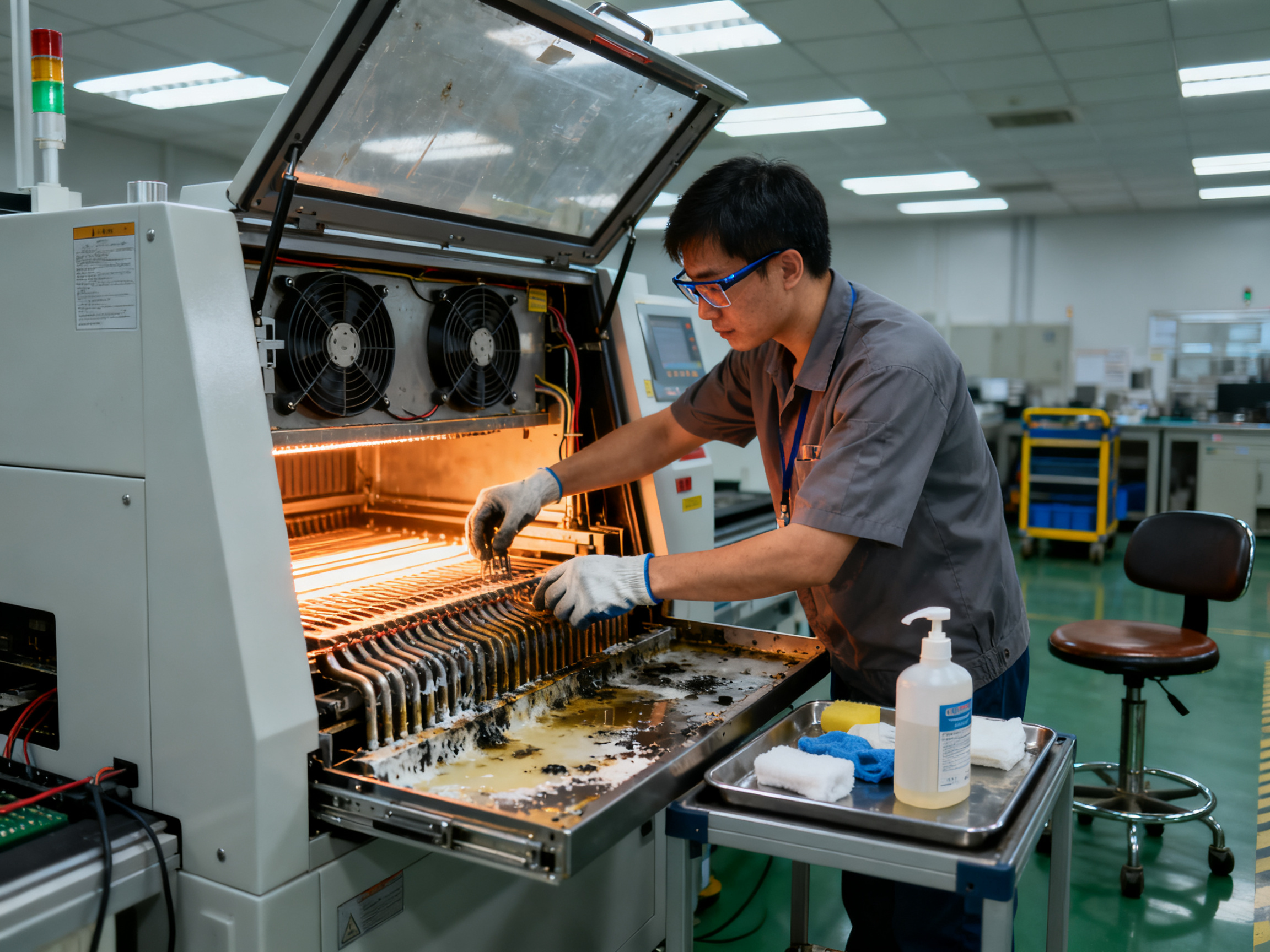
- Clean heating elements and remove accumulated flux residue
- Check thermocouple calibration against reference readings
- Inspect door seals for heat leaks
- Review production logs for any temperature anomalies
Monthly reviews:
- Deep clean the entire chamber and cooling zones
- Inspect fans and motors for wear
- Update firmware if manufacturers have released patches
- Run a full thermal profiling session to catch drift
Pro Insight: Maintaining efficiency and reducing downtime through proper integration starts with choosing equipment that communicates with your existing systems. Look for ovens with open protocols that let you monitor thermal data from your central dashboard.
Extending Oven Lifespan
Regular performance reviews catch drift before it causes defects. Quarterly thermal profiling against your baseline ensures consistency as components age. Track energy consumption over time, sudden spikes often signal developing problems. Replace consumable parts on schedule, not when they fail.
The manufacturers getting it right in 2026 build maintenance into their culture, not just their schedules. Preventive care beats emergency repairs every single time.
Future Trends in Reflow Oven Technology
Looking ahead, reflow oven technology is heading somewhere exciting. The days of basic heating chambers with manual adjustments are fading fast.
AI and IoT integration has become standard in 2026. Modern ovens now learn from production data, automatically adjusting thermal profiles based on board characteristics. Your oven gets smarter with every batch you run.
Hybrid designs are gaining serious traction. Manufacturers figured out that combining convection and IR heating gives you the best of both worlds. Convection handles the heavy lifting for temperature consistency while IR boosts ramp rates for specific zones. That flexibility means your equipment adapts to whatever you throw at it, not the other way around.
Vacuum-assisted reflow is another technology worth watching. Removing air from the chamber during soldering cuts down on void formation dramatically. For power electronics and EV applications, those improvements in thermal interface materials matter a lot.
From Our Experience: Innovative features expected in next-generation ovens include predictive maintenance algorithms that tell you exactly when components need attention, before failures happen. We’re also seeing more manufacturers embrace modular heating zones that let you reconfigure thermal profiles for different board sizes without sacrificing performance.
Energy efficiency is driving a lot of redesign work too. Rising utility costs and sustainability goals push manufacturers toward better insulation, smarter heating algorithms, and heat recovery systems that capture energy from cooling zones.
Modular platforms are replacing those massive single-unit systems. Smaller manufacturers can start with fewer zones and expand as demand grows. That scalability opens up professional-grade equipment to operations that previously couldn’t justify the investment.
The trend line is clear: reflow ovens in 2026 and beyond are becoming smarter, more adaptable, and easier to integrate into modern manufacturing workflows. Whether you’re running a single machine or a full production floor, these advances give you tools to stay competitive as electronics keep getting more complex.
Conclusion
Picking the right reflow oven comes down to understanding what you’re actually building. If your boards have mixed components, varied heights, and tight quality requirements, convection reflow ovens consistently deliver the thermal uniformity you need. If you’re running simpler assemblies with uniform parts, IR heating might give you the speed advantage without sacrificing results.
Quick recap of what matters most:
- Convection ovens excel at even heating across complex boards
- IR ovens offer faster ramp rates and energy savings for simpler assemblies
- Hybrid systems are worth considering if your product mix varies
- Thermal profiling precision drives solder joint quality more than oven type alone
- Integration with your existing line determines real-world performance
The reflow oven landscape has shifted significantly in 2026. AI-powered profiling, smart monitoring, and hybrid heating designs have raised the bar across all categories. Whatever technology you choose, factor in total cost of ownership, not just purchase price. Energy consumption, maintenance requirements, and integration complexity all affect your bottom line over time.
Sun and Mountain SMT continues to develop solutions that balance precision, reliability, and operational efficiency for electronics manufacturers of all sizes. The best oven for your operation is the one that fits your specific products, workflow, and quality targets. Take time to test equipment with your actual boards before committing. Your products and your production team will thank you.