
Published: 16 April 2026
Reading Time: 12 minutes
Reviewer: Placeholder Reviewer, SMT Manufacturing Expert
The Ultimate Guide to SMT Machines and Their Role in Modern Electronics
Have you ever wondered what makes modern electronics so compact yet incredibly powerful? The magic lies in something called SMT, or Surface Mount Technology. SMT machines are behind the scenes, making everything from your smartphone to your laptop possible by assembling tiny components with incredible speed and accuracy.
But here’s the thing: SMT machines aren’t just mysterious gadgets for tech experts. They are the backbone of today’s electronics manufacturing industry, giving businesses the ability to produce high-quality products at scale. If you’re curious about why or how SMT machines matter, this guide is the perfect place to get answers.
Jace Liu has over 15 years of experience in electronics manufacturing technologies, specializing in SMT equipment and automation solutions. As a manufacturing engineer and consultant, Jace has helped global OEM and EMS companies optimize their production lines with advanced SMT systems.
What Are SMT Machines? A Comprehensive Overview
SMT machines are specialized tools designed for mounting electrical components directly onto a printed circuit board (PCB). Unlike older methods that required drilling holes into PCBs, this technology uses surface mounting, which is both faster and more precise.
Key Features and Benefits:
- Efficiency Boost: SMT machines automate assembly processes, handling thousands of components in a matter of minutes.
- Precision: Advanced models offer pinpoint accuracy when placing even the tiniest components, ensuring every product works as intended.
- Error Reduction: By cutting down on manual labor, SMT machines significantly lower the chance of human error.
Expert Tip: Automation in SMT is key to achieving the incredible precision required for modern electronics. Machines equipped with advanced sensors and AI take accuracy to new levels.
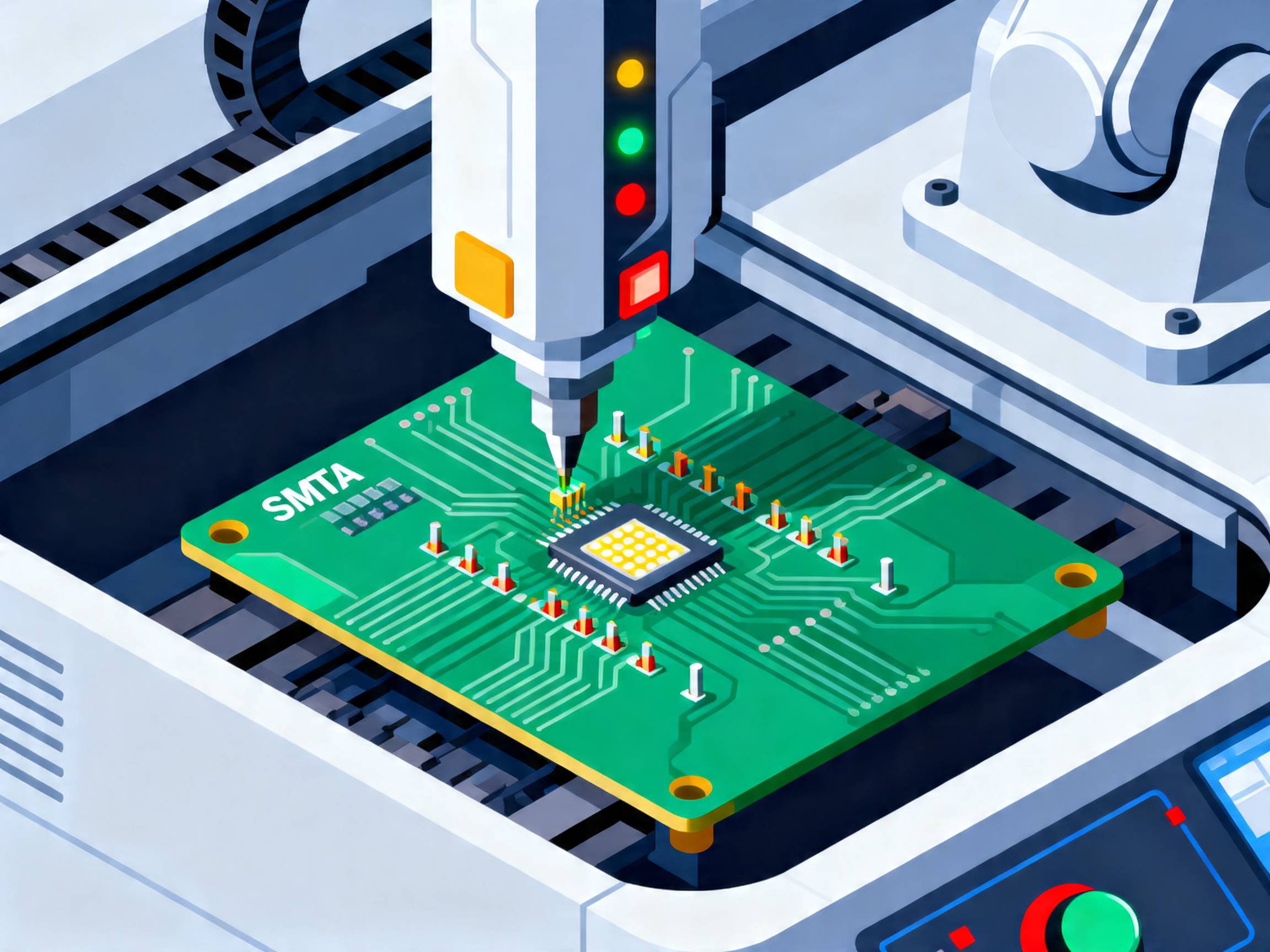
Whether you’re an electronics manufacturing newbie or a seasoned pro, understanding SMT machines helps explain how products are built efficiently and at scale.
How to Choose the Right SMT Machine for Your Manufacturing Needs
Selecting the right SMT machine isn’t a one-size-fits-all decision. It hinges on several factors, including your company’s size, how much you plan to produce, and your budget. Let’s break this down.
Key Considerations:
- Company Size and Production Volume:
- Smaller businesses might focus on compact, cost-effective machines that suit low-to-medium production runs.
- Large-scale manufacturers often need high-speed, automated SMT equipment to keep up with demand.
- Budget:
- Make sure to consider not just the upfront cost but also ongoing maintenance and operational expenses.
- Leasing programs or refurbished options can be smart choices for those with tighter funds.
- Scalability:
- Think ahead! Does the machine integrate well with future upgrades and expansions?
- Integration Capabilities:
- Machines that work seamlessly with your existing processes, like reflow ovens or PCB conveyors, can save you a ton of trouble down the road.
Questions to Ask Vendors:
- How does this model handle production at higher volumes?
- What’s the warranty, and how is customer support?
- Can this equipment integrate with AI-driven manufacturing systems?
Pro Insight: Before purchasing, always ask vendors about scalability and integration features. Flexibility in an SMT machine can save you headaches as your business grows.
Remember, choosing an SMT machine isn’t just about the specs. It’s about finding the right fit for your unique needs. From cost to compatibility, doing your homework now can save you tons of stress later.

Overcoming Challenges in SMT Adoption
If you’re thinking about adopting SMT technology, there are some barriers you should know about. Budget constraints, infrastructure changes, and automation resistance can sometimes complicate the transition. Let’s explore these challenges and what you can do to overcome them.
Common Barriers:
- Budget Constraints:
- Investing in SMT equipment can be pricey, especially for small businesses. Upfront costs, ongoing maintenance, and training expenses might feel overwhelming.
- Leasing SMT machines or buying refurbished models can ease initial financial strain.
- Infrastructure Adjustments:
- Switching to SMT might require upgrades to your production floor, especially if you’re using older equipment.
- Proper planning and gradual implementation can minimize disruptions.
- Resistance to Automation:
- Some teams may worry about job security or resist learning new systems. Education and demonstrating how automation supports higher efficiency can help ease concerns.
Troubleshooting Tips:
- Start Small: Begin with one or two SMT machines before scaling up. It’s easier to adjust processes gradually than make sudden, sweeping changes.
- Leverage Vendor Support: Most SMT manufacturers offer training and customer service to help resolve integration issues.
- Create Clear Processes: Document workflows for assembly, inspection, and maintenance so your team knows what to expect.
Overcoming Resistance:
Resistance to automation often stems from fear of change. Open communication is key. Explain how SMT technology is a tool to make processes easier, reduce errors, and help teams work more efficiently. Highlight the fact that automation upgrades often lead to fewer repetitive tasks, allowing workers to focus on higher-value activities.
Pro Insight: AI-driven features like predictive maintenance and real-time monitoring can simplify troubleshooting. These tools help prevent downtime and ensure smooth production workflows.
It’s not always easy to make big changes, but adopting SMT technology is an investment in your company’s future. Take it step by step, and you’ll see the benefits of modern manufacturing solutions pay off.
Conclusion: Why SMT Technology is Changing Electronics Manufacturing Forever
SMT machines power today’s electronics manufacturing process, making compact, reliable devices possible while scaling production to meet the needs of an ever-connected world. Without Surface Mount Technology, we wouldn’t have the advanced gadgets we rely on daily.
Staying ahead in electronics manufacturing now means embracing advanced tools like SMT machines. Companies leveraging AI-driven features and high-speed automation solutions are better equipped to tackle challenges like efficiency, precision, and scalability.
For businesses searching for cutting-edge SMT equipment, partnerships with trusted manufacturers like Sun and Mountain SMT can simplify the path forward. Their precision-engineered reflow ovens, soldering machines, and conveyor systems are tailored for modern production needs. It’s worth evaluating these solutions as you plan for future growth.
The real transformation of electronics assembly lies in your ability to adapt, upgrade, and innovate using technologies like SMT.
Pro Insight: AI-led innovations and predictive features aren’t just trends; they’re the future of SMT and electronics manufacturing. By embracing cutting-edge machinery today, you’re preparing to meet the demands of 2026 and beyond.
In 2026, Surface Mount Technology isn’t just changing manufacturing—it’s enabling what’s next in global innovation.
Related SMT Equipment
Looking for equipment to support your manufacturing line? S&M offers a full range of SMT equipment:
- SMT Reflow Ovens — Nitrogen and air atmosphere, 8-15 zones, dual-track options
- Wave Soldering Systems — Standard and selective soldering, 350-610mm tunnel
- PCB Loaders & Unloaders — Magazine-based automated board handling
- PCB Buffers — Storage and cooling buffers for production line balancing
- Curing Ovens — UV and thermal curing for coatings and adhesives
Contact our application engineers for equipment recommendations and line configuration support.