
Published: 19 May 2026
Reading Time: 9 minutes
Reviewer: Simon Scrapes, Founder
Reflow Ovens for PCB Assembly: How They Work, Benefits, and Key Features
Reflow ovens are game-changers in the electronics manufacturing world, specifically for PCB (Printed Circuit Board) assembly. If you’ve ever wondered how large-scale production of your favorite tech devices happens, reflow ovens are the unsung heroes. These machines simplify the once-detailed and manual process of soldering components onto boards, bringing speed and consistency to something that used to take hours of labor. Think of them as the conveyor belts of soldering, ensuring every connection is secure without the hassle of hand soldering.
When you’re assembling complex PCBs, consistency is everything. That’s why reflow ovens are so valuable—they automate soldering while reducing errors. In 2026, with advancements like smarter automation and energy-efficient designs, these machines are a core part of modern production lines.
[Insert Author Name] specializes in advanced manufacturing technologies with years of experience advising EMS and OEM companies on optimizing electronic assembly processes. Their insights stem from hands-on expertise with SMT equipment and reflow oven integration into production lines.
What is a Reflow Oven, and Why Do You Need One?
If you’re asking, “What is a reflow oven?”, here’s a quick rundown. Reflow ovens are specialized machines used in Surface Mount Technology (SMT) assembly to heat solder paste to its melting point. But they don’t just melt solder—they create reliable joints between components and the PCB’s surface. Compared to older hand-soldering methods, this process is faster, more precise, and scalable for mass production. In today’s highly competitive electronics industry, speed and accuracy aren’t just nice to have; they’re essential.
A Peek Behind the Curtain: How Reflow Ovens Changed the Game
Back in the day, assembling a PCB required hours of manual labor that sometimes left room for errors. Reflow ovens stepped in as the ultimate time-saving tool. They provide controlled heat, ensuring every solder joint is formed consistently. With features like programmable profiles and automated control systems, you can focus on scaling production without sacrificing quality.
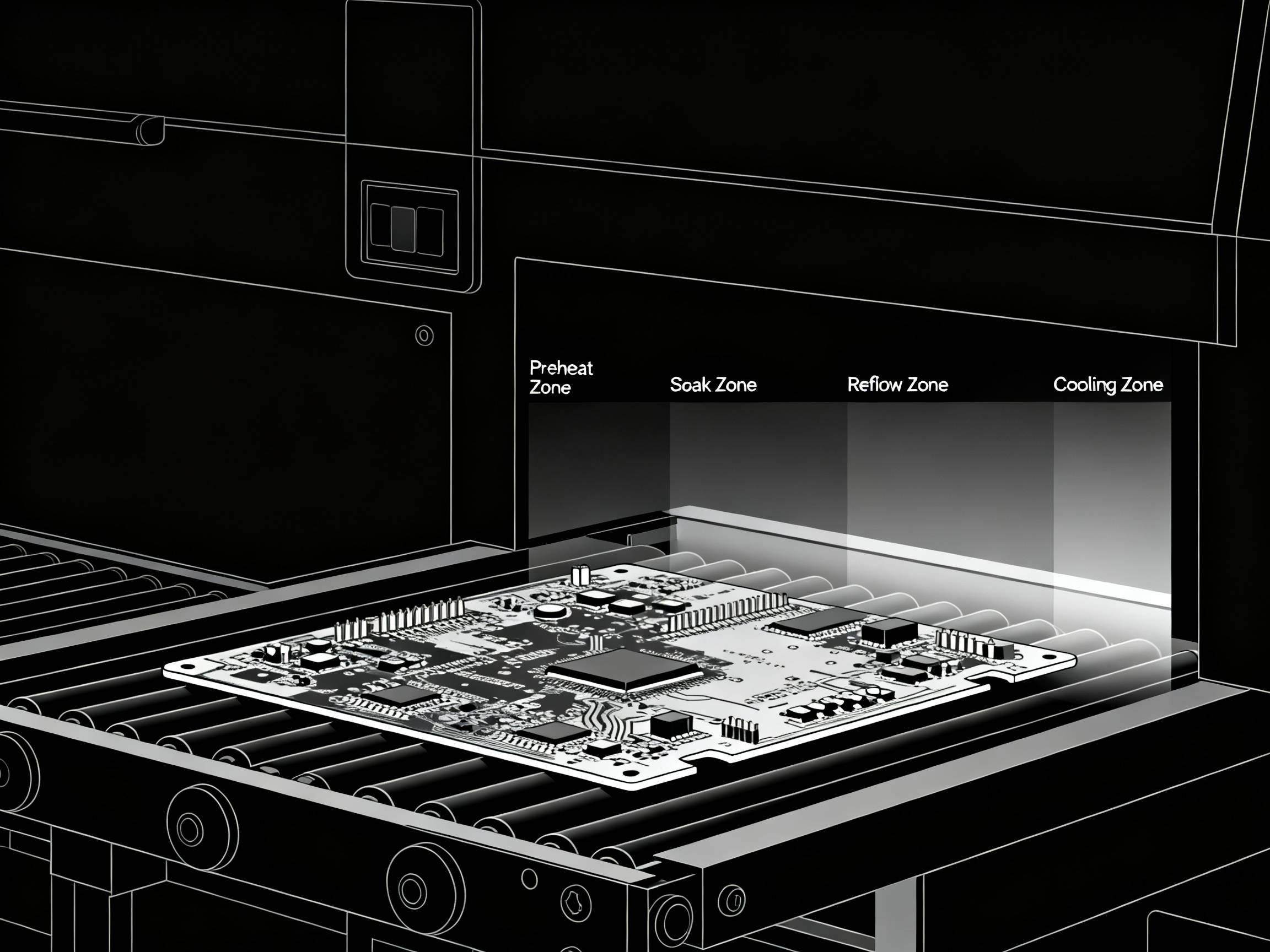
Key Features of Modern Reflow Ovens
Today’s reflow ovens aren’t just about heating up solder paste and hoping for the best. These machines are packed with features that make them essential in modern electronics manufacturing. Let’s break down the top reasons they’re a big deal in 2026.
1. Advanced Temperature Profiling
Temperature profiling is no joke if you want reliable solder joints. Modern ovens let manufacturers create profiles tailored to the specific solder paste being used. For example:
- Lead-free solder pastes like SAC305 require peak temperatures between 240–250 °C.
- Traditional lead-based ones, like Sn63/Pb37, work with peaks around 210–220 °C.
This kind of flexibility ensures consistent results no matter what materials you’re running through the line. Plus, with programmable controls, you can store multiple profiles and switch seamlessly between production runs. It’s all about making sure those solder pads and components behave exactly as they should.
2. Nitrogen Inerting
Here’s a fun fact: oxidation can ruin solder joints, but nitrogen inerting systems in reflow ovens minimize this risk. How? These systems flood the soldering chamber with nitrogen gas, significantly reducing oxygen levels. Less oxygen means fewer defects like cold joints or voids, especially for high-reliability boards like BGAs (ball grid arrays) or automotive electronics.
For companies producing mission-critical electronics, nitrogen inerting isn’t just helpful—it’s a must-have feature. And the benefits? Better yields with fewer production hiccups.
Expert Tip: Selecting reflow ovens with advanced nitrogen inerting systems ensures maximum reliability for complex boards, especially in industries like automotive and aerospace.
3. Energy Efficiency
Let’s talk about the environmental impact. In 2026, more manufacturers are prioritizing eco-friendly designs, and reflow ovens are stepping up. Here are some of the energy-saving tricks in modern models:
- Hybrid heating systems combining infrared and convection to reduce power use.
- Smart sensors that minimize energy draw when lines aren’t active.
- Designs that minimize heat loss, cutting down on both energy costs and environmental footprints.
If you’ve been holding out on upgrading your old system, the savings in energy bills alone might be enough to make it worth your while. Energy-efficient ovens are also easier to integrate into factories aiming to meet strict sustainability goals.
Putting It All Together
Modern reflow ovens are smarter and greener than ever. With features like advanced profiling, nitrogen inerting, and energy-saving designs, they’re built to deliver high-quality results that keep manufacturers ahead in a competitive market. Stay tuned, because in the next section, we’ll dig into what you need to consider when choosing the perfect reflow oven for your production line.
What to Consider When Selecting a Reflow Oven
Choosing the right reflow oven for your production line isn’t as simple as picking something off a shelf. You’ve got to think about how it fits into your current setup, your budget, and how it’ll help meet your company’s goals. Here are the top things to keep in mind.
1. Scalability and Production Line Integration
First, think about whether the oven you’re eyeing can handle your current workflow—and your future growth. Reflow ovens vary in size, capacity, and throughput. Buying one that supports scalability means you won’t have to replace it when your production needs increase. For example, if you’re manufacturing mid-to-high volume electronics, industrial-grade ovens with continuous belt systems integrate seamlessly into automated lines.
Also, consider how the oven fits into your existing process setup. Does it work harmoniously with your solder paste printer and pick-and-place machines? If you’re running a fully automated SMT line, integration is everything. Disruptions here can slow your whole workflow.
Pro Insight: Effectively managing temperature zones in your reflow oven ensures heat spreads evenly across PCBs, avoiding defects like uneven solder joints.
2. Energy Consumption and Environmental Standards
Another big one is energy efficiency. Running industrial equipment day in and day out racks up energy costs quickly, but newer reflow ovens are designed with energy-saving systems. For instance:
- Hybrid heating models cut power usage by combining infrared heating with convection.
- Smart sensors reduce power draw during idle times.
- Insulation systems minimize heat loss, lowering the need for constant heating.
And in 2026, more manufacturers are focusing on lower carbon footprints. If your company has sustainability goals, choosing an oven aligned with environmental standards is crucial. These ovens help reduce greenhouse gas emissions and often provide certifications to meet compliance requirements.
3. Budget and ROI
Reflow ovens come in all price ranges, from refurbished machines to cutting-edge models with the latest tech. Before you make a big purchase, weigh the upfront cost against its expected ROI. An expensive oven often offers higher precision, better reliability, and lower defect rates, which can save you more in the long run.

If budget is tight, you’re not out of options. Leasing programs or refurbished units let you access quality equipment without blowing your company’s finances. Plus, some manufacturers now offer modular ovens that are upgradable. You can start simple and add features, like nitrogen inerting, as your needs evolve.
Expert Tip: Balancing upfront cost with upgradability ensures you’re not overspending now while still preparing for future production demands.
Wrapping It Up
When selecting a reflow oven, it’s all about alignment—does it match your production volume, energy goals, and future needs? Scalability, energy efficiency, and budget considerations should be top of mind. With the right investment, you’ll not only improve your output but also help your company stay competitive in fast-moving markets. Next, we’ll explore the differences between desktop and industrial reflow ovens to figure out which is the better fit for different use cases.
Benefits of Using a Reflow Oven for PCB Assembly
Reflow ovens are more than just machines—they’re problem solvers for anyone in electronics manufacturing. Whether you’re producing a few custom devices or mass-producing electronics, these ovens make the process faster and more precise, improving the overall quality of PCB assembly. Here are some key benefits to think about.
Precision and Consistency
Imagine trying to solder hundreds of tiny components onto a PCB by hand. It’s tedious, and even the most skilled technicians can make mistakes. Reflow ovens remove that risk by offering precise temperature control. Every joint gets the exact amount of heat it needs. So whether you’re working with lead-free solder or traditional materials, the results remain consistent.
In fact, one reason these ovens became industry staples in the 2020s is their ability to nearly eliminate common defects like cold joints, tombstoning, and voids. And those programmable profiles we mentioned earlier? They allow manufacturers to customize settings for different projects, ensuring perfection on every board.
Time Savings
“Time is money,” they say, and reflow ovens understand that better than anyone else. Before these devices became widely available, many PCB assembly tasks were done by hand. Reflow ovens streamlined the process, cutting down production times without sacrificing quality. This can be a game-changer if you’re racing to meet tight deadlines.
Plus, modern ovens often integrate directly into SMT production lines. That means they handle one board after another without skipping a beat, maximizing throughput and making sure you’re never stuck waiting.
Cost Efficiency
While the upfront cost of a reflow oven might feel steep, it’s an investment that pays for itself over time. Here’s why:
- High Yield Rates: Fewer mistakes mean fewer boards scrapped, saving material and labor costs.
- Reduced Downtime: Advanced models are built for reliability and require less frequent maintenance.
- Energy Savings: Features like hybrid heating and smart sensors slash power consumption, cutting utility bills in the long run.
As a bonus, these savings help companies stay competitive in industries where every penny counts. It’s why reflow ovens are a popular choice for manufacturers looking to improve their bottom line.
Flexibility in Production
Need to run a small prototype batch today, and a full production run tomorrow? Reflow ovens handle both with ease. They’re designed to adapt to different project requirements without needing constant reconfiguration. This flexibility is especially valuable for manufacturers managing diverse product lines.
Pro Insight: A well-designed reflow oven maximizes production flexibility by enabling quick profile changes and seamless adaptation to various materials. This reduces line downtime and supports quick turnarounds.
Improved Quality Control
Finally, there’s the peace of mind that comes with knowing your products meet the highest quality standards. Reflow ovens are programmed for precision, leaving no room for guesswork. Features like nitrogen inerting and vacuum systems ensure solder joints are not only consistent but also durable, reducing the risk of field failures.
If your customers demand the best (and let’s be honest, who doesn’t?), a reflow oven helps you exceed their expectations. High-quality boards mean fewer returns, happier customers, and a stronger reputation in competitive markets.
In the next section, we’ll compare desktop and industrial reflow ovens to help you understand which one fits your needs best. Whether you’re a small-scale manufacturer or part of a global giant, we’ll break it down step-by-step so you can make an informed decision.