
Industrial Curing Ovens: What They Are, How They Work, and Choosing the Right Type
Curing ovens might not get much attention, but they’re vital behind the scenes in manufacturing. If you’ve ever wondered how paint hardens smoothly on your car or how electronics last longer without breaking down, these ovens are the answer. They carefully control heat, enabling materials to cure, harden, or finish properly. Let’s dive into how they help businesses and which type might be right for you.
The author has a rich background in electronics manufacturing, specializing in SMT equipment and production optimization. With hands-on experience in implementing industrial ovens for PCB assembly, their insights add valuable expertise to manufacturing solutions.
What Are Industrial Curing Ovens?
Industrial curing ovens are specialized machines that heat materials evenly to create a lasting finish, improve durability, or remove moisture. They’re not just for one task; these ovens are versatile and can handle curing adhesives, paints, coatings, epoxies, and more. The magic lies in their ability to manage temperature precisely, so you always get consistent results.
Why Are They Important?
Think about sectors like aerospace, automotive, or electronics manufacturing. These industries rely on precision and performance, and curing ovens make that possible. For electronics, for instance, they ensure adhesives, coatings, and encapsulants cure properly. This means fewer defects, reliable performance, and longer-lasting products that consumers can trust.
For manufacturers, these ovens also boost efficiency. By optimizing the curing process, companies can churn out quality products faster—helping them stay competitive in demanding markets.
How They Work
Imagine your oven at home, but dialed up with a lot more precision and customization. Industrial curing ovens use advanced temperature controls to create the perfect environment for curing. Some ovens are batch ovens; others are large conveyor-style systems for high-volume manufacturing. Regardless of the type, their functionality revolves around uniform heat distribution.

Temperature Precision: A Game-Changer
Temperature control isn’t just a fancy add-on—it’s the backbone of curing ovens. Even small fluctuations can compromise material quality, especially for electronics. These ovens maintain exact heating ranges, ensuring your products meet high standards every time.
Why Electronics Manufacturing Needs Them
Electronics manufacturing is one area where curing ovens shine. Advanced materials used in chips or PCBs—like adhesives or resins—require heat to set properly. Without precision ovens, production flaws and reduced product reliability would be far too common.
And trust me, this tech isn’t just about production speed. It’s about creating consistent quality, which is essential when you’re trying to minimize downtime or meet tight deadlines.
Types of Industrial Curing Ovens and Their Applications
Industrial curing ovens come in different shapes and sizes, and each type has unique features for specialized applications. Whether you’re curing paint, ensuring adhesive bonds, or hardening components, understanding the types available can guide you toward the ideal choice for your needs.
Batch Ovens
Batch ovens work well for small-scale operations or projects that process materials in batches. These ovens are versatile, making them a top choice for curing paints, coatings, or adhesives in a controlled environment without needing continuous production.
Conveyor Ovens
For businesses managing high-volume production, conveyor ovens are worth considering. These ovens allow materials to move through a continuous curing process, ensuring efficiency and consistency. They’re common in automotive and electronics manufacturing, where speed and precision are key.
Hybrid Ovens
Hybrid ovens are a game-changer because they combine batch and conveyor features. You get the flexibility of both systems, making them ideal for companies handling varied production needs.
Expert Tip: Hybrid curing ovens can optimize production efficiency by allowing manufacturers to adapt processes for both high and low-volume runs, offering scalability and cost savings.
Temperature Ranges for Different Industries
The required temperature range varies by application. For instance:
- Paint curing ovens often need temperatures between 150°F and 450°F.
- Electronics manufacturing ovens may operate within 200°F to 350°F for curing adhesives or encapsulants.
- Rubber vulcanization requires higher temperatures, sometimes exceeding 400°F.
These precise ranges ensure materials are cured without compromising their properties, whether strength or appearance.
Examples of Industries Using These Ovens
From aerospace to medical devices, many industries benefit from curing ovens. Here are a few:
- Automotive: For paint curing and coating protection
- Electronics: For adhesives, potting compounds, and encapsulation
- Medical: Ensuring device components meet stringent quality standards
- General Manufacturing: For multi-purpose curing of plastics, polymers, and composites
By understanding the unique needs of each sector, companies can choose an oven that delivers consistent results.
Maintaining Industrial Curing Ovens for Optimal Performance
Industrial curing ovens are incredible tools, but they need proper care to keep doing their job well. It’s kind of like your car—regular maintenance makes a huge difference. Plus, wouldn’t you rather prevent problems before they happen?
Cleaning: The Easy Win
The first step in maintenance is cleaning. Dust, debris, and material residue can gather inside the oven, lowering efficiency and affecting heat distribution. Using specialized cleaning tools designed for industrial ovens can save time and effort. Manufacturers often recommend cleaning schedules based on usage—so sticking to those guidelines is a smart move.
Checking Temperature Calibration
Temperature precision is crucial for curing ovens, especially in electronics manufacturing. Regular calibration ensures your oven provides even heat and helps avoid material defects. Tools for temperature calibration are usually supplied by oven manufacturers. If you’re unsure how to calibrate, consult your manual or hire a technician.
Replacing Worn Parts
Like any machine, curing ovens have parts that wear down. Belt conveyors, heating elements, and seals are common replacement items. If you notice uneven curing or slower cycle times, it might be a sign these parts need attention. Keeping spare parts on hand is a great way to avoid downtime.
Monitoring Performance with IoT Technology
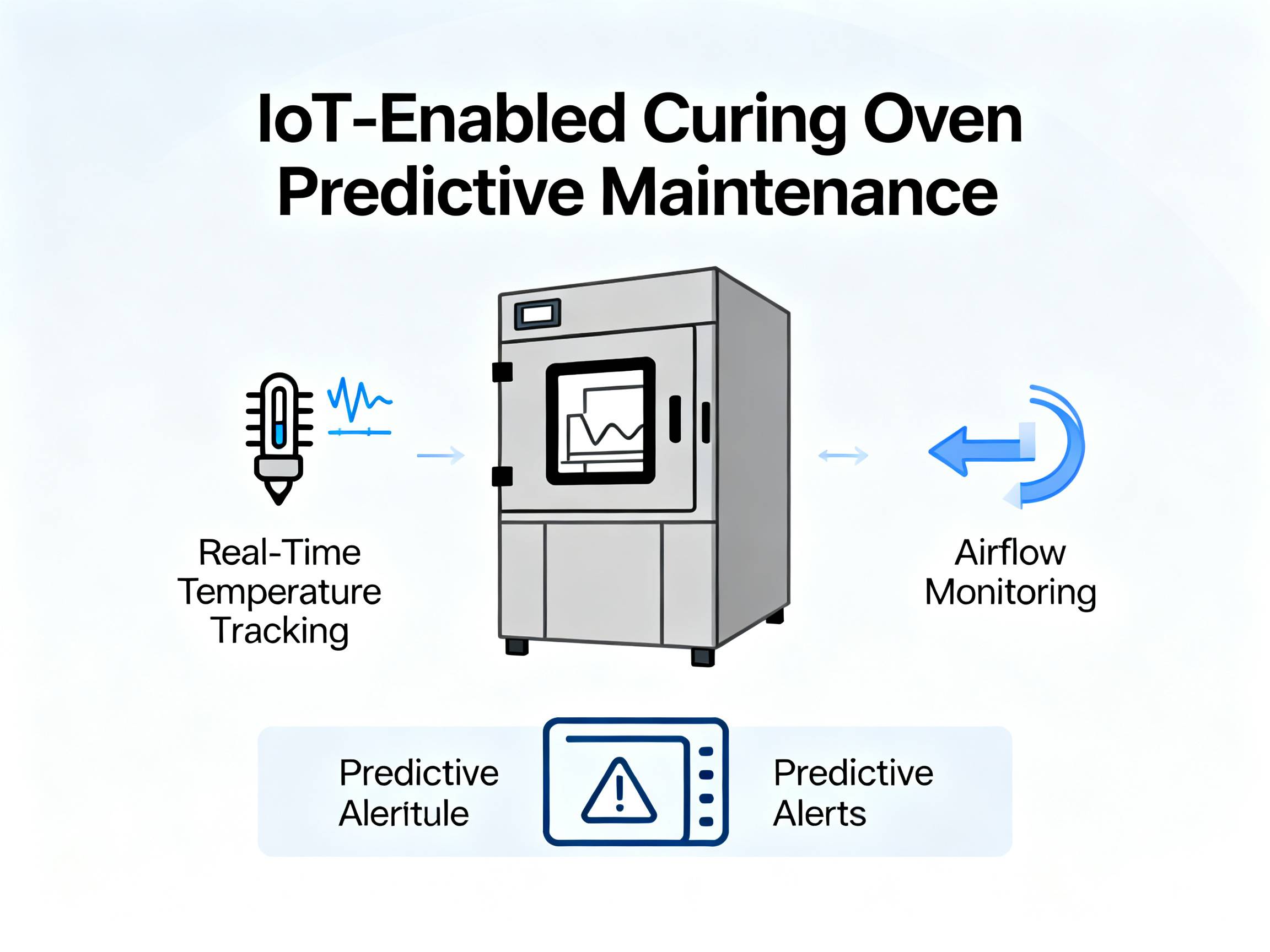
In 2026, IoT monitoring systems are making maintenance smarter. These enable predictive maintenance, alerting you before components fail. For instance, sensors can track temperature consistency or airflow rates—flagging potential issues before interruptions occur. Investing in this tech can save you money and headaches in the long run.
Expert Insight: “From our experience, scheduling routine inspections every quarter is essential. This ensures the system keeps performing at peak levels, and small issues get fixed before they turn into costly repairs.”
Training Your Team
Proper maintenance isn’t just about the machines—it’s also about the people operating them. Training staff to handle basic upkeep tasks ensures they know what to watch out for. Some oven manufacturers offer online training modules to guide teams in monitoring and maintaining their equipment.
Taking the time to properly care for your curing oven can extend its lifespan, cut down on unexpected repair costs, and keep your production running smoothly.
Emerging Technologies and Trends in Industrial Curing Ovens
Industrial curing ovens have come a long way, but 2026 has brought innovations that really change the game. From energy-efficient designs to IoT-connected systems, manufacturers are rethinking how these ovens operate to meet growing needs in electronics and beyond.
Smarter Tech: IoT Connectivity
IoT connectivity is turning curing ovens into smart machines capable of self-monitoring and adjustment. With real-time data, manufacturers can track temperature curves, airflow rates, and even maintenance schedules. Imagine an oven flagging a small issue and fixing it automatically—it’s like having an expert technician on call 24/7. And for production managers, remote monitoring means spotting problems early or verifying systems wherever you are.
Energy-Efficient Designs
Energy efficiency isn’t just a buzzword; it’s a big focus for companies aiming to lower costs and emissions. Modern curing ovens feature upgraded insulation, smarter heating elements, and innovations like heat recovery systems. These tweaks reduce power consumption while maintaining precise temperature control, helping businesses hit sustainability goals without sacrificing performance.
Pro Insight: Budget-conscious manufacturers should ask about eco-friendly features. Initial costs might be higher, but long-term savings almost always pay off.
Meeting Electronics Production Demands
Electronics production is scaling up fast, and curing ovens need to keep up. Miniaturized components and tighter tolerances demand more precise temperature control at lower ranges. This is especially true for advanced semiconductor production. Manufacturers are now designing ovens specifically for electronics to bridge these needs, offering custom heat profiles and adaptive cycles.
It’s fascinating to see how curing ovens, which seem like background tools, are now a front-line solution for modern manufacturing challenges. What trends are you noticing in your industry?