
Published: 08 October 2026
Reading Time: 13 minutes> Published: 08 October 2026
Reading Time: 13 minutes
What Is a Reflow Oven, and Why Does It Matter in PCB Assembly?
Think about the last time you held a smartphone, a fitness tracker, or even a car key fob. Inside each of those devices is a printed circuit board, or PCB, that looks like a tiny city of metal traces and electronic components. Now imagine trying to hand-solder every single component onto that board. It would take forever, and the results would be all over the place.
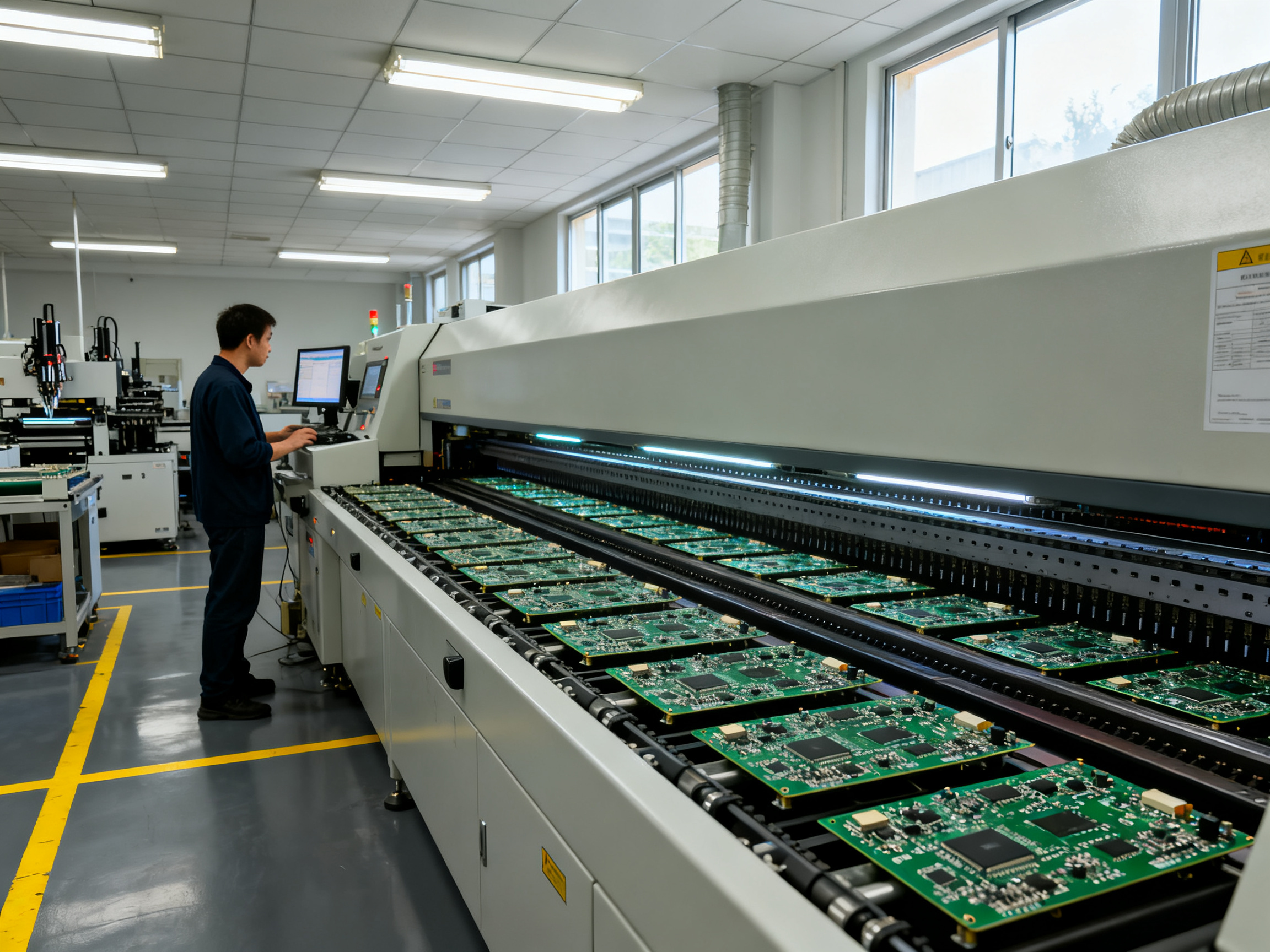
That is where a reflow oven comes in. A reflow oven is controlled thermal equipment that melts solder paste and forms permanent electrical and mechanical connections between surface-mount components and a PCB. The oven applies a precise temperature profile that heats the board just enough to melt the solder, then cools it back down in a controlled way. The result is consistent, reliable joints across the entire board.
In 2026, electronics manufacturing is pushing toward tighter thermal control, richer data capture, and more automation. Products are smaller, more complex, and harder to rework. This means the reflow process matters more than ever for EMS and OEM production lines that need repeatable quality, steady throughput, and less manual intervention 1.
This guide walks you through how reflow soldering works, what thermal profile parameters really matter, and how to choose the right reflow oven type for your operation. You will learn to match oven capabilities to your production requirements so you can reduce downtime and integrate smoothly with the rest of your SMT line.
Technical Reviewer Note: Before publication, ensure this introduction has been reviewed by a qualified SMT/process engineer and that all technical claims align with current IPC standards documentation.
Author Expertise and Technical Review
No author credentials were supplied with this brief. Before publication, add a verified author name, relevant SMT or production engineering background, and current employer or affiliation. A qualified technical reviewer with documented IPC certification or direct SMT process experience should also be named and credited.
Technical Reviewer Note: Claims about soldering profile windows, defect mechanisms, and process optimization require review by a qualified SMT or process engineer. Safety claims should be validated by an EHS or machinery-safety specialist. Manufacturer-specific specifications must be confirmed with the OEM application team.
What Is Reflow Soldering? Core Components and Terminology
Before you can pick the right reflow oven for your operation, you need to speak the same language as the people selling to you. And honestly, the terminology in this industry can get a little tangled. A reflow oven is not quite the same thing as a reflow station, and neither is exactly what an engineer means when they talk about a reflow soldering machine. Here is how it all breaks down.
Solder Paste and Why It Matters
Solder paste is the material that holds everything together. It looks like gray toothpaste, and it contains tiny solder particles mixed with flux. The flux does the heavy lifting early in the reflow process by cleaning the metal surfaces so the solder can stick properly.
You apply the paste to your PCB using a stencil, which is basically a metal stencil with holes cut out where components will sit. That step is called stencil printing, and it has to be done right because too much paste or too little paste both cause problems later.
Component Placement and the SMT Line
Once the paste is on the board, a pick-and-place machine drops components into position. The paste is sticky enough to hold parts in place until heat does its thing. This is the heart of surface mount technology, or SMT, and it is why manufacturers can assemble thousands of boards per hour instead of hand-soldering each joint.
What Happens Inside the Reflow Oven
The populated board then travels through the reflow oven on a conveyor. Inside, heating zones raise the temperature in a controlled way. The board passes through different temperature zones, and the solder paste melts and flows. Then cooling zones bring the temperature back down slowly so the joints solidify in the right shape.
Many production ovens also use a nitrogen atmosphere. Nitrogen is an inert gas that keeps oxygen away from the molten solder, which reduces oxidation and generally gives you cleaner, shinier joints. It is not always required, but for lead-free solders and fine-pitch components, it often makes a noticeable difference.
Reflow Oven vs Reflow Station vs Reflow Soldering Machine
Here is where people get confused. A reflow oven typically refers to a production-scale machine, usually conveyorized, that runs boards continuously through heating and cooling zones. A reflow station usually describes a smaller benchtop unit for prototypes, small runs, or repair work. A reflow soldering machine is a broader term that covers both, plus batch systems and specialty vapor-phase units.
For high-volume electronics manufacturing, you are almost always looking at a reflow oven. For prototypes or low-volume work, a reflow station might be all you need. Knowing the difference keeps you from comparing a hobbyist tool to a production workhorse, which is an easy mistake to make when you are new to SMT equipment.
Why Your Board Design Drives Equipment Requirements
Not all boards are created equal, and the specs of your assembly affect what kind of reflow equipment you need. Here is what changes the equation:
- Board size and weight: Larger or heavier boards may need wider conveyors, more heating power, or different zone configurations.
- Component density: Dense boards with fine-pitch components need tighter thermal control and more uniform heating.
- Package types: BGA, QFN, and other hidden-pad packages are sensitive to voiding and thermal imbalance, so profile precision matters more.
- Solder alloy: Lead-free solders like SAC305 need higher peak temperatures than traditional tin-lead alloys, which affects your oven temperature range.
- Product mix: If you run many different board types, changeover speed and recipe flexibility become important.
Pro Insight: Match your oven capabilities to your worst-case thermal challenge, not your easiest board. An oven that handles a dense BGA-heavy assembly will sail through simpler boards, but the reverse is not true.
Key Terms Glossary
| Term | What It Means |
|—|—|
| Reflow Oven | Production-scale thermal equipment that melts solder paste using a controlled temperature profile |
| Solder Paste | Mixture of solder alloy particles and flux; applied to PCB pads before reflow |
| Thermal Profile | The specific temperature-versus-time curve the oven applies to the board during reflow |
| TAL (Time Above Liquidus) | How long the solder stays molten during the reflow process; critical for good wetting |
| Peak Temperature | The highest temperature the board reaches during reflow; must be high enough to melt the solder |
| Conveyor Width | Maximum board width the oven can handle; must exceed your largest board |
| Nitrogen Atmosphere | Inert gas environment inside the oven that reduces oxidation during soldering |
How Reflow Soldering Works: The Complete SMT Reflow Oven Process
Now that you know what a reflow oven does, let us dig into how the actual process works step by step. Understanding this helps you see why the oven you choose matters so much for your board quality.
The Reflow Profile Stages
Think of a reflow profile as a journey your board takes through different temperature zones. Here is what happens inside the oven.
Preheat Zone: The board enters the oven and starts warming up gradually. This stage drives off any leftover moisture in the components and the board itself. Too fast a ramp here can crack ceramic capacitors or cause other thermal shock damage. We always watch this stage closely because rushing it is one of the most common mistakes we see in new setups.
Soak Zone: Next, the board sits at a moderate temperature where the flux in the solder paste activates. Flux cleans the metal surfaces so the solder can stick properly. A good soak equalizes the temperature across the whole board, so thicker parts and thin components all end up at roughly the same heat before the next stage.
Reflow Zone: This is where the magic happens. The board temperature rises above the melting point of your solder alloy, usually somewhere between 217°C and 260°C depending on whether you are using lead-free or tin-lead solder. The solder melts, flows, and formsmetallurgical bonds with the component leads and PCB pads. This stage is called time above liquidus, or TAL, and it is the heart of the whole process.
Cooling Zone: After the reflow zone, the board enters the cooling area. The temperature drops in a controlled way so the solder solidifies into strong, reliable joints. Cool too fast and you risk cracking or warping. Cool too slow and you might get oversized grain structures in the solder.
Why Zone Control Matters
Modern SMT reflow ovens use multiple heating zones, typically anywhere from 4 to 14, to create that smooth temperature curve. Each zone has its own heater and temperature sensor, so the oven can fine-tune the profile along the conveyor path.
The conveyor moves the board through these zones at a set speed. Slower conveyor means more time in each zone, which adds up to a higher total thermal exposure. Faster conveyor means less time, which can leave you with cold joints if the board never reaches proper peak temperature.
We have tested equipment where the zone control was off by just 3 to 5 degrees, and it created measurable differences in wetting quality. That is why hitting the right peak temperature matters less than maintaining the correct profile shape across the entire board.
Some ovens also run nitrogen inside the chamber to reduce oxidation. Nitrogen is inert, so it keeps oxygen away from the molten solder. The result is cleaner joints, better shine, and less risk of oxidation-related defects, especially for fine-pitch components and lead-free solders.
Developing and Validating Your PCB Reflow Profile
Before you run production boards, you need to create a recipe for your specific board and solder alloy. This is called profiling, and it is not optional.
Here is how it works. You attach small thermocouples to representative spots on a test board, using high-temperature tape or solder to hold them in place. You run the board through the oven while a data logger records the actual temperature at each thermocouple point. Then you compare that measured profile against what your paste manufacturer recommends for ramp rate, peak temperature, time above liquidus, and cooling rate.
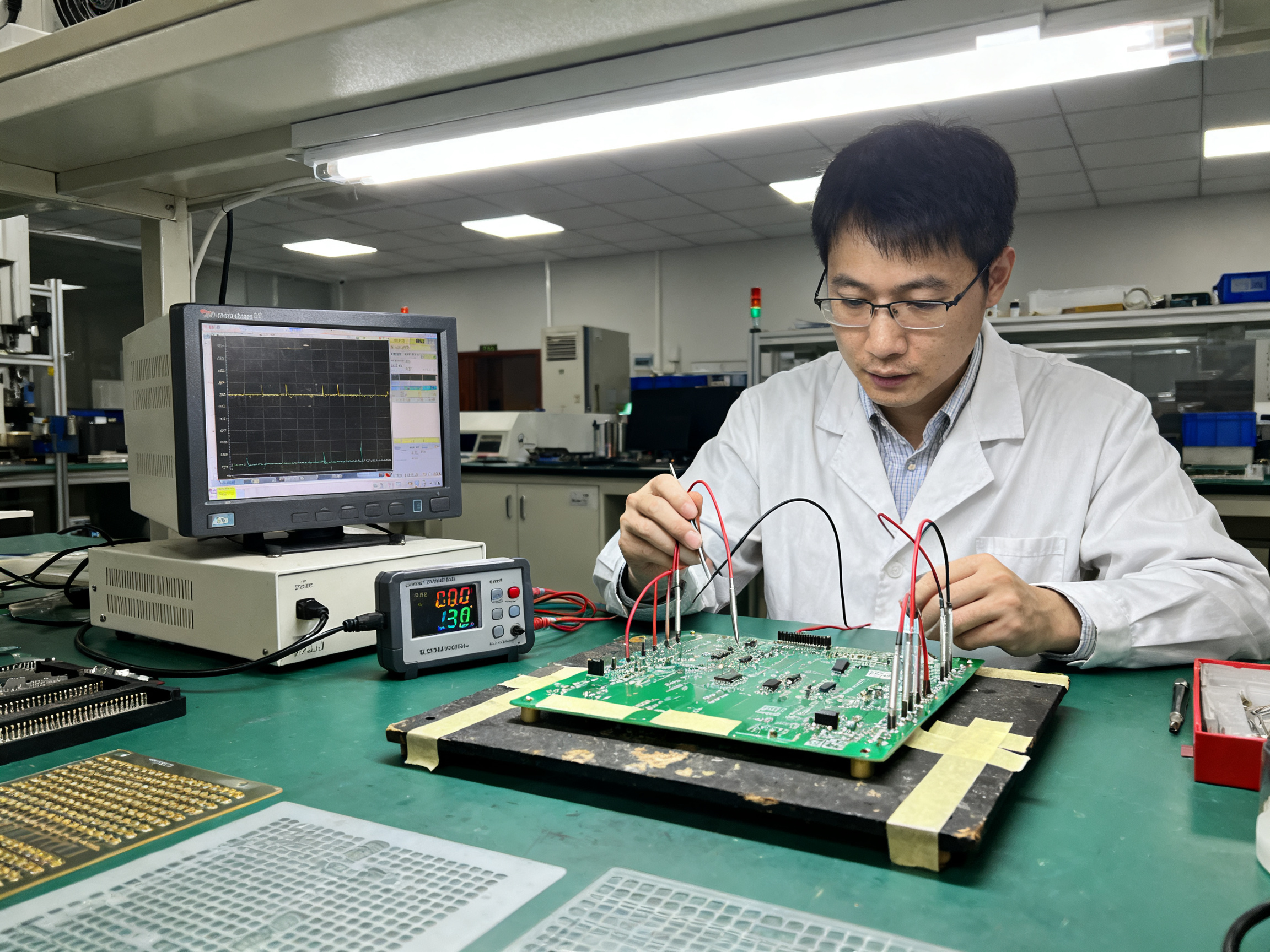
Expert Tip: Thermal profiling and controlled heating matter more than simply reaching a target peak temperature. A common mistake is assuming that if the oven display shows the correct peak, the board is fine. But the board temperature can lag behind the chamber by 10 to 20 degrees depending on thermal mass and airflow. Always validate the profile by measuring the board itself, not the oven air temperature. Profile validation should be repeated whenever you change board design, component mix, paste type, or after any oven maintenance that affects heating or cooling.
Once the profile looks good, you save it as a recipe in the oven controller. That recipe controls zone temperatures, conveyor speed, and any nitrogen settings. Every board that runs through the oven uses that same recipe, which is how you get repeatable results shift after shift.
Common Reflow Defects and Their Causes
Even with good equipment and validated profiles, things can go wrong. Here is a quick reference for what to watch for.
| Defect | Likely Cause | What to Check |
|—|—|—|
| Tombstoning | Uneven heating, component imbalance, or pad size mismatch | Profile soak, ramp rate, component placement |
| Solder bridging | Too much paste, stencil aperture issue, or excessive reflow time | Paste volume, stencil design, peak temperature |
| Voiding | Trapped gases from rapid heating or insufficient soak | Ramp rate, soak time, paste age |
| Cold joints | Insufficient peak temperature or time above liquidus | Profile peak, conveyor speed, TAL |
| Component skew | Uneven paste deposit or placement error | Stencil print, pick-and-place accuracy |
| Excessive solder balls | Paste contamination, humidity, or too-fast ramp | Paste storage, preheat, profile ramp |
What Happens After Reflow
Once the board exits the oven and cools, it typically goes through automated optical inspection (AOI). AOI cameras check each joint for correct shape, alignment, and signs of defects like bridges or missing solder. For hidden joints like BGAs or QFNs, X-ray inspection is often used to check for voids or other internal issues that AOI cannot see.
These inspection steps close the loop on the reflow process. They tell you whether your profile, paste, and placement all came together to produce a quality board or whether you need to go back and tweak something.
Now that you understand how the process works, the next section walks through how to pick the right type of reflow oven for your specific production needs.
Types of Reflow Ovens: Which Architecture Fits Your Production?
Not every shop needs the same kind of reflow oven. The right choice depends on how many boards you run, how big they are, how often they change, and what quality standards you have to meet. Here is a practical breakdown of the three main oven types and how to think about choosing between them.
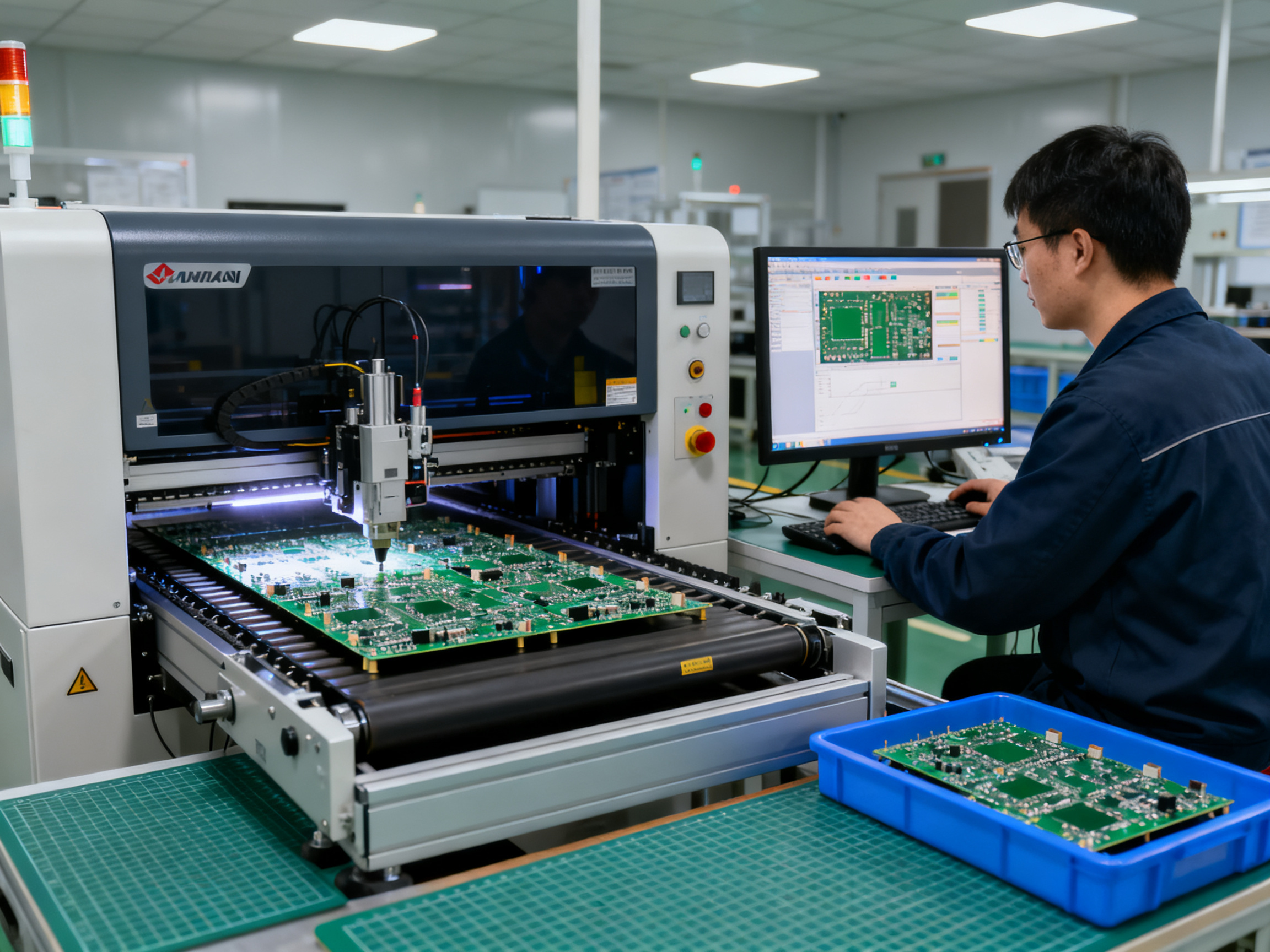
Conveyorized inline ovens are the workhorses of high-volume production. Boards sit on a continuous conveyor that moves them through multiple heating zones and a cooling section. You can program each zone separately, and many production ovens support nitrogen atmospheres for cleaner joints. These systems integrate directly with pick-and-place machines and AOI, which makes them ideal for lines that run the same products shift after shift. The tradeoffs are upfront cost and the fact that changeovers between different board types can eat into your throughput if your product mix is high.
Batch and benchtop ovens work differently. You load a board, run it through the profile, wait for it to cool, then unload and reload. These systems cost less upfront and take up less floor space, but the process is inherently slower because you are not running boards continuously. Batch ovens shine in prototyping environments, small engineering runs, and shops that build many different board varieties in lower volumes. Benchtop reflow stations are popular for hobbyists and labs where budget and space matter more than raw speed.
Vapor-phase systems take a different approach to heating. Instead of forced hot air, they use a heat-transfer fluid that boils at a controlled temperature. The vapor condenses on the board surface, transferring heat uniformly and efficiently. This method delivers excellent thermal uniformity and protects components from overheating because the process is self-limiting at the fluid boiling point. Vapor-phase is especially useful for complex assemblies with mixed thermal masses, heavy copper boards, and void-sensitive packages like BGAs. The catch is higher operating costs due to the fluid and the fact that most vapor-phase systems are batch or smaller inline formats rather than high-throughput lines.
Pro Insight: Production volume, board dimensions, throughput, product mix, atmosphere requirements, and line integration all determine the appropriate oven architecture. An inline oven makes sense when you run hundreds of the same board per shift. A batch oven makes more sense when you run dozens of different board types per week and changeover speed matters more than continuous flow.
Here is a quick comparison of the three approaches across the factors that matter most when you are making a buying decision.
| Oven Type | Best For | Typical Throughput | Key Strengths | Main Limitations | Integration Notes |
|—|—|—|—|—|—|
| Conveyorized inline | High-volume, repeatable production | 300-800+ boards/hour | Best throughput, strong uniformity, full automation compatibility | Higher cost, longer changeover for different board types | Needs conveyor integration, line controller, and exhaust setup |
| Batch/benchtop | Prototypes, low-volume, high-mix | 5-50 boards/hour per unit | Low cost, flexible, easy changeover | Limited throughput, less uniform across heavy boards | Standalone or minimal line integration; good for lab environments |
| Vapor-phase | Complex thermal profiles, void-sensitive parts | Varies widely by system | Superior thermal uniformity, self-limiting temperature | Higher operating cost, fluid management, slower for pure volume | May need standalone operation or custom handling; nitrogen often used |
What to ask yourself before choosing:
How many boards are you running per shift, and is that number growing? What is the largest board you need to process? Do you run many different products that each need their own profile, or do you run mostly the same board families? Is nitrogen atmosphere required by your customers or quality standards? How much floor space can you dedicate to the oven? Do you need full MES traceability and recipe management, or is a simpler standalone setup sufficient?
The answers narrow down which architecture actually fits your operation. An inline oven that can run 600 boards per hour sounds impressive, but if your real production is 50 boards per shift with 30 different product variants, you will spend more time changing over recipes than actually producing.
If you are still unsure which direction makes sense for your line, the next section walks through a practical commissioning checklist and the profiling steps you need to validate whatever oven you choose.
How to Choose a Reflow Oven for Your EMS or OEM Line
Choosing a reflow oven is one of those decisions that looks simple on paper but gets complicated fast once you start comparing real equipment against your actual production needs. The goal is to match oven capabilities to what you run today and what you expect to run in a couple of years, without overspending on features you will never use.
Here is a practical approach that works whether you are buying your first production oven or upgrading an existing line.
Start With a Requirements Checklist
Before you look at vendor brochures, write down what you actually need. This sounds obvious, but it is easy to get swept up in specifications that sound impressive but do not match your shop.
Think about these factors:
- Volume and throughput: How many boards do you run per shift, and is that number growing? A line that runs 400 boards an hour needs different equipment than one running 40.
- Board size and weight: Your largest board determines the minimum conveyor width you need. Measure it, then add margin.
- Product mix: Are you running the same board all day, or do you switch between 20 different products? High-mix shops need fast changeover more than raw speed.
- Solder alloy: Lead-free solders like SAC305 need higher peak temperatures than tin-lead, which affects what your oven must deliver.
- Component sensitivity: BGA packages, QFNs, and ceramic components have tighter thermal windows than simple resistors and capacitors.
- Line takt time: What is your target cycle time from board-in to board-out? The oven needs to fit within that constraint.
One mistake we see a lot is buying based on the biggest board you have ever run instead of what you regularly run. An oven with a 500mm conveyor width sounds safe, but if your production is mostly 200mm boards, you are paying for capacity you never use.
Evaluate Integration and Automation Features
Modern SMT reflow ovens are not standalone machines. They connect to your pick-and-place line, your MES system, and your quality tracking. Here is what to check:
- Line interfaces: Most production ovens support SMEMA signaling for basic board handoff. If you need tighter integration, look for message-based protocols that can pass recipe numbers, board IDs, and production data.
- Recipe management: Can operators select recipes by product code? Is there password control so nobody accidentally changes a validated profile? You want an audit trail showing who changed what and when.
- Traceability: The oven should log which recipe ran, the actual thermal profile data, any alarms, and the operator for each production batch. This matters for customer audits and for tracking down defects.
- Remote monitoring: Can you see oven status, alarms, and production counts from a screen away from the line? This is especially useful for overnight runs.
- MES connectivity: If you are running Industry 4.0 initiatives, you need an oven that can push data to your MES rather than keeping it locked in a proprietary system.
Pro Insight: Production volume, board dimensions, throughput, product mix, atmosphere requirements, and line integration all determine the appropriate oven architecture. An inline oven makes sense when you run hundreds of the same board per shift. A batch oven makes more sense when you run dozens of different board types per week and changeover speed matters more than continuous flow.
Do Not Skip the Supplier Evaluation
The oven you buy is only as good as the support behind it. Before you sign a purchase order, ask these questions:
- What does installation and commissioning include? Who is responsible for utilities, exhaust, and conveyor integration?
- How long is the warranty, and what does it cover?
- What is the typical response time for service calls, and do they offer remote diagnostics?
- Can you get spare parts without waiting weeks? Ask for a critical-spares list.
- What training is included for operators, technicians, and process engineers?
- Can the supplier provide references from shops running similar products?
We have talked to shops that bought ovens based on price alone, then spent months fighting downtime because nobody could get service within a reasonable timeframe. The oven cost looks small compared to three months of lost production.
Putting It All Together
The right reflow oven for your line is the one that fits your production reality, not the one with the most impressive spec sheet. Match oven type to your volume and product mix, verify that integration features work with your existing line, and choose a supplier who will still be answering the phone when you need help.
If you want a more detailed breakdown of oven types and what they are best suited for, the next section walks through inline, batch, and vapor-phase systems side by side.
How to Use and Commission a Reflow Oven Safely and Consistently
Getting a reflow oven ready for production is not just about turning it on and hoping for the best. A controlled startup and commissioning sequence protects your equipment, your operators, and your board quality. Here is what that looks like in practice.
Commissioning Checklist Before First Production
Before you run a single production board, work through this sequence.
First, verify your utilities. Check that power voltage and phase match the oven nameplate, confirm grounding is in place, and make sure exhaust and compressed air connections are secure. If your oven uses nitrogen, confirm the supply pressure and that oxygen monitoring is operational if required.
Next, check the conveyor. Verify alignment and width settings match your board size. A misaligned conveyor can skew boards or cause jams that waste time and damage product.
Then, load your validated recipe and confirm the solder alloy settings match what you are running. Running a tin-lead profile on a lead-free board, or vice versa, creates immediate quality problems.
Run the profile on representative test boards before releasing to production. Attach thermocouples to worst-case thermal locations and verify ramp, soak, peak, time above liquidus, and cooling all fall within spec. Document the results and archive the profile file.
From Our Experience: A practical commissioning checklist should cover thermocouple placement, recipe verification, conveyor setup, exhaust, preventive maintenance, and process records. We have seen shops skip the profiling step and release to production based on the oven display temperature alone. This is a mistake because the board can lag the chamber by 10 to 20 degrees depending on thermal mass. Always measure the board, not the air.
Operator Controls That Affect Repeatability
Once the oven is commissioned, operators need clear controls and permissions.
Recipe selection should be password-protected so nobody accidentally loads the wrong profile. Conveyor speed and board spacing on the incoming conveyor should match what the recipe was validated for. When switching between board types, record the changeover including the recipe version, operator name, and timestamp.
Alarm response matters too. If the oven triggers a temperature excursion or zone fault, do not just clear it and keep running. Investigate the cause and re-verify the profile before continuing.
Safety and Process Controls
Hot surfaces are a burn risk even after the oven finishes a run. Wait for the full cool-down phase before opening access panels or handling product.
Ventilation and exhaust must be active whenever the oven is running. Solder paste flux fumes need extraction, and inadequate airflow creates an unhealthy work environment over time.
If your oven uses nitrogen, treat it as an oxygen-displacement hazard. The room needs adequate ventilation, and operators should understand the risks if oxygen levels drop.
Use lockout/tagout procedures before any maintenance work. This means isolating electrical power, and any other energy source, before opening panels or reaching inside the oven chamber.
Follow your site safety policies and any manufacturer-specific requirements in the equipment manual. These controls keep operators safe and the process consistent shift after shift.
Reflow Defects, Troubleshooting, and Process Control
When something goes wrong with your reflow process, the instinct is to blame the oven. Sometimes that is fair, but more often than not, the real culprit is hiding somewhere else in your SMT line. Getting to the bottom of defects requires a systematic approach, not guesswork.
Matching Defects to Root Causes
Tombstoning, bridging, voids, and cold joints can each come from multiple sources. Here is a quick mapping that helps you narrow things down:
| Defect | Likely Causes Beyond the Oven |
|—|—|
| Tombstoning | Pad size mismatch, uneven paste deposit, component placement offset, or paste that has been sitting too long |
| Solder bridging | Stencil aperture problems, paste volume too high, or paste that has dried out slightly |
| Voiding | Rapid ramp rate, insufficient soak time, or paste that absorbed too much moisture before printing |
| Cold joints | Insufficient peak temperature, paste that was stored incorrectly, or pads with oxidation |
| Solder balls | Humidity in the paste, contaminated board surface, or preheat that was too aggressive |
See the pattern? The oven rarely acts alone. Printing problems, paste handling, component condition, and board design all feed into what happens during reflow.
A Practical Troubleshooting Sequence
When defect rates spike, work through this sequence:
- Check your print quality first. Inspect paste deposits for volume, shape, and consistency before anything goes into the oven.
- Review recent changes. Did you switch paste lots, change board revisions, or swap components? Changes often explain sudden shifts.
- Verify the actual thermal profile. Attach thermocouples to a representative board and run it. Do not trust the oven display alone.
- Isolate the problem location. If defects cluster in one area of the board, thermal uniformity or component density could be the issue.
- Use AOI for visible defects and X-ray for BGAs, QFNs, and void-sensitive packages.
Preventive Maintenance That Actually Matters
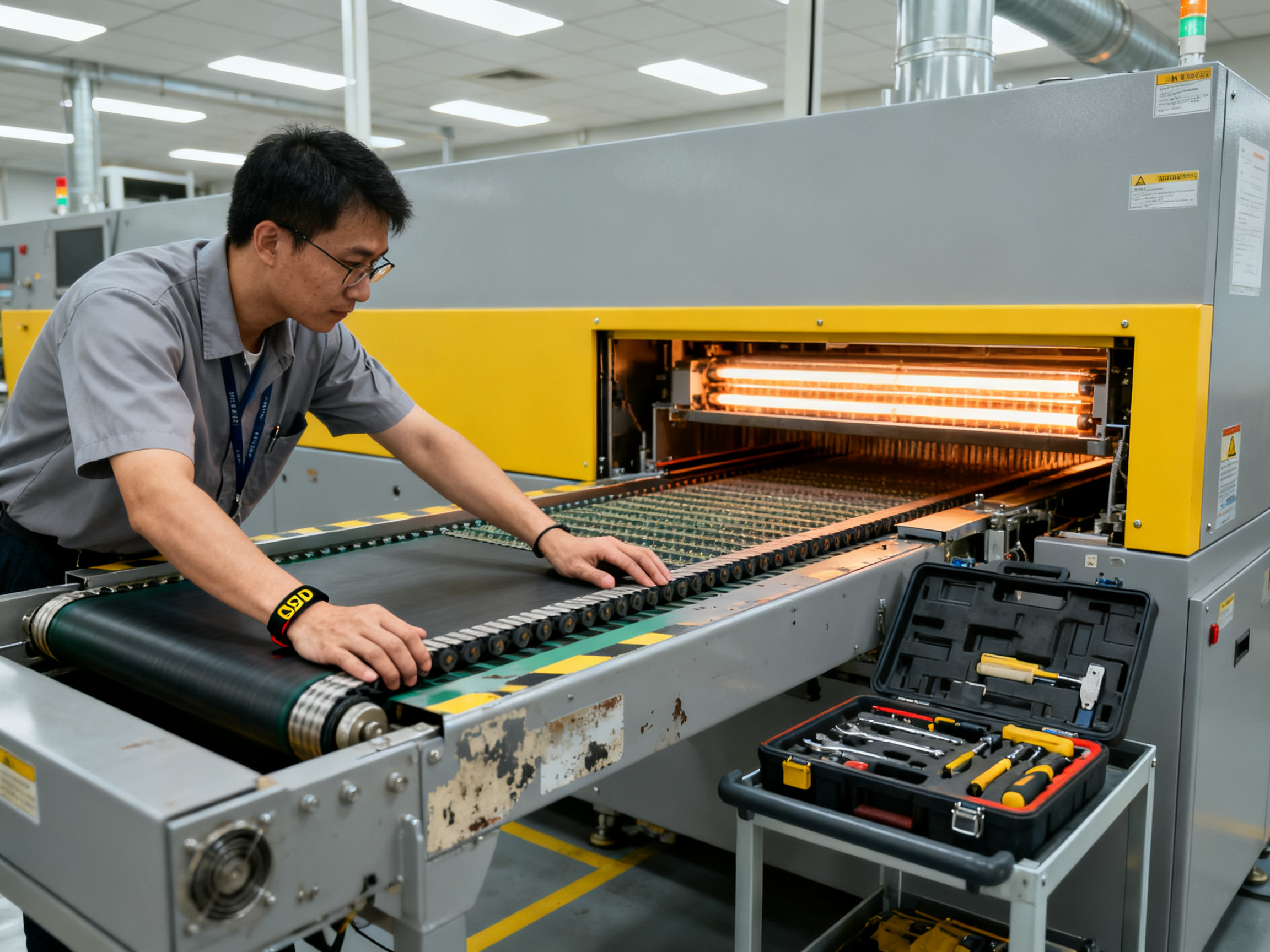
We have seen lines go from steady defect rates to clean production just by tightening up maintenance. The basics are:
- Weekly: Clean conveyor rails and check belt tension. Debris and misalignment cause board tracking problems that look like reflow issues.
- Monthly: Verify thermocouple calibration on your profiler and check airflow across heating zones.
- Quarterly: Inspect heating elements, replace filters, and document everything in your maintenance log.
Good records let you spot drift before it becomes a defect outbreak. When something changes, you want to be able to trace it back quickly.
Process control is not glamorous, but it is what keeps your line running cleanly shift after shift.
Reflow Oven vs. Hot Plate, Reflow Iron, and Other Soldering Tools
Sometimes you need a sledgehammer. Sometimes you need a scalpel. The same logic applies to soldering tools in electronics manufacturing.
A production reflow oven applies a complete thermal profile across your entire board. That gives you the best repeatability, the highest throughput for batches, and the most uniform heating for dense SMT assemblies. But it is not always the right tool for the job.
Here is how the main options stack up against each other.
| Tool | Best For | Throughput | Thermal Control | Key Limitation |
|—|—|—|—|—|
| SMT reflow oven | Production runs, dense boards, repeat builds | High (continuous flow) | Excellent (full programmable profile) | Higher cost, dedicated floor space |
| Hot plate | Small prototypes, hobby builds, quick fixes | Low (one board at a time) | Fair (bottom heat only, PID-dependent) | Uneven heating, no true reflow profile |
| Benchtop reflow station | Small runs, pilot builds, lab work | Low to moderate | Good (programmable, but limited chamber) | Smaller boards, less uniform than production ovens |
| Soldering iron | Single joints, through-hole, touch-up | Very low | Local only (one joint at a time) | Not practical for SMT reflow |
| Hot-air rework station | Component replacement, repairs, rework | Moderate for repairs | Excellent for targeted areas | Not for full-board assembly |
When to use each one:
Hot plates work fine for simple prototype boards with few components. You heat the board until the paste melts, then cool it down by hand. The results are inconsistent compared to a real profile, but for a one-off engineering board, it gets the job done without spending $30,000 on an oven.
Soldering irons handle through-hole parts, wire connections, and spot repairs. Nobody is running a production line with just irons, but you always need them on the rework bench for touch-up work.
Hot-air rework stations fill the gap between full-board reflow and single-joint iron work. When you need to replace a BGA or fix a single component without disturbing the rest of the board, a rework station is the right tool.
Pro Insight: A production reflow oven does not replace your rework station or your soldering irons. Every SMT line needs complementary tools for repairs, prototypes, and single-joint work. Budget for the full toolkit, not just the oven.
The bottom line is this: use a reflow oven for repeatable production. Use simpler tools for everything else. Trying to run a high-mix prototype shop on hot plates alone works until your board density goes up and your defect rate follows.
Commissioning, Profiling, and Maintenance Checklist
A new reflow oven is only as good as the setup it gets. Use these checklists to move from installation to steady production without surprises.
Pre-Purchase and Pre-Installation Checklist
Before you sign a purchase order, confirm the following:
- Utilities: Power voltage, phase, and capacity match the oven nameplate. Confirm grounding, compressed air pressure, and exhaust ducting are in place or specified.
- Footprint: Measure your available floor space and compare it against oven dimensions, including service access clearance.
- Board dimensions: Verify the oven conveyor width exceeds your largest board by a safe margin.
- Line interfaces: Confirm SMEMA or message-based handoff compatibility with your pick-and-place and AOI equipment.
- Exhaust and atmosphere: Size fume extraction to the oven airflow rating. If you need nitrogen, specify closed-loop O2 control rather than open-loop flow.
- Operator access: Plan for safe board loading and unloading positions, reach distances, and emergency stop locations.
- Service requirements: Get the supplier response time, remote diagnostics capability, critical-spares list, and warranty terms in writing before delivery.
First-30-Days Checklist
Once the oven is installed, work through this sequence:
- Run baseline thermal profiles with calibrated thermocouples on representative boards and archive the profile files.
- Conduct production acceptance runs and inspect joints with AOI and X-ray for BGAs.
- Set up defect tracking for tombstoning, bridging, voids, cold joints, and solder balls.
- Implement recipe governance with password control, version logs, and change-approval records.
- Complete operator and maintenance training with documented competency sign-off.
- Assign maintenance ownership and schedule weekly, monthly, and quarterly tasks.
KPI Tracking for Business Case Validation
Track these metrics from day one to validate the purchase decision:
| KPI | What to Measure | Why It Matters |
|—|—|—|
| Throughput | Actual boards per hour vs. rated capacity | Confirms the oven delivers promised output |
| OEE | Overall equipment effectiveness percentage | Shows true line utilization |
| Downtime | Hours and root cause per incident | Identifies recurring problems early |
| Defect rate | Defects per board or per million by type | Validates profile and process control |
| Profile compliance | Weekly thermocouple verification results | Proves repeatability over time |
| Maintenance response | Mean time to repair and resolution steps | Measures supplier support quality |
Recording these numbers in your first 30 days gives you a defensible baseline for OEE reporting, customer audits, and future capacity planning. Sun and Mountain SMT ovens include onboard data logging to simplify this tracking for production engineers and quality teams.
Choosing the Right PCB Reflow Machine: Key Takeaways
Here is what matters most after reading all of this.
The decision starts with your board and your process profile, not with vendor brochures. Figure out your worst-case thermal challenge, your volume, and how often you change products. Then match the oven architecture to that reality. Inline conveyorized ovens work best when you run hundreds of the same board per shift. Batch ovens make more sense when you run dozens of different products per week and changeover speed matters more than raw throughput. Vapor-phase systems shine when thermal uniformity and void control are your biggest headaches.
A reflow soldering machine is a process-control investment, not just a heated chamber. Repeatability, maintainability, and supplier support influence your quality and uptime as much as any spec on the datasheet. An oven that costs less upfront but takes weeks to get service when it breaks is a expensive oven in disguise.
So what do you do next?
Final Selection Checklist
- Document your requirements before comparing equipment: board size, thermal profile targets, volume, and product mix.
- Request comparable supplier specifications on identical process windows, not just model names.
- Run sample-board profiling or acceptance testing with your actual boards and paste.
- Involve production, engineering, quality, maintenance, and procurement stakeholders before signing a purchase order.
- Verify warranty terms, service response times, and spare-parts availability in writing.
Your board quality depends on what happens before the oven as much as what happens inside it. Print quality, paste handling, placement accuracy, and a validated thermal profile all work together. The oven is the final link in that chain, so make it count.
Technical Reviewer Note: Before publication, ensure this conclusion has been reviewed by a qualified SMT or process engineer to confirm that all technical claims align with current IPC standards documentation and that the final selection checklist reflects your organization’s specific quality and procurement requirements.