
Published: 26 May 2026
Reading Time: 10 minutes
Reviewer: Sun and Mountain SMT Editorial Team
The 2026 Guide to Reflow Oven Costs: Pricing Trends and Investment Insights
If you’ve ever priced a reflow oven and felt your eyebrows jump a little, you’re not alone. One quote looks manageable, the next one feels like it belongs in a factory expansion plan, and suddenly a simple question, how much is a reflow oven, turns into a full budget puzzle.
That happens because reflow ovens sit right at the heart of PCB assembly. They don’t just heat boards. They shape solder joint quality, line speed, scrap rates, and even how often your team has to stop production to fix avoidable issues. So yes, reflow oven cost matters. But the cheapest number on a quote sheet usually isn’t the number that tells the full story.
In 2026, buyers are looking at more than just sticker price. They’re comparing benchtop units for prototyping, conveyor systems for volume production, energy use, automation features, and long-term maintenance needs. And if you’re buying for an EMS or OEM operation, every choice touches output, uptime, and margins.
This guide breaks down the big pricing bands, what drives smt reflow oven price changes, and how to think about value before you buy. If you’re comparing options for a new line or replacing an aging machine that still acts like it’s 1997, let’s sort it out together.
[Author Name] is a renowned expert in electronic manufacturing equipment, specializing in reflow ovens and SMT technology. With over 15 years of experience in consulting for EMS and OEM clients globally, [Author Name] brings a wealth of knowledge in cost-optimization and technology integration to help companies enhance their manufacturing processes.
Why reflow ovens matter so much in PCB assembly
A reflow oven is the stage where solder paste melts, forms joints, and then cools into place, connecting surface-mount parts to the board. In most production settings, that means a controlled path through preheat, soak, reflow, and cooling zones, all tuned to a recipe that fits the paste and board design. If the profile is off, defects can show up fast, from tombstoning to weak joints to rework nobody wanted on a Tuesday afternoon. A clear overview from BTU on reflow oven operation explains how zone control and conveyor movement affect consistency.
That technical role is exactly why the cost of reflow oven equipment varies so much. A small lab unit might be fine for short prototype runs. A full conveyor oven with multiple heating zones, closed-loop convection control, and line integration is built for a very different job. Same category, wildly different spend.
And here’s the thing, buyers usually aren’t just paying for heat. They’re paying for repeatability, throughput, operator ease, and fewer expensive mistakes. That’s why a pcb reflow oven price has to be judged against what it helps your team avoid, not just what it costs on day one.
Typical reflow oven cost ranges in 2026
Let’s make this simple. In 2026, the price reflow oven buyers see most often depends on machine size, automation level, and whether the oven is meant for prototyping or full production.
| Reflow oven type | Typical 2026 price range | Best fit |
|—|—:|—|
| Small DIY or entry kit oven | $200 to $1,000 | Hobby work, light lab use |
| Benchtop reflow oven | $2,500 to $10,100 | Prototyping, small-batch production |
| Entry conveyor oven | $5,000 to $20,000 | Growing assembly lines |
| Mid-range SMT conveyor oven | $20,000 to $50,000 | Regular EMS and OEM production |
| High-end multi-zone production oven | $50,000 to $150,000+ | High volume, complex boards, strict process control |
These ranges line up with current market summaries and listings from ALLPCB’s reflow oven guide, PCB Unlimited equipment listings, and broader market outlooks from Future Market Insights on the reflow oven market.
So, how much is a reflow oven really? For a startup lab, maybe a few thousand dollars. For a busy SMT line, the smt reflow oven price can easily move into the tens of thousands. For advanced, high-throughput factories, it can go much higher.
Factors influencing reflow oven costs
The biggest pricing drivers are pretty practical. Number of heating zones. Conveyor width. Nitrogen compatibility. Software controls. Energy use. Maintenance access. Brand reputation. Local support. It adds up fast.
I’ve seen teams save money upfront, then lose that savings in downtime within a few months because the oven was harder to maintain and less stable during long runs. That’s the part many quote sheets don’t show very well.
A few factors shape reflow oven cost more than anything else:
- Machine format: Benchtop units cost less than conveyor systems.
- Temperature control: Tighter control usually means a higher upfront price.
- Automation: Recipe storage, smart sensors, and monitoring tools raise the buy price, but they can cut human error.
- Energy efficiency: Lower power waste can trim long-term operating costs.
- Compliance and retrofit needs: Older sites sometimes need electrical, ventilation, or line layout changes.
- Service and spare parts: A lower machine price can hide higher ownership costs later.
Expert Tip: When you’re comparing pricing decisions, don’t stop at the machine quote. Check install costs, power needs, spare parts, operator training, and expected downtime risk before you call one option cheaper.
Recent market analysis from Report Prime’s reflow soldering oven overview points to raw material costs, labor pressure, and rising feature sets as major reasons prices keep shifting in 2026.
Price breakdown: benchtop reflow ovens
Benchtop ovens are where many buyers begin, especially for R and D, pilot builds, university labs, and small-batch work. They usually offer the lowest barrier to entry, which is why searches for pcb reflow oven price and price reflow soldering oven kit often land here first.
In practice, entry-level models can start around a few hundred dollars, but serious benchtop systems for business use often sit between $2,500 and $10,100. The gap is huge, and that’s because not all benchtop ovens are built alike. Some are basic batch tools. Others are much better suited to repeatable production.
We’ve found that teams moving from hand assembly into low-volume SMT often outgrow cheap benchtop units faster than expected. The first few weeks feel fine. Then board mix changes, profiles need tighter control, and the limits show up.
What pushes a benchtop unit toward the top of the range?
- Better thermal uniformity
- More reliable profile control
- Improved chamber size
- Safer operation features
- Easier repeat runs across different board types
If you’re evaluating a benchtop option for professional use, don’t just ask for the price pcb reflow ovens list. Ask how stable the results are over 20, 50, or 100 boards. That’s where the value shows up.
Conveyor and inline oven pricing
This is where budgets get real. Conveyor reflow ovens cost more because they do more. They move boards automatically, fit into production lines, and usually offer more heating zones, better throughput, and stronger process consistency than batch ovens.
A basic conveyor system may start around $5,000 to $20,000. Mid-range machines often land between $20,000 and $50,000. And high-spec lines can pass $150,000 if you need advanced controls, large board handling, nitrogen support, or deeper factory integration.
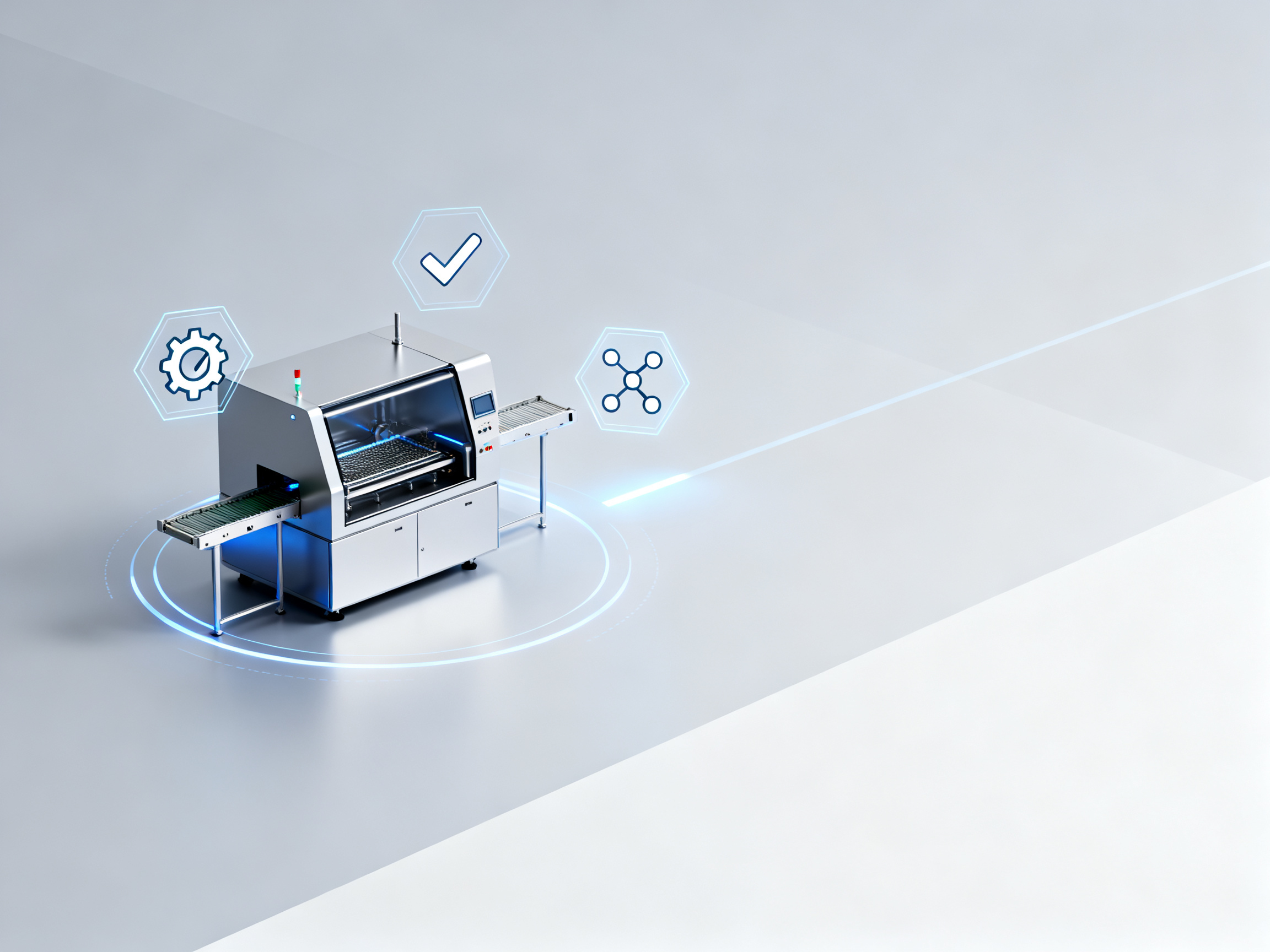
That spread explains why a price reflow oven for pcb assembly machine quote can look wildly different from one vendor to the next. One machine may cover simple double-sided boards at moderate volume. Another is built for dense assemblies running all day, every day.
For many EMS and OEM buyers, this is where a supplier like Sun and Mountain SMT becomes part of the bigger conversation. If your goal is to raise throughput, cut manual handling, and fit a reflow oven into an existing SMT line, a purpose-built conveyor system often makes more financial sense than stretching a benchtop tool past its comfort zone.
SMT reflow oven pricing trends in 2026
You know that sinking feeling when a machine category you need doesn’t get cheaper, it gets smarter instead? That’s pretty much the 2026 story.
Entry-level options are still around. But mid-range and premium smt reflow oven price points are climbing because buyers now expect better data, tighter thermal control, lower energy waste, and easier connection with factory software. Funny enough, a feature that once felt like a luxury becomes normal really fast in electronics manufacturing.
Listings and market reports show prices from a few hundred dollars at the low end to around $26,000 for listed units in some channels, while broader industrial market ranges go much higher depending on configuration. A recent overview from Zion Market Research on convection reflow soldering ovens notes that demand remains strong as assemblies get denser and quality expectations keep rising.
Pro Insight: In 2026, the smartest buying move is usually not the cheapest machine. It’s the oven that gives you enough process headroom for the next 2 to 4 years without forcing a second upgrade too soon.
So yes, prices are rising in many segments. But buyers are also getting more control, more visibility, and in many cases, lower waste. That’s not nothing.
Regional price variations and global market insights
A lot of buyers search for reflow oven price in India, or compare the price reflow oven for pcb assembly in USA with options in Asia or Europe. That’s understandable. But region alone doesn’t tell the whole story.
In 2026, price differences by region are usually tied to shipping, import duties, local certifications, service coverage, and machine class. A lower quote in one country may not stay lower once freight, taxes, commissioning, and support are added.
Here’s a simple view:
| Region | What often affects pricing |
|—|—|
| India | Import costs, distributor setup, demand growth, local service availability |
| USA | Support expectations, line integration needs, certification requirements |
| Europe | Energy standards, compliance needs, freight, premium support structures |
| East Asia | Strong supply base, wide feature range, faster sourcing options |
Expert Insight: Regional pricing only makes sense when you compare total landed cost, support response time, spare part access, and installation scope side by side.
Market outlooks from Future Market Insights suggest Asia-Pacific remains the biggest demand center, with India growing quickly and North America and Europe staying active due to high-value manufacturing needs.
How to make a smarter reflow oven investment
If you’re buying this year, here’s what actually works. Start with the production need, not the catalog.
Ask these questions first:
- How many boards do we need to run per shift?
- Are we prototyping, doing small batches, or running real production volume?
- Do we need future line integration?
- What’s our downtime cost per hour?
- Can our team support maintenance and profile setup in-house?
Then compare ovens using total cost of ownership, not just purchase price. That means:
- Upfront machine cost
- Installation and facility prep
- Energy consumption
- Spare parts and service access
- Training time
- Yield impact
- Future scaling room
I don’t have every factory detail in front of me, of course. But in most cases, buyers regret underbuying more than they regret buying a machine with some extra room to grow.
This is especially true for EMS and OEM teams trying to cut downtime while keeping quality steady. Sun and Mountain SMT’s reflow ovens and line equipment are worth a closer look if you need dependable throughput, precision, and smoother integration into a wider PCB assembly setup. Not because every company needs the biggest machine. They don’t. But because matching the oven to the line is usually where the best savings hide.
Final thoughts on reflow oven pricing in 2026
Reflow oven cost in 2026 isn’t one number. It’s a range shaped by output needs, board complexity, automation, support, and long-term operating cost. A benchtop unit may be enough for some teams. Others need a conveyor oven that can run all day without blinking.
We’ve seen that the best purchase decisions happen when buyers connect machine price to real production math, not guesswork. That means looking at scrap risk, throughput, maintenance, and expansion plans before signing off.
If you’re comparing quotes now, build a shortlist, ask tougher questions, and look beyond the base number. That’s how you find a machine that fits your work today and still holds up when demand picks up.
The best reflow oven purchase is the one that matches your real process, not the one with the flashiest spec sheet. In my experience, companies that win on this decision are the ones that stay focused on yield, uptime, and total ownership cost from the start.