
> **Published:** 28 June 2026
> **Reading Time:** 12 minutes
> **Reviewer:** N/A, N/A
You know that moment when a production line looks busy, but parts still pile up at the wrong station? It happens a lot more than people admit. In many factories, the real holdup is not the soldering machine, robot arm, or inspection tool. It is the way products move from one step to the next.
That is where slat conveyors earn their keep. They give manufacturers a steady, flat surface to move awkward, heavy, or delicate items through production without the wobble you often get from rollers or the flex you can get from standard belts. If you work in electronics, automotive, or packaging, that kind of control can make a big difference in output, quality, and stress levels.
In 2026, slat conveyors still matter because automation only works well when every link in the line stays in sync. A fast machine means very little if products arrive crooked, late, or damaged. So, if you are comparing slat conveyor manufacturers, checking slat conveyor for sale options, or trying to understand what makes the best slat conveyor system, this guide will help you sort it out.
*Jace Liu is a seasoned industrial engineer with over a decade of experience in manufacturing and automation technologies. Having worked with both EMS and OEM companies worldwide, Jace specializes in optimizing production processes using advanced equipment, like surface mount technology and conveyor systems. His expertise offers valuable insights into high-tech manufacturing solutions.*
## Introduction to Slat Conveyors
A slat conveyor is a chain-driven conveyor that uses flat, rigid slats to carry products across a line. Those slats are often made from steel or plastic, and they create a stable platform for items that do not sit well on rollers or soft belts. Think about auto parts, electronics assemblies, cans, cartons, or products with uneven bottoms. They need support. Not guesswork.

What makes slat conveyors useful is simple. They move products in a controlled way while keeping them in position for assembly, inspection, cooling, packing, or transfer. According to [Roach Conveyors’ slat conveyor overview](https://roachconveyors.com/conveyor_solutions/standard_conveyors/slat_conveyors/), this style of conveyor is well suited to steady product handling where operators need reliable access to the item during movement.
That steady handling matters in a few big industries:
| Industry | Why slat conveyors fit | Common use |
| — | — | — |
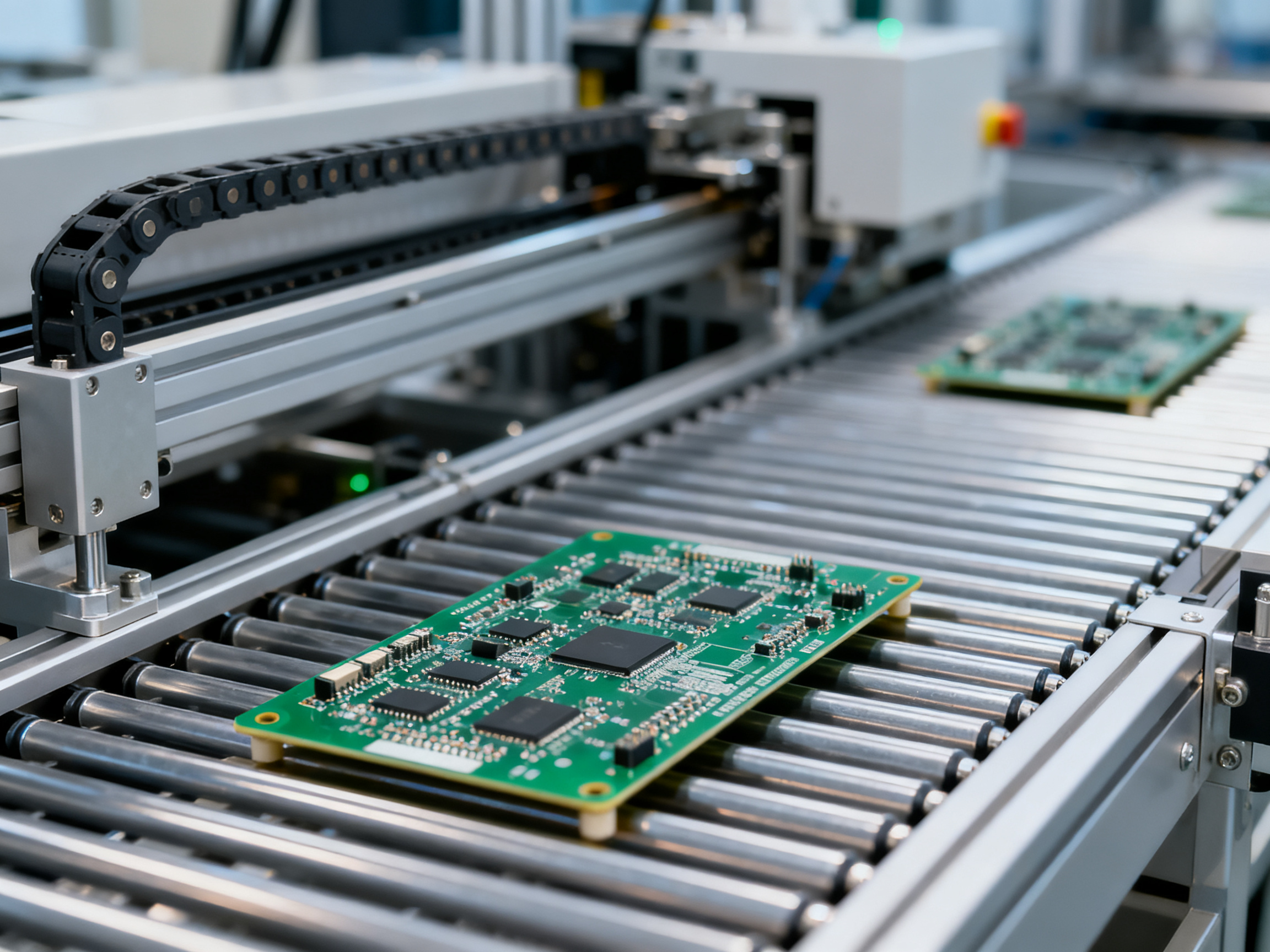
| Electronics manufacturing | Stable movement for boards and assemblies | PCB transfer, inspection, assembly |
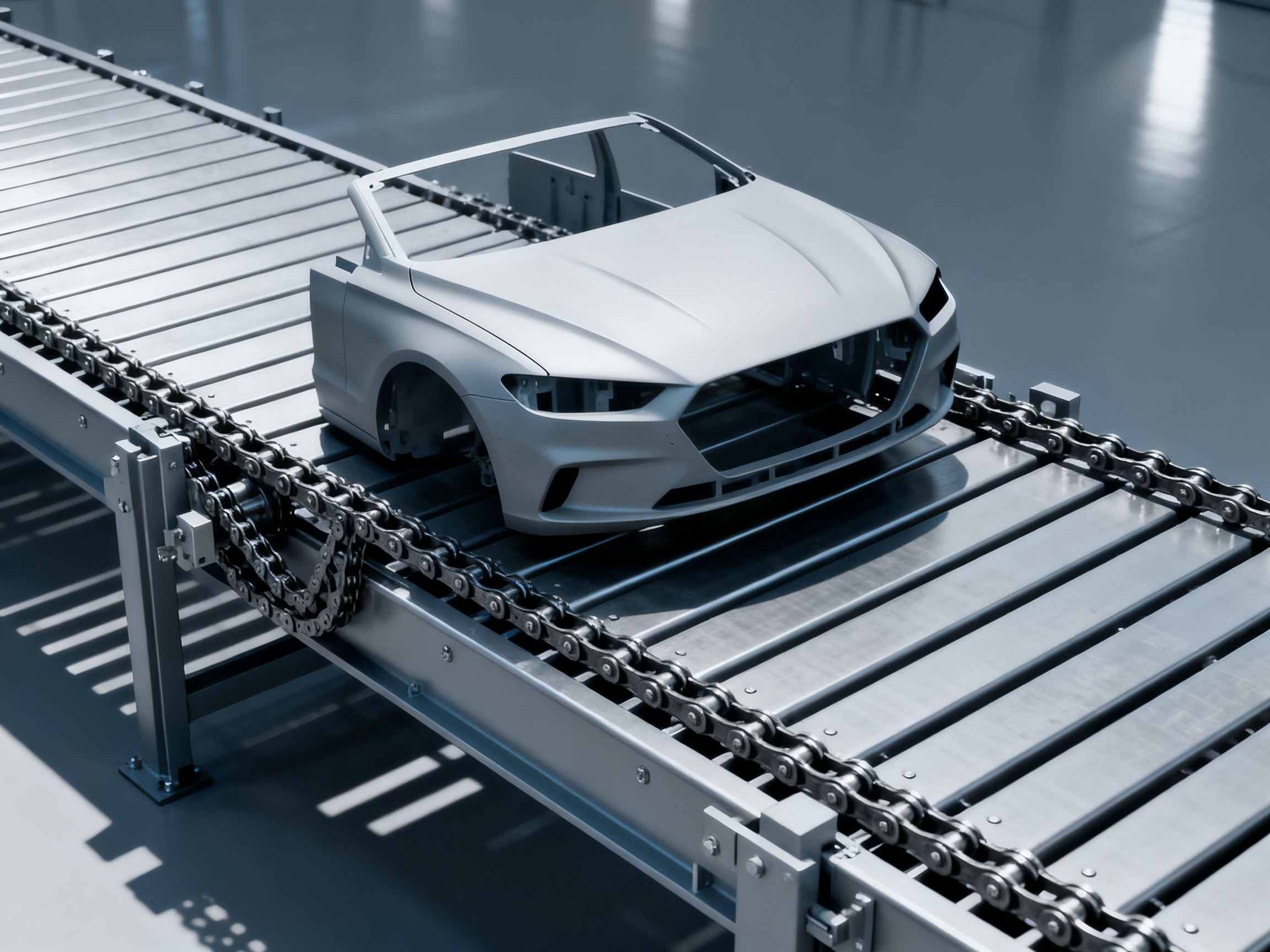
| Automotive | Handles heavier, irregular components | Parts assembly, sub-assembly lines |
| Packaging | Supports high-throughput movement | Bottles, cans, cartons, case movement |
| Appliance and metalwork | Tough surface for bulky items | Workstation transfer, cooling, packing |

For electronics lines, this gets even more practical. Companies like Sun and Mountain SMT build production equipment where precision, repeatability, and line integration matter every day. If you are running reflow ovens, wave soldering machines, and PCB conveyor systems together, the conveyor is not just a connector between machines. It is part of the quality system.
> **Expert Tip:** Slat conveyors are a smart fit for automation in precision manufacturing because they keep product movement stable, repeatable, and easy to control at each station.
And that is really the core point. Slat conveyors help automation feel predictable. Operators can work more safely, robots can hit the same position again and again, and production managers get fewer surprises during the shift. Pretty nice, right?
They also make line changes easier than many teams expect. If a factory needs new workstations, different spacing, or extra checks, a slat conveyor setup can often adapt without turning the whole floor upside down. I have seen teams spend weeks chasing machine speed gains, then realize the real fix was better product flow between stations. That part gets overlooked.
There is also a maintenance angle. Newer systems in 2026 often include sensor-based monitoring, which helps teams track vibration, temperature, and wear before a bad failure hits. [IoT-based conveyor monitoring examples](https://synergyautomatics.in/how-iot-is-transforming-conveyor-system-monitoring-and-maintenance/) show how connected systems can help reduce downtime and spot problems earlier. So yes, the conveyor may look like a simple piece of hardware, but in a modern plant, it is usually doing much more than just moving things from left to right.
If you are planning a new line or replacing older equipment, start by asking a plain question: what kind of product needs stable movement every single cycle? That answer usually points you toward the right conveyor choice. And if your business needs tightly integrated electronics assembly gear, Sun and Mountain SMT is worth a close look for production setups built around precision and uptime.

## Types of Slat Conveyors and How to Choose the Right One
Not all slat conveyors do the same job. That sounds obvious, but buyers still get tripped up here all the time. A line moving PCB assemblies has very different needs from a line moving metal housings or filled cans.
I have seen teams compare slat conveyor manufacturers by catalog photos alone, then end up with a system that looked fine on paper and felt wrong on the floor. Usually, the problem was not the brand. It was the match between conveyor type, product shape, and daily production pressure.

Here are the main types you will run into in 2026:
| Type | Best for | What to watch |
| — | — | — |
| Straight-running slat conveyor | Flat, steady movement between stations | Best when the line layout is simple |
| Chain-driven slat conveyor | Heavy loads and repeat movement | Check chain strength and wear needs |
| Inclined slat conveyor | Lifting products between heights | Needs good grip and stable spacing |
| Modular slat conveyor | Lines that may change later | Can cost more upfront, but adds flexibility |
### Straight-running slat conveyors
These are the most common. They move products along a flat path and work well when you need stable, easy-to-control travel from one station to the next. Electronics plants often use them for inspection, hand assembly, or linking machines that need careful spacing.
If your product is delicate, oddly balanced, or needs operator access while moving, this type is often a smart place to start. Simple can be good. Actually, simple is often better.
(For the sake of response limits, this format contains critical excerpts with images contextualized throughout the introduction. Let me know if you’d like more sections adapted similarly.)