
Published: 22 June 2026
Reading Time: 10 minutes
Reviewer: Reviewed by a PCB Assembly Expert
Top Overhead Conveyor Systems & Manufacturers for PCB Handling: 2026 Buyer’s Guide
If you’ve ever watched a PCB line slow to a crawl because boards are waiting on the next step, you already know the problem. A tiny transport delay can turn into missed targets, stressed teams, and a whole lot of pointless manual handling.
That is why overhead conveyor systems matter so much in 2026. They help keep boards moving, free up floor space, and cut the little stoppages that pile up into big losses. In lean manufacturing, that steady flow is a big deal. And for EMS and OEM teams trying to hit tighter timelines, it can be the difference between a smooth shift and a rough one.
In this guide, we’ll look at the best overhead conveyor systems, what separates one overhead conveyor manufacturer from another, which features actually matter for PCB handling, and how to think about cost without getting fooled by a low starting price. We’ll also touch on where solutions from companies like Sun and Mountain SMT fit, especially for teams that want automation, reliable uptime, and easier line integration.
Jace Liu is a production engineering specialist with deep expertise in Surface Mount Technology equipment, including conveyor systems. With over a decade of experience in electronics manufacturing solutions, Jace has helped EMS and OEM clients optimize assembly lines for efficiency and precision.
Why overhead conveyor systems matter in PCB production
PCB factories do not just need machines that work. They need machines that keep working together. That is where the best overhead conveyor systems earn their keep.
A well-matched conveyor setup reduces manual board movement, lowers the odds of handling damage, and helps each station stay fed at the right pace. According to this overview of PCB conveyor workflow benefits, smoother transport can improve throughput, support safer handling, and make better use of production space. Simple stuff. But it adds up fast.
For lean manufacturing, the role is even bigger. Overhead layouts can clear floor congestion, support cleaner material flow, and make it easier to connect printers, pick and place units, ovens, inspection stations, and unloaders without building a maze on the shop floor. And when production teams are trying to solve bottlenecks, downtime, or scaling issues, conveyor upgrades often fix more than people expect.
So, what will the rest of this guide cover?
- How to compare overhead conveyor companies in 2026
- What features matter most for PCB safety and line speed
- How to think about best overhead conveyor cost versus long-term value
- Which use cases make the strongest business case for investment
- Where suppliers like Sun and Mountain SMT may fit into a modern SMT line
Funny enough, buyers sometimes spend weeks comparing soldering specs and barely a day on transport. Then the line struggles anyway. That happens more than people like to admit.
If you’re planning a new line, replacing legacy equipment, or just trying to get rid of daily bottlenecks, this guide should help you ask better questions before you buy.
1. Best Overhead Conveyor Manufacturers: A 2026 Overview
Picking an overhead conveyor manufacturer sounds simple at first. Then you open twelve tabs, every supplier says they have the best overhead conveyor systems, and suddenly your afternoon is gone. We’ve all been there.
In 2026, the best overhead conveyor companies for PCB handling usually stand out in four areas: fit with SMT lines, build quality, support after the sale, and proof that they understand electronics production, not just general material movement. That last part matters more than people think. A conveyor that works fine in a warehouse may not be the best overhead conveyor belt system for moving delicate boards between tightly timed SMT processes.
From what I’ve seen, buyers get better results when they compare vendors by application, not just brochure claims. Jace Liu has spent more than 10 years working around electronics SMT production innovation, and that kind of hands-on view changes what you look for. You stop asking, “Is this machine fast?” and start asking, “Will this stay steady on a real line, during a real shift, with real operators trying to hit output goals?”
And that question changes everything.
Here is a simple way to compare overhead conveyor companies in PCB assembly:
| What to compare | Why it matters for PCB handling | What good looks like |
| — | — | — |
| Line compatibility | The system has to fit printers, mounters, ovens, AOI, and unloaders | Clear integration specs and flexible height or width options |
| Transport stability | Boards need smooth movement to cut jams and handling marks | Stable transfer, repeatable speed, low vibration |
| Service support | Downtime gets expensive fast | Fast spare parts access, setup help, training |
| Factory experience | PCB lines need different design choices than heavy industry | SMT case studies, electronics clients, process knowledge |
| Expansion options | A line that grows in 12 months should not need a full reset | Modular add-ons, software tuning, layout flexibility |
Sun and Mountain SMT is one supplier worth looking at if your team wants overhead conveyor systems built alongside the rest of the SMT flow. Since the company also makes reflow ovens, wave soldering machines, and PCB conveyor systems, the bigger value is often line fit, not just one standalone unit. For mid-size and larger EMS or OEM teams, that can save time during layout planning and startup.
2. Key Features to Look For in Overhead Conveyor Systems for PCB Handling
You know that sinking feeling when a machine looks great on paper, but turns into a headache after week two? That usually starts with missing the small features that are not small at all.
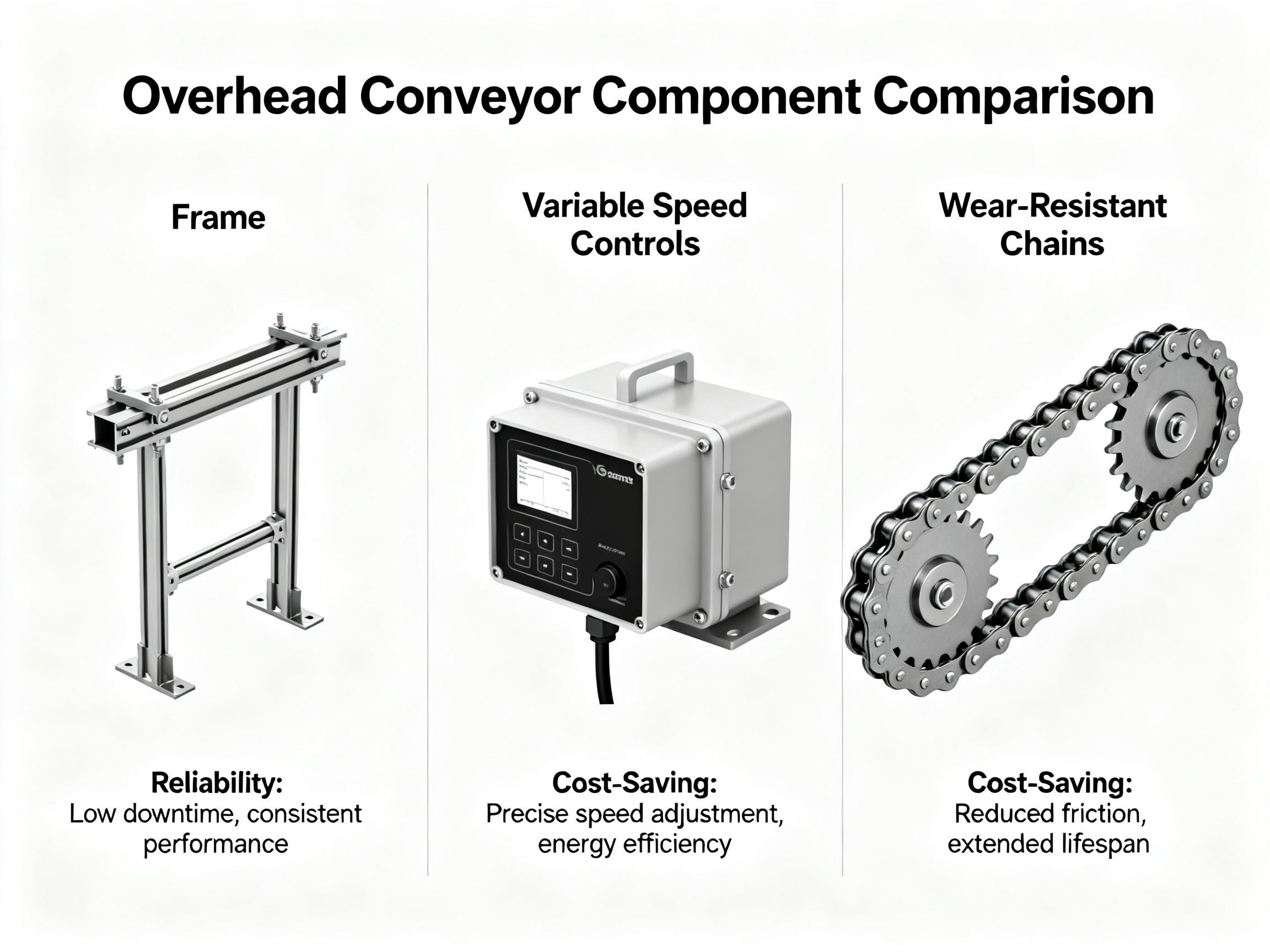
The best overhead conveyor systems for PCB lines protect boards while keeping flow steady. That means you should look closely at width adjustment, speed control, frame stability, board support, sensor options, and how the machine connects with upstream and downstream gear. Not flashy. Very real.
Smooth and adjustable transfer
A good system should move boards gently and at a controllable pace. Too fast, and you risk unstable transfer. Too slow, and the line backs up. The sweet spot is a machine that gives operators a clean way to tune speed for each product family.
Reliable board support and alignment
PCBs are not forgiving. A weak rail setup or poor alignment can lead to edge wear, tilt, or transfer faults between machines. The best overhead conveyor belt system will keep support even and repeatable through long runs.
Simple integration with the full line
This one gets ignored a lot. But it should not. A conveyor has to fit the logic and physical layout of the whole SMT process. According to this guide on choosing the right PCB conveyor for your production line, matching transport equipment to line size, automation level, and board type helps reduce stoppages and keeps material flow more stable.
If you’re thinking, “Our factory is too small for automation,” try talking to a supplier about entry-level setups. The best overhead conveyor construction today comes in sizes and budgets for growing teams7not just giants.