
Published: 21 May 2026
Reading Time: 11 minutes
Understanding Batch Reflow Ovens: How They Work and the Features That Matter
Ever wondered how those tiny components on your electronics circuit boards stay perfectly soldered? That magic happens inside a batch reflow oven. These machines are like the backstage heroes of modern electronics. If you’re into tinkering with PCB design or work in electronics manufacturing, you’ll know that soldering is a crucial step in assembling circuit boards. And doing it right can make all the difference in performance.
Batch reflow ovens provide a consistent, controlled way to solder surface-mounted components onto PCBs. They’re the go-to choice for small-scale production, prototypes, and even a lot of medium-volume manufacturing work. Let’s break down how they work and why their features matter.
[Placeholder for author bio – please provide relevant credentials to integrate here]
How Batch Reflow Ovens Work
Picture this: a tiny metal paste (solder paste) has been placed on a printed circuit board (PCB). Surface-mounted components are laid on top of the paste, and that whole setup is then put into the reflow oven. The goal? To melt the solder just enough so the component connects securely to the board without damaging anything else.
Here’s how it happens,
- Preheating Stage: The oven starts warming the PCB and components uniformly. This step gradually ramps up the temperature to avoid thermal shock that could damage the parts.
- Soaking Stage: The oven keeps the temperature steady, ensuring even heat distribution and activating the flux in the solder paste to get rid of impurities.
- Reflow Stage: This is the main event. The oven ramps up to a high peak temperature to fully melt the solder paste and make those all-important connections.
- Cooling Stage: The oven gradually lowers the temperature to solidify the solder joints, locking the components onto the PCB.
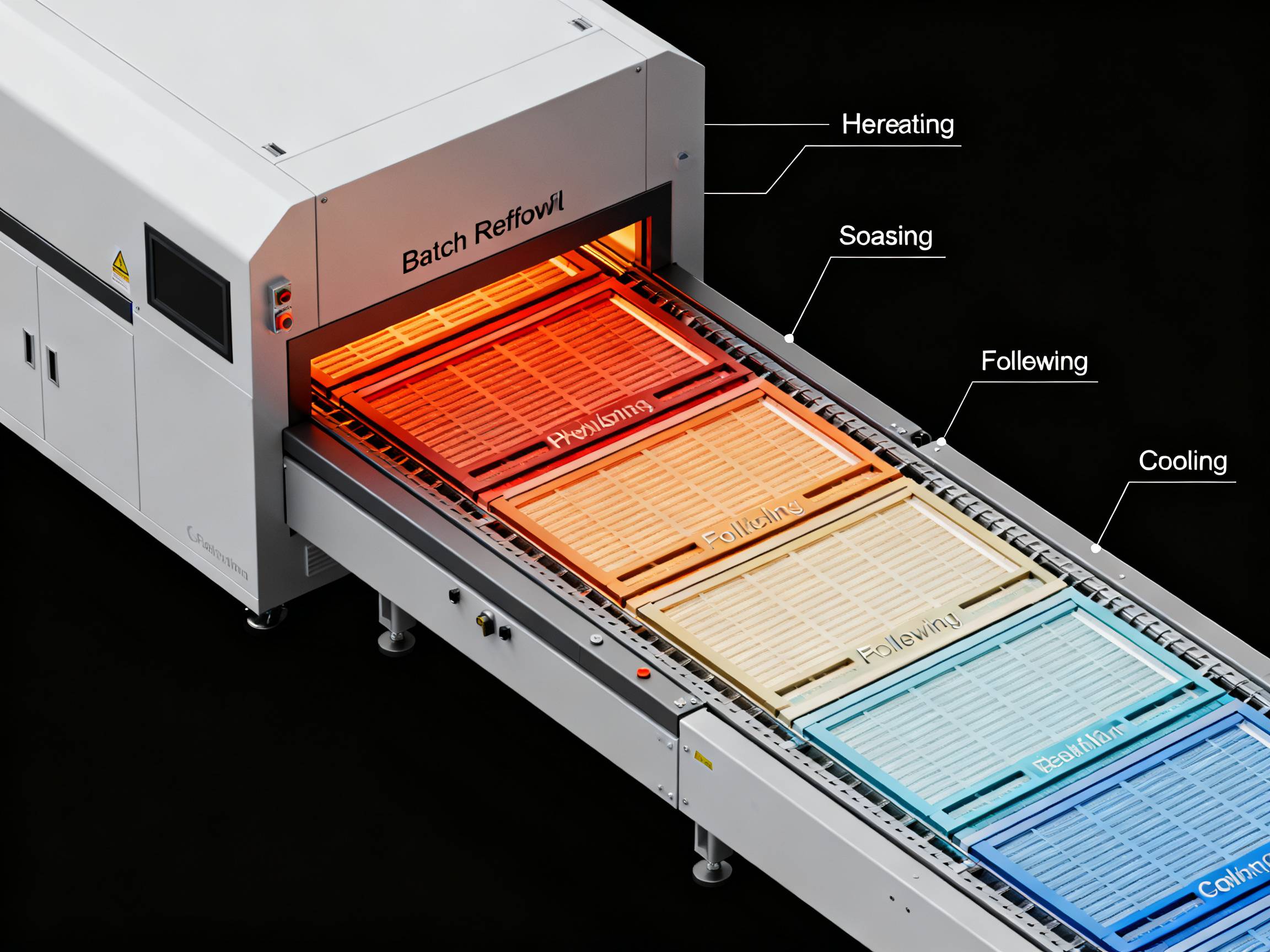
Each stage is super important. For example, overheating during reflow can ruin sensitive parts, while uneven cooling can lead to weak joints. Modern batch reflow ovens use built-in sensors and controllers to make sure every temperature change is precise.
Key Components of a Batch Reflow Oven
To understand what makes these machines tick, let’s peek inside them:
- Chambers: This is where all the heating and cooling magic happens. These chambers are typically sealed to ensure a stable environment for soldering.
- Temperature Zones: Batch reflow ovens usually have individual heating zones, each with its own temperature settings. This helps manage the specific thermal needs of different solder paste and components.
- Controllers: Think of this as the brain of the operation. Controllers make it possible to set precise heating profiles, monitor performance, and even automate processes to reduce human error.
- Cooling Systems: Most models include chillers to quickly cool down PCBs after the reflow stage, which helps maintain solder quality and minimize thermal damage.
Pro Insight: Batch reflow controllers enhance precision by automating temperature adjustments and reducing risks of human error. This is especially critical in high-stakes electronics manufacturing.
You can already see why every component plays a role in nailing those perfect solder joints. They don’t just work together—they make or break the entire process. Curious about the specific features that make some batch reflow ovens better than others? Keep reading to learn what really sets top models apart.