
Published: 26 May 2026
Reading Time: 15 minutes
Reviewer: Simon Scrapes, Founder
Understanding How Solder Reflow Ovens Work: Key Components and Processes
If you’ve ever looked at a packed PCB and wondered how all those tiny parts get soldered so cleanly, you’re not alone. At first glance, it can feel a bit like magic. But it isn’t magic at all. It’s heat, timing, airflow, and a lot of control.
In modern SMT production, solder reflow ovens do a big job. They heat solder paste in a planned way so surface-mount parts bond to the board without wrecking sensitive components. That matters a lot in 2026, when boards are smaller, denser, and expected to work right the first time. A good reflow process helps teams cut defects, raise output, and keep electronic assembly moving without too much manual fixing.
We’ve seen that once a line moves from inconsistent manual soldering to a stable oven process, manufacturing efficiency usually jumps fast. And yes, the oven itself matters, but the bigger story is how solder reflow ovens work together with temperature profiles, heating methods, conveyor speed, and process control.
This guide walks through the parts that matter most, like oven zones, solder reflow oven temperature settings, heating styles, solder reflow oven profile design, and the common mistakes that trip people up. If you’re comparing equipment for an EMS or OEM line, this is also where companies like Sun and Mountain SMT tend to stand out, because precise reflow ovens and line-ready integration can save a lot of pain later.
[Author Name] has extensive experience in electronics manufacturing and specializes in Surface Mount Technology equipment. With a background in production engineering, [Author Name] provides insights into the technical aspects of solder reflow ovens and their integration into modern assembly lines.
Why solder reflow ovens matter in SMT lines
A reflow oven is one of the core machines in surface mount production. After solder paste is printed and parts are placed, the board goes through the oven so the paste melts and forms the solder joints. Simple idea. Hard to do well.
The reason these ovens matter so much is repeatability. Manual soldering can work for repairs or low-volume jobs, but high-volume electronic assembly needs steady, controlled results. According to Wevolver’s reflow soldering overview, reflow systems help produce reliable electrical and mechanical joints by using controlled heating stages rather than guesswork.
That repeatability helps with:
- Better solder joint consistency
- Higher throughput on SMT lines
- Less operator-to-operator variation
- Improved support for miniaturized components
- Lower rework rates over time
And that’s why production engineers care so much about this process. One unstable profile can create a long list of problems by lunch.
The main idea behind how solder reflow ovens work
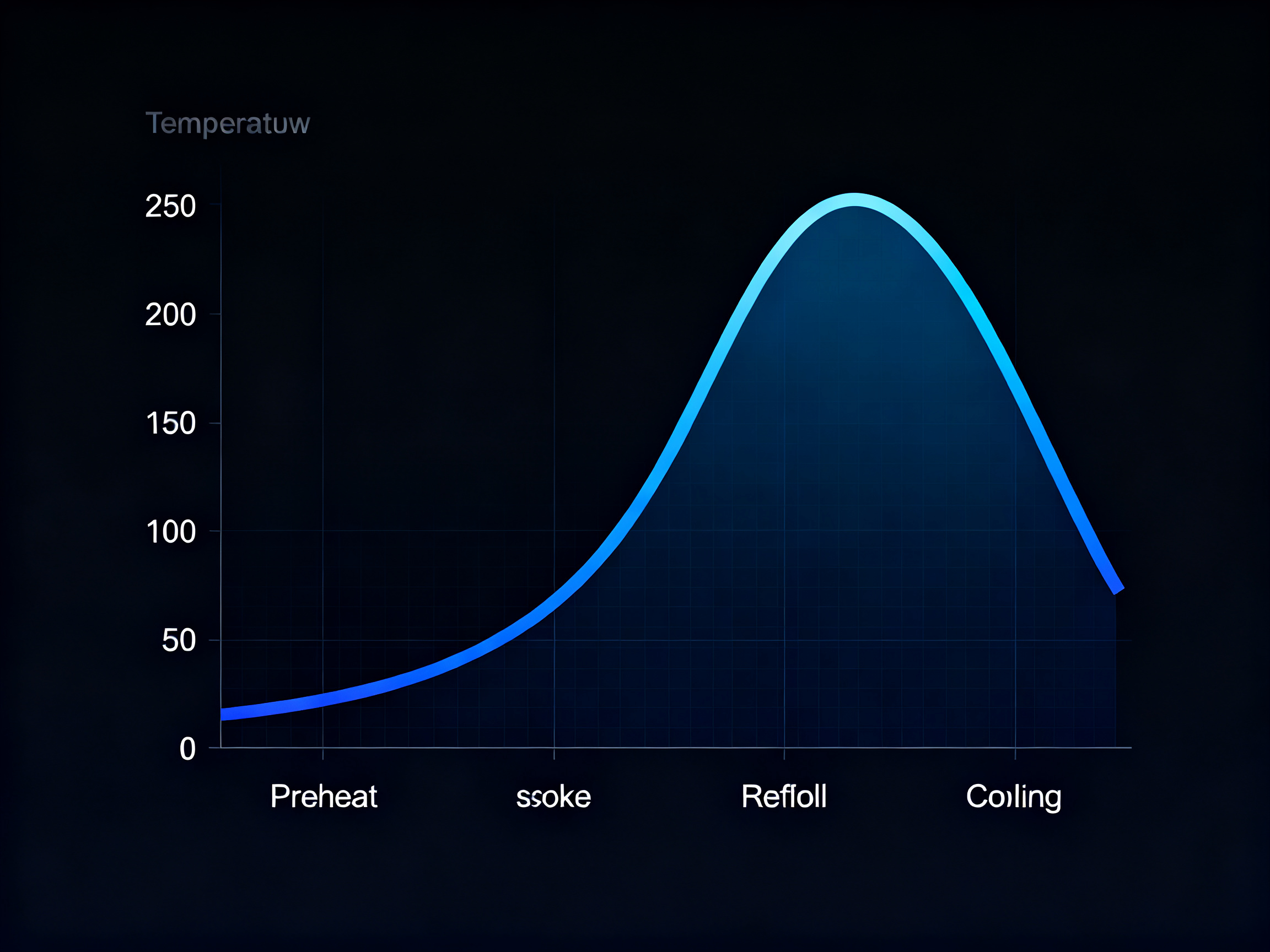
So, how solder reflow ovens work in plain English? The board rides through a heated tunnel on a conveyor. Inside that tunnel, the oven creates a staged temperature journey. First the board warms up, then temperatures level out, then the solder melts, and finally the board cools in a controlled way.
That staged path is called the solder reflow oven profile. It’s not just a nice chart on a screen. It’s the process.
Most ovens are split into zones, and each zone has a job. Some raise temperature slowly. Some hold heat in a narrow band. Some drive the board to peak reflow. The last zones cool the solder so joints solidify correctly. Without that sequence, you’d risk tombstoning, voids, cold joints, bridging, or damaged parts.

Here’s the short version:
| Stage | What happens | Why it matters |
|—|—|—|
| Preheat | Board warms gradually | Reduces thermal shock |
| Soak | Heat spreads more evenly | Helps flux activate and balances temperatures |
| Reflow | Solder reaches melt point | Forms the solder joints |
| Cooling | Solder solidifies | Affects joint strength and finish |
That’s the backbone of how solder reflow ovens work, whether you’re using a compact line or a bigger inline system.
Key components inside a solder reflow oven
Now let’s look at the hardware. Because the profile only works if the machine can actually deliver it.
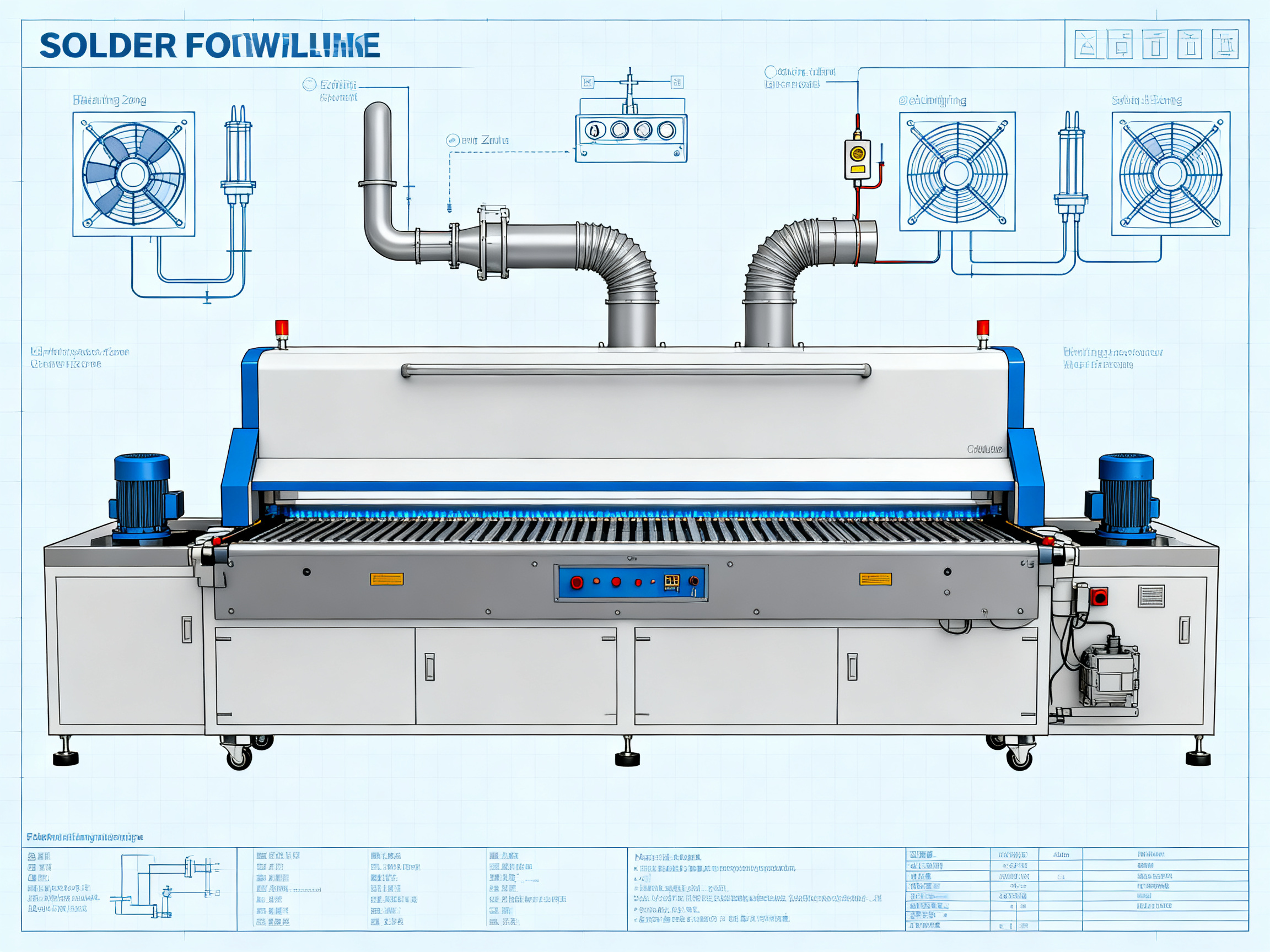
Most solder reflow ovens include these core parts:
- Heating zones for preheat, soak, peak, and cooling
- Conveyor system to move boards at a controlled speed
- Fans or airflow systems to spread heat evenly
- Temperature sensors and thermocouples to measure real conditions
- Control software for recipes, alarms, and monitoring
- Exhaust or filtration systems to handle fumes and flux residues
- Cooling zones to bring boards down at the right rate
In our experience, teams often focus on the peak temperature first, but airflow consistency and conveyor stability can be just as big a deal. We’ve seen lines chase the wrong problem for hours, only to find the actual issue was drift in belt speed or blocked airflow.
For companies upgrading older SMT equipment, this is where newer machines can help. Sun and Mountain SMT, for example, builds reflow ovens for automation-focused EMS and OEM lines that need dependable thermal performance and easier integration with conveyors and other upstream equipment. That’s not the flashy answer. But it’s usually the useful one.
Heating methods used in modern ovens
Not all ovens heat the same way. And that changes results.
The most common heating methods in 2026 are convection, infrared, and vapor phase. Convection, usually hot air, is still the mainstream choice for many SMT lines because it gives broad and fairly even heating. Infrared can heat quickly, but it may create uneven hot spots if the board mix is tricky. Vapor phase is known for very even heating, though it’s often used in more specialized cases.
Here’s a quick comparison:
| Heating method | How it works | Good fit | Watch out for |
|—|—|—|—|
| Convection | Circulates hot air | Most production SMT lines | Needs good airflow control |
| Infrared | Radiant heat warms surfaces | Faster, lower-cost setups | Uneven heating on mixed components |
| Vapor phase | Vapor condensation transfers heat | Tight thermal uniformity | Higher complexity, niche use |
For most readers asking about how solder reflow ovens work, convection is the answer they’ll run into most often. It tends to give the best balance of control, flexibility, and production fit.
Temperature profiles and settings
This is where things get serious. The solder reflow oven temperature profile is what turns a machine into a process tool.
In 2026, common profile types include ramp-to-spike and ramp-soak-spike. Both move the PCB through preheat, soak, reflow, and cooling, but they do it a little differently. Lead-free setups often use a preheat ramp toward 150°C, a soak range around 150 to 180°C, and a peak around 245 to 255°C, depending on the solder paste and board design, based on Eurocircuits’ guide to solder profiles and oven parameters.
But here’s the thing, there is no single best solder reflow oven temperature for every board.
The best solder reflow oven settings depend on:
- Solder paste type
- Lead-free or leaded process
- PCB thickness
- Component density
- Thermal mass differences across the board
- Sensitive parts with lower heat tolerance
- Conveyor speed and airflow pattern
Expert Tip: Optimizing temperature for different solder types starts with the paste data sheet, then gets refined by real profiling on your actual board. A profile that works on one assembly may fail badly on another.
We’ve found that when people search for the best solder reflow oven temp, they usually want one fixed number. That’s understandable. But in production engineering, the better question is, what profile keeps all joints inside the process window without overheating the weakest part?
A practical starting table looks like this:
| Profile stage | Typical range | Goal |
|—|—|—|
| Preheat | Up to about 150°C | Warm board gently |
| Soak | About 150°C to 180°C | Even out temperatures, activate flux |
| Peak reflow | Often 245°C to 255°C for lead-free | Melt solder fully |
| Cooling | About 2°C to 4°C per second | Solidify joints cleanly |
Small changes matter here. Even 5°C can change your results more than you’d think.
Why multiple zones matter so much
You can’t usually get a stable reflow process from one blast of heat. Boards need a sequence, not a shock.
That is why reflow ovens use multiple zones. Each zone lets the machine shape the solder reflow oven profile step by step. Preheat reduces thermal stress. Soak helps equalize temperatures across components with different sizes. Reflow reaches solder melt. Cooling locks in the joint.
For mixed-technology boards, zone control becomes even more useful. A board with a large ground plane, tiny passive parts, and one heat-sensitive connector won’t behave evenly. Multi-zone control gives engineers more room to tune the process without playing thermal roulette.
And honestly, that’s one of the hidden reasons better ovens cost more. You are not just paying for heat. You are paying for control.
Process control techniques that keep quality steady
Good ovens need good control systems. Otherwise, settings on the screen are just nice-looking guesses.
Modern process control in 2026 often includes thermal profiling, closed-loop temperature control, real-time alarms, traceability, and software links into factory systems. Some lines also use nitrogen atmosphere control to reduce oxidation. Plus, smarter systems now help flag drift before it becomes a defect storm.
We’ve worked with teams that thought their recipe was stable because the setpoints never changed. Then a live profile run showed the board itself was seeing something else entirely. That’s a rough afternoon.
Useful process control habits include:
- Run thermal profiles with real test boards and thermocouples.
- Validate each recipe after board or paste changes.
- Watch conveyor speed like a hawk.
- Check airflow balance and fan condition.
- Log trends so drift shows up early.
- Recheck calibration on a schedule, not just after problems.
Pro Insight: Advanced control systems in modern ovens now combine live monitoring, recipe management, and traceability, which helps teams catch small process shifts before they turn into scrap.
If you’re scaling production, this is where equipment choice starts affecting business results. A reflow oven that plugs into broader SMT workflows and supports cleaner monitoring, like the kind Sun and Mountain SMT aims to provide, can make daily process control a lot less messy.
For readers who want a quick visual on automation trends in manufacturing control, this YouTube resource gives helpful context: Advanced manufacturing and control systems in 2026
Common defects linked to poor reflow control
When the profile is off, the board usually tells you. Sometimes loudly.
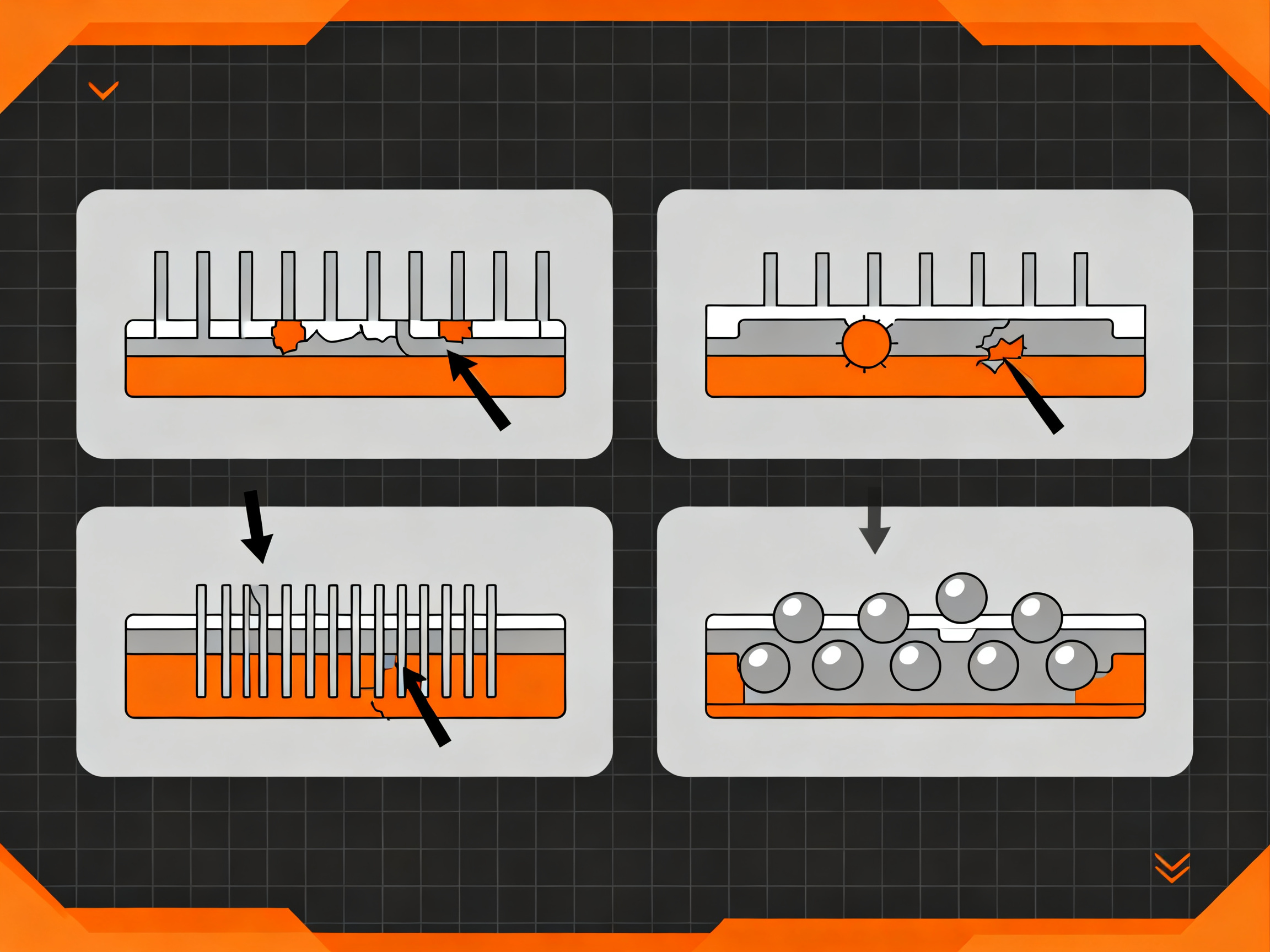
Common reflow-related defects include:
- Cold solder joints
- Tombstoning
- Solder bridging
- Solder balls
- Voids
- Component shift
- Dull or weak-looking joints
These defects often come from a few root causes:
| Problem | Likely cause |
|—|—|
| Cold joints | Peak temperature too low, short time above liquidus |
| Tombstoning | Uneven heating, paste imbalance, part geometry issues |
| Bridging | Too much paste, poor profile, placement issues |
| Voids | Gas entrapment, profile mismatch, paste behavior |
| Burned components | Peak too high, excessive soak or dwell |
Look, I get it. When defects show up, the first instinct is often to blame the paste. Sometimes that’s fair. But often, the bigger issue is that the oven profile no longer matches the real board conditions.
Troubleshooting common issues
Troubleshooting works best when it’s boring. By that I mean methodical, not dramatic.
Start with the basics:
- Verify the current thermal profile with thermocouples
- Check conveyor speed and belt condition
- Inspect heaters, blowers, and airflow paths
- Clean flux buildup and filters
- Confirm sensor accuracy and calibration
- Review recent changes in paste, board design, or component mix
From Our Experience: Common troubleshooting practices that work fastest usually start with profile verification, airflow checks, and basic cleaning. Fancy theories can wait until the obvious stuff is ruled out.
We’ve seen temperature inconsistency blamed on software more than once, and then the real fix was cleaning blocked airflow paths. Not glamorous. Very real.
If your line has recurring issues, build a simple fault log. Track the defect, board type, recipe used, date, and what changed. After a few weeks, patterns usually pop up. And those patterns save time.
What buyers and production teams should look for in 2026
If you’re choosing a new oven, don’t just ask for the best solder reflow oven profile support and call it done. You need to match the machine to your real production life.
Ask questions like:
- How many board types run each week?
- Do you need lead-free only, or mixed processes?
- How much recipe storage and traceability do you need?
- Can the oven integrate with your existing conveyor and SMT line?
- How easy is maintenance?
- What local service or spare parts support exists?
- How stable is zone-to-zone control under full load?
For EMS and OEM teams trying to cut downtime and improve precision soldering, those questions matter more than glossy brochures. Sun and Mountain SMT fits naturally into that conversation because their SMT equipment lineup covers reflow ovens, wave soldering machines, and PCB conveyor systems built for production-scale integration. That can be a smart move if your current setup feels patched together.
Final thoughts
At the heart of it, how solder reflow ovens work comes down to controlled heat over time. But the real success comes from how well the oven manages zones, airflow, conveyor speed, and the solder reflow oven profile for the board in front of it.
If you’re setting up a new SMT line, fixing a defect issue, or comparing oven options in 2026, start with the profile. Then look at the machine’s ability to repeat that profile, day after day, without drama. That’s what drives quality, uptime, and peace of mind.
And if you’re reviewing equipment for a growing EMS or OEM operation, it may be worth taking a closer look at integrated SMT solutions from providers like Sun and Mountain SMT. The right oven won’t solve every process problem, but it can make the rest of your line much easier to manage.
The best reflow results usually come from a simple habit: trust the data, verify the profile, and never assume yesterday’s settings still fit today’s board.
Expert wrap-up: What we learned and where things are headed
OK, let’s take a breath and sum it up. Solder reflow ovens aren’t just a piece of machinery that gets shoved onto the line because “everyone uses one.” They’re the literal heartbeat of any high-volume, modern electronic assembly. If the reflow isn’t dialed in, nothing else really matters. Doesn’t matter how fancy your pick and place is if your joints are weak.
First, the biggest things to remember:
- In 2026, having tight control over reflow processes separates leaders from the pack. The days of “set it and forget it” are gone. Now it’s about smart profiling, zone control, and data-backed tweaks.
- Ovens with great process control, stable conveyor systems, and full integration with monitoring software are non-negotiable for folks chasing zero-defect goals.
- Regular maintenance saves lines from burning time on troubleshooting – get to know your oven like you know your coffee machine (maybe even better).
- No one temp works for everything. Start from your paste specs, run real board trials, and don’t get lazy about retesting when pairs or designs change.
Here’s a twist. Even though reflow sounds like “old tech,” 2026 is bringing real change. Smarter control systems are showing up everywhere, with some setups tying directly into plant-level dashboards. That means engineers can catch problems in real time, sometimes before anyone even notices a defect. We’re even seeing more energy-friendly ovens coming, which helps the bottom line and the environment.
Let’s get specific. If you’re running an EMS or OEM plant right now, your next step isn’t necessarily a brand-new oven. Start by checking your process logs and outlier data. Are your defects falling into patterns? Are there repeats after paste swaps or new board types? That’ll point you to whether it’s the oven, the profile, or just old-fashioned belt misalignment. Often, upgrading or integrating new control modules and software will have a bigger impact than swapping ovens out entirely.
And for anyone fighting for an edge in 2026 – advanced profiling tools, IoT-ready ovens, and smart diagnostics are worth every late-night demo. Especially for high-density, precision builds. These features cut rework, smooth out ramp-up times, and help teams handle smaller runs faster (without babysitting every pass).
Sun and Mountain SMT, for example, keeps popping up with ovens that plug cleanly into full SMT lines. I’ve seen their systems help plants move from 20% rework to under 5% in a quarter. That kind of jump doesn’t happen by accident; it happens because the equipment gives process engineers real-time control and easy troubleshooting. It’s also a lot less headache during those “ship by Friday” pushes.
If you’re stuck, here’s a 2026 starter checklist:
- Profile every new board revision, not just the first one.
- Calibrate thermocouples and zone sensors quarterly (seriously – it’s the difference between good and just lucky).
- Keep spare filters and blower parts on hand. Maintenance never waits for a convenient time.
- Use real-time alarms, not just logs, to spot drift or overheating early.
- If your oven can’t integrate with MES, SPC, or dashboard tools…ask why. That’s the new normal now.
One more thing: when in doubt, talk to your operators. The folks at the line see changes first. Some of our best process improvements came from “that doesn’t sound right today” or “the board piles up in zone 4 now” – and nine times out of ten, they weren’t wrong.
Expert Perspective: The future of solder reflow isn’t just about tighter temperature swings or faster conveyors – it’s connected, data-driven processes that let production teams catch issues before scrap piles up. The best investments in 2026 marry real-time monitoring, flexible control, and simple operator feedback. That’s what keeps quality high and costs down, and that’s where the best SMT lines are heading.
Looking for more insights or ready to move on from manual headaches? Take a look at what integrated SMT setups like Sun and Mountain SMT offer. Their lineup is built for teams that want peace of mind, not drama.