
Published: 08 October 2026
Reading Time: 15 minutes
Every smartphone, laptop, and car control module you use relies on a process most people never think about. Tiny components, some smaller than a grain of sand, get permanently attached to circuit boards using specialized ovens that heat solder paste to exact temperatures. Without these machines, the electronics we depend on daily simply would not exist.
SMT reflow machines sit at the heart of modern electronics manufacturing. They are the workhorses that transform loose surface mount components into solid, working assemblies, one precisely controlled thermal cycle at a time. As devices get smaller and more powerful, the accuracy of these reflow ovens becomes even more critical for producing reliable products.
The SMT equipment market alone is worth over $6 billion in 2026 and continues growing at roughly 8 to 12 percent annually. Contract manufacturers and major electronics brands alike invest heavily in reflow technology because a single thermal profiling mistake can ruin an entire batch of boards. We are talking about defects like components that lift off pads, bridges of solder connecting the wrong pins, or weak joints that crack under everyday use.
So here is the thing. If you are sourcing equipment, running a production line, or just trying to understand what makes your gadgets reliable, knowing how reflow ovens work matters more than ever. This guide breaks down everything you need to understand about SMT reflow machines, from the science behind the process to choosing the right oven for your operation.
About the Author
David Chen brings over 15 years of hands-on experience in electronics manufacturing and SMT equipment technology. Having worked with major EMS and OEM facilities across Asia, Europe, and North America, David understands the critical role that reflow oven technology plays in achieving consistent, high-quality PCB assembly. His expertise spans equipment selection, process optimization, and troubleshooting for high-volume manufacturing environments.
He has spent time on production floors helping contract manufacturers dial in their thermal profiles and cut defect rates. When he is not writing about soldering science, you will find him debugging profiling issues or evaluating new reflow oven technology for upcoming projects.
What Is Surface Mount Technology (SMT)?
Before we get into how reflow ovens work, you need to understand what SMT actually is. SMT stands for Surface Mount Technology. It is the method that lets manufacturers attach tiny electronic parts directly onto the surface of a circuit board instead of pushing leads through holes.
This was a big deal when it became mainstream. Traditional through-hole technology required drilling holes in circuit boards and threading component leads through them. It worked fine, but those holes took up space and limited how small things could get.
SMT changed that equation completely. Components sit right on top of the board surface. No holes needed. This means manufacturers can pack more parts into less space, which is exactly why your smartphone fits in your pocket instead of taking up an entire desk.
The components used in SMT are called surface mount devices, or SMDs for short. They come in all sorts of packages. Resistors and capacitors often look like tiny rectangles. Larger ICs might come in flat packages with legs on all four sides. BGAs, which are common in processors and memory chips, have tiny balls underneath that you cannot even see without magnification.
Here is the thing though. Getting these components to stick permanently requires the reflow soldering process. You place the component on a board with special solder paste, then heat everything up in an smt reflow oven until the paste melts and flows. When things cool down, you have solid electrical connections. That is the whole magic behind surface mount assembly.
SMT became the dominant method because it lets manufacturers place components automatically at incredible speeds. A single pick-and-place machine can install thousands of parts per hour. This makes mass production economically viable for everything from car computers to kitchen appliances.
| Feature | SMT (Surface Mount) | Through-Hole |
|—|—|—|
| Component Size | Very small (down to 01005 packages) | Larger packages required |
| Board Space | High density, compact layouts | Uses more board space |
| Automation | Excellent for high-speed placement | Slower, more manual work |
| Mechanical Strength | Good for most applications | Superior for stressed connections |
| Inspection | May require X-ray for hidden joints | Visual inspection easy |
| Repair/Rework | More challenging for tiny parts | Easier to access and fix |
| Typical Applications | Smartphones, laptops, medical devices | Industrial controls, power supplies, connectors |
Both methods still have their place in modern manufacturing. Most complex electronics use mostly SMT with a few through-hole parts where extra strength matters. Knowing which method fits your application depends on understanding what you are building and what conditions it needs to survive.
What Is an SMT Reflow Machine?
Think of an SMT reflow machine as a highly controlled pizza oven for electronics. Just like you need the right temperature to melt cheese without burning your toppings, these machines heat circuit boards to exact temperatures that melt solder paste without damaging delicate components.
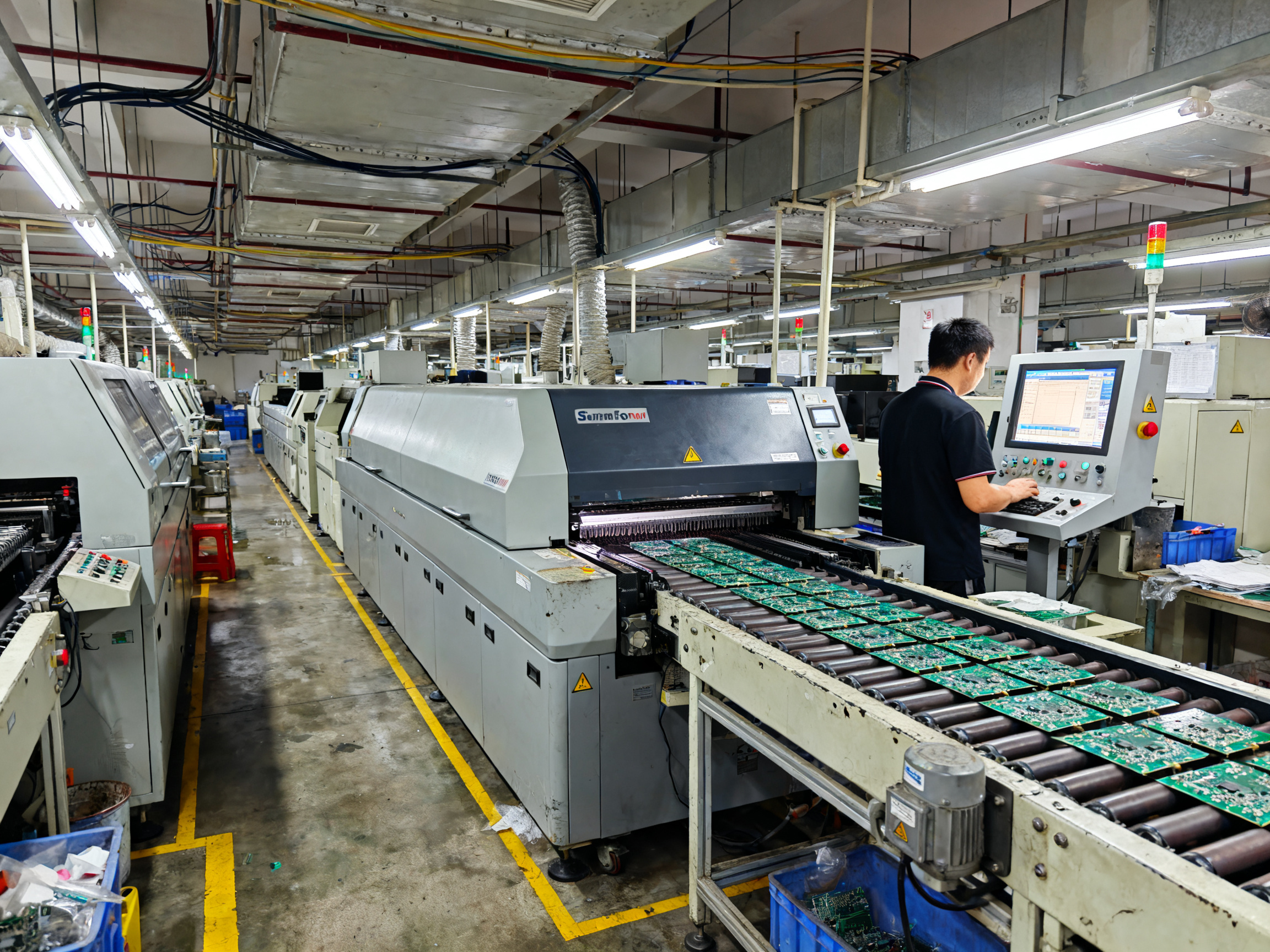
An SMT reflow machine is a specialized furnace that applies controlled heat to printed circuit boards after surface mount components have been placed on them with solder paste. The machine heats everything following a precise temperature profile, melts the solder, and then cools it back down to create permanent electrical and mechanical bonds between components and the board.
What makes these machines different from a regular oven? Everything. A kitchen oven might vary by 10 or 20 degrees and still work fine for cooking. A reflow oven for SMT work needs to hit specific temperatures within a degree or two across the entire board surface. We are talking about maintaining thermal profiles that typically peak between 235 and 250 degrees Celsius for lead-free solder, with ramp rates and soak times carefully controlled throughout the process.
Modern reflow ovens come equipped with multiple heating zones, usually between 4 and 10 depending on the model and application. Each zone can be independently controlled to manage how heat is applied as the board moves through on a conveyor system. Top and bottom heating elements work together to prevent uneven heating that could cause components to lift off their pads or create weak joints.
These machines integrate directly into production lines, working alongside pick-and-place equipment that deposits components and AOI systems that inspect the results. Real-time monitoring tracks zone temperatures, conveyor speed, nitrogen flow, and oxygen levels inside the chamber. Everything gets logged for quality traceability, which matters a lot for industries like automotive and medical devices where failure is not an option.
The basic components include the conveyor system that transports boards through the machine, heating zones with forced convection or infrared elements, cooling zones to solidify solder properly, gas delivery systems for nitrogen when oxygen control is needed, and the control panel where operators set and manage thermal profiles.
Without reflow ovens, surface mount technology simply would not work at production scale. The precision heating they provide is what transforms a board covered in paste and components into a solid, working electronic assembly.
How SMT Reflow Machines Work: The Science Behind the Process
The reflow soldering process follows a precise thermal profile that activates solder paste in stages. Think of it like baking a cake. You preheat the oven, then gradually bring it to the right temperature, hold it there for a bit, and then cool everything down slowly. SMT reflow works the same way, but the margins for error are razor thin.
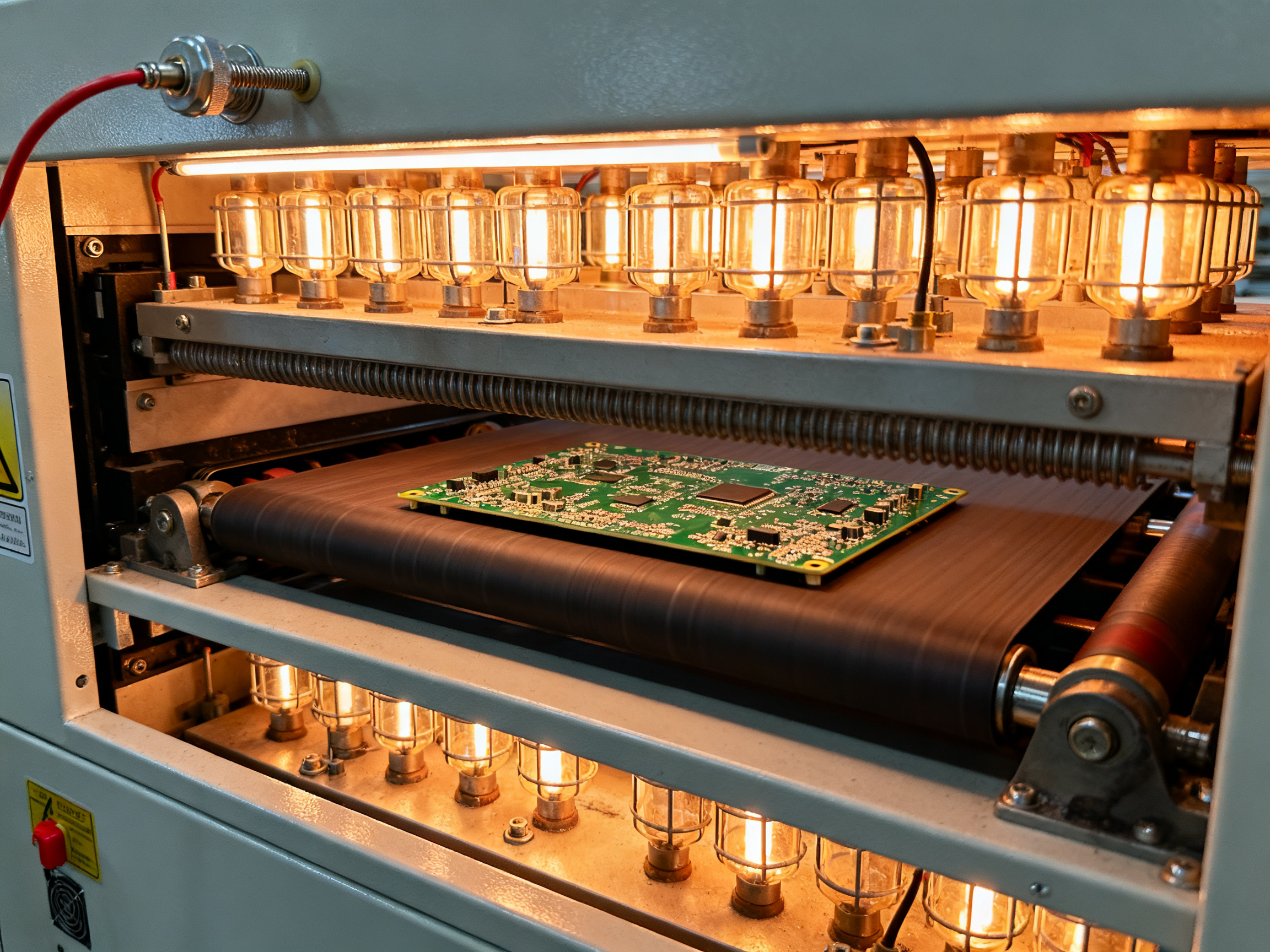
The oven moves your circuit board through different heating zones, each one taking the board closer to the temperature where solder melts. For lead-free solder, which is what most manufacturers use today, peak temperatures typically reach between 235 and 250 degrees Celsius. The board spends maybe 30 to 90 seconds above the point where solder turns liquid, and that time above liquidus matters a lot for getting good joints.
Different reflow ovens use different ways to transfer heat. Forced convection ovens blow hot air across the board surface. The fans make sure temperatures stay uniform even when components cast shadows or have different thermal masses. These ovens are the workhorses of high-volume production lines because they handle variation well.
Infrared ovens work by radiating heat directly onto surfaces. They heat up fast, but they can be tricky. Dark components absorb more heat than light ones. A black chip absorbs infrared differently than a silver capacitor sitting next to it. That inconsistency makes IR less popular for complex boards.
Vapor phase ovens use a special fluid that boils at just the right temperature. The vapor condenses on cooler surfaces and releases heat evenly. This gives fantastic uniformity, which is why medical device makers and automotive suppliers often prefer vapor phase for their most critical assemblies. The trade-off is slower throughput and higher operating costs.
No matter which heating method an oven uses, the goal stays the same. You need to hit specific temperatures at specific times without stressing delicate components or leaving cold solder joints.
We have seen what happens when the thermal profile drifts even slightly. Components can lift off their pads, a defect called tombstoning. Solder can bridge between pins. Joints can be weak and crack under vibration. Getting the profile right protects your board from these headaches.
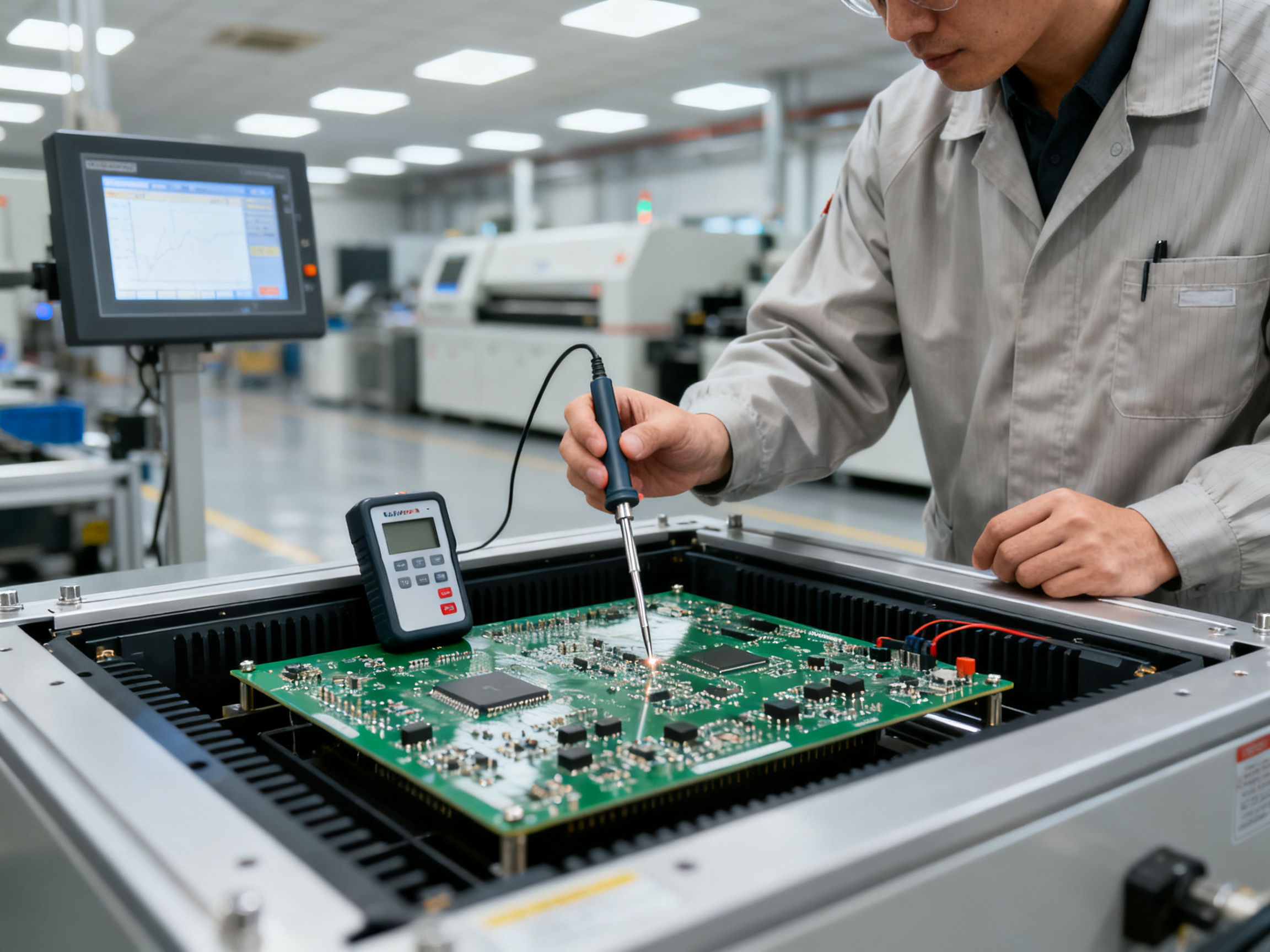
The critical parameters every operator watches include ramp rate (how fast temperature climbs), soak time (holding at intermediate temperatures), peak temperature, and the cooling rate. Ramp rates that are too fast can crack ceramic capacitors. Rates too slow waste time and let flux behave badly. Soak times help even out temperature differences across the board before solder melts. Cooling that happens too quickly stresses the board through sudden thermal contraction.
Modern ovens have multiple independently controlled zones, usually 4 to 10 depending on the model. Each zone can be set to a different target temperature. As boards travel through on a conveyor belt, they experience a carefully designed temperature journey. The control panel lets operators save recipes for different board types, paste chemistries, and component tolerances.
Pro Insight: When transitioning between different reflow technologies or upgrading legacy equipment, always re-profile your most challenging board assembly. What worked in your old oven may not transfer directly, even if the recipe numbers look similar. Thermal mass distribution and heating method differences mean new profiling is non-negotiable for maintaining quality.
Understanding how these machines apply heat helps you make better choices about equipment, troubleshoot problems faster, and communicate more effectively with your production team. The science is straightforward. The execution just takes attention to detail.
Reflow Process Stages and Temperature Profiling
The reflow soldering process follows a precise thermal profile that activates solder paste in stages. Think of it like baking a cake. You preheat the oven, then gradually bring it to the right temperature, hold it there for a bit, and then cool everything down slowly. SMT reflow works the same way, but the margins for error are razor thin.
The Four Stages
1. Preheat Stage
The board starts at room temperature and gets gently warmed up. This stage raises the PCB to roughly 100 to 150 degrees Celsius. The idea is to avoid thermal shock that could crack ceramic components or shift tiny parts off their pads.
Flux in the solder paste begins to activate during this phase. Solvents in the paste start to evaporate. You want this to happen slowly and controlled, not explosively.
Ramp rates typically stay between 0.5 and 3 degrees Celsius per second. Too fast and you risk component stress. Too slow and you waste time without adding much benefit.
2. Soak Stage
Next comes the soak, sometimes called the preheat plateau. The board sits at an intermediate temperature range, usually around 150 to 180 degrees Celsius, for a set period.
This stage does several important jobs. Solvents finish evaporating. Flux gets fully activated and starts cleaning oxide layers from component leads and PCB pads. The soak also helps even out temperature differences across the board before things get really hot.
Soak times typically run 60 to 120 seconds. Getting this right matters a lot. Boards with mixed thermal masses, like big BGAs next to tiny chip resistors, need careful soak tuning to prevent hotspots.
3. Reflow Stage
This is the main event. Temperature climbs above the solder melting point and holds there. For lead-free solder, which is what most manufacturers use today, peak temperatures typically reach between 235 and 250 degrees Celsius.
The solder paste melts and flows. Flux continues cleaning as the liquid solder wets component leads and pads. When things cool down, you get a permanent metallurgical bond.
Time above liquidus, or TAL, is the critical metric here. Most profiles aim for 30 to 90 seconds above the point where solder turns liquid. Too short causes incomplete wetting. Too long risks component damage and excessive intermetallic growth.
4. Cooling Stage
After peak temperature, controlled cooling brings things back down. This stage solidifies the solder joints with the proper grain structure.
Cooling that happens too quickly stresses the board through sudden thermal contraction. Too slow and intermetallic compounds keep growing, making joints brittle.
Ideal cooling rates sit around 1 to 4 degrees Celsius per second. The goal is a controlled descent that mirrors the heating profile in reverse.
Expert Tip: When profiling your reflow oven, pay close attention to these critical temperature thresholds. Going above 260 degrees risks damaging heat-sensitive components and can cause PCB warpage. If you fall below the soak temperature, flux activation will be incomplete, leading to poor wetting and cold joints. Most profilers set peak temperature too conservatively because they worry about component limits, but this causes more defects than running slightly hotter within spec.
Getting the profile right protects your board from headaches like tombstoning, bridging, and weak joints that crack under vibration. The oven moves your board through these stages on a conveyor system, and the control panel lets operators save recipes for different board types, paste chemistries, and component tolerances. One profile rarely works for everything.
We have seen what happens when the thermal profile drifts even slightly. Components can lift off their pads. Solder can bridge between pins. Joints can be weak and crack under everyday vibration. Getting the profile right protects your board from these problems.
Types of Reflow Ovens: Choosing the Right Technology
Not all reflow ovens work the same way. Different heating methods suit different production needs, and picking the right one affects your quality, costs, and throughput.
Here are the four main types you will encounter in 2026.
Forced Convection Reflow Ovens
These are the most common ovens in electronics manufacturing right now. Forced convection ovens use fans to circulate heated air across the board surface. The moving air eliminates hot and cold spots, so every component experiences roughly the same temperature even when pieces have different sizes or shapes.
The thermal uniformity makes these ovens reliable for complex boards with mixed component sizes. A big BGA next to a tiny chip resistor all heat together properly.
Throughput is a strong point. You can run boards through fast and keep quality high. Modern systems like the Sun and Mountain reflow oven series feature multi-zone control with independent top and bottom heating, giving operators fine-tuning capability for different board designs.
Forced convection dominates high-volume production lines where consistency and speed matter most. You will find them in automotive electronics plants, medical device manufacturers, and consumer electronics assembly facilities worldwide.
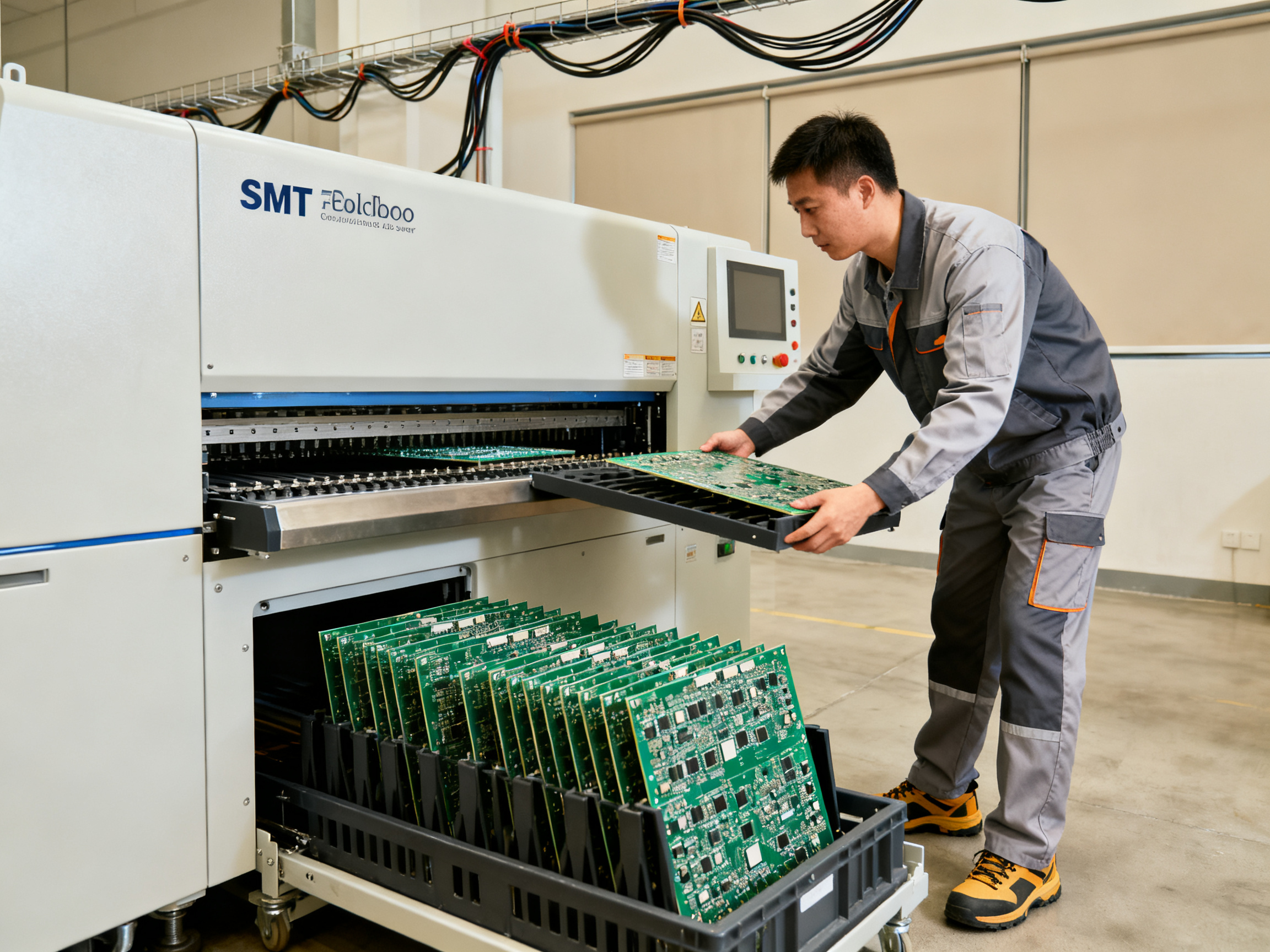
Pro Insight: When transitioning between different reflow technologies or upgrading legacy equipment, always re-profile your most challenging board assembly. What worked in your old oven may not transfer directly, even if the recipe numbers look similar. Thermal mass distribution and heating method differences mean new profiling is non-negotiable for maintaining quality.
Infrared (IR) Reflow Ovens
IR ovens heat components using radiant energy. They warm up fast and the equipment costs less upfront than forced convection systems.
But there is a catch. Dark components absorb more infrared than light ones. A black chip sitting next to a silver capacitor can end up at completely different temperatures, even though they are only millimeters apart. This color sensitivity makes IR less popular for complex boards with mixed finishes and sizes.
IR still works fine for simpler products with uniform thermal profiles. Some prototype work and basic consumer electronics benefit from the fast heat-up times.
Vapor Phase Reflow Ovens
Vapor phase ovens use a special fluid that boils at a precise temperature. The vapor condenses on cooler surfaces and releases heat with exceptional uniformity. Since the vapor heats everything evenly regardless of component color or shape, you get near-perfect temperature distribution across the board.
This makes vapor phase excellent for complex assemblies with thermally sensitive components, dense boards with varied thermal masses, or applications where voiding in solder joints must be minimized. Medical device makers and automotive suppliers often prefer vapor phase for their most critical assemblies.
The trade-off is operating costs. Fluid management adds complexity, and throughput typically runs slower than forced convection. The uniformity advantage matters most when quality requirements are strict.
Hybrid Systems
Hybrid ovens combine multiple heating methods to get the benefits of each. A common setup pairs forced convection with infrared elements. The IR provides quick initial heating while convection handles the critical soak and reflow phases.
Contract manufacturers often prefer hybrid systems because they handle diverse board types without compromising quality. The flexibility to switch approaches depending on the product works well for shops running many different customer boards.
Quick Comparison of Oven Types
| Feature | Forced Convection | Infrared | Vapor Phase | Hybrid |
|—|—|—|—|—|
| Temperature Uniformity | Very good | Good, varies by color | Excellent | Very good |
| Energy Efficiency | Good | Moderate | Good | Good |
| Nitrogen Required | Optional | Not usually | No | Optional |
| Operating Cost | Moderate | Lower | Higher | Varies |
| Throughput | High | Medium-High | Medium | Medium-High |
| Color Sensitivity | Low | High | None | Low |
| Best For | High-volume production | Simple boards, prototyping | Complex, sensitive assemblies | Flexible manufacturing |
The best choice depends on what you are building. High-volume operations with consistent board designs usually benefit most from forced convection. Complex or thermally sensitive assemblies may justify vapor phase costs. Mixed-product facilities often find hybrid approaches offer the right balance.
Think about your defect history, quality requirements, and budget when evaluating options. If you are unsure, equipment specialists can help match your needs to the right technology.
Common Applications and Industry Use Cases
SMT reflow ovens show up everywhere electronics are made. Let me break down where these machines really prove their worth.
Consumer Electronics
This is where reflow ovens do the most volume. Smartphones, tablets, laptops, smartwatches, and wireless earbuds all depend on SMT reflow for their compact designs.
Modern consumer devices pack incredible density into tiny spaces. A smartphone might have over 1,000 surface mount components on a board the size of your palm. Many of these parts are tiny, like 01005 resistors that measure just 0.4mm by 0.2mm. Getting these onto boards reliably requires precise thermal control, which is exactly what reflow ovens deliver.
High-volume consumer production runs 24 hours a day, 7 days a week in facilities across Asia. Speed matters here. Modern reflow ovens push boards through at 300 to 1500 millimeters per minute while maintaining the temperature profiles needed for defect-free joints.
Automotive Electronics
Car manufacturers face different pressures. Automotive electronics need to work reliably for 15 years or more under vibration, temperature extremes, and humidity.
Engine control units, infotainment systems, advanced driver assistance sensors, and dashboard displays all go through reflow ovens. The stakes are high. A solder joint that cracks after 50,000 miles could mean a safety recall that costs millions.
Under IATF 16949 quality standards, automotive manufacturers must document and trace every thermal profile. This means reflow ovens need to log temperatures, store recipes securely, and prove the process stayed in control during production.
A 2026 case study from an Eastern European EMS facility showed what happens when profiling gets optimized. After switching to a 10-zone reflow oven and standardizing three thermal profiles for different product families, throughput jumped from 20 to over 40 panels per hour. Scrap rates fell by 30 percent. EMS factory optimization case study
Medical Devices
Medical electronics require the tightest process control of any industry. Pacemakers, diagnostic equipment, imaging systems, and surgical tools cannot afford failures.
Under ISO 13485 standards, medical device manufacturers must validate their entire reflow process before production begins. This includes proving that temperature profiles work correctly, documenting every parameter, and tracing each finished board back to its specific production run.
Medical assemblies often use vapor phase reflow ovens because they deliver the most uniform heating. When you are implanting a device in someone’s chest, you want every solder joint to be as consistent as possible.
Industrial Equipment
Factory automation, power supplies, motor drives, and industrial control systems round out the major application areas. These products need to survive harsh conditions including temperature swings, vibration, and electrical noise.
Industrial equipment often mixes surface mount components with through-hole parts for extra mechanical strength where connections face physical stress. The reflow oven handles the SMT portion first, then wave or selective soldering finishes the through-hole work.
From Our Experience: We have seen production floors struggle with nitrogen costs that balloon during busy periods. One facility cut their annual nitrogen spending by nearly 40 percent just by adjusting oxygen targets from 200 ppm to 500 ppm for assemblies that did not need ultra-clean atmospheres. Always match your inert atmosphere level to what your products actually require.
No matter the industry, reflow ovens serve the same fundamental purpose. They apply precise heat to create reliable electrical connections that keep electronics working for their intended lifespan. The specific requirements change, but the core technology stays consistent across applications.
Key Factors to Consider When Selecting an SMT Reflow Oven
Picking the right reflow oven feels overwhelming when you look at all the options. So many specs, so many features, and prices that range from reasonable to jaw-dropping. But here’s what I’ve learned from spending time on production floors: focus on a handful of factors that actually matter for your situation.
Throughput Requirements
First, figure out how fast you need to run. Throughput is measured in boards per hour, and it depends on your conveyor speed, board size, and thermal profile length. High-volume operations might need 40 or more panels per hour. Smaller shops or mixed-product facilities might prioritize flexibility over raw speed.
Ask yourself: What are your peak demand periods? Do you run the same product for months or switch between jobs weekly? The answers will shape whether you need a screaming-fast inline system or something with more recipe flexibility.
Thermal Profile Flexibility
Not every board is the same. A simple four-layer board with mostly 0603 components profiles differently than a dense 12-layer board with BGAs and thermally sensitive chips. Your oven needs to handle both without compromising quality.
Look for independent zone control, usually 4 to 10 zones on modern systems. More zones mean better control over complex profiles. Some facilities standardize on three to five recipes for their main product families, which keeps things simple while still handling variation.
Temperature Accuracy and Uniformity
This is where things get serious. Premium systems claim temperature uniformity of plus or minus one degree Celsius. That sounds small, but for lead-free soldering peaking at 235 to 250 degrees Celsius, even a few degrees of variation across the board can mean the difference between solid joints and costly defects.
If you’re building medical devices, automotive control modules, or anything where failure is not an option, verify the uniformity specs with your own thermal profiling before committing. Don’t just trust the brochure.
Energy Efficiency and Operating Costs
Reflow ovens can chew through 15 to 30 kilowatts per hour depending on the model and settings. Nitrogen costs add up fast too, sometimes running thousands of dollars per month at busy facilities.
Total cost of ownership matters more than the sticker price. Double insulation, smart standby modes, and heat recovery features can trim consumption by 15 to 40 percent over time. Low-temperature solder alloys are another option that some shops are exploring to cut energy bills.
Integration and Control Systems
Modern reflow ovens connect to factory systems using standards like IPC-CFX, HERMES, and OPC. This lets ovens share data with MES platforms, log thermal profiles automatically, and trigger alerts when parameters drift.
If you’re already running a connected factory, make sure your new oven plays nicely with your existing setup. Legacy equipment without modern connectivity can create bottlenecks in otherwise automated lines.
Pro Insight: When transitioning between different reflow technologies or upgrading legacy equipment, always re-profile your most challenging board assembly. What worked in your old oven may not transfer directly, even if the recipe numbers look similar. Thermal mass distribution and heating method differences mean new profiling is non-negotiable for maintaining quality.
Quick Selection Checklist
Use this checklist when evaluating reflow oven options:
- Convection zones: 4 to 10 independent zones (top and bottom control)
- Temperature uniformity: ±1°C or better
- Conveyor speed range: Matches your throughput targets
- Oxygen control: Nitrogen capability if needed for your products
- Connectivity: IPC-CFX, HERMES, OPC, or REST support
- Energy features: Smart standby, double insulation, heat recovery
- Profile software: Includes recipe management and data logging
- Service support: Local technicians, response time, calibration services
- Upgrade path: Software updates, additional zones, atmosphere options
The SMT equipment market in 2026 is worth over $6 billion and growing at roughly 8 to 12 percent annually, which means plenty of options at every price point. But more choices does not automatically mean better outcomes. Match the oven to your actual needs rather than chasing features you will never use.
Think about where you will be in three to five years. Buying undersized equipment saves money today but costs more later when you outgrow it. Overspending on a production monster for a small prototyping shop wastes resources that could go elsewhere. The right fit depends on your products, your volume, and your growth plans.
Maintenance Best Practices for Maximizing Reflow Oven Lifespan
Your reflow oven will run reliably for years if you treat it right. Neglect the basics and you will spend more time troubleshooting defects and calling service technicians than actually making boards. Here is what works.
Daily and Weekly Maintenance
Start every shift with a quick visual check. Look for flux buildup around the heating chamber, listen for unusual fan noise, and confirm the conveyor tracks straight. These things take 2 minutes and catch problems before they ruin a batch.
Weekly, clean accessible residue points and inspect the filters. Flux residue causes real problems. It blocks airflow, changes how heat transfers to your boards, and creates inconsistency that shows up as mysterious defect patterns. We learned this the hard way after spending three days chasing tombstoning issues that turned out to be a clogged exhaust filter.
Monthly and Quarterly Tasks
Every month, verify thermocouples against a reference and check conveyor speed with a simple tape measure and timer. Conveyor chains stretch over time. When they do, boards start to skew or jam at the worst moments.
Quarterly means full profile verification under IPC-7801 standards. This is non-negotiable for automotive and medical work. Even for consumer products, re-profiling quarterly catches drift before it becomes a defect nightmare. Cross-check zone temperatures against your baseline and watch for trends that suggest heater degradation.
Common Issues and Troubleshooting
| Issue | Likely Cause | Quick Fix |
|—|—|—|
| Temperature zones drifting | Thermocouple drift or heater wear | Calibrate against reference, replace if needed |
| Boards skewing or jamming | Conveyor misalignment or chain stretch | Realign rails, adjust chain tension |
| Inconsistent peak temperature | Flux buildup restricting airflow | Clean heating chamber and exhaust |
| Longer warm-up time | Heater degradation | Check connections, schedule replacement |
| Profile variability board-to-board | Fan or blower issue | Inspect bearings, verify RPM output |
The Documentation Habit
Log everything. Every cleaning, every calibration, every profile verification. This data reveals patterns that prevent future problems. When something goes wrong, your maintenance logs tell you exactly what changed. Continuous improvement starts with knowing your equipment history.
From Our Experience: We have seen production floors skip documentation because they were busy. Then they could not explain why defects suddenly appeared two weeks later. The answer was always in the maintenance log they did not keep. Do not make this mistake.
Match your maintenance intensity to your production volume. Heavy multi-shift operations need weekly attention. Lighter single-shift use might stretch monthly checks. The key is consistency, not frequency.
A well-maintained reflow oven keeps delivering tight temperature profiles year after year. Your boards deserve that consistency.
Conclusion: Making Informed Decisions on SMT Reflow Equipment
SMT reflow ovens are the backbone of modern electronics manufacturing. Without these precisely controlled thermal systems, the smartphones, medical devices, and car computers we rely on daily simply would not exist.
Throughout this guide, we have covered the fundamentals of how reflow machines work, the science behind thermal profiling, and the different oven types available in 2026. We have looked at forced convection systems that dominate high-volume production lines, vapor phase ovens that deliver unmatched uniformity for critical assemblies, and hybrid approaches that give contract manufacturers flexibility for diverse board types.
Here is what matters most as you move forward.
Understanding your process requirements comes first. Before you evaluate any oven, know your thermal profile needs. What solder alloy are you running? What are your most thermally challenging components? What defect history are you trying to solve? The answers shape everything else.
The right equipment pays for itself. Yes, quality reflow ovens represent a significant investment. But when you factor in improved yield, reduced rework, lower scrap rates, and better throughput, the math works out. A 30 percent reduction in defects can transform your margins overnight.
Support matters as much as specs. The best ovens in the world underperform without proper profiling, maintenance, and process optimization. Look for suppliers who offer training, ongoing technical support, and genuine partnership rather than just equipment sales.
If you are evaluating reflow equipment for your operation, take time to assess your actual needs rather than chasing brochure specs. Consider visiting facilities that run similar products. Ask for thermal profiling demonstrations on your actual boards. And do not underestimate the value of a supplier who understands your industry and its quality standards.
The SMT equipment market is worth over $6 billion in 2026 and growing at roughly 8 to 12 percent annually, which means plenty of options at every price point. But more choices does not automatically mean better outcomes. Match the oven to your actual needs rather than chasing features you will never use.
Think about where you will be in three to five years. Buying undersized equipment saves money today but costs more later when you outgrow it. Overspending on a production monster for a small prototyping shop wastes resources that could go elsewhere. The right fit depends on your products, your volume, and your growth plans.
Ready to explore how modern reflow technology could improve your production outcomes? Start by reaching out to equipment specialists who take time to understand your challenges before recommending solutions.