
Published: 26 May 2026
Reading Time: 8 minutes
Reviewer: [Expert Name], [Credentials]
You know that moment when a circuit board looks done, but one weak joint can still ruin the whole thing? That is why PCB assembly and soldering matter so much. In electronics manufacturing, the board is only the starting point. The real work begins when components are placed in the right spots, then joined so signals and power can move the way they should.
PCB assembly is the step where a bare board turns into a working board by adding electronic parts and fixing them in place. Soldering is the joining part of that job. It melts solder so each component connects to the PCB pads or holes with both electrical contact and physical hold, as explained in this PCB assembly overview. Simple idea. Big impact.
Some teams still use hand tools for low-volume jobs, repairs, or prototype work. Others use automatic systems for speed, repeatability, and cleaner output at scale. So if you’ve ever wondered what assembly soldering is, how assembly soldering is done, or how assembly soldering work changes from manual benches to full production lines, you are in the right place. In 2026, that mix of manual skill and machine precision is still what drives good results.
[Author Name] is a seasoned expert in electronics manufacturing, specializing in PCB assembly and soldering techniques. With over a decade of experience in the field, they have contributed to numerous innovations and improvements in electronic manufacturing processes, helping teams deliver dependable, high-quality assembly solutions.
What PCB assembly and soldering actually mean
Let’s keep it plain.
PCB assembly and soldering is the process of putting electronic parts onto a printed circuit board, then joining those parts with solder so the board can do its job. That can include resistors, chips, connectors, capacitors, and more. Without the solder joints, the parts sit there like groceries still in the bag. Close, but not useful.
When people ask what assembly soldering parts are, they usually mean the core items in the join. These often include:
- The PCB itself
- Electronic components
- Solder paste or wire solder
- Flux
- A soldering iron, station, or automated soldering equipment
- Inspection tools
And what assembly soldering joint means? It is the finished connection between a component lead or pad and the board. A good joint tends to look clean and smooth, with the right amount of solder. A bad one can cause opens, shorts, weak signals, or heat stress later on.
Manual vs automatic methods in PCB soldering
There is no one-size-fits-all answer here. It depends on volume, board design, budget, and quality needs.
Manual soldering
Manual soldering is common for:
- Prototype builds
- Rework and repair
- Small production runs
- Odd-shaped parts that machines may not handle well
This is where people often ask what assembly soldering iron is or how assembly soldering gun works. A soldering iron uses a heated tip to melt solder at the joint. A soldering gun does something similar, but it heats up fast and is often used for heavier work. A soldering station gives more control over temperature, which is why many shops prefer it for delicate electronics. If you’re comparing what assembly soldering stations offer, the big difference is stable heat, better safety, and more repeatable work.
Manual work can be flexible. But it also depends a lot on operator skill. One person can make beautiful joints. Another can cook a pad in ten seconds. That is the risk.
Automatic soldering
Automatic soldering is built for consistency and output. It is often used in mid-size and large electronics manufacturing lines where speed matters and mistakes get expensive fast.
Common automated methods include:
| Method | Best for | How it works |
|—|—|—|
| Reflow soldering | Surface mount technology boards | Solder paste is printed, parts are placed, then the board passes through a heated oven |
| Wave soldering | Through-hole parts or mixed technology boards | The underside of the board passes over a wave of molten solder |
| Selective soldering | Specific through-hole areas | Solder is applied only where needed |
So, how assembly soldering machine works in simple terms? It controls heat, timing, and movement more tightly than hand work. The machine applies solder in a repeatable way, which helps cut defects and raise throughput.
The role of SMT equipment in modern production
This is where things get interesting.
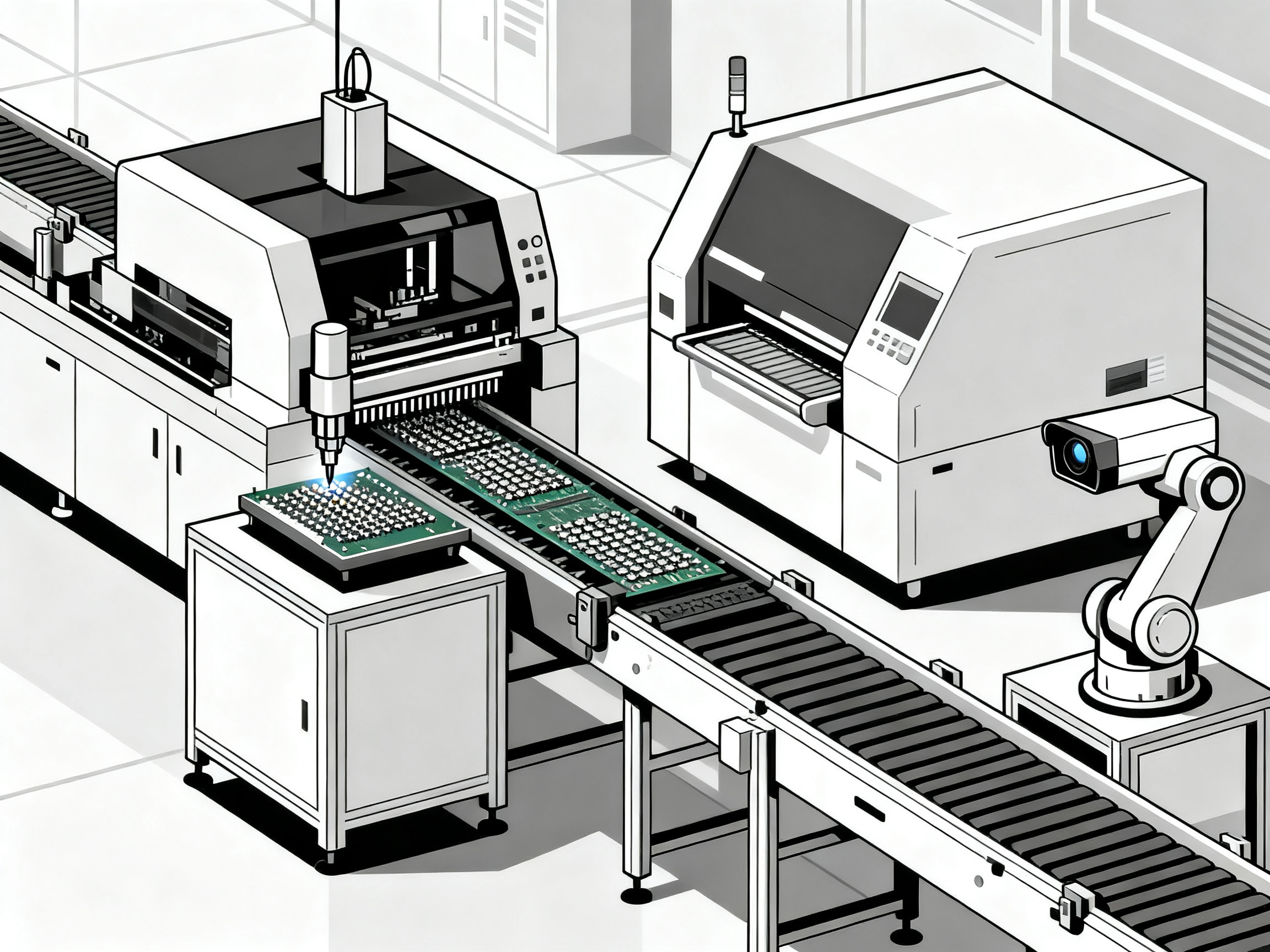
Surface mount technology, often called SMT, is now a standard part of high-volume PCB assembly process planning in 2026. Instead of inserting leads through holes, SMT places components right onto the board surface. That saves space and helps support faster assembly.
SMT equipment usually includes:
- Solder paste printers
- Pick-and-place machines
- Reflow ovens
- PCB conveyor systems
- Inspection systems
I’ve seen teams hit a wall with older setups, especially when output climbs and downtime starts eating the week. That is usually when better SMT equipment stops feeling optional.
For companies building at scale, systems from firms like Sun and Mountain SMT can fit naturally into this picture. Their reflow ovens, wave soldering machines, and conveyor systems are built for shops that need high-precision production equipment with less manual interruption. That matters to EMS and OEM teams trying to keep lines moving without trading away quality.
If you’re asking how assembly soldering station setups compare with full SMT lines, the short answer is this: stations help people do precise bench work, while SMT equipment helps factories do repeatable production work. Both matter. They just solve different problems.
So, which approach makes sense?
Usually, manual and automatic soldering work best together, not against each other.
A small lab or repair team may lean on hand soldering tools and soldering techniques for control and flexibility. A growing manufacturer may need surface mount technology lines and stronger soldering equipment to keep up with demand. And many real factories use both. That hybrid model is common for a reason.
If you are planning a new line, upgrading old hardware, or just trying to understand what assembly soldering techniques fit your workflow, start with volume, board type, and quality targets. Then match the tools to the job. Not the other way around.
If you want a closer look at automated line behavior, this YouTube video on PCB assembly and soldering is a helpful visual starting point.
As this guide continues, we will break down the PCB assembly process, cover better soldering techniques, and look at the tools that make clean, reliable joints much easier to get. If your team is weighing new SMT equipment in 2026, that next step could save more time than you think.
Step-by-step PCB assembly process (from blank design to ready-to-ship board)
Let’s walk through how a plain circuit board turns into a packed and tested product in 2026. It’s not just plopping parts down and zapping things—there’s a flow here.
1. Design and layout
Everything starts with a good plan. Folks use design software like Altium Designer or Eagle to sketch out the PCB, place parts, and draw the electrical pathways. The exact tools don’t matter as much as getting the circuit clear, neat, and easy to build.
After the design, a file called Gerber gets sent to the PCB fabricator. This file shows exactly where every trace and hole should go. I’ll admit, I once sent the wrong version for a rush order—never again. Always double-check that file before sending!
2. Preparing materials and components
Next up, teams gather all the needed parts. This means checking the bill of materials (BOM), buying components, and making sure everything matches the design. If a resistor is supposed to be 10k ohms, someone has to make sure it’s not 1k by accident. Mistakes here haunt you later on.
For high-volume projects, parts get sorted with pick-and-place feeders. For small jobs, folks sometimes hand-sort into trays. Either way, everything needs to be nearby and labeled.
3. Solder paste printing (for SMT boards)
Surface mount technology (that’s SMT equipment for short) makes things fast. A solder paste stencil is laid over the PCB, and paste gets pushed through tiny holes where each part will sit. No paste blob–no connection.
4. Component placement
Robots, called pick-and-place machines, grab each tiny component and set it on the sticky solder paste. For simpler or low-volume jobs, humans do it with tweezers. The goal? Each part in its spot, no mix-ups.
5. Soldering
This is where soldering techniques count. Boards go into a reflow oven to melt the paste, or through wave soldering for bigger, through-hole parts. Think of wave soldering as a mini solder river under the board. Both ways, the joints get strong and solid. For repairs or special tasks, the trusty soldering iron is always on standby.
Pro Insight: Quality assurance isn’t just an afterthought. Catching errors before boards leave the line means less troubleshooting later. I like to do a quick spot check after every single soldering run, even if the machines are having a “perfect day.”
6. Inspection and testing
Every finished board gets checked. Some teams use fancy automated optical inspection (AOI) machines with cameras to catch tiny flaws. Others use magnifying lamps or checklists. X-rays can scan for hidden problems, like cold joints or missed solder inside big chips.
Then comes functional testing. Boards connect to test rigs that zap signals in and check what comes out. If it works, it’s good to go. If not, grab the soldering station and troubleshoot.
7. Final assembly and packaging
When boards pass, they get cleaned (to remove leftover flux or dust), then packed with any cases, screws, or cables needed. In some shops, this means heat-shrinking or boxing for shipping.
Tools at every stage
Here’s a quick look at what tools show up during the journey:
| Stage | Main Tools |
|—————————-|—————————————–|
| Design & Layout | Design software (Altium, Eagle) |
| Stencil Printing | Solder paste, stencil printer |
| Placement | Pick-and-place machines, tweezers |
| Soldering | Reflow oven, wave solder, soldering iron|
| Inspection & Testing | AOI, X-ray, magnifiers, test jigs |
| Packaging | Cleaning stations, boxing gear |
Sun and Mountain SMT gear is built for a lot of these steps—from paste printers to reflow ovens to conveyor belts. A line with machines handling most stages can crank out more boards, with fewer surprises and less downtime (something I wish I’d had back when fixing boo-boos by hand every Friday night).
Quality checks: No skipping!
The teams that build boards right always double-check their work. QA (that’s quality assurance) isn’t just about the last inspection—it’s woven into every part of the process. Here’s how:
- Visual checks after every main stage
- Testing every single finished board
- Using software to track parts and results
- Feedback loops if a problem pops up repeatedly
Some teams use in-circuit testing (ICT) that pokes and measures electricity right on the board, while others stick to functional test benches. If you spot a pattern of flaky results, stop the line and fix it fast.
Want to watch this for yourself? This video walkthrough gives a solid visual of real-life PCB assembly and what can go wrong or right.
If you’re scaling up, starting out, or just want cleaner solder joints, stick around. Next, we’ll get into practical soldering techniques and tips for making every joint last.
Soldering techniques and best practices
Here’s where things get hands-on. Not all soldering is equal, and in 2026, we have more ways than ever to join those tricky little leads to their PCBs. The end goal? Strong, reliable solder joints that hold up during real-world use (and maybe even survive a toddler’s enthusiastic drop test).
Let’s talk biggest players in the soldering world:
1. Reflow Soldering
Reflow is the go-to for mass production and surface mount tech (that is SMT equipment country). Solder paste goes on first; then the board heads into a reflow oven. It heats up in stages until the paste melts and locks each component in place. Super clean, super repeatable. Machines like those from Sun and Mountain SMT make this almost boring (in a good way — you want predictability in production).
Common issues:
- Cold joints from wrong temp profiles
- Bridges where paste splats between pins
- Tombstoning (little parts stand up, one end in the air… like tiny electrical zombies)
Quick Troubleshooting:
- Double-check oven profiles if joints look frosty or dull
- Check stencil cleanliness and alignment
- Use plenty of inspections — a bad solder bridge is sneaky
2. Wave Soldering
This is typical for through-hole components, or when SMT and old-school parts mix. The board glides over a moving “wave” of melted solder. Quick, neat, and a ton of boards can run in minutes.
Common issues:
- Solder skipping some pins
- Solder shorts from too much flux or flawed board layout
- Heat damage if line speed is off
Quick Troubleshooting:
- Adjust conveyor speed and keep the wave clean
- Mind flux application and avoid pooling
- Regularly inspect for burnt or uneven joints
3. Hand Soldering
Ah, the artful bit. Some situations call for hands plus a trusty soldering iron (or sometimes a gun for beefier stuff). This is where skill swings the outcome, not just the gear.
Best practices:
- Use a clean, tinned tip
- Heat the pad and component lead evenly before feeding solder
- Don’t move the joint before it sets (that’s how you get cold cracks)
- Less is more — a big solder blob isn’t stronger
Common issues:
- Too little heat: weak or unreliable joints
- Too much heat: lifted pads, fried parts, or cooked boards
- Sloppy application: solder balls bouncing everywhere
Quick Troubleshooting:
- If joints look frosty, try more time or a fresh tip
- Overheated pads? Lower the heat and use less pressure
- Practice with scrap boards before working on something that matters
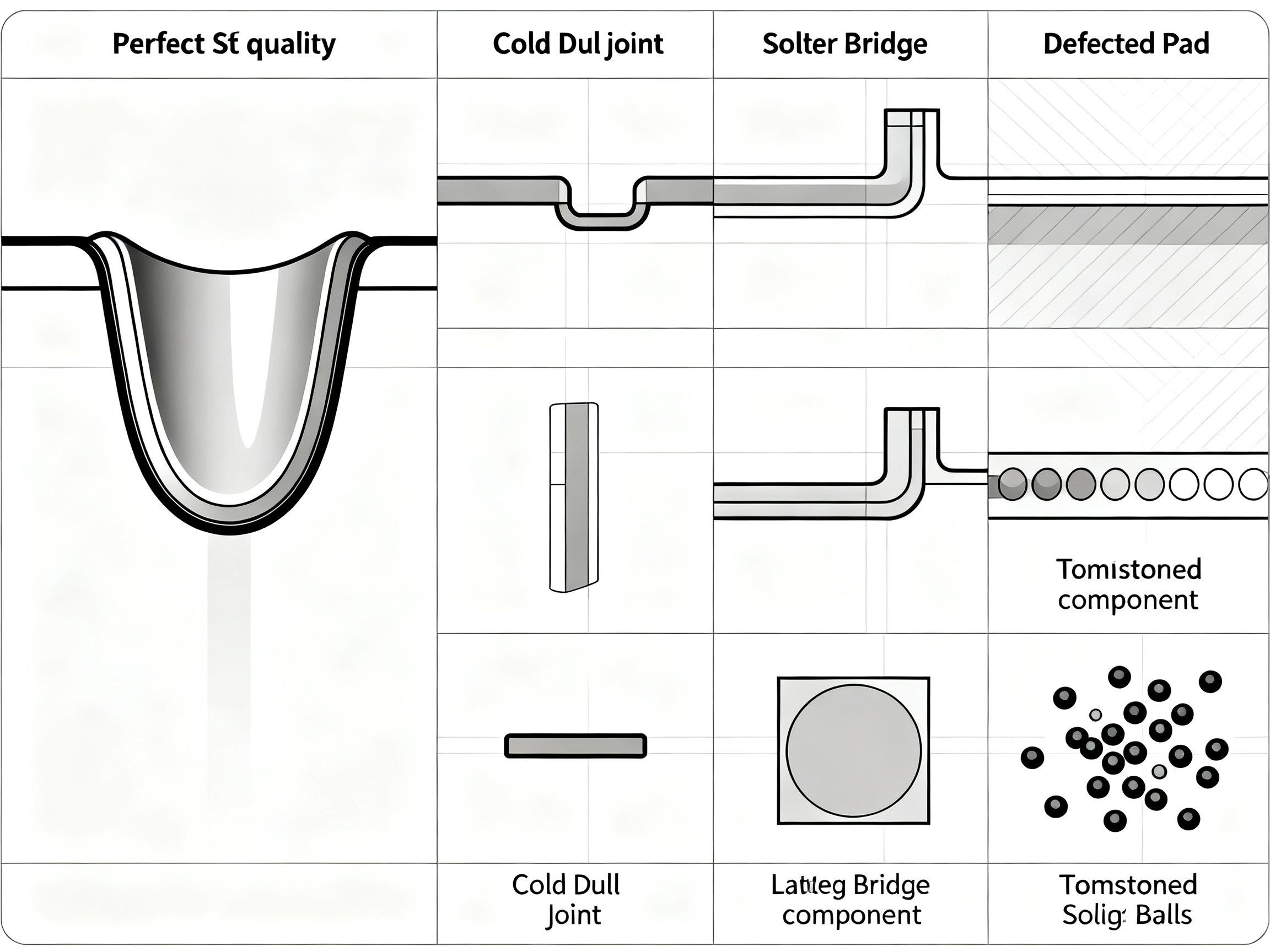
Expert Tip: For high-quality solder joints, watch your heat and flow. Good solder should look shiny and smooth, not dull and lumpy. Take breaks and check your work every batch — even skilled hands make mistakes.
The “why isn’t this working??” moments
Most soldering fails fall into a few buckets:
| Issue | What It Looks Like | Quick Fix |
|———————|————————————–|———————————————-|
| Cold Joint | Dull, grainy, sometimes moves | Reheat and add flux/solder |
| Solder Bridge | Connected pins, short circuit | Remove with iron, use solder wick |
| Lifted Pad | Pad peeling off PCB | Lower heat, less time, let pad cool |
| Tombstoning | SMT part lifts, one end in air | Check oven profile and part alignment |
| Solder Ball | Tiny balls of solder scattered | Clean work area, adjust solder technique |
And honestly, sometimes weird stuff just happens. Maybe your solder type wasn’t quite right for the parts, or a draft made one oven edge cool faster. Here’s what I tell new folks: if you’re troubleshooting the same flaw every run, stop and figure out why before you try the fix for the fifteenth time in a row.
Old-skool or new-skool — does it matter?
In 2026, the technique you pick is about what the job needs. Got a dozen custom boards for science class? Hand solder, all day. Need 10,000 boards by Tuesday at 2pm? Automatic reflow is your friend.
Shiny gear can help, but it only works if you know the basics: manage heat, prep materials, inspect early and often. If you aim for those, you’re already ahead of the curve in PCB assembly and soldering.
Ready to see what tools make or break a shop? That’s next — with some hands-on advice from years of burned fingers and perfect joints.
Choosing the right tools for PCB assembly and soldering
This part can save you money, or waste a lot of it.
A lot of teams buy tools too early, or buy the wrong ones because a catalog made them look shiny. I get the temptation. New gear looks like the answer to everything. But in pcb assembly soldering, the best tool is usually the one that fits your board mix, production volume, staff skill, and repair needs.
I’ve seen lines improve fast just by changing one weak tool in the chain instead of replacing everything at once. That might mean a better soldering station at the bench, a cleaner stencil printer, or a reflow oven with steadier zone control. Small swap. Big difference.
Start with the basics: what assembly soldering kits and stations should include
If someone asks what assembly soldering kits are, think of them as grouped tools for hand work, repair, prototypes, and training benches. A solid starter kit for electronics manufacturing work often includes:
- Temperature-controlled soldering iron
- Solder wire or paste, based on the job
- Flux pen or paste flux
- Tip cleaner and spare tips
- Tweezers
- Solder wick or desoldering pump
- Magnifier or inspection lamp
- ESD-safe mat and wrist strap
Now, what assembly soldering stations bring to the table is a bit more control. A station usually includes the iron, power unit, temperature setting, and safety features in one setup. That matters because how assembly soldering station performance feels in real use often comes down to heat recovery. If the tip cools too much during contact, joints get ugly fast.
What to look for in hand soldering tools
Not every bench needs the fanciest gear. But cheap tools can make good work weirdly hard.
Here’s a simple way to compare options:
| Tool | Best use | What to check before buying |
|—|—|—|
| Soldering iron | Quick repairs and light bench work | Stable tip temperature, grip comfort, replaceable tips |
| Soldering station | Daily assembly and rework | Heat recovery, temp control, ESD safety, standby mode |
| Soldering gun | Heavy wires or larger joints | Fast heat-up, but too rough for many small PCB jobs |
| Hot air rework tool | Removing or replacing SMT parts | Airflow control, nozzle choices, temperature range |
| Microscope or magnifier | Inspection | Clear view, lighting, enough room to work under it |
If you are still wondering what assembly soldering iron means in practice, it is your direct-contact heat tool for making or reworking joints by hand. And how assembly soldering gun works is similar at the core, it heats a tip to melt solder, but it usually runs hotter and bulkier, which can be too much for fine PCB pads.
From Our Experience: The right soldering tool is not always the most expensive one. For bench work, we usually get better results from a steady temperature-controlled station than from a high-heat tool that swings all over the place.
How to choose tools by job type
This is the part many buyers skip. Don’t.
Different work needs different soldering equipment. Here’s a cleaner way to match them:
| If your work looks like this | You probably need this |
|—|—|
| Prototypes, one-off builds, repair jobs | Soldering station, hand tools, microscope |
| Small batch mixed boards | Bench stations plus selective automation |
| High-volume SMT lines | Paste printer, pick-and-place, reflow oven, conveyors |
| Through-hole heavy production | Wave soldering machine or selective soldering system |
| Fine-pitch rework and BGA touch-up | Hot air station, preheater, inspection system |
So, what assembly soldering system should a growing factory consider in 2026? Usually one that mixes manual flexibility with automation where repeatability matters most. That is why a lot of EMS and OEM teams keep both bench stations and SMT equipment on the floor. One handles exceptions. The other handles volume.
Modern tool upgrades worth watching in 2026
OK, this next part is actually pretty cool.
Modern soldering equipment is getting smarter, especially on factory lines. Better sensors, cleaner thermal control, and easier machine-to-line integration all help reduce downtime. Not magic. Just better engineering.
For example, some newer reflow ovens and wave soldering machines are built to hold steadier process settings across long runs. That matters more than people think. In my experience, when a line drifts even a little, defects pile up quietly. Then everyone acts surprised at 4:40pm.
Sun and Mountain SMT fits naturally here for teams that need scalable, high-precision production equipment. Their reflow ovens, wave soldering machines, and PCB conveyor systems are a practical match for mid-to-large electronics manufacturing lines that want fewer manual slowdowns and easier integration into existing workflows. If your team is balancing cost, uptime, and output, that kind of equipment tends to make more sense than patching old hardware forever.
Quick checklist before you buy
Before picking any pcb assembly and soldering tool, ask these five questions:
- What board types do we build most often?
- Are we doing prototypes, repair, or volume production?
- How much operator skill do we have on staff today?
- Will this tool work with our current SMT equipment and line layout?
- What downtime cost us last quarter, and will this purchase really help?
Funny enough, the best buying question is often the least exciting one: what problem are we actually fixing?
A simple buying guide
Here’s a fast summary you can share with your team:
| Need | Best first step |
|—|—|
| Better hand joints | Upgrade to a temperature-controlled soldering station |
| Faster SMT throughput | Review printer, placement, and reflow bottlenecks |
| Cleaner through-hole output | Check wave solder settings or selective solder options |
| Less rework | Improve inspection tools and process control |
| Easier scaling in 2026 | Add automation where repeatability matters most |
The short version? Buy for the job you do every week, not the dream setup you might need someday.
And if you’re mapping out a new production line or replacing worn-out hardware, this is a good moment to compare your manual benches with modern SMT equipment options. The right mix can help you build faster, fix less, and sleep a little better too.
Final thoughts on pcb assembly soldering in 2026
PCB assembly and soldering is part skill, part process, and part tool choice. You need good people, a clear PCB assembly process, and soldering techniques that match the board in front of you. That is true for one repair on a bench and for 20,000 boards on a production line.
If you came here asking what assembly soldering is, how assembly soldering is done, or what assembly soldering techniques make the biggest difference, the answer is pretty simple. Good results come from matching the method to the work, checking quality early, and using tools that stay steady under pressure.
For smaller jobs, a dependable soldering station and careful hand work may be enough. For larger electronics manufacturing teams, stronger SMT equipment and automated soldering equipment can help cut mistakes, raise output, and keep deadlines from turning into chaos. If that sounds like where your team is headed, it may be worth taking a closer look at production-ready systems from providers like Sun and Mountain SMT.
If you want the next step, review your current process and mark where defects, delays, or rework happen most often. Start there. That is usually where the smartest upgrade lives.
The best PCB assembly results usually come from discipline, clean process control, and tools that your team can trust day after day. In a field where one weak joint can stop the whole product, that kind of consistency is not just nice to have, it is the job.
How SMT Equipment Complements Traditional Assembly Methods
Turns out, blending SMT equipment with older assembly tactics can work wonders for just about any electronics team in 2026. I used to think it was all-or-nothing, but experience says otherwise.
Picture a classic bench setup: You have a technician with a soldering iron, a pile of resistors, and a magnifier lamp. Now imagine adding SMT gear (like reflow ovens or pick-and-place robots). They don’t compete—they actually fill each other’s gaps. SMT lines take care of lots of the tiny surface-mount parts super fast, while manual soldering deals with tricky bits, repairs, or one-off components that need extra care.
This approach means you’re not stuck waiting for a single method to do it all. Instead, you get the best of both: flexibility for custom work and rock-solid consistency for anything that repeats. (And headaches from fried pads drop way down when machines handle the tedious stuff!)
Real-World Advantages: Why Mix SMT With Manual?
Blending the two ways pays off in a few big ways. Here are the main ones:
- More Speed, Less Rework: SMT equipment (like the machines from Sun and Mountain SMT) place hundreds of tiny chips in minutes—no human can match that. But if a part shows up wrong or gets damaged, you can swap back to the bench, fix the flaw, and move on. It’s like using a power drill for big jobs but keeping a hand screwdriver for the weird corners.
- Stronger Precision: Machine control means every solder joint gets made with the same curve, amount of paste, and heat, every time. Humans get tired (or distracted by lunch). SMT lines just keep going. Still, some components won’t fit the regular pattern, so that’s when steady hands still matter.
- Easy Upgrades and Growth: When teams add SMT gear, they don’t need to ditch their old tools. Instead, they plug them in alongside—so, if demand suddenly triple, they’re covered. A lot of EMS and OEM factories (especially those in crowded production hubs in East Asia and North America) use hybrid lines to jump volume fast, or to handle a mix of job types in the same week.
Industry Case Studies: What Success Looks Like
In 2026, companies that scale best tend to mix and match.
One contract manufacturer in Shenzhen started with five manual benches and only did 25 boards a day. After adding a Sun and Mountain SMT reflow oven and conveyor system, they bumped output to 400+ boards daily without hiring new staff. But they still use the benches for high-value prototypes and last-minute fixes, so nothing gets left behind. Another team in Texas upgraded from legacy wave soldering systems to newer machines that fit right into their existing workflow—so, downtime dropped by 30 percent, and they cut defects by nearly half in three months.
Sure, it’s not magic. It takes planning, training, and a bit of patience. But the payoff is more boards, fewer headaches, and happier customers who don’t call back with surprises.
Bottom line? SMT equipment doesn’t replace the art and skill of classic soldering—it just lets teams do more, mess up less, and keep up with whatever order comes next.
If you’re curious about what hybrid lines look like, check out this YouTube video that walks through a modern assembly process. It’s the best way to see the perks (and pitfalls) before you buy any new gear.
Future Trends in PCB Assembly and Soldering: Where We’re Headed in 2026
All right, let’s peek into the future (which, honestly, is now in 2026) and see how things are shaking up in PCB assembly soldering. Sure, technique and steady hands still matter, but tech’s moving fast—and the boards are keeping up.
Smarter Machines, Fewer Mistakes: Tech Advancements You Can Actually Feel
The biggest upgrade right now? Smarter SMT equipment is everywhere. Factory lines use machines that literally learn on the fly. AI-driven inspection cameras spot flaws in real time, correcting bad placements or solder joints before a whole run gets wasted. It used to take hours to spot a problem. Now, an operator gets a ping on their tablet after just a few minutes. This ProtoExpress overview talks about how newer assembly lines are folding in these tools to catch mistakes early and keep output high.
Plus, automation isn’t just a buzzword. Conveyor systems, reflow ovens, and placement robots from companies like Sun and Mountain SMT are getting software updates, not just hardware tweaks. They’re syncing with shop-wide resource planning (ERP) and even supply chain apps to predict what you’ll run out of before it hits the bench. Neat, right?
The AI Factor: Not Just for Sci-Fi
Machine learning is slipping into nearly every step. AOI machines (yep, that’s “automated optical inspection”) can check for solder joint issues, misplaced resistors, or even flux smears. And they learn as they go—if a certain defect pattern pops up, the system teaches itself how to spot it faster next run. There are lines where operators see defect rates cut in half thanks to smarter, self-correcting stations.
AI even shows up in preventive maintenance. This year, more lines are scheduling automatic downtime for cleaning, tip replacement, or heat calibration based on what sensors pick up, not a set calendar. Less unplanned pause, more working hours.
Connecting the Dots: Real Integration Across the Factory
Here’s a simple truth: systems are finally talking to each other. Instead of a bunch of machines doing their own thing, newer SMT equipment lines connect every tool—printers, ovens, AOI, and conveyors—so you can pull up live progress, job data, and quality stats on a single dashboard. Who actually enjoys running down a line to update each station by hand? No one.
And because those systems are networked, changes in a process step (like needing to swap out a part) ripple through automatically. You’re less likely to misplace a component, skip a step, or repeat a mistake from last Tuesday.
What’s Next? Predictions for PCB Assembly and Soldering
If you’re wondering what comes after smarter lines and AI helpers, here are a few trends already showing up in 2026:
- Voice-guided workstations: No more clunky paper checklists—operators get real-time instructions and feedback via headsets or smart glasses.
- Cloud-based process control: Whole lines can be managed, monitored, and tweaked from anywhere. Someone in Austin can check stats on a line in Singapore.
- Predictive supply ordering: Factory AI sees faster output, orders more parts before downtime even starts looming.
- Greener production: Eco-friendly (lead-free) solder and lower-energy machines are becoming the default, not just “nice to have.” Because a cooler plant means cheaper bills and happier regulators.
Sun and Mountain SMT is already offering lines with these plug-and-play upgrades. If your company’s grown tired of manual headaches and downtime drama, these modern SMT systems make that leap a lot less painful.
Final Thought: The Human Touch Still Matters
Even as factories fill with robots, someone still has to train, monitor, and tweak the line. Folks who know how assembly soldering is done by hand usually make the best tech trainers. After all, machines don’t grab a coffee when a power supply acts weird—people do.
So, the big trend? Marrying high-tech gear with old-school know-how. With the right combo, teams are cranking out more boards, burning through fewer mistakes, and getting home before midnight rush hour.
If you’d like a closer look at how these new systems actually run, check out this YouTube walkthrough of a modern PCB assembly line. It’s a great way to see today’s technology in action without stepping foot in a factory.
PCB assembly and soldering will always need skilled hands, good process, and solid teamwork. But in 2026, with the latest SMT equipment, AI, and cloud control, building quality into every board is finally much easier than it used to be.
Expert Summary and Strategic Recommendations for PCB Assembly Soldering in 2026
We’ve covered a lot, but let’s make the big takeaways simple and useful. PCB assembly soldering in 2026 isn’t just about getting joints to stick. It’s about turning a blank board into a tool that actually works—no weak connections, no wasted parts, no late-night troubleshooting.
Key Insights You Don’t Want to Miss
- Solid assembly depends on matching your process to the job. There’s no universal setup—what works for repairs at a school lab won’t hold up in a factory that pushes out 5,000 boards a day.
- Soldering techniques matter more than fancy gear. Shiny new SMT equipment won’t fix messy methods, but solid basics will make even old tools reliable.
- Blending manual and automatic methods saves time, money, and nerves. Hybrid approaches let teams use hands where precision counts and robots where speed rules.
- Strong quality checks at every stage keep your boards running and your customers happy. It’s way easier to stop a bad joint before shipping than after.
- The best tools are the ones your team actually needs (not the catalog ones everyone drools over).
Expert Advice for Upgrading PCB Assembly Techniques
If you’re thinking of raising your game, here’s how:
- Start by mapping your workflow. Where do defects happen? Where does downtime spike? Plug the gaps first.
- For small-scale, focus on operator skill and steady soldering stations. For bigger lines, invest in SMT equipment with good integration (like Sun and Mountain’s reflow ovens, wave solderers, and conveyor systems).
- Don’t rush into full automation unless your volume and repeatability justify it. Mix bench repairs, small assemblies, and selective automation for best results.
- Build in QA from the start. Every main stage deserves a spot check, not just end-of-line inspection.
- Upgrade inspection tools. AOI cameras, X-ray scanners, and test jigs aren’t luxuries—they’re must-haves if you’re building for high reliability.
Expert Tip: Push for smarter, self-correcting lines. In 2026, AI-driven SMT equipment and networked systems can flag flaws, track output, and streamline process tweaks. That keeps production steady and mistakes less likely.
Strategic Recommendations for SMT Equipment Implementation
If your team is ready for SMT upgrades, here’s what usually works best:
- Pick machines that can scale up but still fit your current workflow. Don’t get stuck waiting months for custom hardware tweaks—choose plug-and-play options where possible.
- Keep at least one traditional setup for repairs and one-off builds. You’ll need them for exceptions, troubleshooting, or custom parts.
- Train staff on both manual and automated methods. Hybrid teams can avoid bottlenecks and deal with weird jobs on the fly.
- Integrate AOI, conveyor systems, and cloud dashboards. Real-time data beats chasing paper logs and missed steps.
- Factor in downtime costs. Ask vendors about maintenance intervals, support options, and software upgrades before buying.
- Stay flexible—today’s customer needs can change quick. Make sure your production line can handle sudden rush orders, new board types, or last-minute changes.
Bottom Line: Why It Matters More in 2026
PCB assembly soldering is a moving target. The real win is staying ahead—tech smarter than yesterday, people sharper than last quarter, tools that don’t break when you need them most. Sun and Mountain SMT gear fits right into this push for high-precision production equipment, especially for companies that demand speed and reliability and hate downtime.
If you’re setting up a new electronics manufacturing line, or just tired of fighting old bench tools, review your process, spot weak points, and build around tools that your team can actually use day in and day out.
Need proof it’s worth the trouble? Hybrid factories in places like Shenzhen and Austin are putting out more boards, with fewer errors, and keeping customers happy—without dropping the human touch. If you want to see these systems in action, check out this YouTube walkthrough of a real PCB assembly line.
You don’t have to be a mega-factory to get results. Just keep your soldering basics strong, your QA steady, and your upgrades practical.
PCB assembly and soldering will always need skilled hands, solid process, and real teamwork. In 2026, with smarter SMT equipment, AI-driven checks, and cloud control, building better boards gets easier every month. Stick with what works, and keep reaching for the next improvement.