
“> Published: 26 May 2026
Reading Time: 15 minutes
Reviewer: Dr. Alex Chen, PhD in Mechanical Engineering, Expert in Manufacturing Technologies
You know that sinking feeling when a finish looks perfect at first, then fails after cure? Maybe the powder coat comes out uneven. Maybe the paint takes too long. Maybe a Cerakote run misses the mark on color or hardness. It happens more than most teams want to admit.
If you’re trying to figure out what batch curing oven is best, you’re not really shopping for a metal box that gets hot. You’re choosing a system that shapes product quality, cycle time, energy cost, and day-to-day stress on your floor. And in 2026, that choice matters even more because manufacturers are under pressure to cut defects, move faster, and still keep costs in check.
This guide is here to make that choice easier. We’ll look at batch curing ovens for powder coating, paint, and Cerakote, the common problems buyers run into, and why precision curing and oven efficiency tend to decide whether an oven helps your line or slows it down. If you’ve been asking what batch curing oven to use, what batch curing oven do I need, or what batch curing oven for Cerakote makes sense for your workflow, you’re in the right place.
Jace Liu is an experienced engineer with expertise in manufacturing technology. With over 15 years in the field, Jace specializes in equipment solutions that enhance efficiency and precision. His focus on innovative curing systems adds invaluable insights to this topic.
Why batch curing ovens matter for powder coating, paint, and Cerakote
Batch curing ovens are used when parts need controlled heat in grouped runs instead of a nonstop conveyor flow. That makes them a smart fit for shops with mixed part sizes, changing schedules, or lower-to-mid production volume. According to International Thermal Systems’ overview of batch ovens, these ovens are widely used for powder coating cure, paint curing, drying, baking, preheating, and other thermal finishing jobs.
For powder coating, a powder coating oven has to hold stable heat long enough for the coating to flow and cure evenly. For paint, a paint curing oven needs the right airflow and timing so parts don’t end up with soft spots, overbake, or surface flaws. And for Cerakote, the stakes can feel even higher because finish quality is tied closely to heat consistency, part prep, and repeatable cure cycles.
That’s why so many buyers search for the best batch curing oven for paint or the best batch curing oven for Cerakote instead of just looking at chamber size and price. They’re trying to avoid rework. Fair enough.
The biggest problems buyers run into
Here’s the deal, most oven buying mistakes start before anyone asks for a quote.
Teams often choose a batch curing oven based on outside size, max temperature, or budget alone. But the real fit depends on your parts, your coating chemistry, your racks, your cure window, and your expected throughput. Research from IQS Directory’s curing oven guide points to the same issue: temperature uniformity, airflow, process match, and operating cost all affect final curing quality.
The most common problems usually look like this:
| Challenge | What it causes | Why it matters |
|—|—|—|
| Poor process fit | Wrong cure profile, coating defects | The oven may not match the material or finish |
| Weak temperature uniformity | Hot spots, cold spots, uneven cure | Parts in the same load can come out different |
| Incorrect chamber size | Bottlenecks or wasted energy | Too small hurts output, too large raises cost |
| Low oven efficiency | Higher power or fuel bills | Operating costs add up fast |
| Hard integration | Delays and operator frustration | New gear can disrupt a working line |
| Missing compliance checks | Safety and audit risks | Standards matter, especially in industrial settings |
And yeah, there’s a money side too. A cheaper oven can cost more over three years if it runs long cycles, wastes energy, or creates reject parts. Because nothing says “good investment” like paying twice for the same job.
Precision and efficiency are not nice extras
A lot of buyers ask what batch curing oven for paint or Cerakote should have. My short answer? Precision first, efficiency second, and both need to be real, not marketing fluff.
A curing process only works when temperature, airflow, dwell time, and load setup stay inside a tight range. If heat distribution is uneven, coatings may not fully cure. If the oven overshoots or drifts, cycle results can change from one batch to the next. Research from Despatch on curing ovens for manufacturing teams explains that curing ovens are chosen for controlled thermal processing because consistency directly affects product results.
In simple terms, precision curing helps you get the same finish on Monday morning and Friday afternoon. Oven efficiency helps you do that without burning time and money.
If your plant already works with automation-heavy equipment, this may sound familiar. Companies that use advanced production gear, including highly controlled thermal systems like Sun and Mountain SMT equipment, already know the pattern: tight control and smooth integration usually beat brute force every time. Different industry, same headache. When a machine is precise and easy to fold into the line, people trust it more and use it better.
So as we go deeper, keep one question in mind: what batch curing oven is best for your actual workload, not some perfect factory on paper?
Understanding batch curing technology
If you’re still wondering what batch curing oven is best, it helps to start with the basic split: batch vs continuous. They sound similar. They are not.
A batch curing oven runs one load at a time. You load parts, close the door, run the cure cycle, unload, then start again. A continuous system moves parts through on a conveyor, usually with less stopping and less hands-on handling. For shops doing mixed work, odd part sizes, or smaller runs, batch curing tends to be the better fit. For very high-volume lines making the same part all day, continuous ovens often win on throughput. A helpful breakdown from Reliant Finishing Systems on batch vs continuous curing ovens lines up with what most production teams see on the floor.
Here’s the simple version:
| Oven style | Best for | Trade-off |
|—|—|—|
| Batch curing oven | Mixed parts, flexible schedules, lower upfront cost | More loading time between cycles |
| Continuous curing oven | High volume, repeat jobs, automated flow | Higher system cost and less flexibility |
So, what batch curing oven to use if your plant handles powder coating, paint, and Cerakote in the same week? Usually batch. It gives you room to adapt without rebuilding the whole line. That’s a big deal when customer demand changes fast, which in 2026 feels like basically every month.
We have seen this same logic play out in other manufacturing gear too. Teams that invest in precise, easy-to-fit systems, whether that’s a curing oven or tightly controlled SMT equipment from Sun and Mountain, usually get better operator buy-in and fewer workflow headaches. Different machine, same lesson.
Core parts that actually matter
Let’s make the oven itself less mysterious.
A batch curing oven usually includes an insulated chamber, a heating source, an air circulation system, controls, safety devices, and exhaust or venting components. Standard temperature capability often reaches up to 316°C, or 600°F, depending on the build, and control accuracy can get close to ±1.0°C based on published batch oven specs from Blue M.
That sounds technical, but the buying questions are pretty plain:
- Does the chamber fit your parts, racks, and airflow needs?
- Does the heating system recover fast after loading?
- Do the fans move air evenly across the whole load?
- Can the controls store repeatable recipes?
- Do the safety systems match your material risk?
If even one of those answers is shaky, the oven may look fine on paper and still fail in real production.
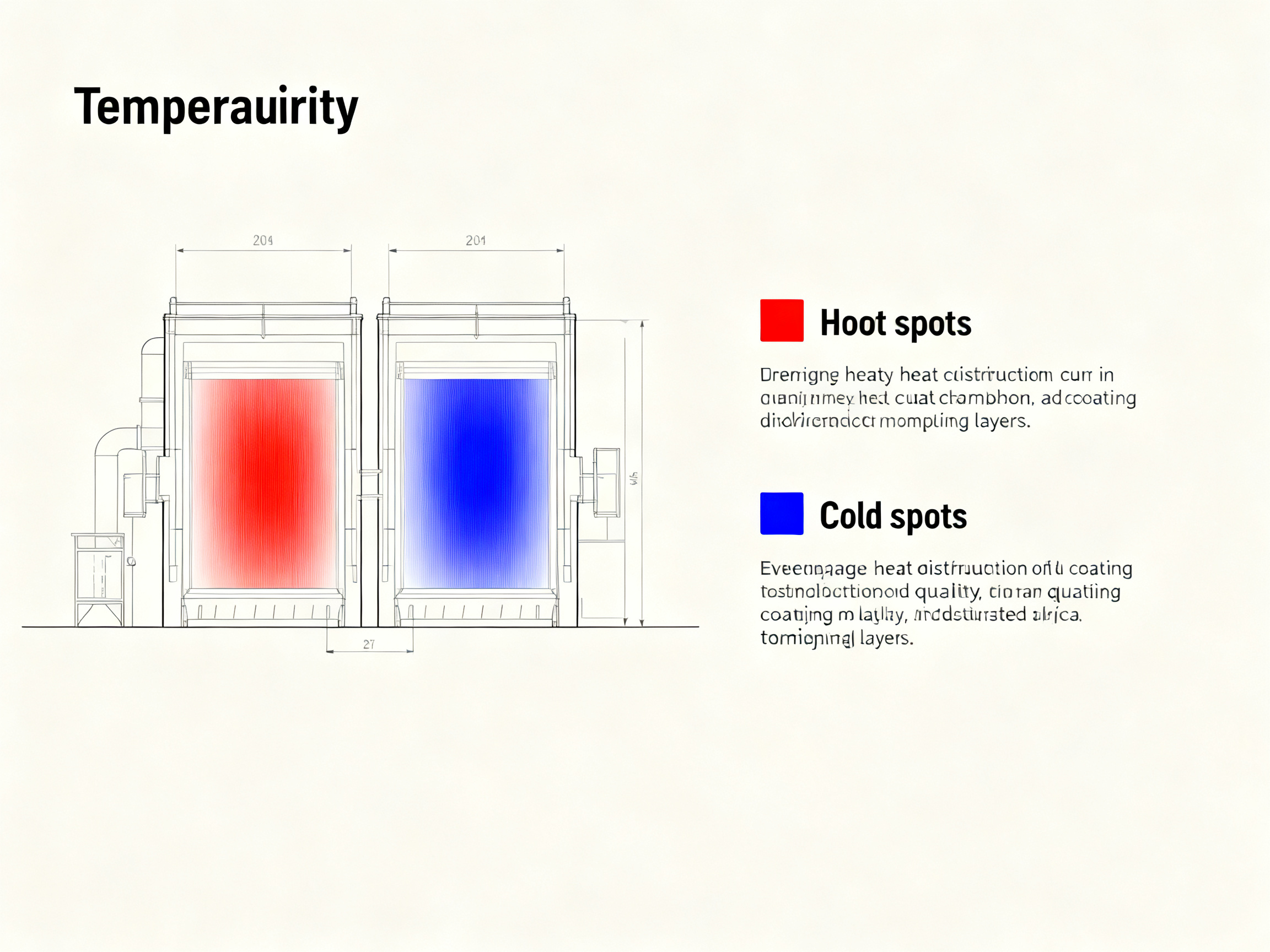
Expert Tip: Precision in curing is not just about hitting a set temperature. It is about holding the right temperature, across the full load, for the full cycle.
And that last part gets ignored all the time. A display can say 180°C while one back corner of the chamber is nowhere close. That’s where uneven gloss, weak adhesion, and surprise rework creep in.
Why precision curing changes everything
Precision curing sounds fancy. Really, it means repeatable results.
If you’re asking what batch curing oven do I need, the better question may be this: how tight is my cure window? Powder coating, liquid paint, and Cerakote all react badly to sloppy heat control, just in slightly different ways. Powder can under-cure and chip early. Paint can skin over too fast or stay soft underneath. Cerakote can miss the target on hardness, color stability, or finish consistency.
I’ve seen buyers focus on max heat first, then regret it later. We cared less about the number on the brochure and more about whether the oven held steady after a full rack rolled in, because that is where real production starts to tell the truth.
Control matters in three areas:
- Temperature accuracy
The oven should hit the programmed setpoint without wide swings. - Uniformity across the chamber
Heat should stay even from top to bottom, front to back. - Airflow consistency
Moving air has to support the cure, not create hot spots and cold spots.
Miss one, and the curing process gets shaky.
This is why the best batch curing ovens are rarely the cheapest units in the quote pile. They tend to have better insulation, smarter airflow design, stronger controls, and clearer recipe management. Not flashy. Just dependable.
For Cerakote work especially, this matters a lot. If you’re choosing what batch curing oven for Cerakote fits your shop, look closely at control stability and chamber uniformity before anything else. The best batch curing oven for Cerakote is usually the one that gives you the same result on part number one and part number forty. Boring answer, I know. But boring is good when you’re trying to avoid scrap.
And if your focus is liquid finishes, the same thinking applies. The best batch curing oven for paint should support even airflow, reliable dwell time, and simple recipe control so operators are not guessing halfway through a run.
Comparing different oven types
Now for the part buyers usually jump to first.
Not all batch ovens heat the same way, and that shapes cost, speed, and process fit. The most common choices are electric, gas, and infrared. Each one has a place. Each one also has a catch.
| Oven type | Where it tends to fit best | Upside | Watch-out |
|—|—|—|—|
| Electric batch curing oven | Precision-focused curing, smaller to mid-size loads | Good control, clean heating | Power cost can add up |
| Gas batch curing oven | Larger loads, higher heat demand | Lower operating cost in some plants | More facility and venting checks |
| Infrared oven | Fast surface heating, some coating lines | Quick response | Not ideal for every part shape or load depth |
For mixed finishing work, electric ovens are often the safest starting point because they give strong control. Gas ovens can make a lot of sense if your production volume is bigger and utility costs favor gas. Infrared can be great, but only when the part geometry and coating process truly match it. Otherwise, it can feel like buying a race car to drive to the grocery store.
When teams ask what batch curing oven for paint or powder coating is smartest, I usually tell them not to pick by fuel type alone. Start with the finish requirements, load mass, part shape, cure window, and shift pattern. Then work backward.
We tested equipment with very different load shapes, and the surprise was how often airflow mattered more than raw heater power. A stronger heater did not fix poor circulation. It just made uneven results happen faster.
Comparing heat distribution methods
Fuel type matters, sure. But heat distribution is where a lot of curing wins or fails.
Most batch curing ovens use convection, radiant heat, infrared, or a mix of these. Convection moves heated air around the chamber, which is why it is common in a batch curing oven for powder coating and paint. Radiant heat sends energy from hot surfaces toward the part. Infrared works more directly and can speed up surface response. Research on curing performance shows that better heat distribution tends to cut defects, shorten cycles, and improve energy use, especially when cold spots are removed and the whole load sees more even heating as explained here.

Here is the practical view:
| Heat method | Best fit | Good at | Can struggle with |
|—|—|—|—|
| Convection airflow | Powder coating oven, paint curing oven, mixed loads | Even chamber heating | Slow response on very dense parts |
| Radiant heat | Specific shapes, targeted heating | Direct energy transfer | Less even on complex loads |
| Infrared heating | Fast surface cure, lighter parts | Quick startup and response | Shadowing on deep or irregular shapes |
| Hybrid systems | Mixed process needs | Balance of speed and uniformity | More setup choices to manage |
If you’re asking what batch curing oven to use for mixed production, convection or a hybrid setup is usually the safe answer. Why? Because most shops need repeatability more than they need bragging rights on warm-up speed.
Assessing oven efficiency
This is where buying gets real.
An oven may look great in a quote, then quietly drain money every week. So if you’re trying to decide what batch curing oven is best, check oven efficiency with the same care you give chamber size or max temperature.
The metrics worth watching are pretty simple:
- Energy use per cycle
- Preheat time
- Recovery time after loading
- Cure time per batch
- Temperature stability during the full run
- Output per hour or per shift
- Idle or standby energy use
That sounds like a lot, but it all points to one thing: how much usable work the oven gives you for the energy and time you spend.
We learned this the hard way during equipment reviews. A unit with a strong spec sheet looked great until full racks went in, the recovery time slipped, and the curing process stretched longer than expected. On paper, solid. On the floor, not so much.
Pro Insight: Efficiency metrics only matter if you track them under real load. Empty-chamber numbers can look nice and still miss what happens during daily production.
The efficiency checks that actually help
If you want a fast shortlist, start here.
| Metric | Why it matters | What to ask vendors |
|—|—|—|
| kWh or fuel use per cycle | Tells you operating cost | What is usage at my cure temp and load size? |
| Preheat time | Affects startup waste and scheduling | How long from ambient to setpoint? |
| Recovery time | Shows how the oven handles fresh loads | How fast does it return to cure temp after loading? |
| Uniformity | Impacts part quality and scrap rate | What chamber uniformity is documented? |
| Throughput per shift | Connects oven choice to real output | How many loads can I finish in 8 hours? |
| Insulation quality | Reduces heat loss | What wall build and door sealing are used? |
Funny enough, insulation is one of the least flashy buying points, and one of the most useful. Better insulation helps with stability, lowers waste, and often makes the whole oven feel calmer to run. Operators notice that stuff.
For 2026 buyers, energy prices and downtime risk make efficiency a bigger deal than ever. The best batch curing ovens are not always the hottest or fastest units. They are the ones that hit your cure window, keep cycle times steady, and avoid turning every shift into a guessing game.
Evaluating oven integration with current systems
A new oven does not live alone. It has to fit your building, your people, your carts, your racks, your schedule, and the line steps before and after cure.
That is why oven integration can make or break a project.
If you’re asking what batch curing oven do I need, part of the answer is this: the one your team can actually install, run, and support without wrecking the rest of the workflow. A useful guide on workflow planning makes the same point, that new equipment works best when it is treated as part of the full process, not just a stand-alone purchase see this workflow advice.
Here are the big checks before you buy:
- Floor space and door swing
- Utility access, electric or gas
- Venting and exhaust needs
- Rack, cart, and forklift movement
- Loading height and ergonomic fit
- Recipe controls and operator training needs
- Data logging, alarms, and control handoff
- Safety and compliance review
We have seen integration issues pop up in weird places. Not in the heat system. In the doorway width. In the cart height. In the fact that one operator had to walk an extra 40 feet every cycle. Small problems stack up fast.
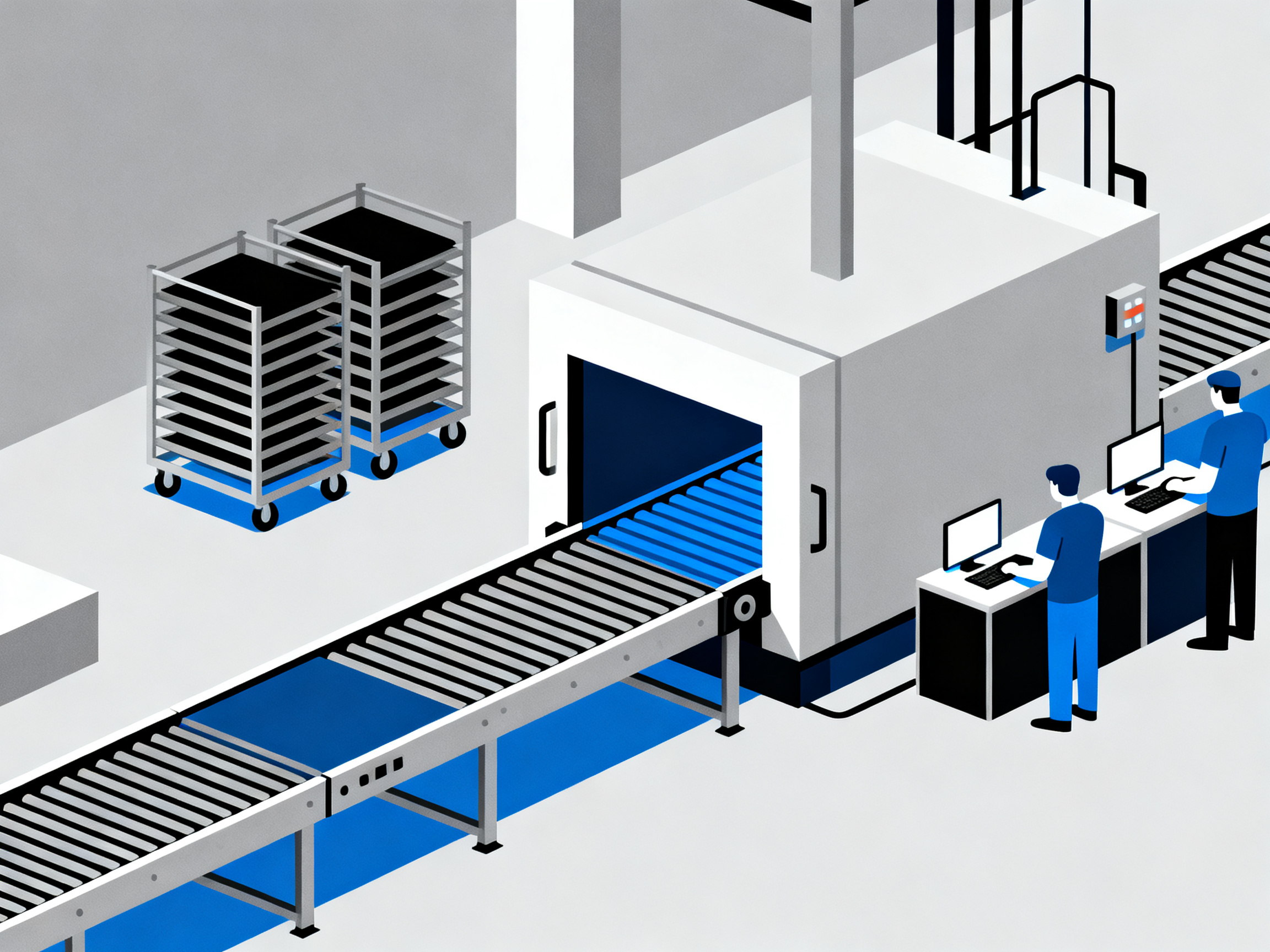
From Our Experience: The smoothest installs happen when teams map the full operator path before the oven arrives. The rough installs usually skip that step.
Why control fit matters more than people think
In 2026, buyers often focus on automation, and that makes sense. But a fancy control panel is not the same as a good fit.
The best batch curing oven used in a real shop tends to have controls people can learn quickly, recipes they can recall without hunting through menus, and alarms that make sense at 6:15 on a rushed Tuesday morning. If the system is too clunky, people work around it. And when that happens, precision curing starts to drift.
This is one reason the Sun and Mountain SMT story feels relevant here. Their equipment is built around precision, automation, and easy line fit, which is exactly what manufacturers want from advanced curing systems too. Different process, same goal. Less friction, more repeatable output.
Safety and compliance checks you should not skip
This part is not glamorous. Still matters a lot.
A batch curing oven can involve high heat, electrical systems, airflow controls, and in some cases solvent or combustible vapor concerns. So before you lock in a purchase, check the standards tied to your process and site.
Common items include:
- NFPA 86 for ovens and furnaces
- NFPA 70 for electrical work
- OSHA expectations for workplace safety
- UL, cULus, ETL, or cETLus listings
- Local fire and building code review
If your workload includes flammable or combustible materials, the compliance picture gets stricter fast. That is not the time for guessing or vague promises in a brochure.
Ask vendors for documentation. Ask your facility team to review utility and safety needs early. Ask who is responsible for startup checks. Boring questions, yes. Smart questions too.
So, what batch curing oven is best?
Here is the honest answer: the best batch curing oven is the one that matches your parts, your finish, your cure profile, and your daily workflow.
For powder coating, look hard at chamber uniformity, airflow design, and recovery after loading. For paint, focus on stable heat, gentle and even circulation, and recipe control. For Cerakote, put precision first, because repeatability tends to matter more than almost anything else.
If you want a quick buying filter, use this:
- Define your coating and cure window.
- Measure real part sizes, rack sizes, and load mass.
- Pick the heating style that fits your process.
- Verify temperature uniformity and airflow design.
- Compare oven efficiency under real load, not empty-chamber claims.
- Check oven integration with your floor, utilities, and staff.
- Review safety and compliance before final approval.
That is usually enough to separate a smart purchase from an expensive headache.
And if your team also values precision, automation, and dependable production fit across other equipment, it may be worth looking at suppliers that think this way across the whole factory, including partners like Sun and Mountain SMT for adjacent manufacturing systems. Good operations rarely come from one perfect machine. They come from equipment that works well together.
The short version? Do not buy on price alone. Do not buy on max temperature alone. Buy for repeatable results.
If you’re narrowing options now, build a side-by-side scorecard for curing quality, oven efficiency, controls, integration, service, and long-term operating cost. That extra hour of planning can save months of frustration later.
The right oven should make your process feel steadier, not more complicated. That is the goal.
Jace Liu’s view is simple: the best curing system is the one that gives your team repeatable quality, predictable cost, and a workflow that people can trust every day. In manufacturing, that kind of consistency is what turns equipment from a purchase into a real advantage.
Key Takeaways for Choosing the Right Batch Curing Oven in 2026
OK, now for the part every decision-maker secretly scrolls down to: What actually matters when picking the best batch curing oven for powder coating, paint, or Cerakote? If you want the Twitter version, here it is: focus on what really matches your workflow, not just the specs and sales talk.
Let’s hit the highlights one more time (just in case you skipped ahead, no judgment):
- Match oven to your actual needs. Not just the biggest or hottest. Look at part sizes, rack setup, cure profile, finish type, and what your shop really runs on a busy day. That’s how you avoid buyer’s regret.
- Double down on temperature uniformity and airflow. Uneven heat is the shortcut to rework and frustration. The best batch curing ovens share one thing—they nail chamber stability, so results are the same every cycle.
- Efficiency isn’t hype; it’s money in your pocket. Oven efficiency (think recovery time, energy per batch, solid insulation) often matters more long-term than the purchase price. Check real-world numbers, not just the empty-oven claims.
- Plan for real integration. Fancy features are nice, but if the oven doesn’t fit your line, your carts, or your operator habits, it can slow the whole process down. Test fit, walk the space, and picture your actual workflow.
- Prioritize easy-to-use controls. Complicated menus slow operators and lead to recipe errors. Go for recipe storage, simple setpoint recall, and clear alarms that actually help in the moment.
- Don’t overlook compliance or safety. Make sure your oven meets 2026 standards like NFPA 86, OSHA, UL or ETL, and anything else your plant or region requires. Safety checks are boring, but they matter—a lot.
- Compare ovens side-by-side, not just by brand. Make a quick chart for cure quality, uniformity, efficiency, cost, and integration. Sometimes a model that “looks cheaper” ends up costing more in energy, downtime, or scrap.
Jace’s Quick Recommendations for 2026 Oven Buyers
- If you need to process different finishes, stick with batch ovens for their flexibility. Only go continuous if your work is high-volume, same-part, same-finish, non-stop.
- For powder coating: get a batch curing oven that’s known for airflow balance and quick recovery after loading. Don’t settle for hot spots.
- For paint: look for gentle, consistent airflow and steady, accurate recipe management. The best batch curing oven for paint should make your finish look great on every part.
- For Cerakote: prioritize the best batch curing oven for Cerakote with chamber uniformity and control accuracy. Tiny variations? They show up in finish quality. Don’t learn this the hard way.
- For anyone integrating with high-automation lines or advanced SMT equipment (hello, Sun and Mountain folks), check control handoff options and data logging support. Seamless integration equals less manual tracking, less headache. Equipment that fits together runs better together. See more on integrating manufacturing workflows in 2026.
Expert Tip: If you don’t have time to demo three ovens side-by-side, push your vendor for a full video walk-through under load, including start-up, rack loading, curing, and unload. Real conditions matter 100 times more than empty-chamber specs.
Next Steps: How to Decide (and Avoid Buyer’s Remorse)
- List your real parts, finishes, and loads. Don’t shop blind.
- Visit, watch, or simulate a real run. Empty specs are never the full story.
- Score your shortlist against workflow fit and integration ease.
- Factor in downtime, support, and long-term energy use. The extra hour now saves months (and money) later.
- Talk to operators as well as engineers. They know what slows production.
There’s no magic cure-all oven. But there is a best-fit oven for your situation in 2026.
If you’re in a larger outfit with advanced SMT or manufacturing tech, take a page from the Sun and Mountain SMT playbook—prioritize gear that integrates cleanly, runs predictably, and supports your line. Usually, results improve when you treat the equipment as part of a system, not a solo star.
Thinking of upgrading your thermal equipment across the shop? Consider leveraging established automation partners like Sun and Mountain SMT for guidance on broader integration and future-proofing your production workflow.
Dr. Alex Chen’s Conclusion: The best batch curing oven isn’t always the one with the most features or the highest temperature rating. It’s the one that matches your daily workflow, delivers consistent results, and keeps costs predictable over time. Rely on real-world metrics, focus on integration, and treat your oven as a critical link in the manufacturing chain. That’s how you future-proof your finishing line for 2026 and beyond.