
Published: 22 May 2026
Reading Time: 10 minutes
Reviewer: [Placeholder for reviewer’s name and credentials]
Introduction: The Importance of Wave Soldering Machines in Modern Manufacturing
Think about the last time you dropped your phone. Or bumped your laptop against something. The device probably kept working just fine.
That reliability comes from how circuit boards are assembled inside. Specifically, how tiny metal connections called solder joints are made to hold everything together.
Wave soldering machines are a big part of that story. These machines have been soldering electronic components to circuit boards at high speed since the 1950s, and they still power a huge portion of the electronics you use every day.
So why are we talking about them in 2026? Because even with all the newer assembly methods out there, wave soldering remains essential for specific types of components that just won’t work any other way.
In this guide, I’ll walk you through everything you need to know. You’ll learn about the different types of wave solder machines, how the actual soldering process works, where these machines show up in real manufacturing, and what other options exist if you’re comparing solutions for your own production line.
My goal is simple: by the end of this article, you’ll understand wave soldering well enough to make informed decisions about whether it’s the right fit for your manufacturing needs.
About the Author: This guide draws on extensive experience with SMT equipment and electronics manufacturing technology. Simon Scrapes has worked with manufacturers worldwide, helping them evaluate and implement wave soldering solutions that balance quality, speed, and cost efficiency.
Let’s get started.
About the Author
Simon Scrapes has spent more than 20 years working alongside electronics manufacturers to optimize their soldering operations. As founder of Sun and Mountain SMT, he helps production teams across multiple continents balance quality, speed, and cost efficiency. His writing draws from real factory floor experience to break down complex manufacturing technology into practical guidance.
Understanding Types of Wave Soldering Machines
Here’s something that surprises a lot of people: not all wave soldering machines work the same way. If you’re hunting for a wave solder machine for sale, you’ll quickly discover there are several distinct categories, each built for different production needs.
Let’s break down what you’ll actually encounter when comparing options.
Traditional Wave Soldering vs. Selective Wave Soldering
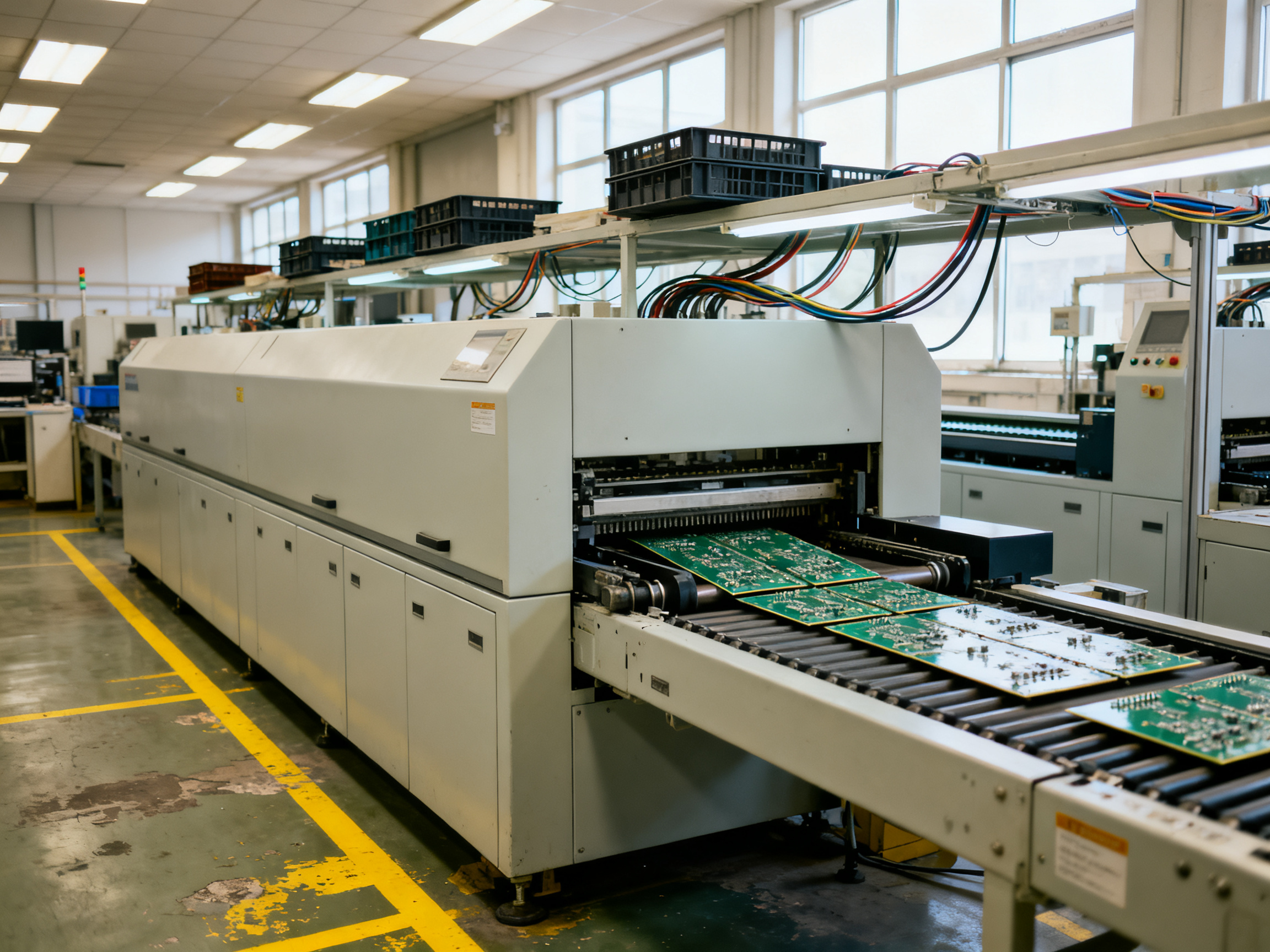
Traditional wave soldering machines create one continuous wave of molten solder. The board passes over this wave and all exposed leads get soldered in a single pass. It’s fast, it’s efficient, and it’s been the backbone of through-hole assembly for decades.
Selective wave soldering machines work differently. Instead of soldering everything at once, these systems target specific pins or zones on the board using a custom program. This matters when you have mixed boards that combine surface mount components with through-hole parts. You can selectively solder the through-hole sections without disturbing the already-placed SMT components.
Selective systems tend to cost more upfront, but they dramatically reduce defects on complex boards.
Inline versus Batch Machines
Inline wave soldering machines process boards continuously as they move through the system on conveyor belts. This setup works best for high-volume production lines where you’re running thousands of identical boards daily. The machine never stops, which means your throughput stays consistently high.
Batch machines process boards in groups. You load several boards, run them through, then unload and reload. This approach suits lower-volume operations or facilities that make many different products in smaller quantities. The flexibility can be worth the slightly slower pace depending on what you’re building.
Automation Levels
Semi-automated machines need an operator to load and unload boards manually. The soldering process itself runs automatically, but human hands handle the physical movement. These machines cost less upfront and work well for companies just getting started with wave soldering.
Fully automated systems integrate directly into production lines with robotic loading and unloading. Boards feed in from one end and exit finished on the other. Labor costs drop significantly at scale, though the initial investment is higher. For companies running continuous shifts, the automation typically pays for itself within a couple of years.
Expert Tip: When evaluating machine types for high-volume production, consider your board complexity first. Simple through-hole boards usually justify traditional wave systems, while mixed-technology assemblies often benefit more from selective capabilities, even at a premium.
What About Lead-Free?
Modern electronics manufacturing increasingly requires lead-free solder due to environmental regulations. Nitrogen-inerted wave soldering systems prevent oxidation during the process, which is critical when working with lead-free alloys. Most wave solder machine manufacturers now offer nitrogen-capable variants as standard options rather than premium add-ons.
The Wave Soldering Process and Best Practices
Now that you understand the machine types, let’s look at what actually happens inside a wave soldering system. The process follows a predictable sequence, and getting each stage right matters more than you might think.
The Four Stages
Fluxing comes first. A liquid flux gets sprayed or foamed onto the bottom of your PCB. This stuff cleans oxidation from metal surfaces and helps solder flow properly. Skip this step and you’ll get cold joints, bridges, or incomplete connections. No bueno.
Preheating comes next. The board moves through a heating zone that brings it up to temperature gradually. This drives off solvents in the flux and reduces thermal shock when the board hits the molten solder. Most machines have adjustable preheat temperatures, and finding the right setting for your specific board thickness and component mix takes some trial and error.
The solder wave itself is stage three. The board rides over a pump-generated wave of molten tin-lead or lead-free alloy. Surface tension pulls the solder up against the leads and pads, creating the joint. Contact time with the wave usually runs between 2-5 seconds depending on the application.
Cooling finishes the process. The board exits the wave and moves through a cooling section where the solder solidifies. Rushing this stage causes thermal stress, so we usually aim for a controlled cooldown over 30-60 seconds.
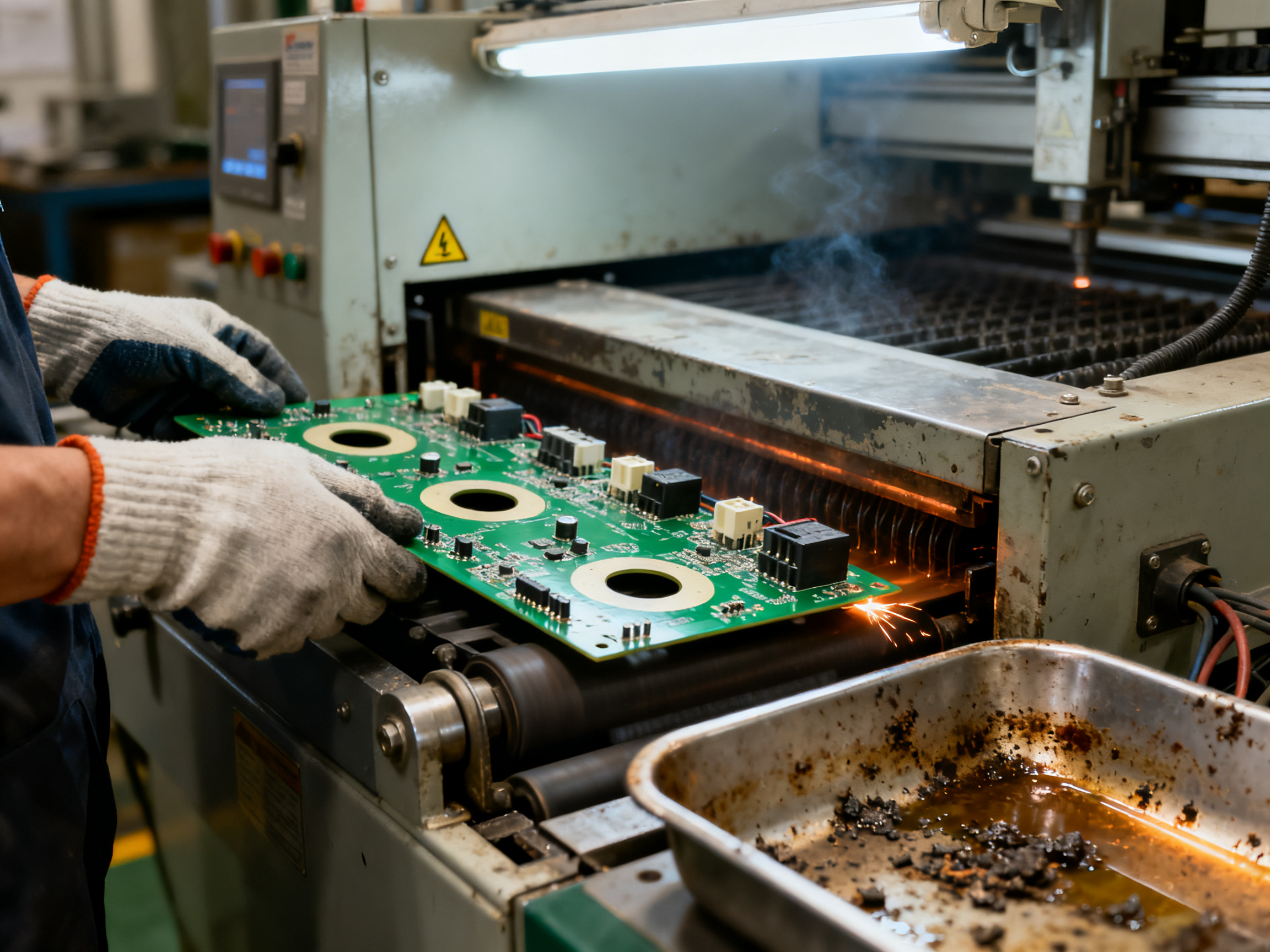
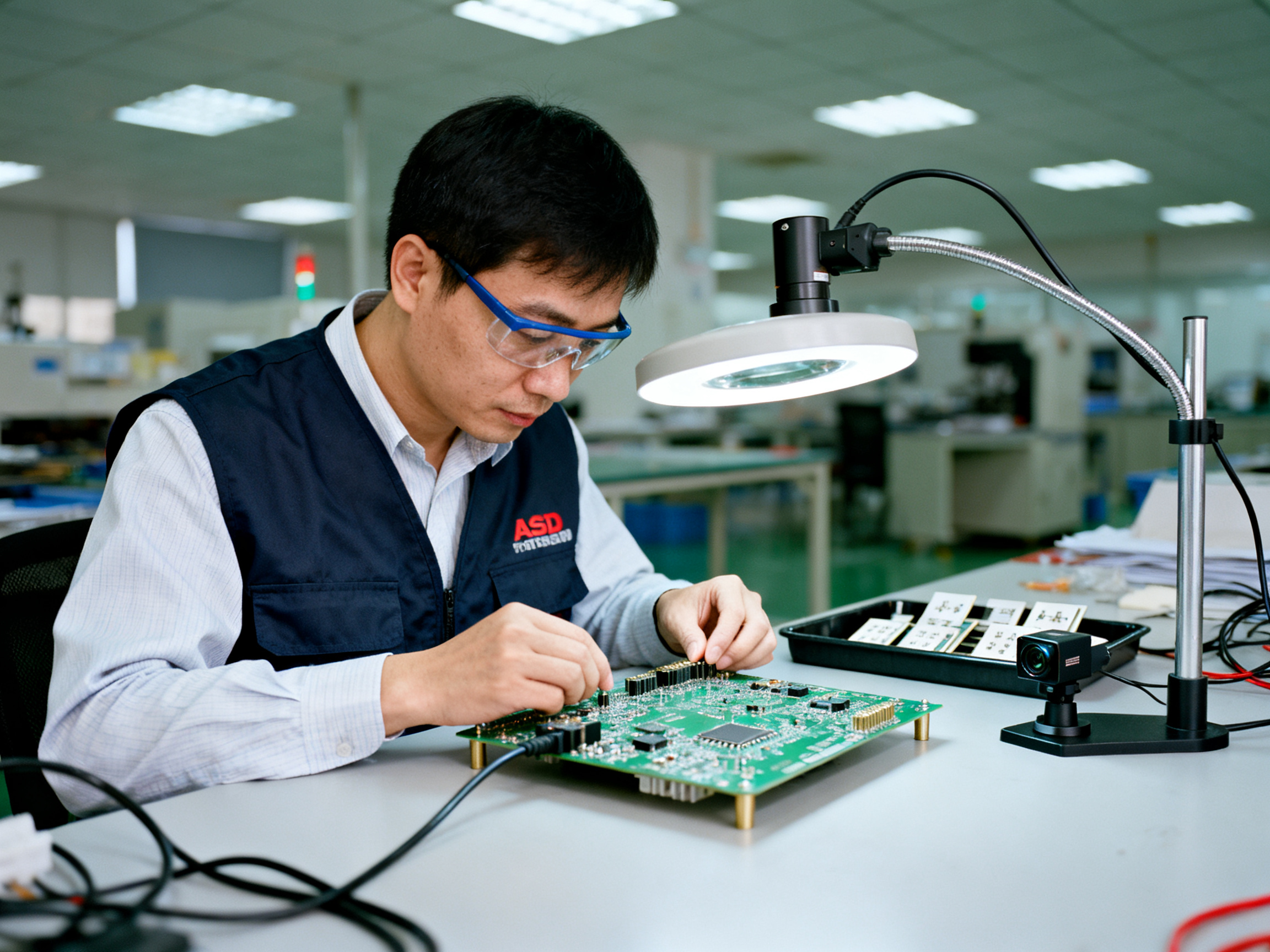
Pro Insight: Quality control during wave soldering starts with visual inspection of every board after cooling. Look for bridges between pads, insufficient fillets, or spots where solder didn’t wet properly. We recommend AOI (automated optical inspection) for high-volume lines, and X-ray inspection for BGA and hidden joint verification.
Common Mistakes to Avoid
Here’s where factories lose money. Board warping happens when preheat temperatures run too hot, especially with larger panels. The fix is straightforward: lower your preheat setting or slow down the conveyor speed.
Solder bridging occurs when too much solder accumulates between pads. This usually signals problems with your wave height, conveyor angle, or flux application. In my experience, checking the wave height first saves a lot of debugging time.
Cold joints look dull and grainy instead of smooth and shiny. They happen when the board didn’t reach proper temperature before hitting the solder wave. Bump up that preheat.
Quality Control Measures
Testing solder joints properly protects your reputation. Visual inspection catches obvious defects, but you need more for critical applications. Pull testing measures joint strength by actually pulling components off boards to verify solder integrity. Cross-sectioning cuts sample boards and magnifies the joint structure under a microscope. This destructively confirms what you can’t see from the outside.
Most wave solder machine manufacturers in 2026 offer integrated inspection options alongside their equipment. If you’re running a serious production line, combining your wave solder system with automated optical inspection makes financial sense.
Applications of Wave Soldering Machines in Electronics Manufacturing
So where does wave soldering actually show up in the real world? Let me give you some concrete examples.
Consumer Electronics
Your TV, computer, or kitchen appliances contain circuit boards assembled with wave soldering. Large through-hole components like power connectors, switches, and big capacitors get soldered this way. These parts need strong mechanical connections that can handle repeated plugging and unplugging over years of use. Wave soldering handles this beautifully.
Automotive Industry
Cars run on electronics, and those electronics need rock-solid solder joints. Engine control units, dashboard displays, and lighting systems all go through wave soldering. The automotive world demands extreme reliability because a failed joint could mean a safety system goes down. Wave soldering delivers the durability these applications require, and automotive manufacturers remain some of the biggest buyers of wave solder equipment.
Industrial and Medical Equipment
Factory automation controllers, medical imaging devices, and industrial power supplies all rely on wave soldered circuit boards. These products need to survive harsh environments and run continuously for years without failure. You cannot beat wave soldering for this combination of durability and throughput.
Why Scale Matters
Here is the thing about wave soldering that keeps it relevant in 2026: it handles massive volume efficiently. A single wave solder machine for sale can process thousands of boards per shift with consistent quality. When you are building millions of identical units, that speed and consistency add up fast.
Different wave solder machine manufacturers offer systems designed for specific production volumes, from entry-level batch units to fully automated lines running 24/7. The investment scales with your needs.
Companies using robotic soldering machines alongside wave systems often dedicate the wave equipment to high-volume through-hole production while robotics handle selective work on complex boards. This hybrid approach maximizes the strengths of each technology.
Pro Insight: Real-world success with wave soldering often comes from matching the machine type to your actual production mix. Consumer electronics companies typically run dual-wave systems for their highest-volume products while using selective equipment for boards that mix through-hole and surface mount components.
Alternatives to Wave Soldering Machines: Comparing Technologies
Wave soldering isn’t your only option. Depending on what you’re building and how much you’re making, other approaches might actually work better for your situation.
Dip Soldering Machines
Dip soldering is exactly what it sounds like. Instead of passing boards over a wave, you literally dip them into a pot of molten solder. This method works well for boards with just a few joints that need soldering, or for prototype runs where setting up a full wave system would be overkill.
The trade-off is consistency. Dip soldering typically produces less uniform results than wave methods, and it requires more operator skill to get right. But for low-volume work, a dip soldering machine costs a fraction of what you’d spend on a wave system.
Robotic Soldering Machines
Robotic soldering machines have come a long way. Modern systems can place a soldering iron with crazy precision, making them ideal for complex boards with tight spacing. We’ve seen factories use these for boards where wave soldering would risk damaging nearby surface mount components.
The big advantage here is repeatability. A robot does the same thing every single time, which matters when you need that kind of consistency. The downside is speed. Robots are slower than wave systems for straightforward through-hole work, and the equipment costs more upfront.
When Alternatives Make More Sense
Here’s a practical breakdown. If you’re running prototype batches of 10-50 boards, dip soldering often beats configuring a wave system every time. For complex boards that mix surface mount and through-hole parts, selective robotic soldering lets you target specific joints without touching the SMT components already in place.
Heat-sensitive parts also tip the scales toward alternatives. Wave soldering exposes the whole board to high temperatures, which can damage some components. Robotic or dip methods give you more control.
Hybrid Systems
Many manufacturers run hybrid setups. They use wave soldering for high-volume through-hole production, then route selective work to robotic stations or manual operators. This approach lets each technology do what it does best.
The hybrid model makes sense when your production mix varies. Maybe 80% of your work is straightforward through-hole that suits wave processing, but 20% involves complex boards requiring selective attention. No single machine handles both optimally, so combining technologies fills the gap.
Pro Insight: When evaluating alternatives to wave soldering, focus on your actual production mix rather than theoretical flexibility. We often see companies overspend on robotics when their real volume works fine with a well-tuned wave system, or stick with manual methods when automation would cut their labor costs significantly.
The right choice depends on your specific situation. High-volume, simple through-hole production usually favors wave systems. Complex, low-volume, or mixed-technology work often justifies the investment in robotic or dip alternatives.
Choosing the Right Wave Solder Machine Manufacturer
Picking a wave solder machine manufacturer feels overwhelming when you’re staring at dozens of options. I’ve watched companies spend months comparing specifications without ever making a decision. Let me cut through that noise.
What Actually Matters When Evaluating Manufacturers
Durability sits at the top of my list. Your wave solder machine will run thousands of hours under harsh conditions. Look for machines built with stainless steel solder pots, robust heating elements, and quality pumps that won’t need replacement every six months. Ask manufacturers about component lifespans and what their machines typically run before major service.
Efficiency metrics tell you how production-ready a system really is. Pay attention to warm-up time, conveyor speed ranges, and maximum throughput per hour. Some wave solder machine manufacturers advertise impressive numbers that only work under ideal conditions. Get real-world benchmarks from current customers if you can.
Cost-effectiveness isn’t just the purchase price. Factor in maintenance requirements, spare parts availability, and energy consumption. A cheaper machine that needs constant repairs or uses twice the nitrogen will cost more over its lifetime.
Top Manufacturers Worth Considering
Several established wave solder machine manufacturers dominate the market in 2026. Sun and Mountain SMT builds systems known for reliability and reasonable maintenance intervals, which matters when you’re running production around the clock. Their machines integrate well with existing lines, and their support team responds quickly when issues come up.
Other players like Kurtz Ersa and BTU International offer premium features at higher price points. These work well if you need cutting-edge process control or specific lead-free capabilities. For companies watching budgets closely, manufacturers in the mid-tier range often deliver solid performance without the premium branding.
Where to Find Wave Solder Machines for Sale
Direct from manufacturers remains the most reliable path for new equipment. You get warranties, installation support, and someone to call when things go wrong. Many wave solder machine manufacturers in 2026 offer financing options that spread costs over time.
Used equipment marketplaces exist too, but approach with caution. Refurbished systems from reputable dealers can offer good value, especially if you’re starting out with machine soldering PCB operations. Just verify the machine’s service history and get guarantees in writing.
Pro Insight: Real-world success with wave soldering often comes from matching the machine type to your actual production mix. Consumer electronics companies typically run dual-wave systems for their highest-volume products while using selective equipment for boards that mix through-hole and surface mount components.
Trade shows in 2026 let you see equipment running live before committing. This hands-on evaluation often reveals things that spec sheets cannot capture.
Conclusion: Leveraging Wave Soldering Machines for Maximum Efficiency
Wave soldering has been keeping pace with electronics manufacturing for over 70 years now, and here’s the thing: it’s not going anywhere. The combination of speed, consistency, and cost efficiency makes it irreplaceable for through-hole production at scale.
If you’re weighing options for your production line, remember that wave soldering delivers its biggest wins when you’re running high volumes of boards with straightforward through-hole components. The technology handles massive throughput without breaking a sweat, and modern machines require surprisingly little hands-on attention once properly configured.
That said, wave systems aren’t always the answer. Selective robotic soldering machines have carved out serious market share for complex mixed-technology boards. Dip soldering still makes sense for prototypes and small batches. The smart move is matching the method to your actual production mix rather than defaulting to whatever’s most familiar.
Looking ahead to trends in soldering technologies for 2026 and beyond, expect continued improvements in lead-free process control and energy efficiency. Nitrogen-capable systems are becoming standard rather than premium features, which helps with both environmental compliance and joint quality. AI-assisted process monitoring is starting to appear on newer equipment, letting manufacturers catch defects before they become costly problems.
If you’re ready to explore wave solder machine manufacturers for your facility, start by getting quotes from at least three suppliers. Ask hard questions about maintenance schedules, spare parts availability, and what their machines typically run before requiring major service. The right partner makes all the difference.
About the Author: Simon Scrapes has spent more than 20 years working alongside electronics manufacturers to optimize their soldering operations. As founder of Sun and Mountain SMT, he helps production teams across multiple continents balance quality, speed, and cost efficiency. His writing draws from real factory floor experience to break down complex manufacturing technology into practical guidance.