> **Published:** 22 May 2026
> **Reading Time:** 10 minutes
> **Reviewer:** Simon Scrapes, Founder
---
You know that nervous moment before a board run starts, when everyone looks at the oven and hopes the profile is right? If you've worked around SMT, you've probably felt it. One small mistake in reflow soldering temperature can turn a clean build into a pile of cold joints, tombstones, solder balls, or warped boards.
That is why the [reflow soldering temperature profile](https://www.chuxin-smt.com/how-reflow-oven-temperature-profiles-impact-pcb-solder-quality/) matters so much. It is not just about hitting one hot number. It is about guiding the PCB through preheat, soak, reflow, and cooling in the right order, at the right speed, for the paste, parts, and board you are using. Get that balance wrong, and defects show up fast. Get it right, and production feels a lot smoother.
In this guide, we will walk through what reflow soldering temperature means, how a reflow temperature profile works, lead-free and leaded settings, how to measure the profile, and what to check when things go sideways. If you're trying to set a better reflow oven temperature profile in 2026, this is a solid place to start.
*This article was prepared for manufacturers, process engineers, and buyers who need practical help with SMT reflow temperature control. It is reviewed with input aligned to real production equipment needs and factory use cases.*
## Why getting reflow soldering temperature right is hard
Here is the deal. A lot of people ask, what is solder reflow temperature? The simple answer is that it is the controlled heat used to melt solder paste so components bond to PCB pads. But the bigger truth is that there is no single magic number that works for every job.
A proper reflow soldering temperature profile has to manage heat, time, airflow, paste volume, alignment, and material quality all at once. The board moves through stages, and each stage has a job to do. If the ramp is too fast, parts can crack or shift. If the soak is off, flux may not activate well. If peak heat is too low, solder may not fully wet. If it is too high, the board or components can get damaged.
Uniform heating is another big headache. A large board with mixed thermal mass rarely heats evenly, and that is where defects start. According to [Wevolver's overview of reflow soldering challenges](https://www.wevolver.com/article/reflow-soldering), common trouble spots include uneven heating, poor solder paste volume, alignment issues, oxidation, and thermal damage. So yes, the oven matters, but so do the stencil, paste, layout, airflow, and even conveyor stability.
If you're running volume production, this is where machine quality becomes a real business issue. A stable reflow oven with repeatable zone control, like the kind Sun and Mountain SMT builds for EMS and OEM lines, can make profile control easier and downtime less painful.
> **Expert Tip:** Do not copy a profile from another board and assume it will work. Even if the paste is the same, board thickness, copper balance, and component mix can change the real heat response.
---
## What is a reflow temperature profile?
A reflow temperature profile is the temperature curve your PCB follows as it moves through the oven. Think of it like a timed heat map. You are not just picking a peak number. You are setting a path.
Most profiles include 4 basic stages:
| Stage | What happens | Why it matters |
|---|---|---|
| Preheat | Board temperature rises in a controlled way | Helps avoid thermal shock |
| Soak | Heat levels out across the board | Gives flux time to work and reduces temperature gaps |
| Reflow | Solder passes liquidus and forms joints | This is where wetting and joint formation happen |
| Cooling | Board cools at a controlled rate | Helps joint strength and limits damage |
That curve is what people mean when they talk about a reflow oven temperature profile or pcb reflow oven temperature. Funny enough, many defects blamed on the oven are really profile shape problems.

---
## Typical leaded reflow solder temperature settings
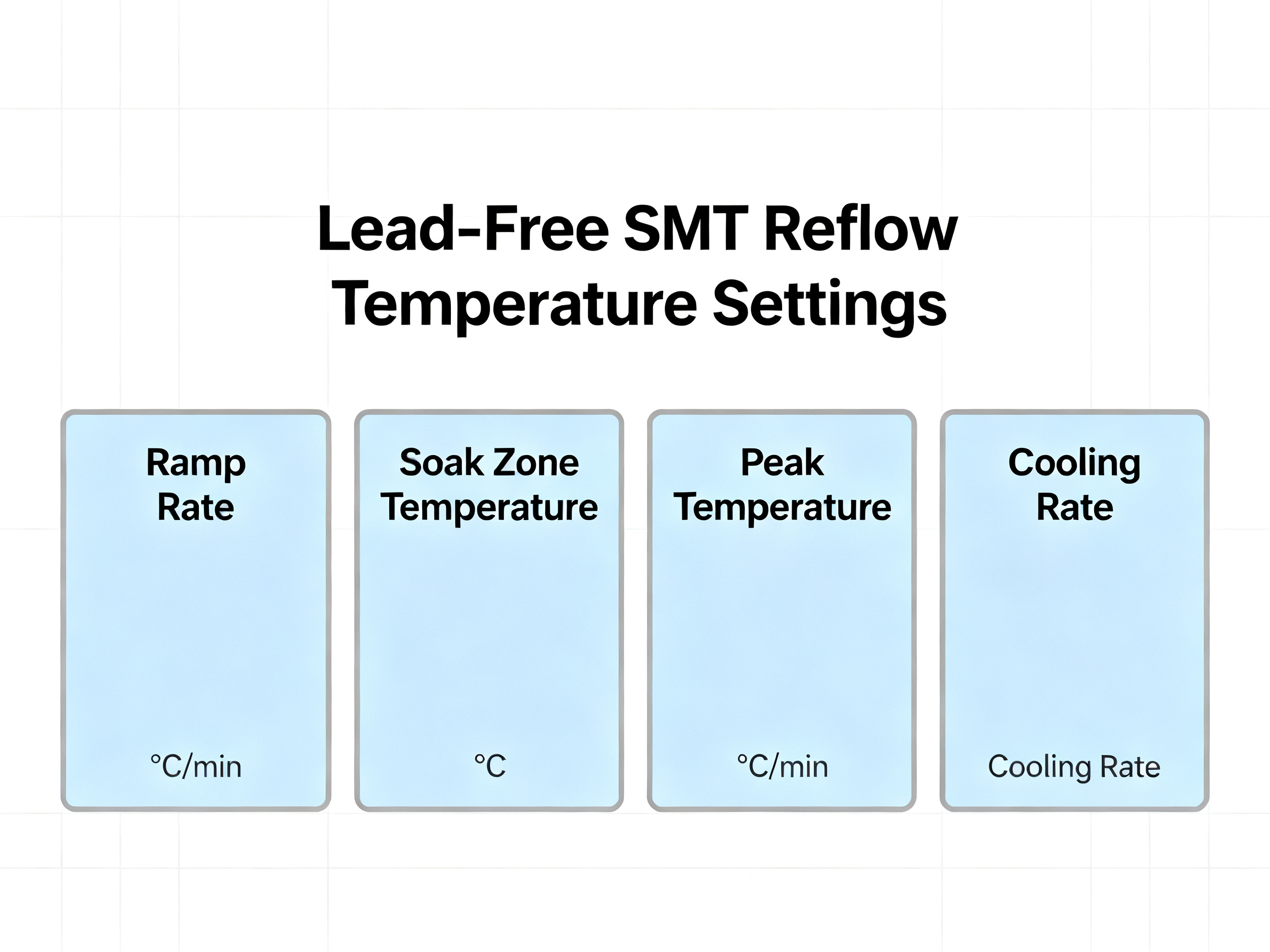
Leaded solder, usually Sn63/Pb37, melts at a lower temperature than lead-free alloys. Because of that, the leaded reflow temperature profile is usually a bit gentler.
A common starting point looks like this:
| Profile factor | Typical leaded range |
|---|---|
| Ramp rate | 1 to 3°C per second |
| Soak zone | 120 to 180 seconds around 120 to 180°C |
| Peak temperature | 205 to 215°C |
| Time above liquidus | 30 to 90 seconds above about 183°C |
| Cooling rate | About 2 to 4°C per second |
Now, that is just a baseline. Your paste supplier's data sheet should always win. A tiny board with low thermal mass may hit peak faster than expected. A heavy backplane may need more tuning. That is why asking how reflow soldering temperature is determined always leads back to real measurement, not guesses.
---
## How to [set reflow oven profile](https://www.chuxin-smt.com/set-reflow-oven-temperature-profile-for-better-soldering/) without guessing
If you're wondering how to set reflow oven profile, here is a practical order that usually works.
1. **Check the solder paste specs**
Look at the recommended ramp, soak, peak, and time above liquidus.
2. **Review component temperature limits**
Some connectors, LEDs, shields, and plastic parts have tighter limits than the paste.
3. **Look at the PCB itself**
Thick boards, large ground planes, and mixed component sizes change how heat moves.
4. **Set zone temperatures as a starting recipe**
This is your first reflow recipe, not your final answer.
5. **Run a profiled board with thermocouples**
Put sensors on cold and hot spots. Measure the real board temperature, not just oven air.
6. **Compare actual results to the target profile**
Then adjust conveyor speed, zone temperatures, or both.
7. **Inspect joints and defects**
A profile that looks good on a graph still has to make good solder joints.
We have seen teams lose days by tweaking oven zones without ever measuring the board. It feels busy. It is not productive. Real profiling is faster in the long run.
For factories trying to scale in 2026, ovens with tighter thermal control, stable conveyors, and easier profile repeatability can save a lot of setup time. That is one reason manufacturers look at dedicated SMT equipment providers like Sun and Mountain SMT when older hardware starts fighting the line.
---
## How reflow soldering [temperature is measured](https://www.chuxin-smt.com/choose-the-right-reflow-oven-for-your-smt-line-guide/)
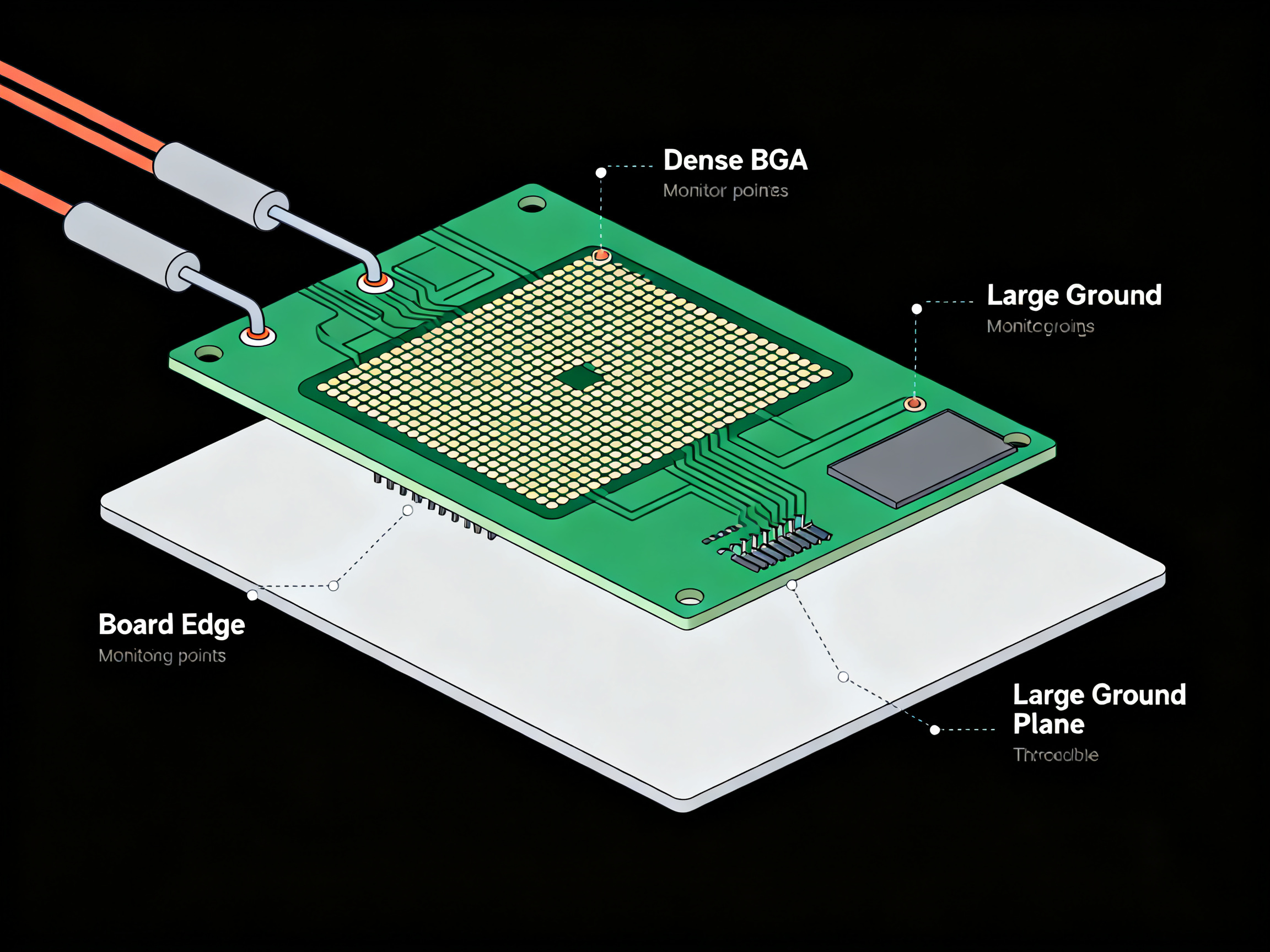
This part matters more than people think. If you want to know how reflow soldering temperature is measured, the usual method is simple. You attach thermocouples to the PCB, run the board through the oven, and record the temperature over time with a profiler.
Common measurement points include:
- A dense BGA area
- A large ground plane near a cold spot
- A small passive component area
- The board edge
- A temperature-sensitive component
And yes, placement matters a ton. If the thermocouple is loose, taped badly, or stuck in the wrong place, your data can lie to you. Been there. It is annoying.
A good profile tells you:
- Ramp rate
- Soak time
- Peak temperature
- Time above liquidus
- Cooling rate
- Temperature spread across the board
---
## [Common reflow soldering defects](https://www.chuxin-smt.com/slug-an-in-depth-guide-to-the-reflow-profile/) and what they usually mean

When the solder reflow temperature profile is off, the defects often leave clues. Not perfect clues, but useful ones.
| Defect | What it may point to |
|---|---|
| Cold joints | Peak too low, time above liquidus too short, poor wetting |
| Tombstoning | Uneven heating, paste imbalance, pad design issues |
| Bridging | Too much paste, alignment issues, excessive slump |
| Solder balls | Overheating, poor paste condition, rapid outgassing |
| Voids | Trapped flux, surface contamination, profile mismatch |
| Burned components or warped PCB | Peak too high, excessive time at heat, poor cooling control |
Troubleshooting solder reflow is rarely about one setting alone. It is usually a chain. Paste condition, stencil print, placement accuracy, oven airflow, and board design all play a part. So when someone asks how reflow soldering temperature work, the shortest honest answer is this: it works as part of a process, not as a single dial.
> **Expert Tip:** If one corner of the board keeps failing, stop blaming the whole profile right away. Check airflow balance, conveyor support, and local copper mass first.