
Published: 17 October 2026
Last Updated: 17 October 2026
Reading Time: 12 minutes
Written by: [Author name and relevant credentials]
Reviewed by: [Reviewer name and credentials, if applicable]
Editorial Note: Author and reviewer details will be published once documented credentials and verification are confirmed.
—> Published: 17 October 2026
Last Updated: 17 October 2026
Reading Time: 12 minutes
Written by: [Author name and relevant credentials]
Reviewed by: [Reviewer name and credentials, if applicable]
Editorial Note: Author and reviewer details will be published once documented credentials and verification are confirmed.
What Is a Reflow Oven Used For?
Think about the last time you held a smartphone or opened up a laptop. Inside that device, there are dozens of tiny components literally glued to a circuit board with solder. That solder did not get there by magic or by hand. A reflow oven heated everything up according to a precise thermal recipe, melted the paste, and then cooled it down just right so the joints would hold.
So what is a reflow oven used for? It heats printed circuit board assemblies following a controlled temperature profile. The solder paste melts, flows across component leads and pads, then solidifies during cooling to form solid electrical connections. Skip this step or do it wrong, and you get cold joints, poor wetting, or components that pop right off.
For engineers and production managers running SMT lines, this process matters for a few reasons. First, you get repeatable quality. Run the same profile on 500 boards and you should see the same results on all 500. Second, you gain throughput. A conveyor oven can process hundreds of boards per hour without operator fatigue affecting outcomes. Third, you get traceability. Modern ovens log temperatures, recipes, and board IDs, which matters big time for automotive, medical, or aerospace work where defect accountability is non-negotiable.
In high-mix operations, reflow ovens also offer flexibility. You can store dozens of validated recipes and switch between product families without re-tuning the entire system.
This guide covers the full picture. We will look at how reflow soldering actually works, where these ovens sit in your production line, the real business benefits, how they compare to simpler hot-plate methods, which features actually matter when you are buying, and a practical framework for selection. Whether you are evaluating your first oven or upgrading a line, there is something here for you.
Direct Answer: A reflow oven is a controlled thermal processing system that melts solder paste on a PCB assembly and creates solid, reliable solder joints as it cools, enabling automated, repeatable high-volume SMT production.## About the Author
Editorial Note: Author credentials are pending verification. This section will be updated once documented qualifications are confirmed.
Written by: [Author Name and Relevant Credentials]
At Sun and Mountain, we believe technical content works best when it comes from people who have actually spent time working with the equipment and processes they write about. Our author brings verified, hands-on experience in SMT reflow profiling, line integration, or process engineering, with documented achievements in electronics manufacturing.
Once documentation is complete, a full author profile will be published here, listing confirmed credentials, relevant technical background, and other published work. View Full Author Profile
How an SMT Reflow Oven Works
A reflow oven does not just “heat things up.” It follows a specific thermal recipe that tells the machine exactly how fast to raise temperature, how long to hold it, and how quickly to cool things down. Think of it like baking, except the margin for error is measured in degrees and seconds.
The process breaks into four stages. During preheat, the board warms gradually so moisture in components and the board itself does not flash-boil and cause defects. Too fast here creates solder balls and voiding. Next comes thermal soak, where the board holds at a lower temperature to equalize heat across all components. This step prevents tombstoning, where tiny components lift off pads because one side heated faster than the other.
The reflow stage, sometimes called time-above-liquidus, is where solder paste melts and flows. The oven must stay hot enough for long enough to get good wetting, but not so hot that it damages components or warps the board. Finally, controlled cooling solidifies the joint at the right rate. Cool too quickly and you stress component bodies; cool too slowly and you may get dull or grainy joints.
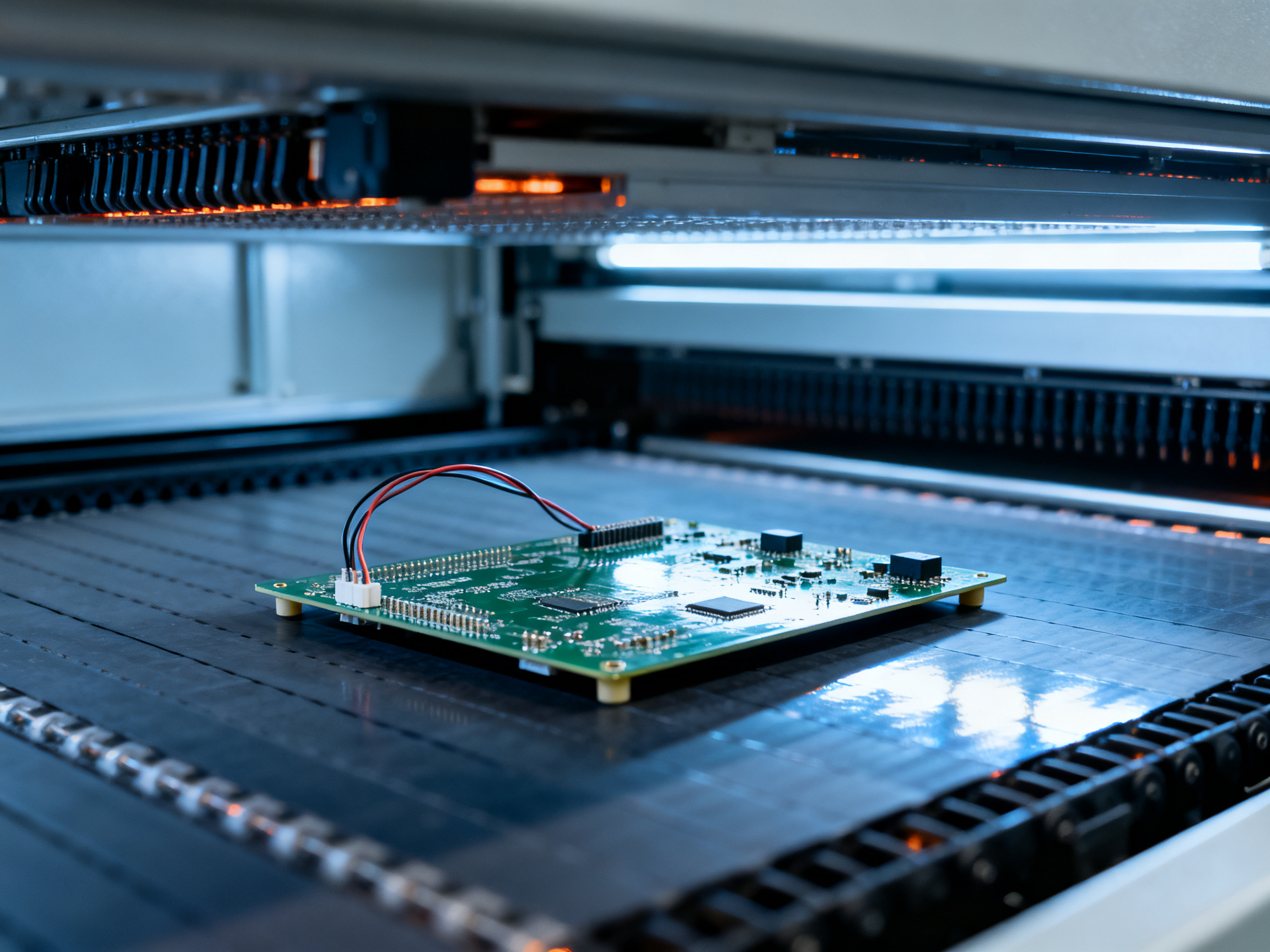
Modern SMT production mostly uses forced convection ovens. Hot air moves across the board from multiple directions, giving fairly even heating even when components cast shadows. Infrared ovens heat surfaces directly but can create hot and cold spots. Vapor phase systems use condensing fluid for excellent uniformity, though voiding concerns sometimes arise. Batch ovens process one or a few boards at a time, which works for prototyping or low volume. Inline ovens move boards continuously on a conveyor, which is how most scaled production runs today.
Profile variables you will hear about include ramp rate, soak time, peak temperature, time above liquidus, conveyor speed, and cooling rate. There is no magic numbers here; the right settings depend on your solder alloy, board construction, and component limits. Your paste supplier data sheet gives you the starting window, and then you measure and adjust based on your actual board.
Pro Insight: When evaluating ovens, ask suppliers for their thermal uniformity data tested on representative boards. Do not just accept zone count as a proxy for performance. A six-zone oven with poor air circulation can underperform an eight-zone oven with optimized airflow design.## Where Reflow Ovens Fit in Electronics Manufacturing
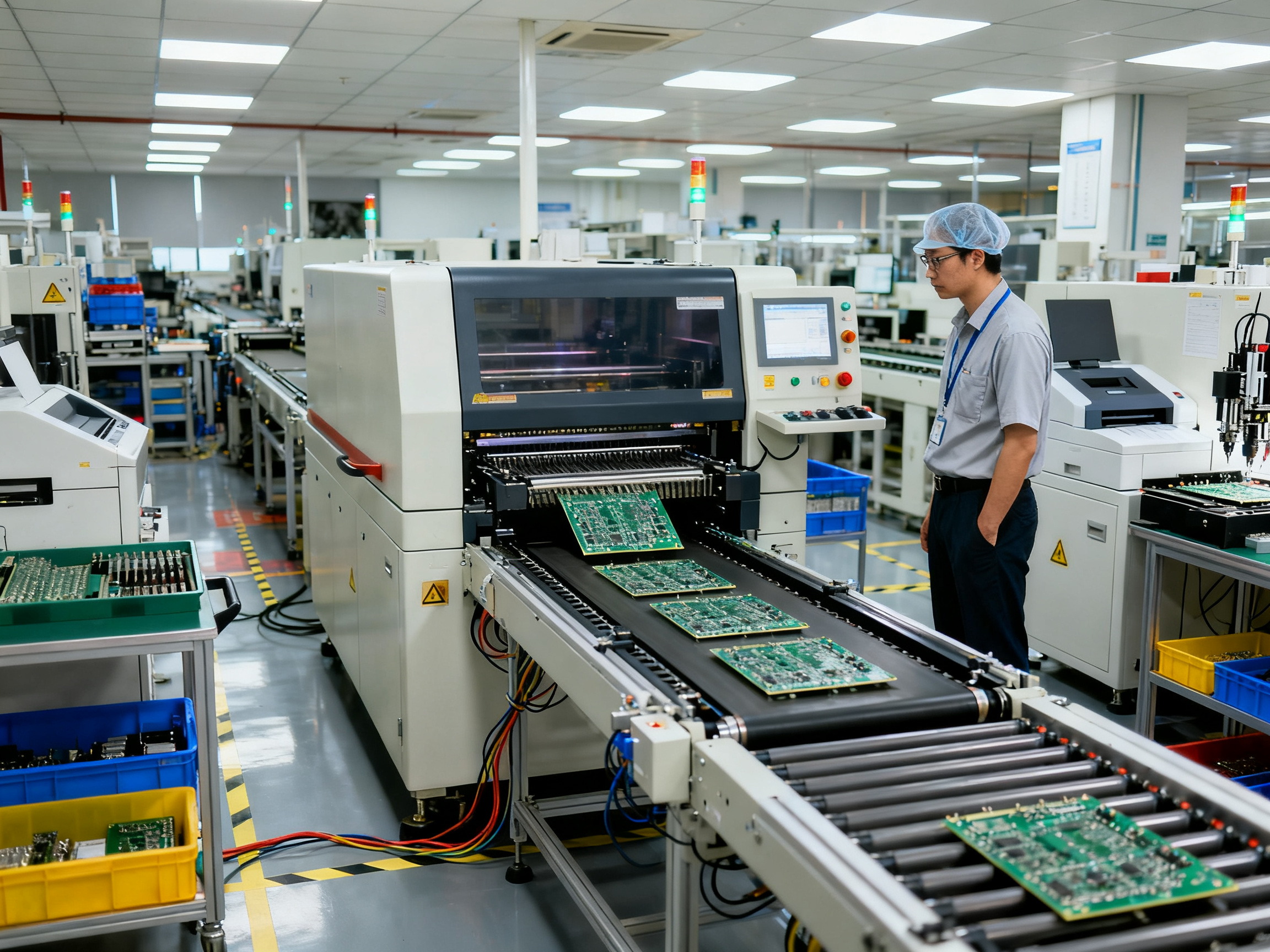
The reflow oven sits roughly in the middle of most SMT lines. Before boards enter, solder paste gets printed onto the pads. Then an SPI (solder paste inspection) machine checks that print quality. Components get placed by a pick-and-place machine. Now the board heads to reflow, where heat creates the joints. After cooling, AOI (automated optical inspection) or X-ray checks catch defects before boards move downstream to test, programming, and final assembly.
Data systems tie all this together. Modern lines push board IDs, recipes, and test results to MES or QMS software. This creates a full traceability trail from first paste print to finished board. That matters a lot when you need to track down what went wrong on a specific unit.
Applications span quite a range. Consumer electronics like smartphones and tablets run massive volumes, so throughput and consistency count big time. Automotive and aerospace work demands complete traceability and zero-defect goals. Boards tend to be larger, more complex, with heavier thermal mass. Medical devices and defense systems follow similar rigor, just with more documentation and validation overhead.
Industrial controls and telecom gear often sit somewhere in the middle. Boards might be large but not super dense. The priority is reliability and repeatability over raw speed.
Prototyping shops and high-mix manufacturers face different pressures. You might run 50 different board designs in a week. Flexibility and quick changeover matter more than throughput. An inline oven with recipe storage helps, but the profiling work per SKU adds up.
| Production Type | Board Characteristics | Oven Format | Critical Requirement | Likely Constraint |
|—————–|———————-|————-|———————|——————-|
| High-volume consumer | Dense, multilayer, small | Inline, dual lane | Throughput, consistency | Changeover time |
| Automotive/aerospace | Large, heavy, complex | Inline with center support | Profile precision, N2 | Thermal mass |
| Medical/defense | Mixed size, high reliability | Inline with full traceability | Documentation, requalification | Validation cost |
| Prototyping/low-volume | One-off, varied | Batch oven | Flexibility, quick changeover | Labor, setup time |
| High-mix EMS | Many SKUs, small runs | Inline with recipe storage | Changeover speed, profiling | Profile qualification |
For production volume, inline ovens make sense. They move boards continuously on a conveyor, which keeps labor low and output steady. Batch ovens work better for prototypes, low-volume runs, or shops that need to switch products often. Batch systems cost less upfront and need less floor space. But they require more operator handling, and profile consistency depends on how well the operator runs things.
The real question is not just about the oven. It is about how the oven interfaces with your printer, placer, and inspection systems. Conveyor height, board width, lane count, and data connectivity all affect whether the oven actually fits your line or creates bottlenecks.
Benefits of Controlled Reflow Soldering
Look, you could technically solder boards with a heat gun and a prayer. But if you are running any kind of serious production, controlled reflow gives you something you cannot get otherwise: consistency. Lots of it.
When your oven maintains stable zone temperatures and delivers uniform heating across the board, solder joints come out the same way board after board. Closed-loop monitoring catches drift before it becomes a defect. Repeatable recipes mean your night shift runs the same as your day shift, your Tuesday same as your Friday. That stuff matters when you are building for automotive or medical where a cold joint is not just a quality problem, it is a liability problem.
Thermal defects drop significantly when you control the profile properly. We are talking tombstoning, solder balls, voiding, poor wetting. These happen when heating is uneven or too fast. A profiled oven with proper soak stages gives the board time to equalize. Components do not see thermal shock. The solder melts and flows where it should, not where physics decides on a bad day.
Expert Tip: Before you talk to any supplier about ROI, establish your baseline. Track first-pass yield, rework rate, OEE, energy use, and unplanned downtime for at least 30 days on your current process. Without these numbers, you cannot separate marketing claims from real improvement. Write down what you measure, because what gets measured gets managed.
On the throughput side, conveyor speed, usable process width, and recipe management all play together. A wider process window means you can push boards through faster without sacrificing quality. Recipe storage and automatic setup reduce changeover time. If you are switching between five different product families in a week, that quick changeover matters more than your top speed.
Line integration ties everything together. MES connectivity means board IDs, recipes, and profile data travel with each unit. You can trace any board back to its exact thermal profile. For aerospace and defense work, that is not optional.
Quantified Improvements from Process Optimization
Real data from documented cases shows what tighter reflow control actually delivers.
| Metric | Before Optimization | After Optimization | Improvement |
|——–|——————-|——————-|————-|
| First-pass yield | 53% | 78% | +25 percentage points |
| Defect rate | Baseline | 60% of baseline | 40% reduction |
| Nitrogen consumption | Baseline | 37% of baseline | 63% reduction |
| Production output | Baseline | 133% of baseline | 33% increase |
| Heat loss | Baseline | 45-47% of baseline | 53-55% reduction |
| Electricity cost | Baseline | 30% of baseline | 70% reduction |
These numbers come from documented case studies with measurable interventions, not vendor slide decks. Your results will vary based on your starting point, your product mix, and whether your current process is already well-optimized.
Total Cost of Ownership Beyond the Purchase Price
Here is what nobody tells you when you are comparing oven quotes. The purchase price is typically 20-30% of what you will spend over five years. The rest? Energy, nitrogen, maintenance, spare parts, downtime, training, and support contracts.
A practical TCO model looks like this:
5-Year TCO = Purchase Price + (Energy Cost × Hours × Years) + (Nitrogen Cost × Hours × Years) + (Maintenance Labor × Hours × Years) + Parts Cost + Downtime Cost + Training Cost + Support Contracts
Energy and nitrogen often get ignored in initial analysis, but they add up fast. A well-insulated oven with optimized profiles can cut electricity use by 15-20%. Nitrogen consumption varies widely between ovens and atmospheres. These operating costs often exceed the purchase price within 2-3 years at typical utilization.
When you are evaluating ovens, ask suppliers for their energy consumption data under your expected operating conditions. Run the numbers. The cheapest oven on the quote is rarely the cheapest oven in the building.
Bottom line: controlled reflow soldering pays back through quality, throughput, and operating efficiency. The question is not whether to invest, it is whether you have the baseline data to make the investment wisely.## Reflow Oven vs Hot Plate: Which Method Fits the Job?
Here is something I see all the time. Someone needs to solder a batch of boards, and they ask: “Do I really need an expensive reflow oven, or can I just use a hot plate?”
It is a fair question. Both methods melt solder. But the how and the results are pretty different.
How the Heat Gets There
A reflow oven uses zoned convection. Hot air moves across the board surface from multiple directions, giving fairly even heating even when components cast shadows. You can control ramp rate, soak time, peak temperature, and cooling rate. Every variable is measurable and repeatable.
A hot plate heats from below. The board sits on a hot surface and conducts heat upward. This means temperature gradients happen naturally based on copper distribution, component mass, and board thickness. Larger components pull heat away from surrounding areas. Taller parts shade what is behind them. Uneven heating is not a bug here; it is just physics.
Board warpage is another concern with hot plates. Heat from one side causes the board to bend, especially with larger boards or metal-core substrates. Reflow ovens heat more evenly from all directions, which reduces this problem significantly.
Where Each Method Makes Sense
Hot plates work fine for basic through-hole soldering, simple single-sided boards, or quick prototypes where exact temperature control is not critical. If you are just tacking components down for testing, a hot plate does the job at a fraction of the cost.
Reflow ovens shine when you need consistency across production runs, have moisture-sensitive components, are working with lead-free solder, or need documentation for quality records. Dense double-sided assemblies, large boards, and anything heading into automotive, medical, or aerospace applications typically require the controlled profile that a reflow oven delivers.
The real difference comes down to traceability. A hot plate lets you dial in a temperature and hope for the best. A reflow oven logs every profile, every board ID, every thermal excursion. When something goes wrong six months from now, that data matters.
Side-by-Side Comparison
| Factor | Reflow Oven | Hot Plate |
|——–|————-|———–|
| Temperature control | Board-level, multiple zones | Plate temperature only |
| Heating method | Forced convection | Conduction from below |
| Uniformity | Good, multi-directional | Uneven, mass-dependent |
| Shadowing risk | Low with forced air | High with tall components |
| Board warpage risk | Low | Moderate to high |
| Throughput | High, continuous | Low, batch per operator |
| Repeatability | Excellent, logged | Variable, operator-dependent |
| Traceability | Full data logging | None typically |
| Capital cost | Higher | Lower |
| Best fit | Production, compliance work | Prototypes, repairs, one-offs |
The Decision Rule
If your work stays in the prototyping, repair, or hobby space, a hot plate can be economical and practical. But once you need repeatable results, lead-free processing, or integration with inspection and MES systems, a profiled reflow oven is the better investment.
The question is not really about which is better overall. It is about which fits your current stage and likely future needs.## Best Reflow Oven Features to Evaluate
Not all reflow ovens are created equal, and the specs that matter depend on what you are building. Here is how to think about it.
Process Performance Features
These are the thermal characteristics that directly affect solder joint quality. Zone count matters, but it is not the whole story. A well-designed six-zone oven with optimized airflow often outperforms a poorly designed eight-zone unit.
Heating uniformity is critical. You want consistent temperature across the entire board surface, not just in the center. Edge-to-edge temperature delta tells you how much variation exists from board center to board edge. Larger boards with uneven copper distribution expose this weakness fast.
Cooling capacity matters for lead-free processing. You need controlled cooling to avoid component stress and achieve proper grain structure in the joint. Some ovens skimp here to hit a lower price point.
Profile accuracy means the oven actually delivers what the controller says it is delivering. Thermocouple measurement, PID tuning, and closed-loop control all play a role. Conveyor stability affects how consistently boards travel through the profile. Wobbly or inconsistent conveyor speed introduces variation that shows up as defect patterns.
Nitrogen atmosphere reduces oxidation and improves wetting, but it adds cost and complexity. Not every application needs it.
Production and Integration Features
Board-width capacity must match your largest product plus margin. Dual lanes double throughput if your product fits. Center support prevents board sag on heavy assemblies.
SMEMA or Hermes compatibility determines how the oven talks to upstream and downstream equipment. Recipe controls let operators store and recall validated thermal profiles. Barcode and MES connectivity enable full traceability, linking each board to its specific profile data.
Alarms, data logging, and remote diagnostics matter for keeping lines running and tracking down problems. When something goes wrong at 2am, remote access can save hours of downtime.
Maintainability and Ownership Factors
Flux management systems collect residue and keep the heating chamber clean. Accessible chambers make maintenance faster and safer. Automatic lubrication reduces manual upkeep on conveyors.
Energy-saving modes cut operating costs during slower periods. Consumables like filters and heating elements have real costs that add up over time. Spare-parts availability and service response times vary wildly between manufacturers, and they matter big time when your line is down.
Warranty terms, software support, and training packages affect your total cost of ownership in ways that do not show up on the initial quote.
Pro Insight: When evaluating ovens, ask suppliers for their thermal uniformity data tested on representative boards. Do not just accept zone count as a proxy for performance. Demand that they show you their measurement methods and verify critical specifications with your representative boards present. A good supplier will welcome this; a bad one will deflect.
Buyer Scorecard: Features by Priority
| Category | Must Have | Application-Dependent | Optional |
|———-|———–|———————|———-|
| Process | Zone count for your thermal mass | Nitrogen atmosphere | Advanced cooling |
| Integration | SMEMA/Hermes, recipe storage | Dual lanes, center support | Remote diagnostics |
| Data | Profile logging, alarms | MES connectivity, barcode | SPC trending |
| Maintenance | Accessible chamber | Auto lubrication | Predictive maintenance |
| Ownership | Spare parts availability | Energy-saving modes | Training packages |
The right feature set depends on your products, volumes, and quality requirements. Match the oven to your actual needs rather than chasing specifications that sound impressive on paper.## How to Select an SMT Reflow Oven
Buying a reflow oven is not a simple price comparison. You need to match the machine to your actual products and production goals. Here is a practical approach that works.
Step 1: Define What You Actually Need
Start with your product characteristics. What is the biggest board you will run? How much thermal mass does it have? Are there heat-sensitive components, BGAs, or large connectors that create shadows or pull heat away from nearby joints? What solder alloy are you using, lead-free or traditional? Lead-free needs higher peak temperatures.
Then look at your production goals. What takt time do you need to hit? How many boards per year? Build in growth headroom for at least two to three years out. Regulatory requirements matter too if you work in automotive, medical, or aerospace. Those sectors demand full traceability and documented process control.
Step 2: Build a Capacity Model
Translate your requirements into actual oven specs. You need to know minimum heated length based on how long the board must stay in the profile. Conveyor speed comes from dividing board length plus spacing into the process time window.
Account for changeovers. If you run five different product families in a week, recipe storage and quick recall matter more than raw speed. Planned maintenance blocks out time too. The formula looks like this: effective capacity equals ideal rate times utilization times availability times yield times changeover factor.
Step 3: Run a Structured Supplier Evaluation
Do not just compare zone counts on a spec sheet. Ask suppliers to profile your actual boards. That is the only way to know if their oven can actually handle your thermal mass.
FAT (Factory Acceptance Test) should include repeated thermal profiles on hot and cold board locations. SAT (Site Acceptance Test) confirms the oven works in your facility with your utilities and MES system. Get uptime commitments in writing, not just marketing claims. Look at spare parts lead times, training packages, and total cost of ownership over five years. Energy and nitrogen costs often exceed the purchase price within two to three years.
Get references from similar shops. Talk to other buyers who run comparable products. Their real-world experience tells you more than any sales brochure.
The buyers who get burned are the ones who pick based on purchase price alone or trust a demo board that was dialed in for weeks before the sales visit. Baseline your current process first. Measure first-pass yield, defect rates, and energy use. Then you can actually tell if the new oven made a difference.## Implementation, Profiling, and Ongoing Control
Getting the oven into your facility is just the start. Site readiness matters. You need proper electrical supply, exhaust extraction, nitrogen plumbing if you run inert atmosphere, cooling water for some units, floor loading capacity, conveyor height that matches your line, and safe operator access all around. Skip this planning and you end up with delays or costly retrofit work after delivery.
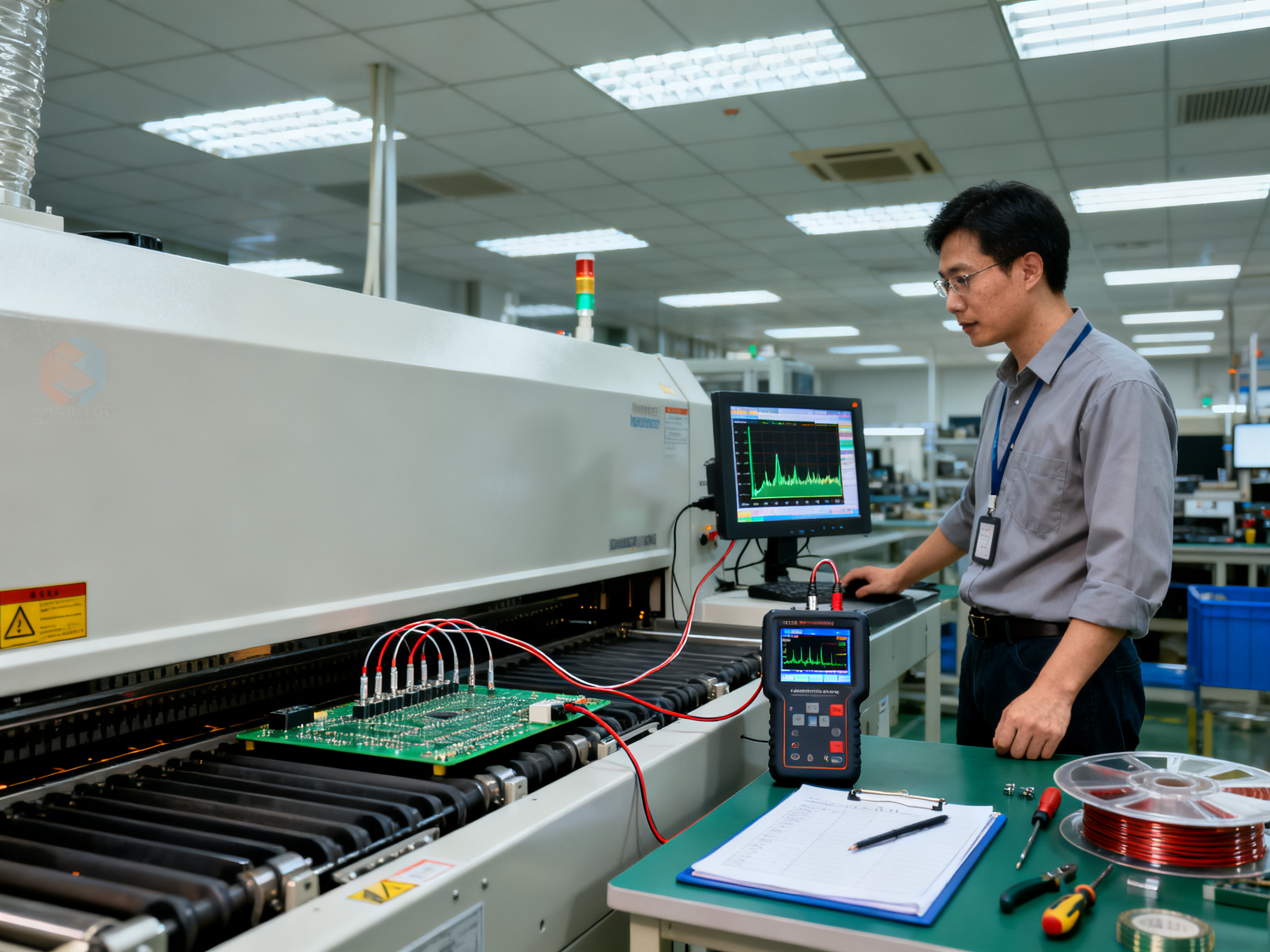
Once the oven is in, you establish thermal recipes using instrumented boards with thermocouples at hot spots, cold spots, heavy components, and heat-sensitive parts. Run the profile, measure what actually happens to the board, then adjust oven settings to fit within your paste supplier window and component limits. IPC-7530 and IPC-7801 give you the measurement and control framework here. Keep recipe revisions under version control. Do not let operators tweak setpoints without documentation.
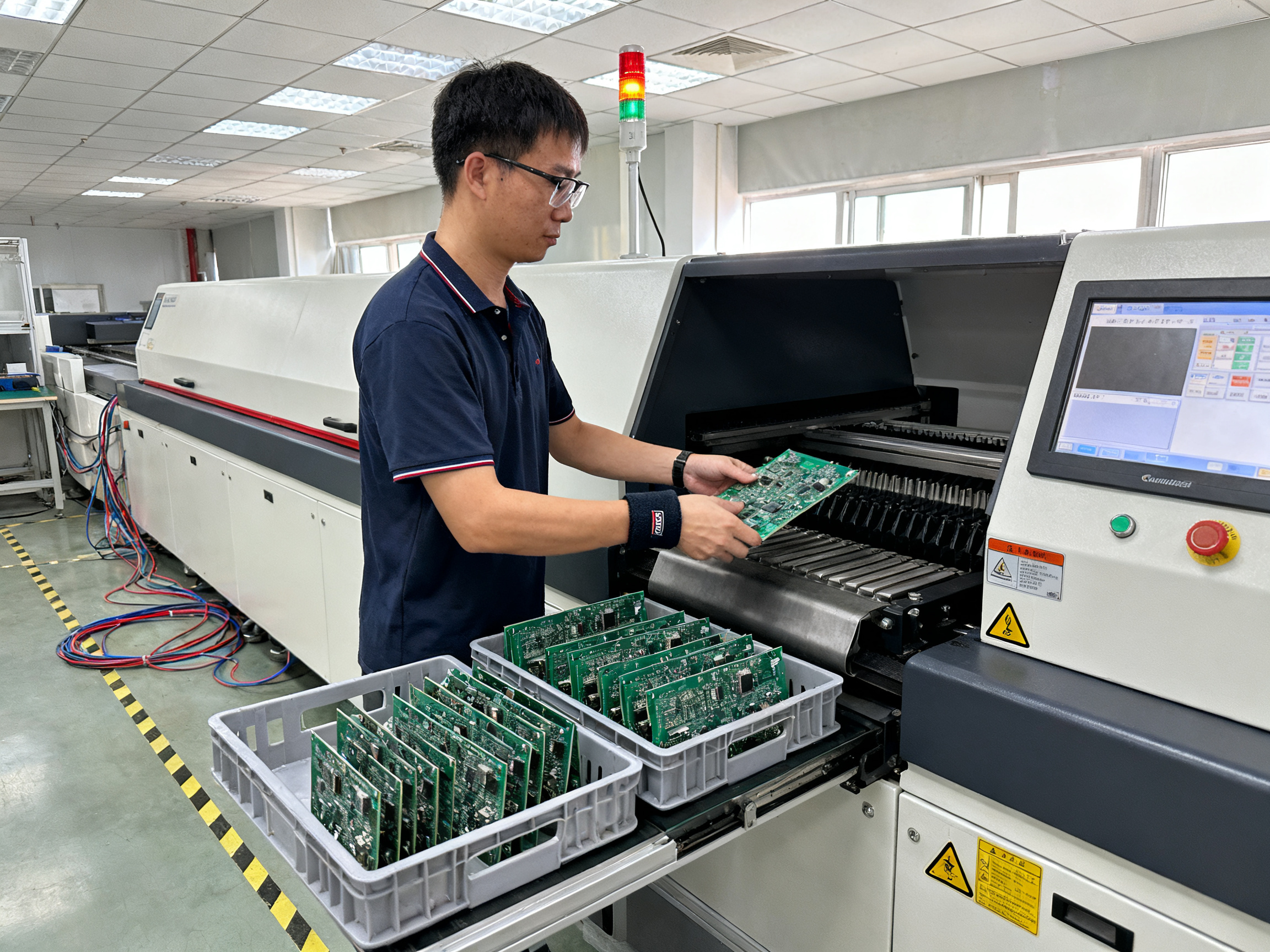
Ongoing control keeps performance steady. Calibration follows manufacturer intervals, typically annually. Preventive maintenance catches wear before it causes drift. Flux removal schedules keep the heating chamber clean. Review alarms, track SPC data, watch for increasing delta between hot and cold board locations, and requalify after major changes or persistent drift.
Commissioning Timeline
- Site prep and utilities: Week 1-2
- Equipment installation: Week 3
- FAT with representative boards: Week 4
- SAT and MES integration: Week 5
- First production qualification: Week 6
Recurring Control Checklist
- Thermocouple calibration verification
- Profile deviation review
- Flux buildup inspection
- Conveyor alignment check
- Alarm trend analysis
- Spare parts inventory audit
- Requalification trigger review
Expert Recommendation and Next Steps
The right reflow oven comes down to matching thermal process requirements to your actual products, not chasing specs on a page. Zone count, purchase price, and advertised throughput mean nothing if the oven cannot maintain profile control across your board population.
Role-specific next steps help you focus where it counts. Production engineers should define worst-case thermal mass and validate paste window requirements. Operations teams should confirm capacity calculations against takt time and unplanned downtime history. Procurement should compare evidence-backed five-year TCO models that include energy, nitrogen, maintenance, and support contracts, not just sticker price.
The most critical step before signing anything: instrument representative boards and validate against documented acceptance criteria. Without measured profiles on your actual product, you are buying based on marketing claims.
From Our Experience: This callout will be updated with a verified example from a named subject-matter expert once documented project details and measurable results are supplied.
Five-Step Action List
- Define worst-case board thermal profile requirements
- Calculate line capacity and growth headroom
- Request supplier profiling of your representative boards
- Build five-year TCO model with operating costs
- Negotiate uptime guarantees and spares availability