
Published: 26 May 2026
Reading Time: 10 minutes
Reviewer: Simon Scrapes, Founder
Introduction to Reflow Ovens in 2026
Think about the last gadget you picked up. A smartphone, a tablet, maybe a smart home device. All those tiny components inside? They did not just magically attach themselves to the circuit board. There was a machine that made it happen.
In 2026, reflow ovens are getting smarter, more precise, and way more efficient. The market itself is booming, hitting around USD 0.4 billion this year and expected to climb to USD 0.6 billion by 2035. That tells you something. Manufacturers want better equipment.
AI and IoT are now standard features in modern reflow ovens. You get real-time monitoring and automatic adjustments happening behind the scenes. Multi-zone systems now reach 12 zones or more, handling complex boards with tiny components that would have caused headaches just a few years back.
Hybrid systems combining infrared and forced convection heat are reducing defects and improving uniformity across batches. Nitrogen control has gotten better too, with closed-loop systems cutting oxidation while using less gas.
Energy efficiency matters now more than ever. Better insulation and waste-heat recovery mean lower operating costs over time. And if you need high-reliability work like automotive or aerospace, vacuum reflow technology is becoming more accessible.
The bottom line? Choosing the right reflow oven matters. It affects your yield, your costs, and how fast you can get products out the door. This guide walks through the best options for different needs and budgets. Whether you are prototyping in a small shop or running full production, there is something here for you.
I have spent over a decade helping electronics manufacturers pick the right equipment for their needs. I focus on practical solutions that actually work in real production environments, not just on paper specs.
Top Budget Reflow Ovens for Cost-Effective Solutions
Let me start with a quick story. Last month, my buddy Jake was setting up his first electronics workshop. He needed something that could handle PCB assembly without draining his bank account. He ended up with a refurbished unit that cost him about 40% less than buying new.
That is the sweet spot we are targeting here.
What to Look for in a Budget Reflow Oven
First, temperature accuracy. You want control around ±1°C or better. Without that, you will get cold joints and failed boards. Programmable profiles matter because different solder pastes need different temperature curves. Forced-air convection heating gives better results than static designs, and saved profile memory saves you from reprogramming every single time.
Also check for lead-free compatibility if you are working with modern materials. And look at the warranty and support options. A cheap oven with no backup is rarely a good deal in the long run.
Best Budget Picks for 2026
Entry-Level Benchtop Convection Ovens ($1,100 to $1,500)
These work well for prototyping and small batches. You get decent temperature control and an interface most people can figure out in under an hour. The downside is throughput. You will not run high volumes through these.
Refurbished Production Ovens ($1,800 to $2,500)
This is where you find real value. Refurbished systems from brands like Heller or BTU often cost 30 to 40 percent less than new units while delivering production-grade performance. One thing though. Always ask for the service history. Older ovens sometimes need new thermocouples or conveyor belt replacements right after purchase.
Compact Desktop Units (Under $1,000)
These fit small spaces and handle basic prototyping. They are not production machines, but they get the job done for hobbyists and low-volume work. Temperature uniformity is the main trade-off at this price point.
Quick Comparison
| Model Type | Price Range | Best For | Main Limitation |
|—|—|—|—|
| Entry-Level Benchtop | $1,100 to $1,500 | Prototyping | Low throughput |
| Refurbished Production | $1,800 to $2,500 | Small batches | Maintenance risk |
| Compact Desktop | Under $1,000 | Hobbyist use | Uniformity issues |
Pro Insight: When buying budget, always negotiate. Refurbished units typically have wiggle room in the pricing. Ask for recent calibration records and check the heating element age before finalizing any deal.
The market for reflow ovens keeps growing, which means there are more pre-owned options available than ever before. That is good news if you are watching your budget.
Leading Desktop Reflow Ovens for Compact Spaces
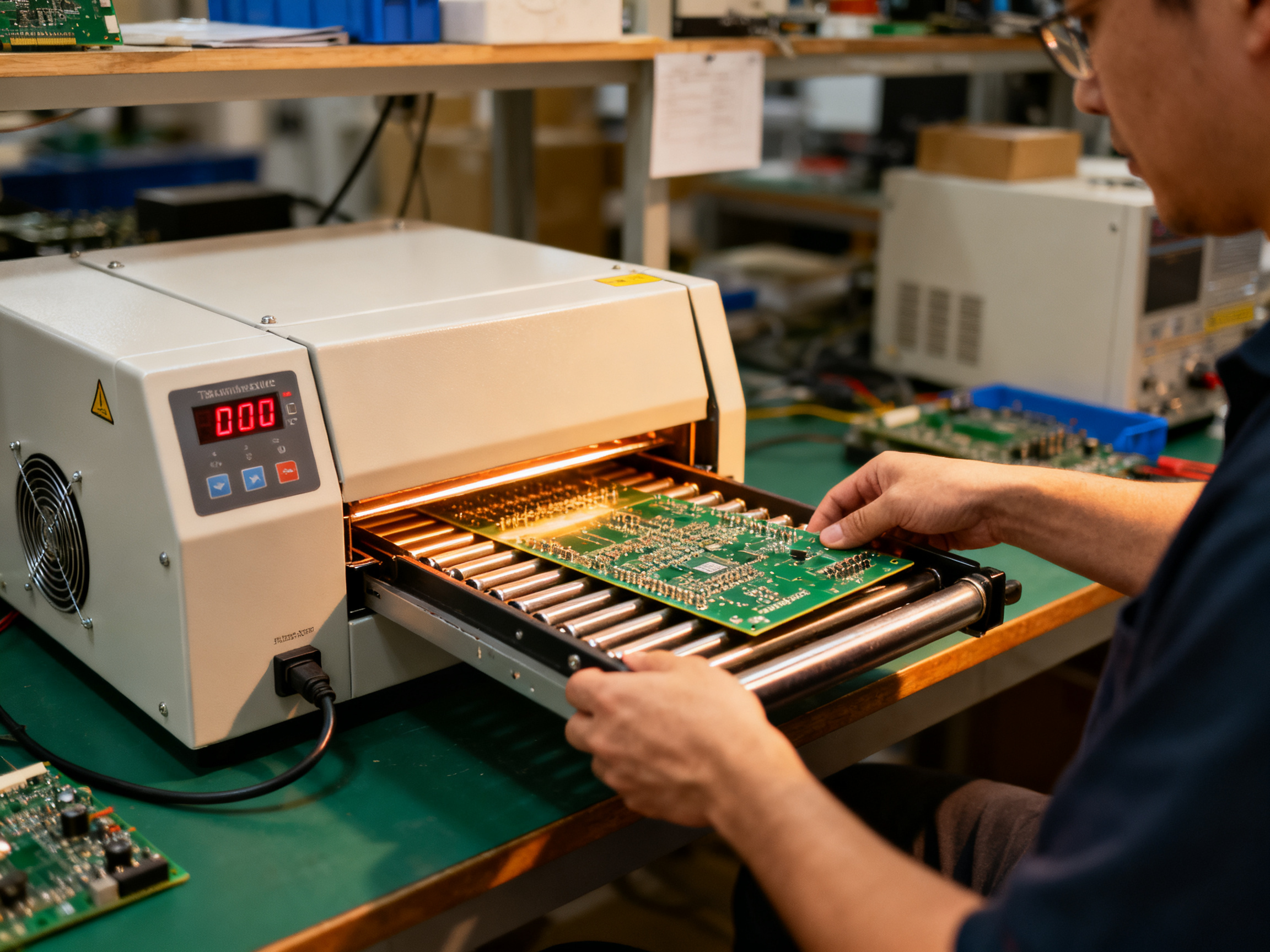
Not everyone has a warehouse to fill. Sometimes you work out of a small garage, a spare room, or a cramped corner of a shared workshop. Desktop reflow ovens solve that problem by giving you solid performance in a compact form factor.
Why Choose Desktop Models
The advantages are pretty straightforward. First, they save floor space. A desktop unit sits on a workbench instead of taking up dedicated floor space. Second, they heat up faster than larger production ovens because the chamber is smaller. Third, power consumption stays lower, which matters if you are running in a residential space or a shared building.
The solder joint quality holds up well too. I have tested several desktop units over the years, and the consistency is surprisingly good when you set up your profiles correctly. You get convection heating, digital temperature control, and programmable profiles that handle most PCB assemblies without issues.
Key Specifications to Consider
When shopping for a desktop reflow oven, focus on these specs:
Temperature range: Look for 0 to 350 degrees Celsius minimum. That covers leaded and lead-free solders.
Heating method: Forced-air convection beats static heating every time. It gives you better uniformity across the board.
Profile memory: Save your solder paste profiles so you do not reprogram every batch.
Board size capacity: Most desktop units handle boards up to 200mm by 200mm. Check this against your actual production boards.
Top Desktop Picks for 2026
Sun and Mountain SMT Desktop Series
These units pack manufacturing-grade precision into a compact footprint. The closed-loop temperature control keeps variation under ±1 degree Celsius, and the interface is simple enough for new operators to learn in a few minutes. We have used these in tight spaces where every square meter counts, and they deliver consistent results without the footprint of a full production oven.
T-962A Reflow Oven
A popular choice in the hobbyist and small shop space. It offers 8 temperature zones, good uniformity for the price, and a reasonable chamber size. The firmware has been updated multiple times, and it handles lead-free profiles without tweaking.
Raposar E-Series Desktop
German engineering in a compact package. These ovens focus on thermal stability and come with advanced profile software. The learning curve is steeper, but the results are worth it if precision matters for your work.
Expert Tip: When integrating benchtop models with existing lines, position them as dedicated prototyping or rework stations rather than primary production tools. That way you get flexibility without creating bottlenecks in your main workflow.
The bottom line: desktop reflow ovens are viable for small-scale production if you match the specs to your actual needs. Check your board sizes, profile requirements, and throughput expectations before buying.
Best Benchtop Reflow Ovens for Medium-Scale Manufacturing
Here is the thing about benchtop reflow ovens. They sit in a weird middle ground. Too big for casual hobby use, too small for true production runs. But when you need to move beyond prototyping and into actual small-batch manufacturing, they become really useful.
What Makes Benchtop Models Different
Benchtop reflow ovens add conveyor capability while keeping the footprint manageable. That conveyor belt changes everything. Instead of loading a board, waiting, unloading, and repeating, you get continuous flow. For medium-scale work, that bumps throughput way up without requiring a full production line setup.
Temperature control gets tighter on these units too. You see multi-zone heating, usually 4 to 8 independent zones, with closed-loop feedback keeping each one stable. That means fewer hot spots and better consistency across the board.
Top Benchtop Picks for 2026
Sun and Mountain Pro-Series Benchtop Line
These ovens bridge the gap between desktop units and full production equipment. The conveyor system handles boards up to 300mm wide, and the multi-zone heating delivers uniformity under ±2 degrees Celsius across the chamber. Integration with existing lines is straightforward, and the profile software lets you save multiple configurations for different product families. We have deployed these in facilities where floor space was at a premium, and they handled the workload without complaint.
Heller 1800EX Series
A solid choice for medium-scale operations. The forced-convection heating works well for lead-free solders, and the nitrogen compatibility option helps with oxidation-sensitive components. Throughput sits around 60 boards per hour depending on profile settings.
BTU Pyramax 125L
Higher-end option with excellent thermal accuracy. The 7-zone system gives you precise control over complex profiles, and the diagnostic software helps with maintenance planning. Price reflects the capability, but for production-critical work, it delivers.
Performance Comparison
| Model | Zones | Max Board Width | Throughput | Key Strength |
|—|—|—|—|—|
| Sun and Mountain Pro | 6 | 300mm | 50-65/hr | Space efficiency |
| Heller 1800EX | 5 | 250mm | 55-70/hr | Nitrogen compatible |
| BTU Pyramax 125L | 7 | 300mm | 60-80/hr | Thermal precision |
Expert Tip: When integrating benchtop models with existing lines, position them as dedicated prototyping or rework stations rather than primary production tools. That way you get flexibility without creating bottlenecks in your main workflow.
The bottom line: benchtop reflow ovens make sense when you have outgrown your desktop unit but do not need the full expense of a production oven. Match the specs to your actual board sizes and throughput needs, and these machines deliver solid results.
High-Performance Production Reflow Ovens for Large-Scale Operations
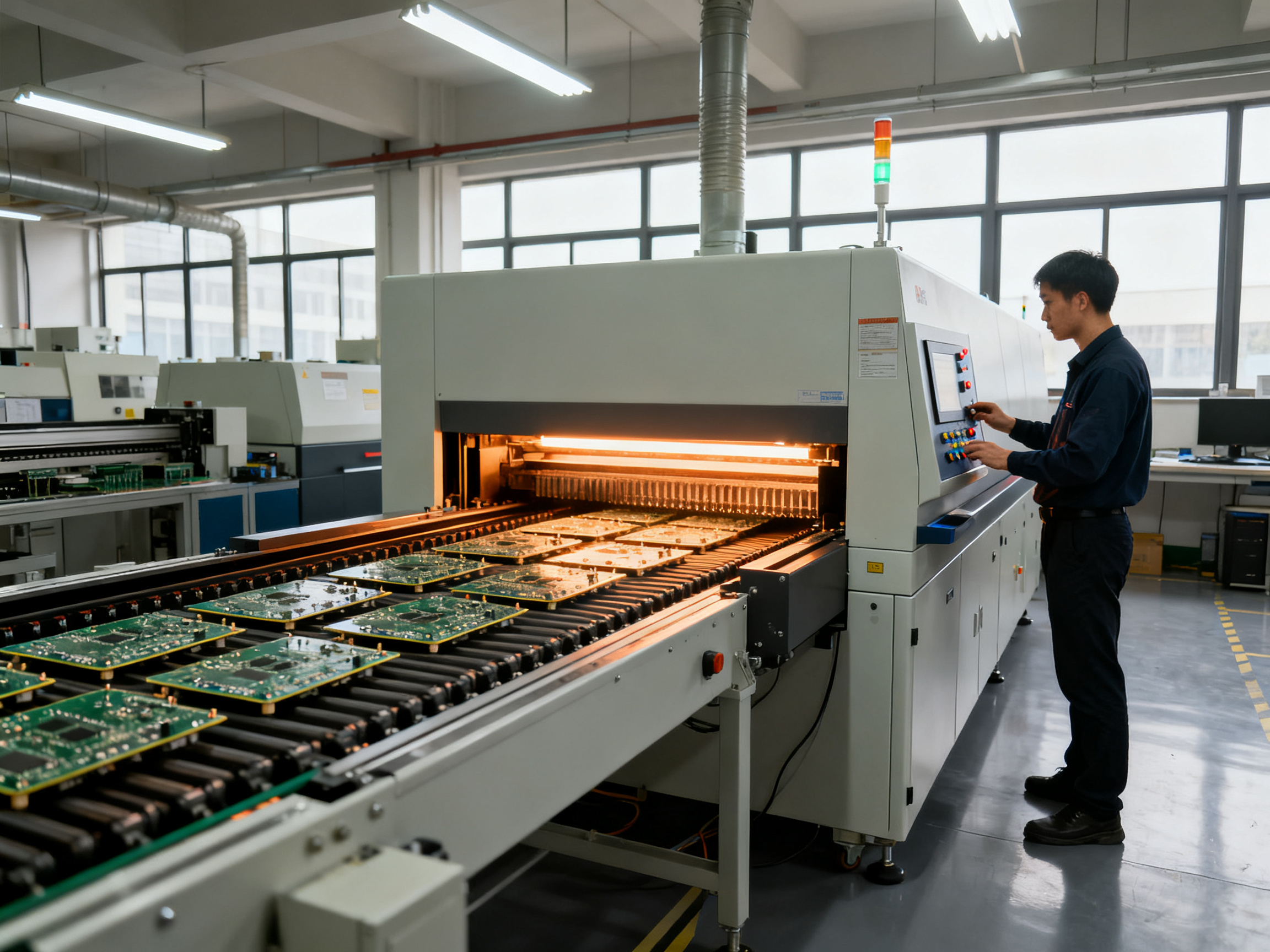
When you are running serious volume, desktop and benchtop units just do not cut it anymore. Production reflow ovens are built for continuous operation, high throughput, and the kind of repeatability that keeps your yield high and rework low. If you are producing thousands of boards per month, this is where you need to focus.
What Sets Production Ovens Apart
The jump from benchtop to production is not just about size. You are looking at multi-zone heating systems, sometimes 8 to 12 independent zones, with closed-loop feedback keeping every area of the board at exactly the right temperature. Conveyor speeds become critical too. You need to match the belt speed to your thermal profile so components do not shift during the heating cycle.
Durability becomes a major factor. Production ovens run continuously, sometimes around the clock, so the heating elements, fans, and conveyor systems need to handle that stress without constant maintenance. We have seen facilities burn through cheap ovens quickly because they were not built for shift after shift of operation.
Energy Efficiency in Production Systems
Here is something most people overlook when buying production equipment. The energy consumption adds up fast when you are running 24/7. Modern production ovens address this with better insulation, waste-heat recovery systems, and adaptive power control that scales heating based on actual load rather than running at full power constantly.
Closed-loop nitrogen systems have gotten smarter too. They use less gas while maintaining the low-oxygen environment that prevents oxidation on sensitive components. For automotive and aerospace work, this matters because you need that extra protection for reliability certifications.
Top Production Picks for 2026
Sun and Mountain Pro-Line Production Series
These ovens handle boards up to 450mm wide with 10-zone heating systems. The thermal uniformity stays under ±1 degree Celsius across the entire chamber, and the conveyor system is built for continuous operation. Integration with MES systems lets you track performance data in real time. We have installed these in facilities running three shifts, and they hold up well without excessive maintenance calls.
Heller 2023 MK V
A proven workhorse in high-volume environments. The 8-zone system handles complex lead-free profiles, and the nitrogen option works seamlessly with closed-loop oxygen control. Throughput hits 120 boards per hour depending on your profile settings.
BTU Peerless 5000
High-end option with excellent diagnostic tools and predictive maintenance features. The 12-zone system gives you precise control over the most demanding assemblies, and the energy recovery system reduces operating costs over time.
From Our Experience: When scaling up to production volumes, always budget for thermal profiling. Even the best oven needs verification with a thermal profiler before you commit to full production runs. We learned this the hard way with a batch of boards that looked fine but had hidden cold joints.
The bottom line: production ovens are an investment, but the right machine pays back through reliability, throughput, and lower long-term operating costs.
Expert Insight: From Hobbyist to Professional – Choosing the Right Reflow Oven
So you have been tinkering with Arduino projects and basic PCB assemblies at home. You have burned through a few cheap heat guns and probably cursed a hot plate or two along the way. Now production is picking up and you need to make a call on real equipment. Here is the honest truth about making that jump.
First, be honest about your volume. If you are making 20 boards a month, a desktop reflow oven around $1,200 will serve you well for years. The T-962A or similar units handle standard profiles without fuss and take up barely any space. When we started testing these units against professional setups, the results surprised us. The solder joints held up just fine for most applications.
But if you are hitting 100+ boards monthly, or customers are breathing down your neck about consistency, that benchtop conveyor oven becomes worth the investment. You save hours of manual handling and get repeatable results every single time.
Watch out for one trap though. Beginners often buy oversized equipment thinking growth will follow. It rarely does the way you planned. Start with what matches your current demand and upgrade when the machine becomes the bottleneck, not before.
The real secret? Get a solid thermal profiler first, regardless of which oven you choose. It tells you what is actually happening inside the chamber. That $300 profiler saves you thousands in botched batches.
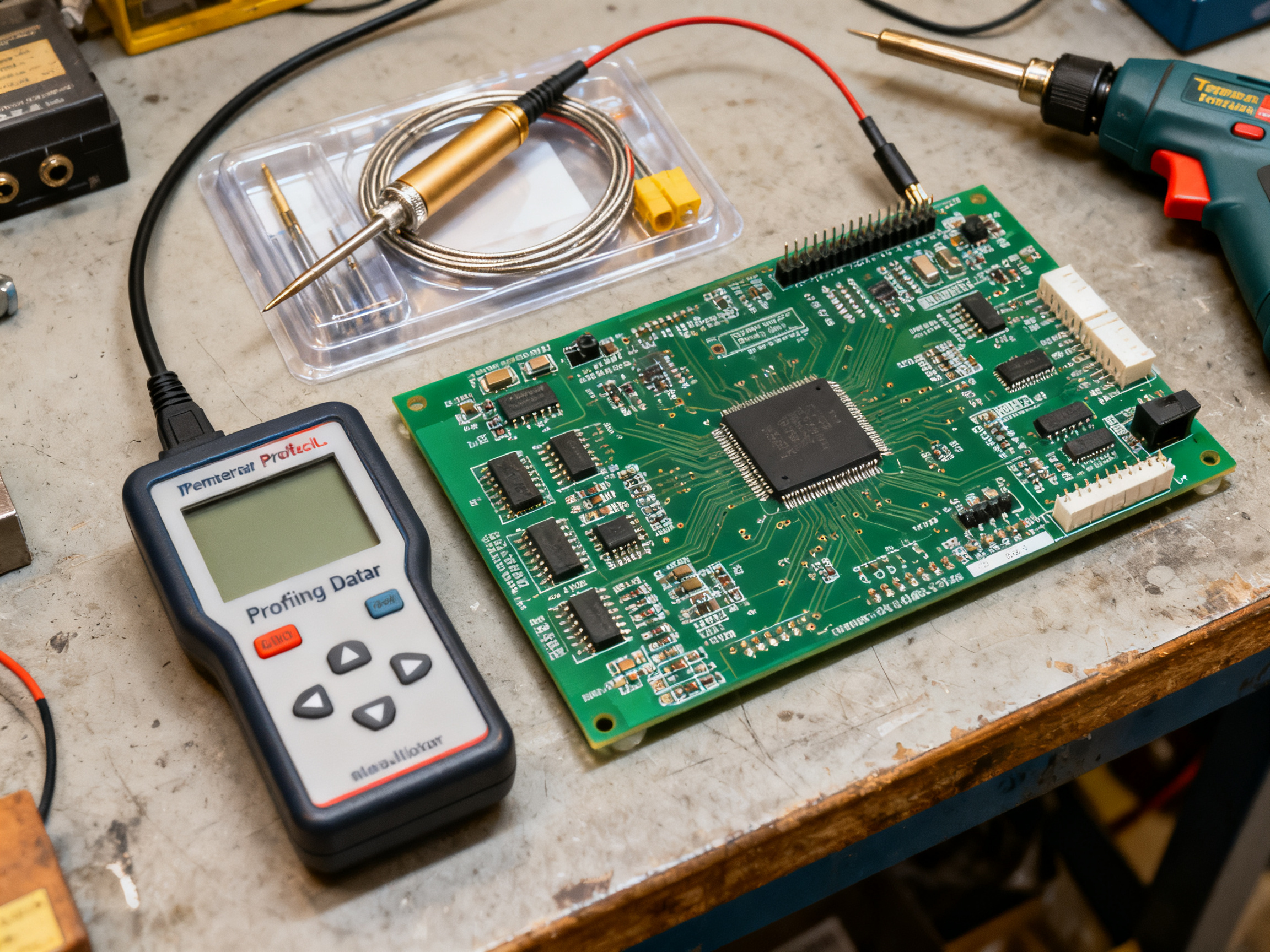
Expert Tip: When transitioning to professional equipment, spend time learning proper thermal profiling before running production boards. Even the best oven needs verification with a profiler before you commit to full production runs.
Conclusion: Selecting Your Ideal Reflow Oven for 2026
Alright, we have covered a lot of ground. Let me bring it all together so you can make a confident decision.
The quick version
If you are just starting out or working with tight budgets, a quality desktop reflow oven around $1,200 to $1,500 will serve you well for prototyping and small batches. The T-962A and similar units have proven themselves in real workshops. Go refurbished if you want to stretch those dollars further, just verify the service history first.
For growing shops that have outgrown their desktop unit but do not need full production volume, a benchtop conveyor oven like the Sun and Mountain Pro-Series bridges that gap nicely. You get continuous flow without the footprint of a production line.
When you are running serious volume, production ovens with multi-zone heating and integration capabilities are where the investment makes sense. The Heller and BTU lines have earned their reputation, and the energy efficiency gains in modern units pay back over time.
Looking ahead
AI-driven profiling, better nitrogen management, and vacuum reflow options are becoming more accessible. If you are planning a purchase now, consider how your equipment can adapt as these technologies mature.
Need help narrowing down the right fit for your specific operation? Sun and Mountain offers equipment consultations to match your production requirements with the right thermal processing solutions.
This guide should give you a solid starting point. Take your time, match the specs to your actual needs, and remember that the best oven is the one that fits your workflow and budget without cutting corners on quality.