
Published: 26 May 2026
Reading Time: 15 minutes
Reviewer: Reviewed by [Expert Name], Manufacturing Systems Analyst
You know that awkward moment when one machine is ready to go, but the next one is still busy? In an SMT line, that tiny delay can turn into a real headache fast. Boards pile up, operators step in, and the whole flow starts to feel clunky.
That is where buffer conveyors come in.
If you’re trying to understand how SMT buffer conveyor works, the simple answer is this: it gives printed circuit boards a safe waiting spot between machines, so the whole line keeps moving without constant stops. A standard transfer conveyor moves boards from A to B. A pcb buffer conveyor does more. It stores, releases, and spaces boards in a controlled way.
In 2026, that matters even more. Electronics makers are under pressure to raise output, cut manual touches, and keep quality steady. According to this guide on PCB buffer conveyors and SMT flow, buffer systems help decouple fast and slow processes so one machine does not keep forcing another to stop. That sounds simple, and honestly, it is. But the payoff can be big.
This article walks through what SMT and PCB buffer conveyors do, why they matter, and the common buffer system types you will see on modern assembly lines. If you’re sizing a new line or fixing bottlenecks in an older one, this will help you ask better questions before you buy.
[Author Name] is a specialist in electronic manufacturing systems with extensive knowledge of SMT equipment and production efficiency techniques. With over a decade of experience in the field, [Author Name] has helped numerous companies optimize their manufacturing lines and achieve cost-effective automation solutions.
Understanding SMT and PCB Buffer Conveyors
Let’s keep this plain.
An SMT buffer conveyor is a machine placed between production steps to hold and release PCBs when needed. A pcb buffer conveyor has one main job: protect line flow. It creates a small storage zone between machines, so an upstream process can keep running while a downstream process catches up.
A normal conveyor transports boards. A buffer conveyor transports and stores them.
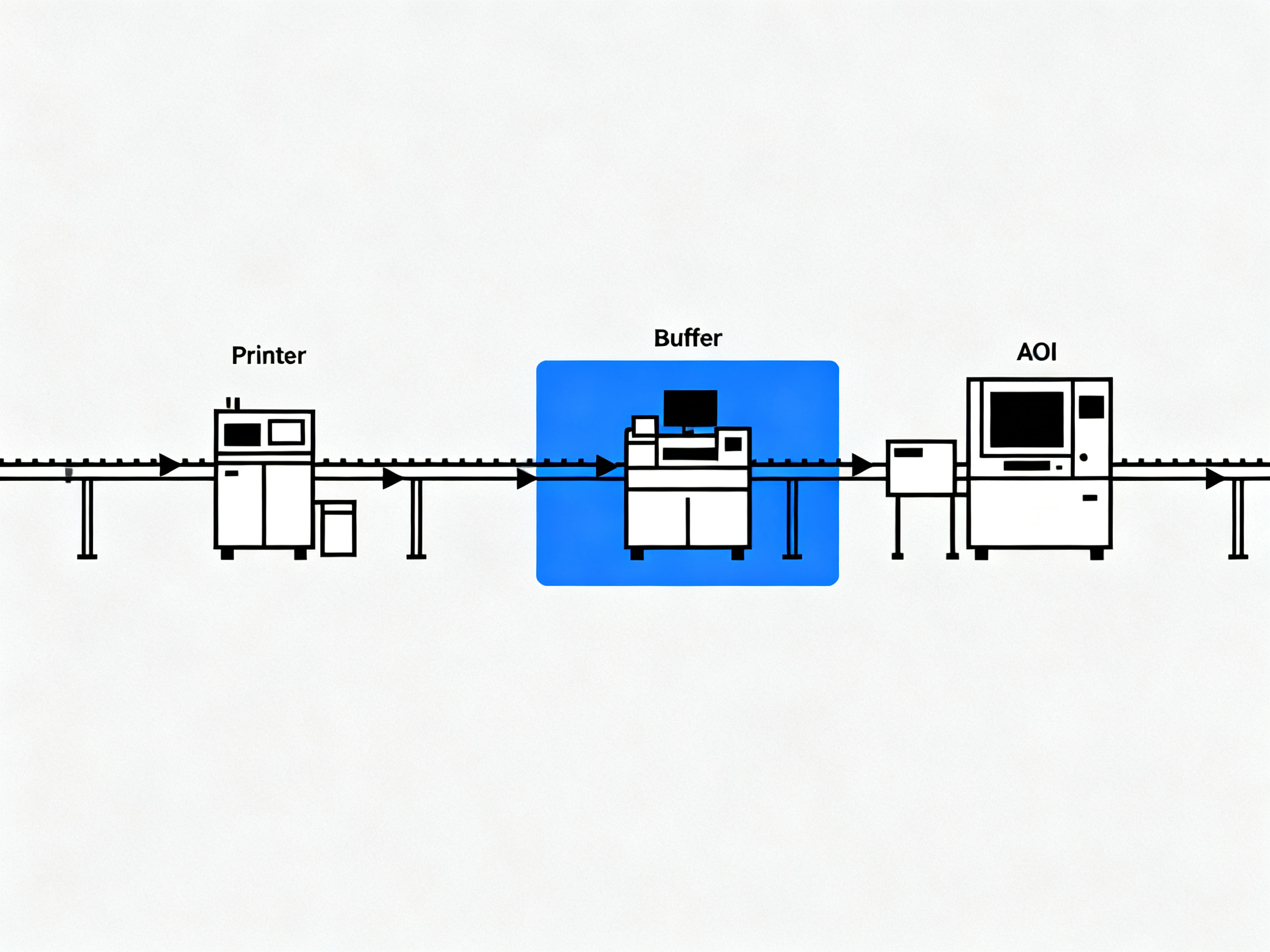
That difference is the whole point. If a pick-and-place machine is feeding boards faster than inspection can clear them, the buffer takes in those boards for a short time instead of forcing the full line to stop. So when people ask what SMT buffer conveyor is used for, that is usually the answer. It helps absorb speed differences between machines.
You will often hear this described as SMT buffer conveyor operation or PCB buffer conveyor functionality. Fancy wording, same core idea. Move the board, hold the board, then release the board at the right time.
What SMT Buffer Conveyors Actually Do on a Line
Here’s the deal, these systems are not just passive belts.
They help with several day-to-day production tasks:
- Move PCBs between machines like printers, pick-and-place units, reflow ovens, and AOI stations
- Temporarily store boards when the next machine is busy
- Reduce manual handling between process steps
- Lower the chance of board mix-ups, contamination, or bumps
- Keep the line from stopping during short slowdowns
- Support controlled release patterns like FIFO, LIFO, or pass-through on some models
If you have ever wondered how pcb handling buffer works in real life, think of it like a traffic light with a waiting lane. Cars do not all slam into the junction at once. They pause, line up, and move when space opens. Same idea here. Less chaos. Better rhythm.
For EMS and OEM teams, that rhythm can mean higher output and fewer operator interventions. And yes, fewer frantic moments on the floor at 4:47 pm when everyone just wants the line to behave.
Why Conveyors Matter for Production Efficiency
A conveyor sounds basic. But in SMT, basic equipment often carries the line.
When conveyors are set up well, boards move with stable spacing and less handling. That helps upstream and downstream machines stay fed without constant waiting. And when you add buffering, you get another layer of protection against small line interruptions.
We have seen this most clearly on mixed-speed lines, where one process consistently runs a little slower than the one before it. Without buffering, that mismatch keeps causing stops. With buffering, the faster machine gets some breathing room. The slower machine gets time to recover. The full line usually feels calmer after that.
This is one reason manufacturers in 2026 keep investing in automation in PCB handling. Labor costs are up, throughput targets are tighter, and nobody wants expensive equipment sitting idle because one station fell behind.
A buffer is not magic, of course. If the line design is poor, a buffer will not fix everything. But it can smooth short-term imbalances really well.
Common Types of Buffer Systems Used in Electronics Manufacturing
Not all buffer systems look the same. Some are compact. Some go vertical. Some are built for simple pass-through with a little extra storage, while others handle more advanced routing.
Here are the main types you will run into:
| Buffer system type | What it does | Best use case |
|—|—|—|
| Accumulation buffer | Holds boards in sequence during short slowdowns | Lines with minor speed mismatch |
| Conveyor buffer | Stores boards directly on a conveyor path | Standard SMT transfer between machines |
| FIFO/LIFO buffer | Releases boards in first-in-first-out or last-in-first-out order | Controlled product flow or process priority |
| Lift or vertical buffer | Stores boards across multiple levels | High-capacity buffering in small floor space |
| Rotary or circulation buffer | Moves boards through a loop or rotating system | Compact layouts with changing flow needs |
| AS/RS style WIP buffer | Uses automated storage and retrieval logic | Larger factories with more complex WIP control |
If your line space is tight, vertical or lift-based systems can be a smart fit. If your line is simpler, a conveyor buffer may be all you need. Sun and Mountain SMT, for example, offers PCB conveyor systems designed to fit into broader automation plans, which can be helpful for teams that want better flow without rebuilding an entire production line from scratch.
So, How Does an SMT or PCB Buffer Conveyor System Work?
At a basic level, here’s how smt buffer conveyor system works:
- A PCB arrives from the upstream machine.
- Sensors detect the board position.
- The conveyor either transfers it straight through or routes it into a temporary storage position.
- The system waits until the downstream machine is ready.
- The board is released in the required order.
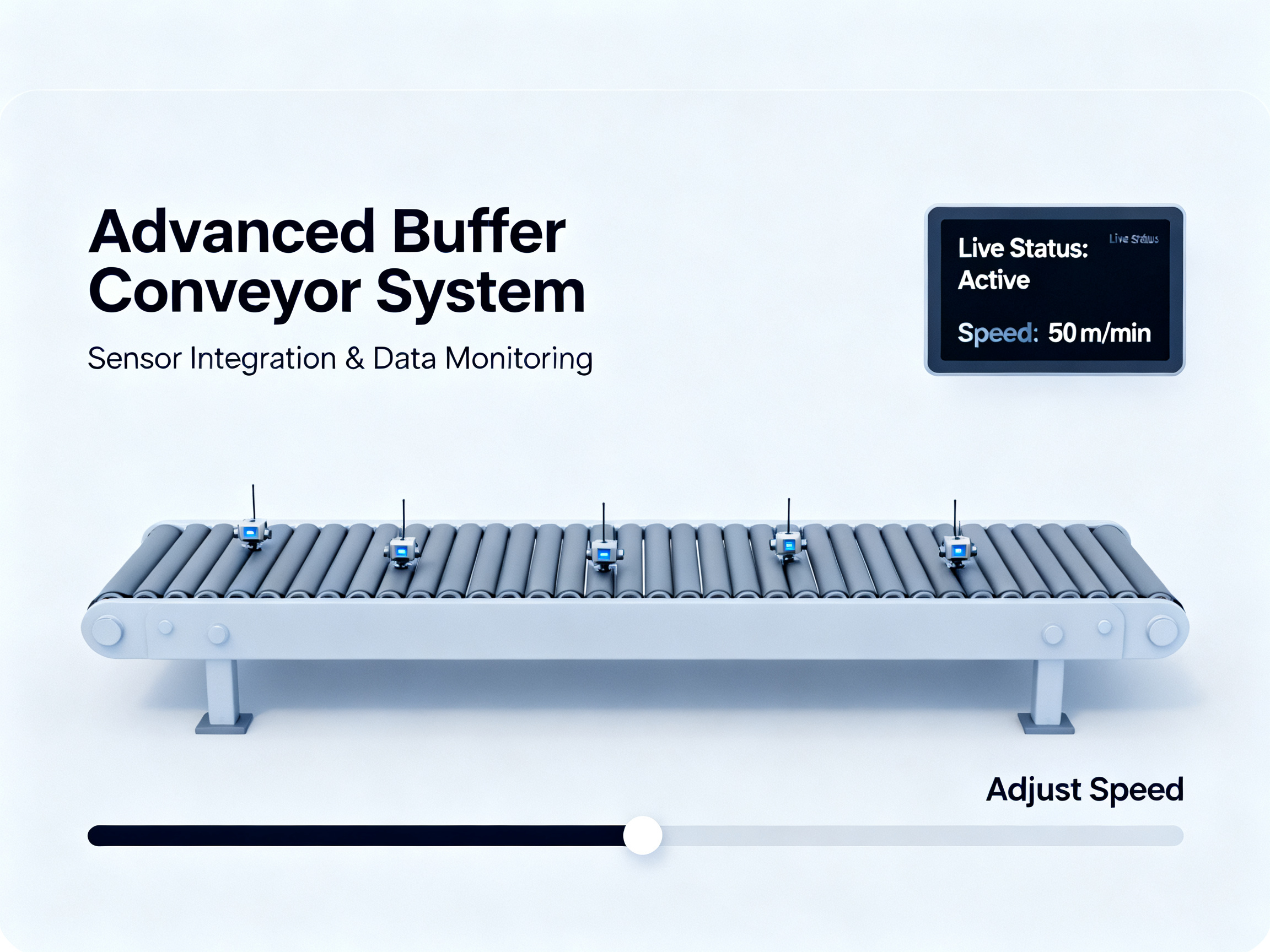
That is the short version of how pcb buffer conveyor system works too.
Some units use simple single-lane buffering. Others use elevators, stacked magazines, or multi-segment storage lanes. The design depends on line speed, board size range, and how much decoupling the process needs. If you’re searching for how smt line buffer works or how pcb handling buffering supports flow, this release-and-hold logic is the heart of it.
A lot of buyers also look for a how smt buffer conveyor works diagram. Fair enough. A diagram makes this much easier to picture.
Simple flow diagram
Upstream machine -> Entry conveyor -> Buffer storage zone -> Exit conveyor -> Downstream machine
And if the system uses vertical buffering, it may work more like this:
Upstream machine -> Entry -> Lift mechanism stores board on open level -> System waits -> Lift returns board to exit level -> Downstream machine
Short. Clear. That is really the logic.
Final Thoughts
SMT and PCB buffer conveyors do more than move boards around. They help protect uptime, reduce bottlenecks, and give each machine on the line a bit of breathing space. That is why they are such a common part of modern electronics assembly in 2026.
If you’re comparing options, focus on your real pain points first. Do you need more storage between fast and slow stations? Better FIFO/LIFO in SMT systems? Less manual board handling? Start there, then match the buffer type to the line behavior you already see every day.
And if your team is planning an automation upgrade, it may be worth looking at integrated conveyor and buffer options from specialists like Sun and Mountain SMT, especially if you want equipment that fits alongside reflow, transfer, and handling systems in one setup.
Good buffering does not just store boards. It gives your whole line room to work smarter.