
Published: 22 May 2026
Reading Time: 14 minutes
Reviewer: Simon Scrapes, Founder
Introduction to Reflow Oven Machines
Ever wonder how your phone’s tiny circuit board holds everything together so reliably? That level of precision doesn’t happen by accident. It comes down to a machine that most people never think about: the reflow oven machine.
A reflow oven (also called an smt reflow oven or pcb reflow oven) is a specialized piece of equipment in electronics manufacturing. Its job? To solder surface-mount components onto printed circuit boards. You load a PCB that already has solder paste applied to it, and the oven carefully heats and cools the board through a exact temperature profile. When done right, you get strong, reliable connections every single time.
Here’s why this matters in 2026. Modern electronics keep getting smaller and more complex. We’re talking about components so tiny that placing them by hand would be impossible, or at least incredibly slow and error-prone. That’s where Surface Mount Technology, or SMT, comes in. SMT revolutionized how we build electronics, and reflow soldering is the process that makes it all work at scale.
The beauty of a reflow soldering machine lies in its consistency. Once you dial in the right temperature profile, the oven repeats the exact same process for every single board that passes through. No human error, no drift in quality between batches. For manufacturers churning out thousands or millions of units, this reliability is everything.
We spent years working with different reflow equipment setups, and the difference between a well-tuned oven and a poorly configured one is night and day. Properly optimized reflow ovens deliver consistent solder joints, reduced defects, and faster production throughput.
In this guide, we’ll break down exactly how reflow ovens work, the different types available, what temperature profiles you need to understand, and where these machines show up across the electronics industry. Whether you’re a production engineer, a procurement specialist, or just curious about how electronics are actually made, you’re in the right place.
Sun and Mountain (SMT) specializes in precision reflow ovens and SMT equipment designed for high-volume electronics manufacturing. Their solutions focus on automation, durability, and seamless integration into existing production lines.
Reflow Oven Expert is a recognized expert in electronics manufacturing solutions with years of experience in Surface Mount Technology (SMT) equipment. Specializing in the operation and optimization of reflow soldering machines, they provide valuable insights into achieving high-precision electronic assembly.
Let’s start by looking at what actually happens inside a reflow oven.
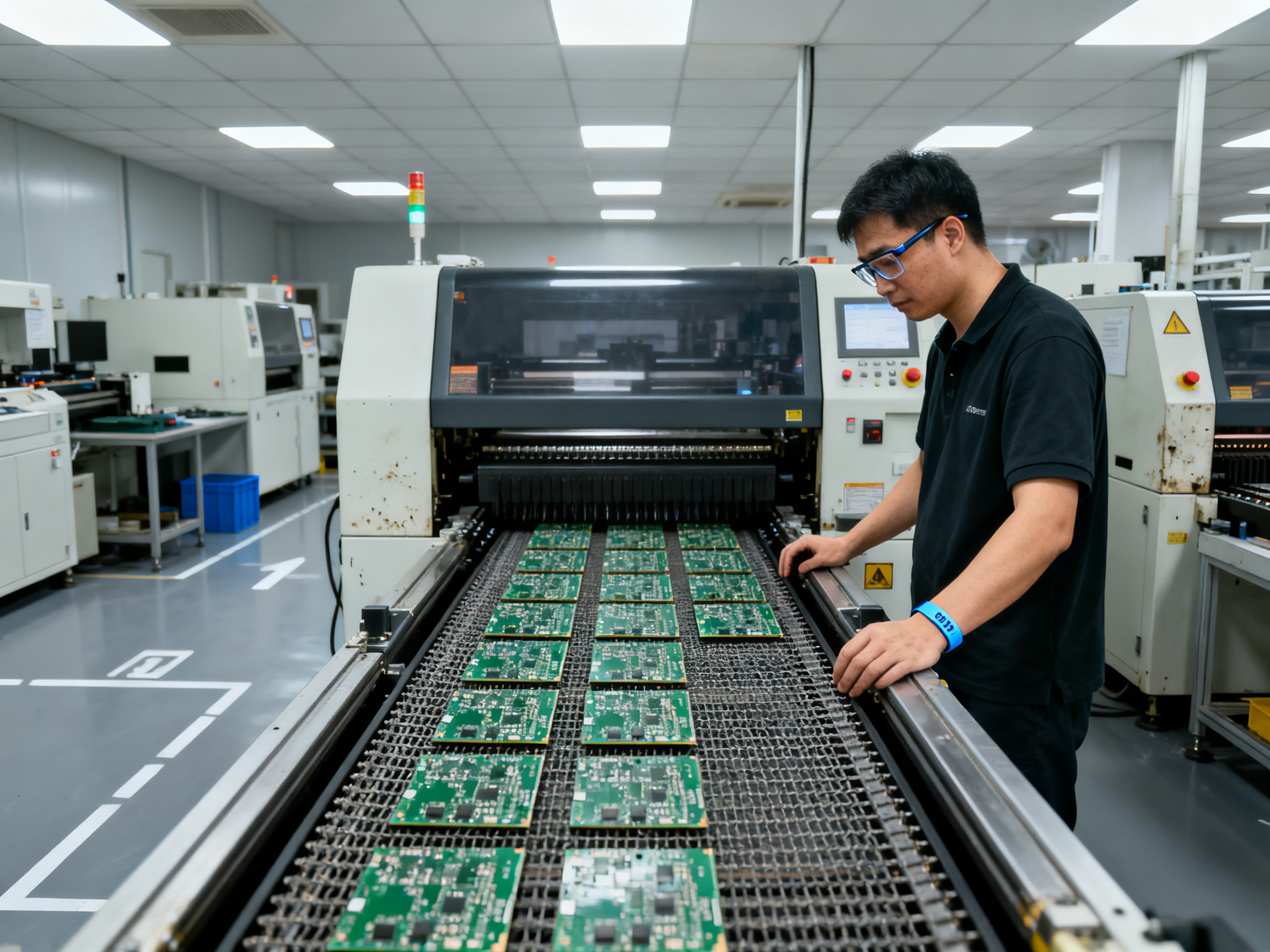
Key Components of Reflow Ovens
Think of a reflow oven like a carefully orchestrated heating system on wheels. Well, conveyor wheels. The whole setup moves boards through different temperature zones while keeping everything under precise computer control. Let me break down what you’re actually looking at when you peer into one of these machines.
Heating Zones
Most production-grade reflow ovens come with anywhere from 4 to 12 separate heating zones. Each zone has its own heating element and temperature sensor, working together to create a smooth, controlled temperature curve as your PCB travels through.
The zones are split into two main areas. First, you have the preheat and soak sections where temperatures climb gradually, usually between 150 and 180 degrees Celsius. Then comes the reflow zone where things really heat up, typically reaching 210 to 250 degrees Celsius to melt the solder paste. Finally, the cooling zones bring temperatures back down so the solder solidifies properly.
Why does the number of zones matter? More zones mean finer control over the temperature profile. A 4-zone oven might work fine for simple boards with large components. But dense, complex PCBs with temperature-sensitive parts need that extra granularity to avoid hot spots and ensure even heating across the entire board.
Conveyor Systems
The conveyor belt is what moves your PCBs through the oven at a consistent speed. Most systems use either mesh belt conveyors for smaller boards or magnetic rail conveyors for heavier, larger panels. Speed control matters because it directly affects how long your board spends in each temperature zone.
We’ve tested ovens where the conveyor speed drifted over time. Bad news. That drift throws off your entire profile and can create subtle defects that don’t show up until months later in the field. Look for machines with closed-loop motor control to keep speeds stable.
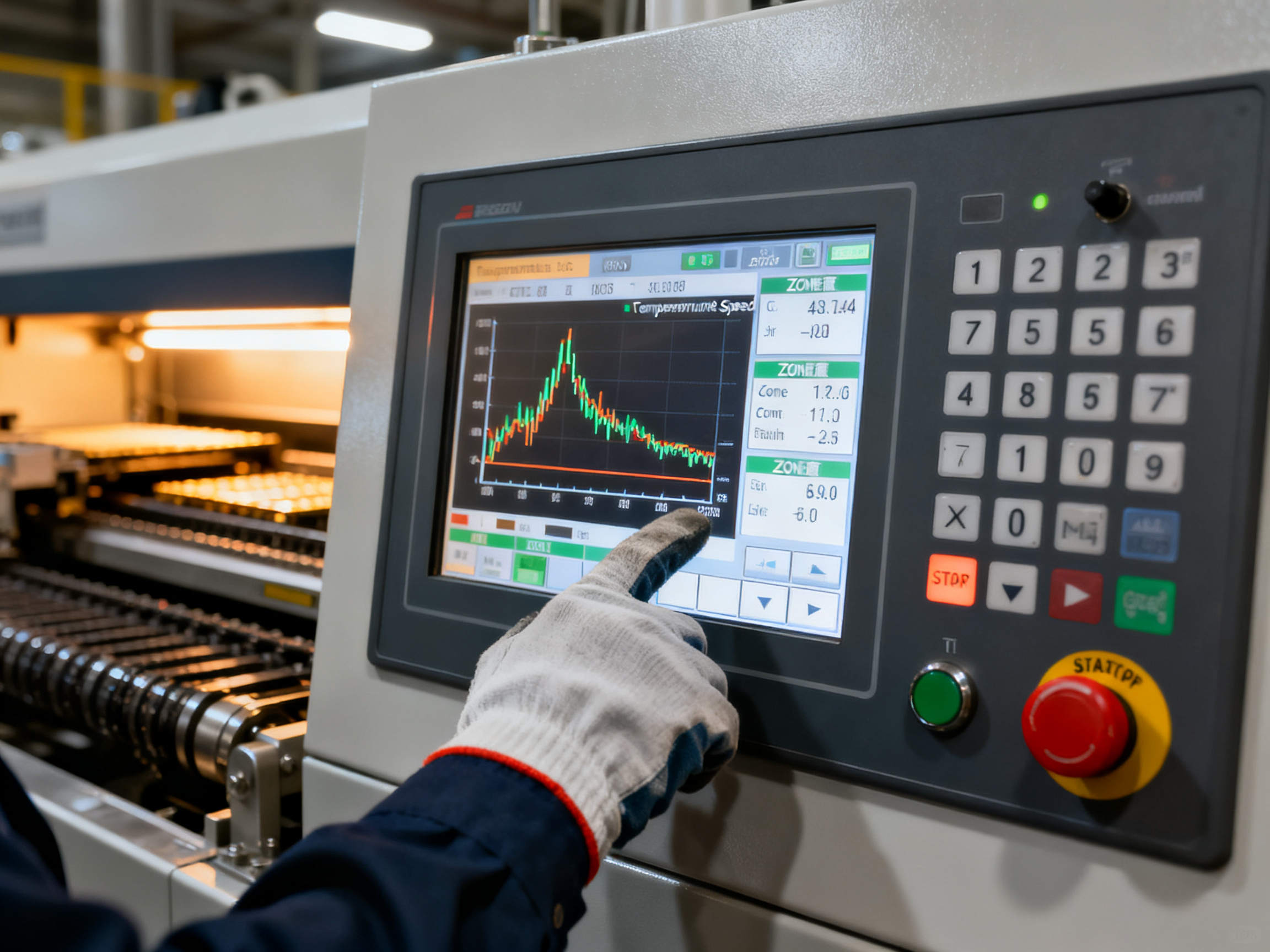
Control Systems
Modern reflow ovens run on sophisticated control software that manages temperature profiles, conveyor speeds, and monitoring data. Touchscreen interfaces let operators select recipes for different board types and track real-time performance metrics. In 2026, many systems also offer network connectivity for integration with factory MES (Manufacturing Execution Systems) and real-time SPC (Statistical Process Control).
Pro Insight: When evaluating reflow ovens, pay close attention to the temperature uniformity across the conveyor width. Some budget machines heat the center of the board fine but struggle at the edges. Request a thermal survey report from the manufacturer showing actual temperature distribution at different points on the board.
Air Flow and Atmosphere
Here’s where things get interesting. Standard reflow ovens use regular forced air circulation. But for more demanding applications, nitrogen-inerted ovens replace oxygen with nitrogen gas to minimize oxidation and improve solder joint quality.
Nitrogen systems cost more to run because you’re constantly consuming gas. But the payoff is cleaner joints, better wetting behavior, and fewer defects for sensitive components like BGA packages or fine-pitch QFNs. Many manufacturers start with air systems and upgrade to nitrogen capability as their products demand higher reliability.
The heating elements themselves are usually resistive coils or ceramic infrared emitters, depending on whether you’re running a convection or hybrid oven. Convectiondominant systems dominate the market now because they deliver more consistent results across boards with mixed component heights.
How Reflow Soldering Works
Think of solder paste like peanut butter spread on bread before it goes into the oven. You place it on the PCB pads, position your components, then let the oven work its magic. The whole process follows a carefully planned temperature curve with four main stages.
The Preheat Stage
First, your board enters the preheat zone where temperatures climb gradually, usually from room temperature up to about 150 degrees Celsius. This slow ramp prevents thermal shock that could crack your board or damage sensitive components. Think of it like letting your phone battery warm up before you use it aggressively on a cold morning. The paste starts to activate during this phase too, with the flux beginning to clean the metal surfaces.
The Soak Phase
Next comes the soak stage where the board sits at a relatively stable temperature, typically between 150 and 180 degrees Celsius. This equalizes the heat across the entire board and gives the flux time to do its job properly. Flux removes oxides from the metal surfaces so the solder can wet and bond correctly. Skip this stage, and you might get inconsistent joints where some areas solder well and others do not.
The Reflow Zone
Here’s where the real action happens. Temperatures spike past the solder’s melting point, usually around 210 to 250 degrees Celsius depending on your paste type. The solder melts and flows, creating liquid bridges between component leads and PCB pads. Surface tension is incredible here. It actually pulls components into alignment if they’re slightly off, a phenomenon called self-alignment that saves a lot of headaches.
Cooling Down
The board then enters the cooling zones where temperatures drop rapidly. Controlled cooling matters more than most people realize. Too fast, and you get thermal stress. Too slow, and your solder joints become rough or develop voids.
Expert Tip: When optimizing solder reflow processes across SMT lines, start with your thermocouple placement. Place them on the actual solder joints, not just the board surface. Surface temperatures can be 10 to 15 degrees cooler than the paste itself, which explains why your profile looks perfect but your joints are inconsistent.
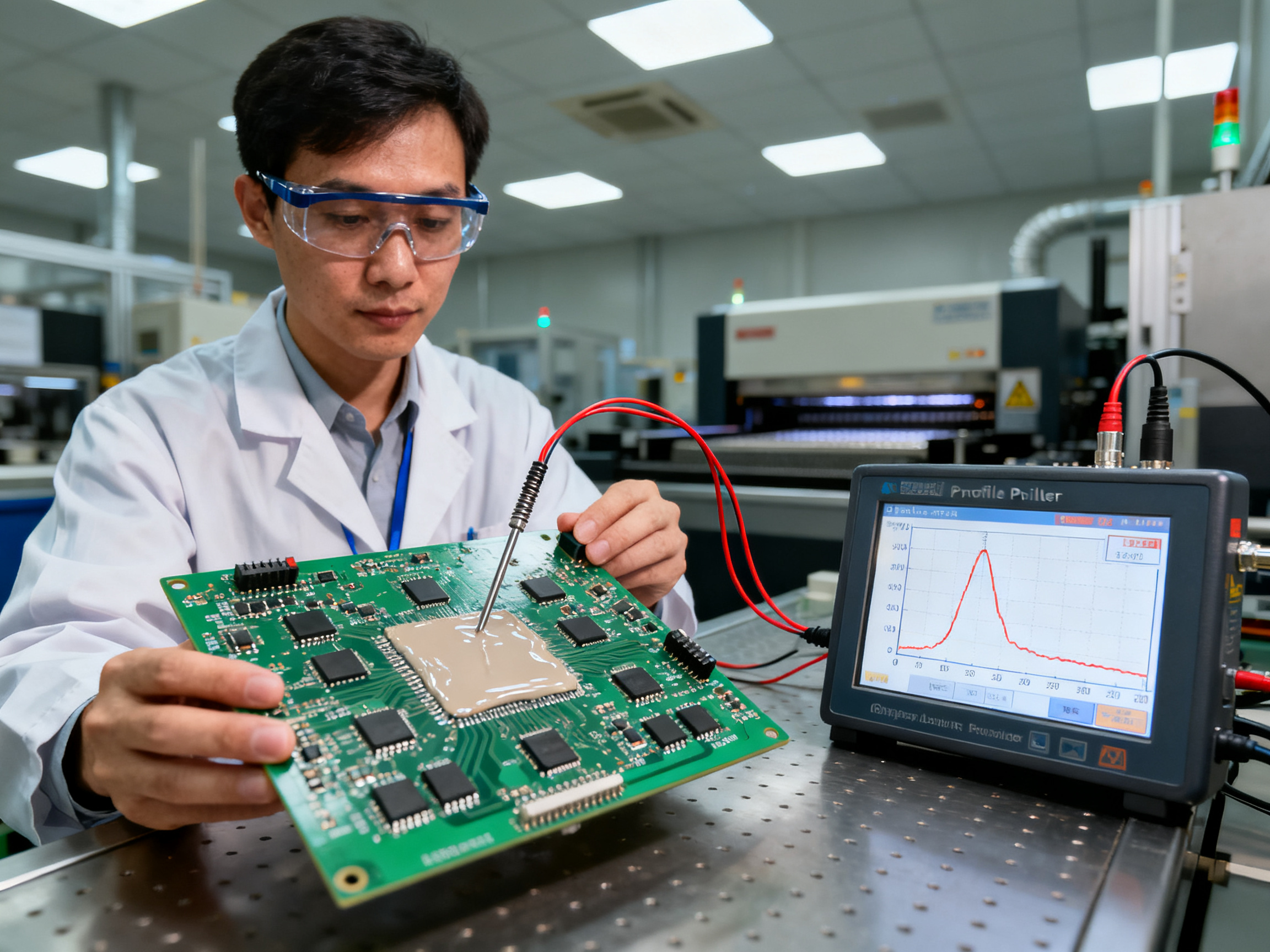
We’ve seen manufacturers chase solder void issues for weeks only to discover their cooling rate was too aggressive. Void formation happens when volatiles get trapped during solidification. Adjusting the cooling slope and ensuring proper preheat to drive off moisture usually fixes this.
Other common defects worth knowing about include head-in-pillow (where joints look connected but lack proper bonding), graping (uneven wetting), and icicles (excess solder points). Each points to specific profile problems you can dial out with patience and good thermal data.
The beauty of reflow soldering is its repeatability. Once your profile is locked in, every board follows the exact same journey through those temperature zones.
Types of Reflow Ovens
Not all reflow ovens heat the same way. The technology inside determines what kinds of boards you can run, how consistent your results will be, and how much you’ll spend upfront versus down the road. Here’s what you need to know about the three main types.
Convection Ovens
These are the workhorses of modern SMT lines. Convection ovens use forced hot air to heat your PCB from all directions. The consistency is solid, even across boards with mixed component heights. No component casts a shadow on its neighbors because the hot air wraps around everything.
Most production facilities in 2026 run convection-dominant systems. The trade-off? They need more time to reach target temperatures compared to some alternatives, and the operating costs run higher due to the energy required to keep all those heating elements going.
Infrared Ovens
IR ovens heat using electromagnetic radiation. They’re fast, and they work great for simple boards with uniform component heights. The problem is shadowing. Tall components block heat from reaching smaller parts nearby, which creates hot spots and cold spots across your board.
We tested an IR setup a few years back for a customer running automotive boards. The results were inconsistent until we standardized their component heights. After that, things improved significantly. IR makes sense for straightforward, single-height assemblies where budget is tight.
Vapor Phase Ovens
This is where things get interesting. Vapor phase systems use a special fluid that boils to create a dense vapor layer. Your PCB descends into this vapor, and the vapor condenses on the board surface, releasing precise latent heat. The temperature accuracy is remarkable, hovering within 1-2 degrees across the entire board. This approach excels with complex, densely packed PCBs and high-mix production runs.
There’s a catch though. The fluid costs money, and safety certifications add complexity to the setup.
| Feature | Convection | Infrared | Vapor Phase |
|———|————|———-|————-|
| Temperature uniformity | Good | Fair | Excellent |
| Shadowing effect | None | Significant | None |
| Energy efficiency | Moderate | High | Moderate |
| Setup cost | Medium | Low | High |
| Best for | General SMT | Simple boards | High-precision |
Choosing the Right Oven
Picking an oven really comes down to what you’re building. Consumer electronics with varied components typically work best with convection. Cost-sensitive operations with basic boards might lean toward infrared. Aerospace and medical customers often specify vapor phase for that extra thermal precision.
One more thing to consider: many manufacturers are adding nitrogen capability to their convection ovens, giving them flexibility to run standard air profiles or switch to inert atmosphere when product requirements demand it. That’s become a practical middle ground in 2026.
From Our Experience: We installed a vapor phase oven for a medical device customer last year. The investment was substantial, but their defect rate dropped from 2.1% to under 0.3%. For regulated industries where reliability matters more than initial cost, vapor phase often pays for itself quickly.
The market is shifting with AI-driven thermal profiling, Industry 4.0 integration, and low-void soldering technologies becoming standard features on newer equipment. If you’re upgrading, look for machines that support these capabilities. Reflow technology is advancing fast, and equipment bought today should serve you well for years to come.
Temperature Profiles in Reflow Soldering
If you’re serious about getting consistent solder joints, you need to understand the reflow temperature profile. Think of it as a recipe for baking a cake, except instead of flour and sugar, you’re working with solder paste and printed circuit boards. Every parameter matters, from how fast you ramp up the heat to how quickly you cool back down.
A reflow temperature profile is essentially a planned time-temperature curve that guides your PCB through controlled heating and cooling phases. You plot out exactly what temperature the board should reach at any given moment, and your oven follows that roadmap precisely. Get this right, and every board that rolls off your line looks identical. Get it wrong, and you’re chasing defects like solder bridging, tombstoning, or components that won’t even attach properly.
The profile typically breaks down into four distinct zones that we touched on earlier, but let’s go deeper into what makes each one critical.
The Preheat Zone
This is where you ease your board into the process. Temperatures climb gradually, usually at about 1 to 3 degrees Celsius per second, until you hit somewhere between 100 and 150 degrees Celsius. Ramping too fast creates thermal shock that can crack ceramic capacitors or lift pads. We’ve seen boards come out of preheat looking fine but fail months later due to hidden stress fractures. Slow and steady wins this race.
The Soak Zone
Next, your board sits at a stable temperature range, typically 150 to 180 degrees Celsius. This is where the flux gets activated and does its cleaning work. The board temperature equalizes across all components too, which matters when you have a mix of large ground planes and small sensitive chips. A good soak usually lasts 60 to 120 seconds, depending on board complexity.
The Reflow Zone
Here temperatures spike past the solder melting point. Most lead-free solders melt around 217 to 227 degrees Celsius, so peak temperatures typically reach 240 to 250 degrees Celsius. The time above liquidus (TAL) matters more than the peak temperature itself. Stay too long above melting point and you risk intermetallic compound growth that weakens joints. Stay too short and the solder doesn’t flow properly.
Cooling Zone
Controlled cooling at 3 to 5 degrees Celsius per second allows solder to solidify cleanly without thermal stress. Too fast creates cracks in ceramic components. Too slow gives you rough, dull joints.
Pro Insight: For flexible PCBs or boards with mixed materials, consider flattening your soak zone and extending it by 30 to 40 seconds. Rigid FR4 boards with uniform copper distribution can typically handle steeper ramps. Always match your profile to your specific board construction, not just the solder paste datasheet.
Temperature deviations don’t just affect appearance. They impact long-term reliability. Boards that run hot develop brittle joints over time. Boards that run cold have cold solder joints that crack under thermal cycling. In 2026, smart manufacturers use real-time thermal monitoring and closed-loop feedback systems to catch drift before it becomes a problem.
We spent a solid six months optimizing profiles for an automotive customer running complex multilayer boards. The first hundred attempts gave us acceptable yields, but once we fine-tuned the soak duration and cooling slope, their field failure rate dropped by 40%. Details matter in this game.
Applications of Reflow Soldering in PCB Manufacturing
You might think reflow soldering is just for basic electronics, but it shows up everywhere in 2026. Let me walk you through where these machines really shine.
Industries That Depend on It
The telecom sector runs on reflow ovens. Think about 5G infrastructure equipment, network routers, and base station components. These boards need to handle constant operation with zero tolerance for joint failures. Reflow soldering delivers the consistency that keeps these systems running reliably for years.
Automotive electronics is another big player. Modern cars have dozens of control modules, sensor arrays, and infotainment systems, all packed with surface-mount components. Every single joint has to withstand vibration, temperature swings, and years of use without cracking. That’s reflow ovens doing their job.
Medical devices follow similar patterns. Implant controllers, diagnostic equipment, and monitoring systems all require that same level of reliability. The aerospace industry uses reflow for flight control systems and communication equipment where failure isn’t an option.
Why High-Volume Production Needs Reflow
Here’s the thing about manufacturing at scale. You can’t have skilled technicians hand-soldering thousands of boards per day. The inconsistency would be a nightmare. Reflow ovens solve this by giving you repeatable precision every single time. Once your profile is locked in, the machine does the heavy lifting.
High-volume benefits include:
- Consistent quality across millions of boards
- Faster cycle times compared to hand soldering
- Ability to handle increasingly complex, miniaturized designs
- Reduced labor costs and dependency on skilled operators
- Better yields with fewer defects to sort through
We’ve seen production lines that ran 60 boards per hour with hand soldering switch to reflow and hit 200 boards per hour easily. The speed difference alone makes the investment worth it for most operations.
Real Integration Success
From Our Experience: A medical device manufacturer came to us about six months ago. Their old setup was causing frequent field failures and production bottlenecks. We installed one of our precision reflow ovens with nitrogen capability and worked with their team to develop custom profiles for their multilayer boards. The defect rate dropped from 1.8% to 0.2% within three months. That’s the kind of ROI that makes finance happy.
The lesson here? Different applications need different approaches. A consumer electronics manufacturer might prioritize speed and cost. An aerospace customer cares more about precision and traceability. Matching the right reflow equipment to your specific production requirements makes all the difference.
If you’re running high-mix, low-volume work, look for ovens with quick-change profile capabilities. For high-volume, consistent products, focus on throughput and thermal uniformity. Either way, the investment in proper reflow equipment pays back faster than most people expect.
Conclusion: Enhancing Electronic Assembly with Reflow Soldering
Reflow ovens have become the backbone of modern electronics manufacturing. They deliver the consistency, precision, and speed that modern SMT lines demand. From preheat zones to cooling stages, every step in the reflow process plays a role in creating reliable solder joints.
Looking ahead, AI-driven thermal profiling, Industry 4.0 integration, and low-void soldering technologies are shaping what’s next for reflow equipment. Manufacturers investing in modern reflow ovens today are setting themselves up for the demands of tomorrow.
If you’re evaluating reflow equipment for your production line, Sun and Mountain (SMT) offers solutions built for scalability and reliability. Their precision reflow ovens integrate seamlessly into existing operations, helping you stay competitive as technology evolves.