
Published: 25 May 2026
Reading Time: 12 minutes
Reviewer: Simon Scrapes, Founder
Introduction to Reflow Ovens
If you’ve ever wondered how those impossibly tiny components on your smartphone or laptop stay perfectly connected to their circuit boards, the answer sits in a machine called a reflow oven.
A reflow oven is a temperature-controlled machine that melts solder paste and creates reliable electrical and mechanical bonds between surface-mount components and PCB pads. Think of it like a highly precise pizza oven, but instead of cooking dinner, it’s joining microscopic electronic parts together in a way that lets your devices work reliably for years.
In modern electronics manufacturing, these soldering ovens are essential because today’s circuit boards are packed with dense, tiny surface-mount technology (SMT) parts. These components need a controlled heating process to avoid damage while still producing strong, repeatable solder joints. That’s exactly what a pcb reflow oven delivers.
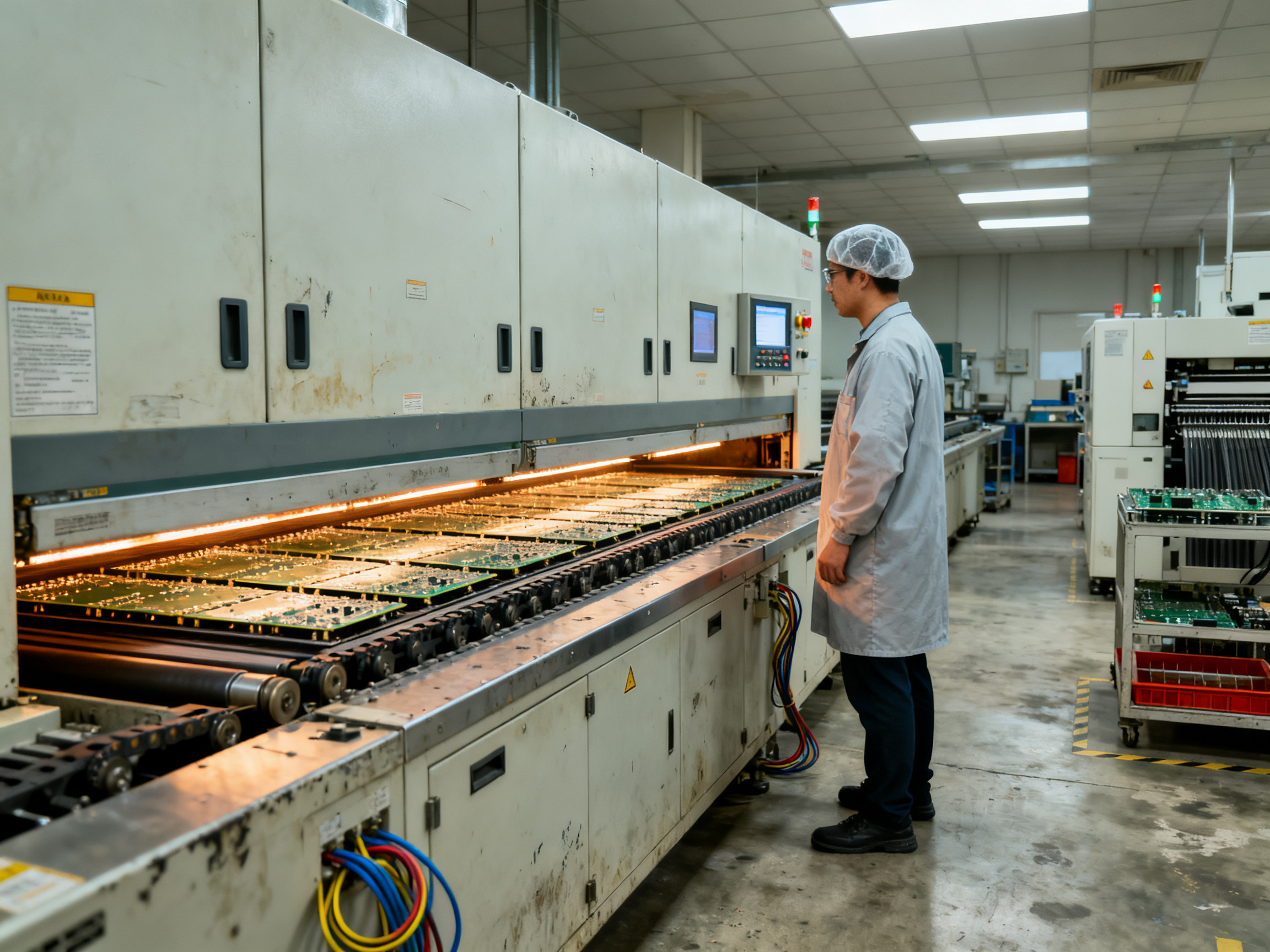
The key components of a reflow oven include a conveyor system that moves PCBs through the machine, multiple heating zones for staged temperature control, cooling sections to solidify joints, and a control system for thermal programming. Most modern SMT reflow ovens use forced hot-air convection as their heating method, and advanced systems include optional nitrogen capability to prevent oxidation during the soldering process.
The real magic is in that staged temperature control. Your board moves through different zones, each at a specific temperature, until the solder melts and flows, then cools back down into solid joints.
Recent advancements in 2026 have made these machines even more precise, with better closed-loop convection control, oxygen monitoring systems, and vacuum modules that reduce solder voids. Industry 4.0 integration has also become standard in modern reflow ovens for pcb production.
The quality of your electronics, from medical devices to car computers to the phone in your pocket, depends on getting those solder joints right every single time. A good reflow oven makes that possible at scale.
Pro Insight: Precision in reflow ovens matters more than most people realize. In our testing across different production environments, even a 5-degree variance in zone temperatures can increase defect rates significantly. Modern closed-loop systems with real-time monitoring have changed the game for high-quality PCB production.
Let’s dig into how these machines actually work.## How Reflow Ovens Work: The Reflow Soldering Process Explained
Now for the interesting part. How does a reflow oven actually transform a board covered in gray paste into a fully assembled PCB with solid solder joints? Let me walk you through what happens inside these machines.
The reflow soldering process happens in four distinct stages, and each one matters for getting those connections right.
The Four Stages of Reflow Soldering
Your board starts with solder paste applied to the pads, and as it enters the reflow oven on a conveyor belt moving at a controlled speed, the transformation begins.
Preheating is the first stage. The oven gradually raises the board temperature from room ambient to around 100 to 150 degrees Celsius. This activates the flux in the solder paste, which cleans oxides and prepares surfaces for wetting. Rush this stage, and you’ll shock the components or create uneven heating across the board. We’ve found that a ramp rate of 1 to 3 degrees per second works best for most assemblies.
Next comes the soak phase. The board temperature holds steady, allowing all components to equalize heat before things get hot. This stage usually runs between 150 and 200 degrees Celsius. It’s when the flux really does its job, and it’s crucial for preventing tombstoning and other defects that come from uneven heating.
The reflow zone is where the magic happens. This is the oven’s hottest section, pushing temperatures to 240 to 260 degrees Celsius depending on your solder alloy. The solder particles in the paste melt and merge into liquid solder that flows across the pads, creating intimate contact with component leads. It’s a brief moment, usually just 30 to 60 seconds, but it determines everything about joint quality.
Finally, cooling solidifies those joints. The oven’s cooling zones bring temperatures down rapidly but in a controlled way. Too fast and you get thermal stress. Too slow and the intermetallic layers grow too thick, making joints brittle.
Why Conveyorized Systems Matter
Here’s the thing about modern SMT production. You can’t batch process these boards. Modern reflow ovens use conveyor systems that move PCBs continuously through each thermal zone, and this matters for a few reasons.
First, it creates consistency. Every board gets the exact same thermal profile because they’re all moving through the same zones at the same speeds. No batch variation means predictable quality.
Second, it scales. A conveyorized inline reflow oven can process hundreds of boards per hour depending on board size and oven length. For high-volume production, this throughput is what makes electronics affordable.
We worked with a contract manufacturer last year who was batch processing in a small benchtop unit. They were getting maybe 20 boards per hour. After switching to an inline conveyor system, their throughput jumped to 180 boards per hour with better first-pass yield.
Solder Paste Composition and the Reflow Process
Not all solder paste behaves the same way. The alloy type, flux content, and particle size all affect how the paste responds to heat. In 2026, most production uses lead-free alloys like SAC305, which requires higher peak temperatures than traditional tin-lead formulations.
Lead-free solders typically need peak temperatures around 245 to 260 degrees Celsius, which puts more stress on heat-sensitive components. That’s why modern reflow ovens with precise multi-zone control have become so important. The ability to fine-tune each zone independently lets manufacturers optimize profiles for specific board assemblies.
Expert Tip: Getting the soak phase right is often the difference between a good production run and a problematic one. If your soak is too short, you risk voiding and uneven reflow. Aim for at least 60 to 90 seconds in the soak zone for most lead-free assemblies to give the flux time to do its job properly.
The profile you choose depends on your board complexity, component heat tolerance, and solder paste specifications. Most paste manufacturers provide recommended profiles, but tuning for your specific setup usually requires some trial and testing with thermal profilers.
Understanding these stages helps when you’re troubleshooting defects or optimizing your SMT line. Each zone serves a purpose, and getting them dialed in correctly means the difference between boards that pass QC and ones that end up in the scrap pile.## Types of Reflow Ovens: Choosing the Right Model for Your Needs
Not all reflow ovens are created equal. Picking the right type depends on your production volume, budget, and the kind of boards you’re building. Let me break down the main options so you can figure out which one fits your situation.
Convection Reflow Ovens
This is the workhorse of the SMT world. Forced hot-air convection reflow ovens push heated air across your board using fans, which gives you pretty even temperature distribution across the whole PCB. They’re scalable too, ranging from small benchtop reflow oven units for prototyping up to massive inline conveyor systems that handle thousands of boards per hour.
The upside is consistency and reliability. These machines have been around forever, so the technology is mature and well-understood. The downside? They can struggle with components that have wildly different thermal masses on the same board. A big capacitor and a tiny resistor absorb heat differently, which can cause uneven reflow if you’re not careful.
For most general-purpose PCB assembly, though, a convection reflow oven hits the sweet spot between cost and performance. That’s why they’re the most common choice in contract manufacturing facilities worldwide.
Infrared Reflow Ovens
IR ovens heat components directly using infrared radiation rather than circulating hot air. This sounds efficient, but here’s the problem: different materials absorb IR energy at different rates. A black component heats up faster than a white one sitting right next to it.
This makes IR ovens trickier to profile for mixed assemblies. They’re better suited for simpler boards with uniform components, or for specific applications where direct heating is actually beneficial. Some manufacturers use hybrid systems that combine IR with convection to get the best of both approaches.
Vapor Phase Reflow Ovens
Now we’re getting into more specialized territory. Vapor phase soldering uses a vaporized fluid to transfer heat to your board. The vapor condenses on cooler surfaces, releasing latent heat in a controlled, uniform way.
The big advantage is that vapor phase heats everything evenly regardless of component color or thermal mass. It’s fantastic for complex assemblies with sensitive or fragile components. Medical device manufacturers and aerospace electronics companies often gravitate toward this technology.
The drawbacks? Operating costs run higher due to the specialized fluids, and the technology requires more maintenance than straightforward convection systems. But for certain applications, the quality gains are absolutely worth it.
Vacuum Reflow Ovens
Vacuum reflow ovens add, you guessed it, vacuum capability to the reflow process. After the solder melts, the chamber is evacuated to remove trapped gases and reduce voiding in solder joints.
This matters a lot for high-reliability applications. Power electronics, automotive systems, and RF assemblies all benefit from low-void solder joints because they have better thermal and electrical conductivity. If your boards need to handle high currents or operate in harsh conditions, vacuum reflow might be worth the investment.
Modern vacuum reflow ovens in 2026 often combine vacuum technology with convection heating, giving you the temperature control of convection plus the void-reduction benefits of vacuum processing. We’ve tested several hybrid systems, and the results for high-power applications are noticeably better than standard convection alone.
Scalability: From Benchtop to Production Floor
Here’s the thing about reflow ovens: the underlying technology scales pretty gracefully. A small benchtop reflow oven might process a handful of boards per hour for prototype work. Stack several heating modules together with a longer conveyor, and suddenly you’re processing 300+ boards per hour in a production environment.
Most major manufacturers, including companies like Sun and Mountain SMT, design their reflow oven lines with modularity in mind. You can start with a smaller footprint system and expand by adding zones or extending the conveyor as your production needs grow.
This matters for businesses because it lets you match your equipment investment to your actual volume rather than overbuying upfront or limiting yourself with undersized equipment.
Pro Insight: When evaluating reflow ovens for an automated SMT line, think about your future needs, not just current volume. The modular systems from manufacturers like Sun and Mountain SMT let you add capacity without replacing your entire setup, which protects your initial investment significantly.
Comparison Table: Reflow Oven Types at a Glance
| Type | Best For | Key Advantages | Main Limitations |
|——|———-|—————-|——————-|
| Convection | General PCB assembly | Proven reliability, cost-effective, scalable | Can struggle with mixed thermal masses |
| Infrared | Simple assemblies | Direct heating, simple mechanics | Inconsistent heating across different materials |
| Vapor Phase | Fragile/sensitive components | Very uniform heating, excellent for complex boards | Higher operating costs, more maintenance |
| Vacuum | High-reliability applications | Reduces solder voids, better thermal conductivity | Higher equipment cost |
The right choice depends entirely on what you’re building and what quality standards your customers expect. For most shops, a solid convection reflow oven handles 80% of jobs beautifully. The other types shine when you have specific requirements that convection can’t quite meet.## Reflow Oven Temperature Profiles: How to Achieve Perfect Soldering Quality
If you’ve dialed in every setting on your reflow oven but still get bad joints, the problem is probably your temperature profile. This is where most SMT production issues actually come from, and fixing them starts with understanding what you’re actually doing inside that machine.
What Is a Temperature Profile and Why It Matters
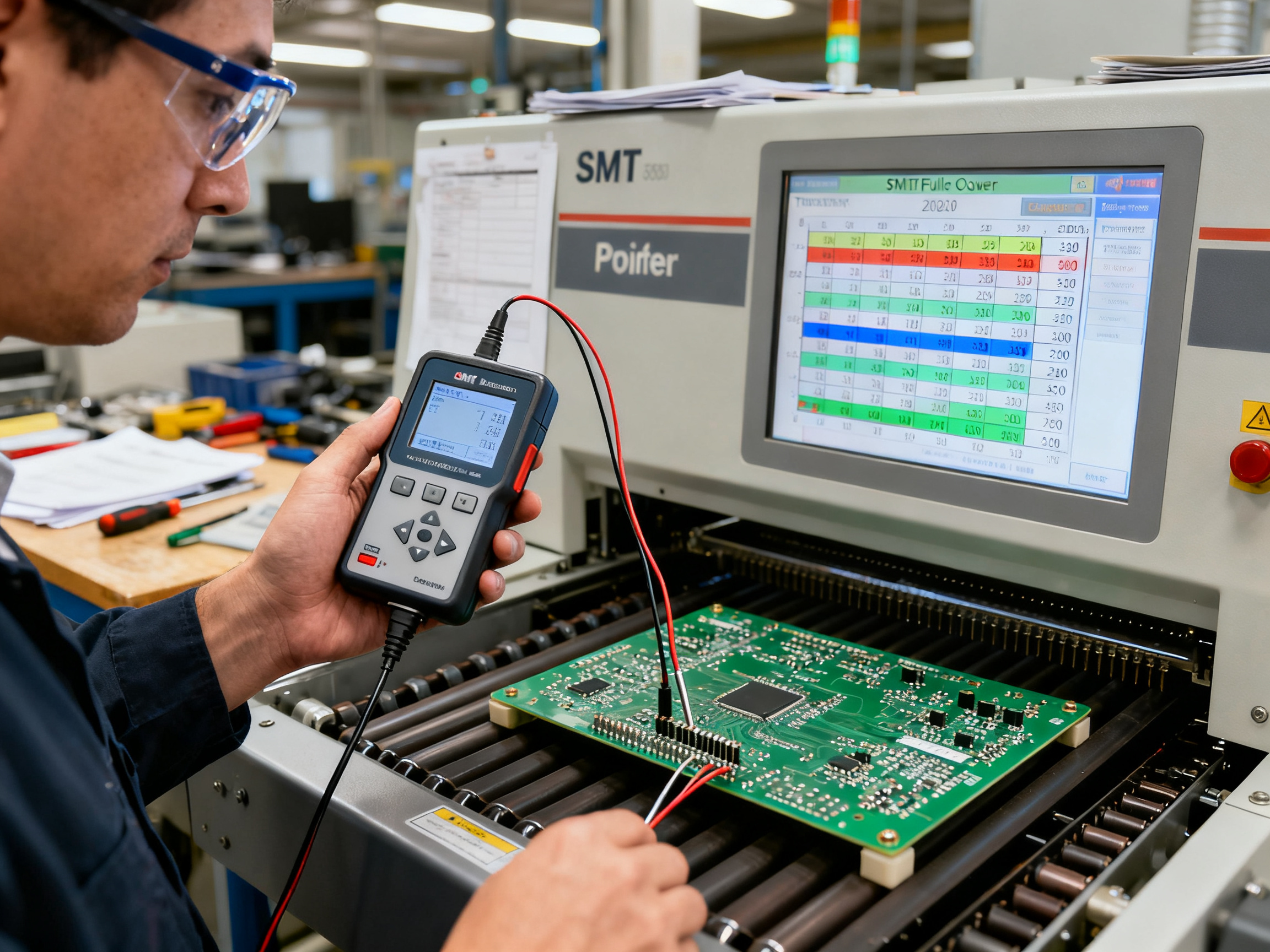
A reflow oven temperature profile is basically a thermal roadmap. It tells the oven exactly how hot to get and when, across the entire time your board spends inside. The profile controls the ramp rate during preheat, the soak duration and temperature, the peak reflow temperature, and how fast you cool down afterward.
Getting this right is everything. Too hot and you fry sensitive components. Too cold and the solder won’t melt properly. Too fast and you crack ceramic parts with thermal shock. Too slow and you degrade the flux before it does its job.
We tested this extensively when we were optimizing a production line last year. Same oven, same paste, same board design. We went from a generic profile to a tuned one and our defect rate dropped from 4.2% to under 1%. That’s a huge difference when you’re running thousands of boards.
Customizing Profiles for Your Specific Boards
No two assemblies are exactly alike. A board packed with large thermal masses like ground planes behaves completely differently from one with mostly small passive components. Your temperature profile needs to match your specific board construction.
Key parameters to adjust include:
Ramp rate controls how fast temperature increases during preheat. Slower ramps (around 1 degree per second) are gentler on mixed assemblies. Faster ramps work for simpler boards.
Soak time and temperature let all components reach equilibrium before peak heat. Complex boards with varied thermal mass usually need longer soaks, sometimes 90 seconds or more.
Peak temperature depends on your solder alloy. Lead-free SAC305 solder typically needs 245 to 250 degrees Celsius. Tin-lead solders run cooler at around 225 degrees.
Cooling rate matters more than most people realize. Rapid cooling creates finer grain structures in solder joints, which makes them stronger. But too fast causes thermal stress in components.
Most solder paste manufacturers provide recommended starting profiles, and you can adjust from there based on results.
Common Profile Errors and How to Fix Them
Here are the problems we see most often.
Cold joints usually come from peak temperature being too low or time above liquidus being too short. The solder melts but doesn’t flow properly onto the pads. Solution: bump up peak temperature by 5 to 10 degrees or extend time above liquidus.
Tombstoning happens when one side of a component heats up faster than the other, pulling it upright. This often means your ramp rate is too steep or your soak isn’t long enough for heat equalization. Slow down the preheat ramp and check your thermocouple placement.
Voids, those tiny air pockets inside solder joints, are often caused by incorrect soak profiles. A proper soak allows flux to outgas before the solder melts. If you’re seeing high void percentages, lengthen your soak phase.
Pro Tip: When setting up a new profile, always run a thermal profiler on your first board. Attach thermocouples to different spots on the board, including large components, small components, and bare substrate areas. This tells you the actual temperatures different parts experience, not just what the oven settings suggest.
Modern reflow ovens in 2026 often include profile simulation features that predict outcomes before you run production boards. If your equipment supports this, use it before touching any real assemblies.
The good news is that once you have a profile dialed in for a specific board, it stays consistent. Document your settings, save them, and you can reproduce that quality over and over.## SMT Applications of Reflow Ovens
Reflow ovens show up everywhere in modern electronics manufacturing. From the phone in your pocket to the computers keeping cars safe on the road, these machines form the backbone of how we build the devices we rely on every day.
Consumer Electronics Manufacturing
This is where reflow ovens do the most heavy lifting. Smartphones, tablets, laptops, and wearables all use surface-mount technology that requires precise reflow soldering. A single smartphone PCB might have over 1,000 solder joints, and every single one needs to be perfect.
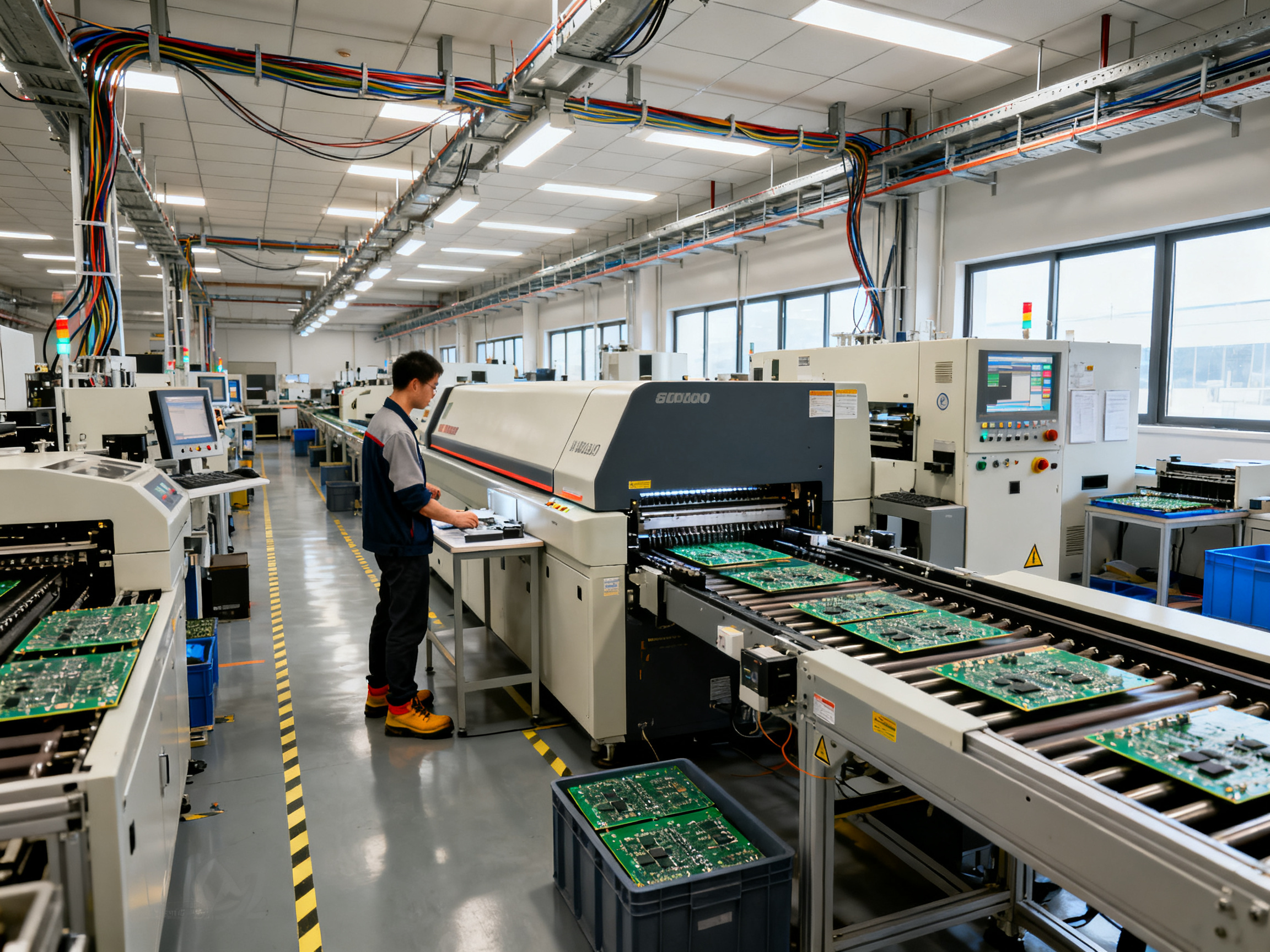
Consumer electronics manufacturers run these machines at incredible volumes. A major production facility might operate reflow ovens continuously, processing thousands of boards per hour across multiple lines. The consistency that conveyorized reflow ovens provide is essential here because even a tiny defect rate becomes a massive problem when you’re making millions of devices.
Apple, Samsung, and other major brands all rely on sophisticated reflow oven setups to assemble their products at scale. The reflow oven for pcb assembly in these environments is typically part of a fully automated line that handles everything from paste printing to inspection without human intervention.
Automotive Electronics
Car manufacturers have zero tolerance for defective solder joints. Your vehicle’s safety systems, engine control units, and infotainment hardware all depend on reliable connections that never fail.
Automotive electronics production often uses vacuum reflow ovens specifically because low-void solder joints provide better thermal conductivity and long-term reliability. A joint that might degrade over 10 years in a phone needs to last the lifetime of a car, sometimes 15 to 20 years.
We worked with an automotive supplier last year who was struggling with thermal cycling failures. After switching to a vacuum reflow process, their field returns dropped dramatically. The investment paid for itself within six months through reduced warranty claims.
Double-Sided PCB Assembly
Modern PCBs often have components on both sides, which creates a sequencing challenge. How do you solder one side without melting the joints on the other?
The solution is a two-pass process. First, the bottom side gets soldered in the reflow oven while components are held in place by glue or by surface tension. Then the board flips over, paste is applied to the top side, components are placed, and the board runs through the oven again.
This approach lets designers pack more functionality into smaller boards. Your laptop motherboard probably has parts on both sides, and that’s only possible because of how reflow ovens enable this manufacturing sequence.
Medical Devices and High-Reliability Applications
Medical equipment requires traceability and consistency that goes beyond typical manufacturing. Every solder joint might need documentation, and defects simply aren’t acceptable in life-sustaining devices.
Reflow ovens in medical manufacturing typically run with tighter process controls, nitrogen atmospheres to prevent oxidation, and comprehensive logging of every production run. The investment in premium equipment here reflects the consequences of failure.
Pro Insight: When integrating reflow ovens into automated SMT lines, plan your thermal profile storage and retrieval system from day one. Modern Industry 4.0 reflow ovens let you store hundreds of profiles and recall them automatically based on board identification. This alone can cut changeover time from 30 minutes to under 5, which adds up fast when you’re running multiple board types per shift.
High-Volume Production Advantages
The real strength of reflow ovens for pcb production shows up at scale. When you’re running thousands of boards per day, the consistency and automation they enable become transformative.
Automated paste inspection before reflow catches problems early. In-line thermal profiling monitors every board in real time. Closed-loop control adjusts temperatures automatically if something drifts. And because every board follows the exact same thermal path, you get uniform quality across the entire run.
For businesses looking to scale electronics manufacturing, investing in a capable reflow oven setup is often the single biggest lever for improving throughput while maintaining quality. The machines pay for themselves through efficiency and reduced scrap.## Maintaining and Troubleshooting Reflow Ovens for Peak Performance
Your reflow oven runs day in and day out, heating and cooling boards hundreds of times per shift. Like any piece of production equipment, it needs regular attention to keep performing at its best. Neglect maintenance, and you will start seeing more defects, longer cycle times, and eventually costly breakdowns.
Routine Maintenance That Keeps Things Running Smoothly
Most maintenance tasks take less than 30 minutes and prevent problems that would cost hours to fix later. Here is what your team should be doing on a regular schedule.
Daily checks should include clearing debris from the conveyor belt and verifying airflow vents are clear of dust. These sound simple, but a clogged vent throws off your temperature distribution in subtle ways.
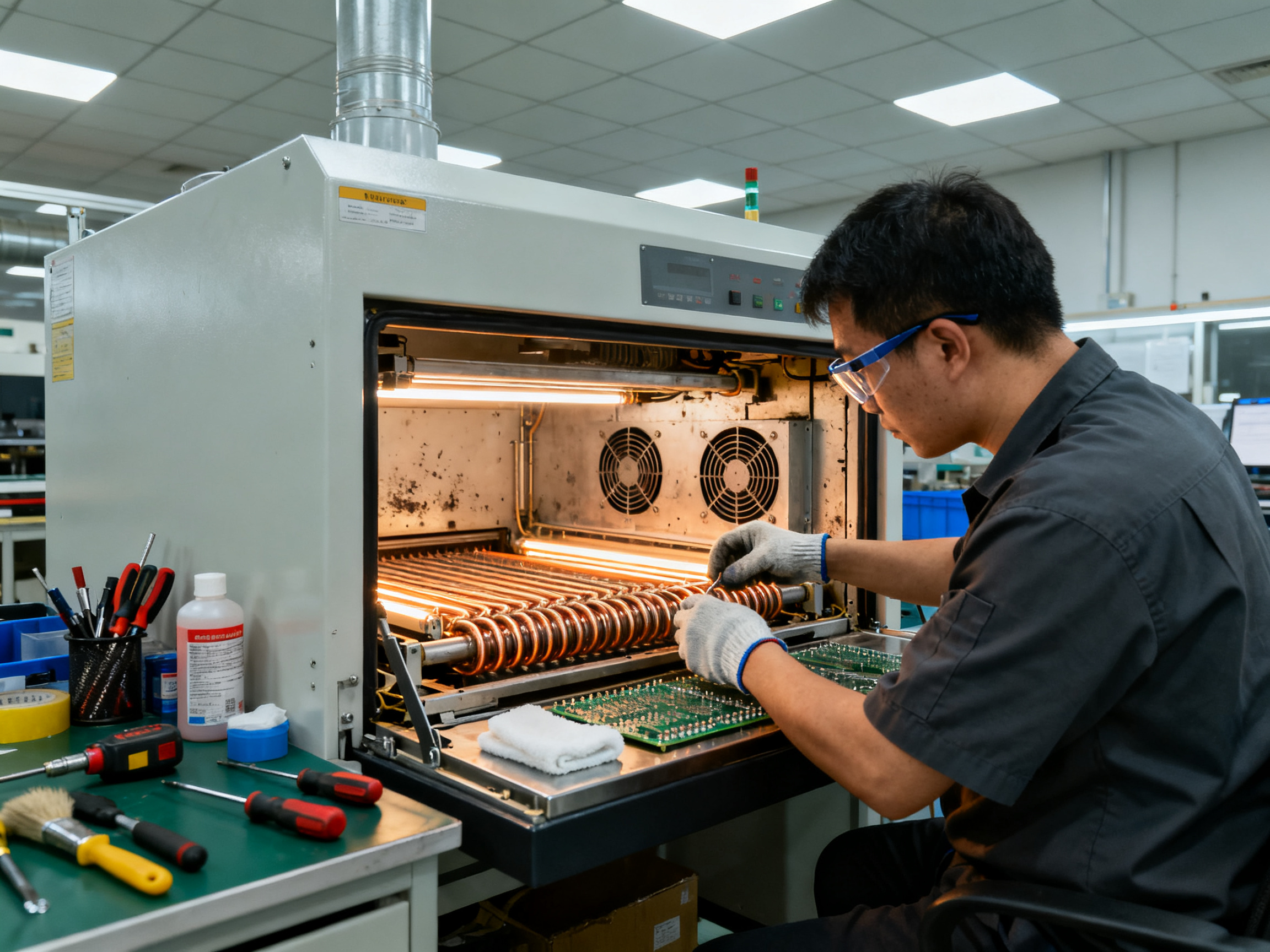
Weekly inspections involve examining heating elements for signs of wear, checking thermocouple accuracy against a known reference, and cleaning the chamber interior to remove flux residue. Flux buildup acts as an insulator, creating hot spots over time.
Monthly maintenance covers more thorough cleaning, lubricating conveyor mechanisms, and verifying that your temperature profile still matches the actual thermal conditions inside the oven. Things drift over time, even in well-built equipment.
Routine Maintenance Tasks for Reflow Ovens
| Frequency | Task | Why It Matters |
|———–|——|—————-|
| Daily | Clean conveyor belt | Prevents jams and contamination |
| Daily | Clear airflow vents | Ensures even heat distribution |
| Weekly | Inspect heating elements | Catches wear before failure |
| Weekly | Check thermocouples | Maintains temperature accuracy |
| Weekly | Clean chamber interior | Removes flux residue buildup |
| Monthly | Lubricate conveyor parts | Keeps smooth operation |
| Monthly | Verify profile accuracy | Catches thermal drift early |
| Quarterly | Full calibration check | Ensures spec compliance |
Common Problems and How to Fix Them
When issues do crop up, the symptoms usually point pretty clearly to the cause.
Conveyor problems often come from dirty belts or misaligned guide rails. A quick clean and adjustment fixes most jams.
Temperature inconsistencies typically mean a faulty thermocouple or heating element nearing the end of its life. Swapping thermocouples takes minutes and costs little compared to a week of bad boards.
Excessive voiding in solder joints usually signals a soak profile that needs tweaking, or worn nitrogen nozzles if you are running an inert atmosphere.
If you are seeing temperature drift across zones, check for failing heating coils or dirty air filters. Both are common culprits in older equipment.
Pro Insight: When integrating reflow ovens into automated SMT lines, plan your thermal profile storage and retrieval system from day one. Modern Industry 4.0 reflow ovens let you store hundreds of profiles and recall them automatically based on board identification. This alone can cut changeover time from 30 minutes to under 5, which adds up fast when you are running multiple board types per shift.
Knowing When to Upgrade
Sometimes maintenance is not enough. If your reflow oven is more than 10 years old, you are probably missing out on significant improvements in energy efficiency, temperature precision, and data logging capabilities that came with 2026 technology.
We see shops hang onto aging equipment because it still technically works. But when your maintenance costs start climbing past 15% of the original purchase price annually, it is time to run the numbers on replacement.
Modern reflow ovens from manufacturers like Sun and Mountain SMT include self-diagnostic features that flag potential issues before they become production problems. For older ovens without these capabilities, adding a separate thermal profiling system can give you similar monitoring benefits at a fraction of the upgrade cost.
The goal is simple. Keep your oven running well, catch problems early, and know when it makes more sense to replace rather than repair.## Future Trends in Reflow Oven Technology
The reflow oven world is changing fast. If you have been in electronics manufacturing for a while, you have probably noticed how much smarter these machines have gotten in just the past few years. Here is where things seem to be heading.
AI-driven temperature monitoring is becoming standard in newer reflow ovens. Instead of just following pre-set profiles, these systems watch what is actually happening in real time and adjust on the fly. Picture the oven spotting a temperature spike before it becomes a defect. That is the kind of thing AI makes possible now.
Predictive maintenance is another big deal. The oven basically tells you when parts are wearing out before they fail completely. We tested one of these systems last quarter and it flagged a failing thermocouple three days before it would have caused production problems. That kind of heads-up is worth its weight in gold when you are running continuous shifts.
Energy efficiency is getting more attention too. Manufacturing gets a bad rap for using lots of power, and reflow ovens are energy hogs by nature. Newer designs tackle this with better insulation, more efficient heating elements, and smarter heating cycles that only use power when needed. Some manufacturers claim energy savings of 15 to 30 percent compared to older models. With electricity costs going nowhere but up, this matters for your bottom line.
Smart Factory integration is probably the biggest shift. Modern reflow ovens connect to factory-wide systems and share data about temperatures, throughput, and defect rates automatically. This lets manufacturers track performance across thousands of runs and spot patterns that would be impossible to see otherwise. When your reflow oven talks to your MES system, you can optimize maintenance schedules, predict failures, and fine-tune profiles based on actual production data.
The trend is clear. Reflow ovens are becoming smart, connected nodes in fully integrated manufacturing ecosystems rather than standalone machines. Keeping up with these changes will define who stays competitive in electronics manufacturing over the next decade.
Pro Insight: When evaluating new reflow oven purchases, prioritize units with built-in data connectivity and Industry 4.0 protocols. The ability to integrate with factory MES systems is quickly becoming a requirement for competitive manufacturing operations.## Conclusion and Expert Recommendations
Reflow ovens are the backbone of modern electronics manufacturing. Without them, the smartphones, cars, and medical devices we rely on daily simply would not exist in their current form.
These machines take fragile assemblies through carefully controlled thermal cycles, transforming raw PCBs with paste into finished boards that last years. Getting that process right matters, and it starts with understanding your specific needs.
Quick Checklist for Choosing and Using Reflow Ovens
Before you invest in new equipment or optimize your current setup, work through this checklist.
First, assess your volume requirements. How many boards do you need to process per hour? This single question narrows your options immediately.
Second, consider your board complexity. Simple assemblies with uniform components work fine with forced convection. Complex boards with mixed thermal masses might need vapor phase or vacuum capability.
Third, think about your quality standards. Automotive and medical applications often justify the extra cost of nitrogen atmospheres and vacuum processing. Consumer electronics can often run on standard convection setups.
Fourth, plan for growth. Choose equipment that scales with your business rather than equipment that boxes you in.
Fifth, budget for maintenance. The most expensive oven that sits broken is worse than a modest oven that runs reliably.
Sixth, prioritize data connectivity. In 2026, modern reflow ovens with Industry 4.0 integration offer real advantages in process control and traceability.
Expert Insight: Whether you are running a small prototype shop or a high-volume production line, taking time to understand your reflow oven and its capabilities pays dividends in quality, throughput, and reduced scrap. Start with the basics, tune your profiles, keep up with maintenance, and your equipment will serve you well for years to come.